The Rise of Rewilded Lawns
I recall walking through a neighborhood where every lawn appeared as a uniform green surface, clipped short and evenly maintained. At first the sight seemed orderly. Yet no bees hovered near clover patches, no butterflies moved between blooms, and no tall grasses rustled in the breeze. The absence of sound revealed a landscape too controlled to sustain life.
Over recent seasons a different approach has emerged in many yards. Some describe the result as untidy while others call it natural. At its core the practice centers on rewilding, which restores life by reducing intervention rather than increasing it.
Defining Rewilding in a Garden Context
Rewilding creates a small functioning ecosystem where native plants, soil organisms, insects, and birds interact. The lawn shifts from a decorative surface into a living habitat. Balance returns when species that previously lacked space are given room to establish.
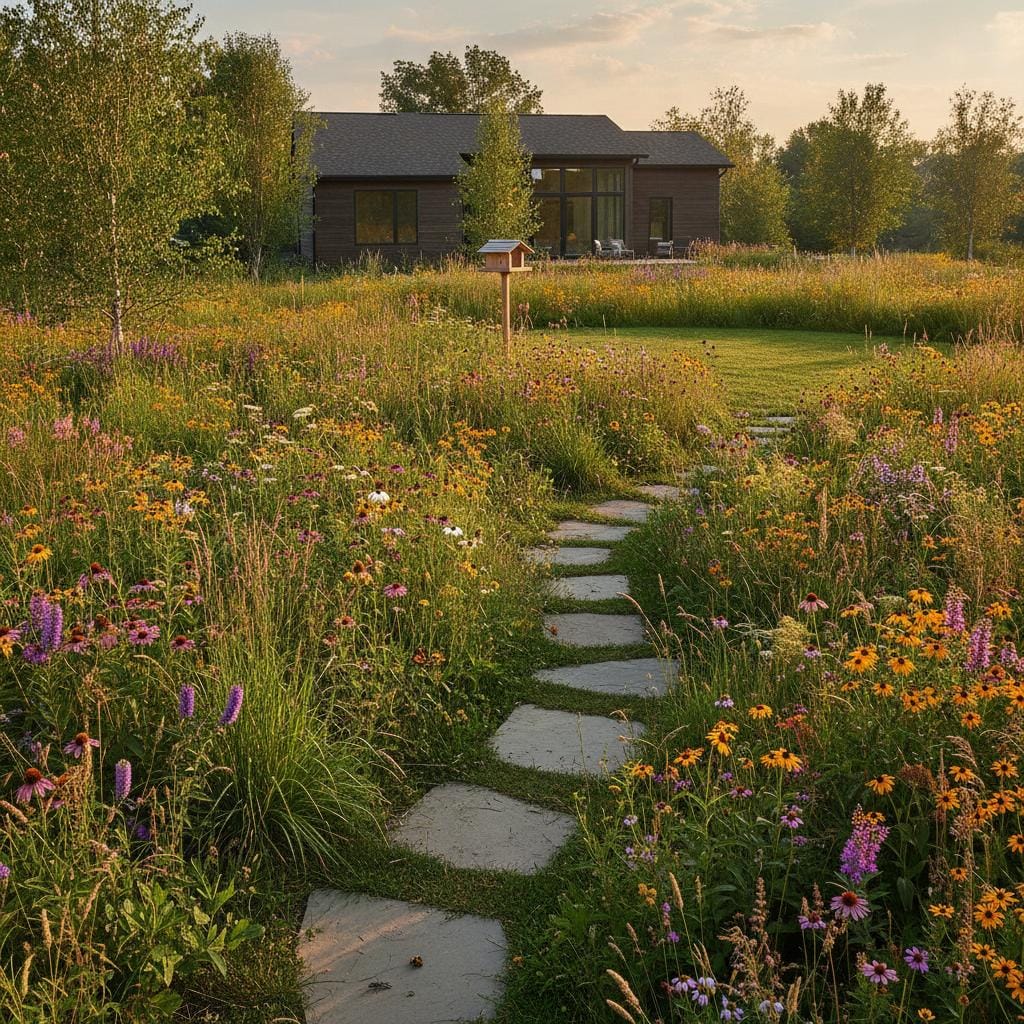
The process begins with less frequent mowing and the elimination of chemical applications. Taller growth mixed with additional species allows soil to recover. Wildflowers appear, pollinators arrive, and moisture remains in the ground longer. Textures and colors shift with each season, producing a living appearance rather than a static one.
Comparing Traditional and Rewilded Lawns
A conventional lawn represents order through uniform height and constant upkeep. Fertilizers, pesticides, and weekly mowing maintain the surface, yet the result supports minimal wildlife. A rewilded lawn instead welcomes variation. Clover grows alongside fescue, violets occupy edges, and seed heads move with the wind.
Maintenance changes from routine cutting to periodic observation. The aim becomes participation in natural cycles rather than enforcement of uniformity. This ecological difference matters. Manicured turf sustains little life while a rewilded area provides food and shelter for pollinators, birds, and small mammals.
Practical First Steps
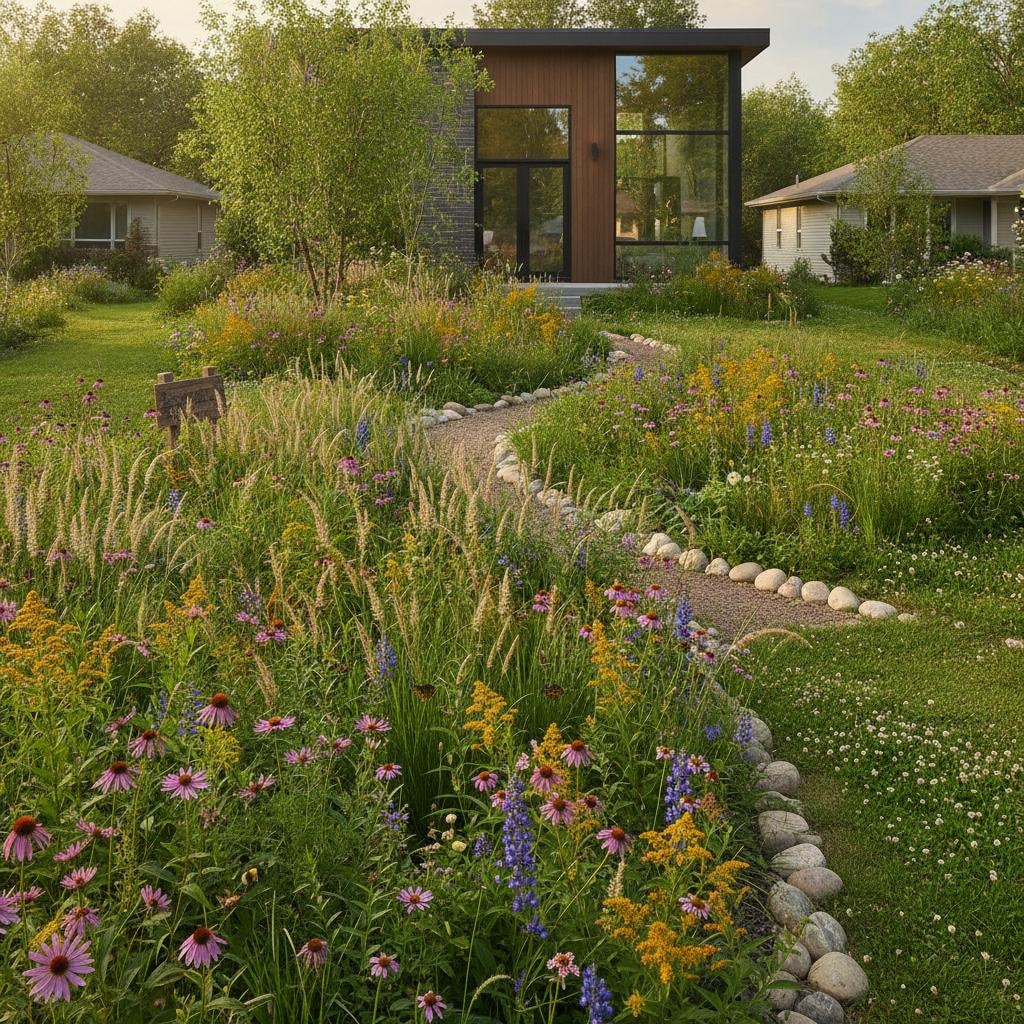
Homeowners can start without committing an entire property at once. Select one corner and allow growth for a full season to observe what emerges naturally. Introduce a few native species such as coneflower or milkweed to attract specific insects. Avoid fertilizers and pesticides so soil life can recover on its own.
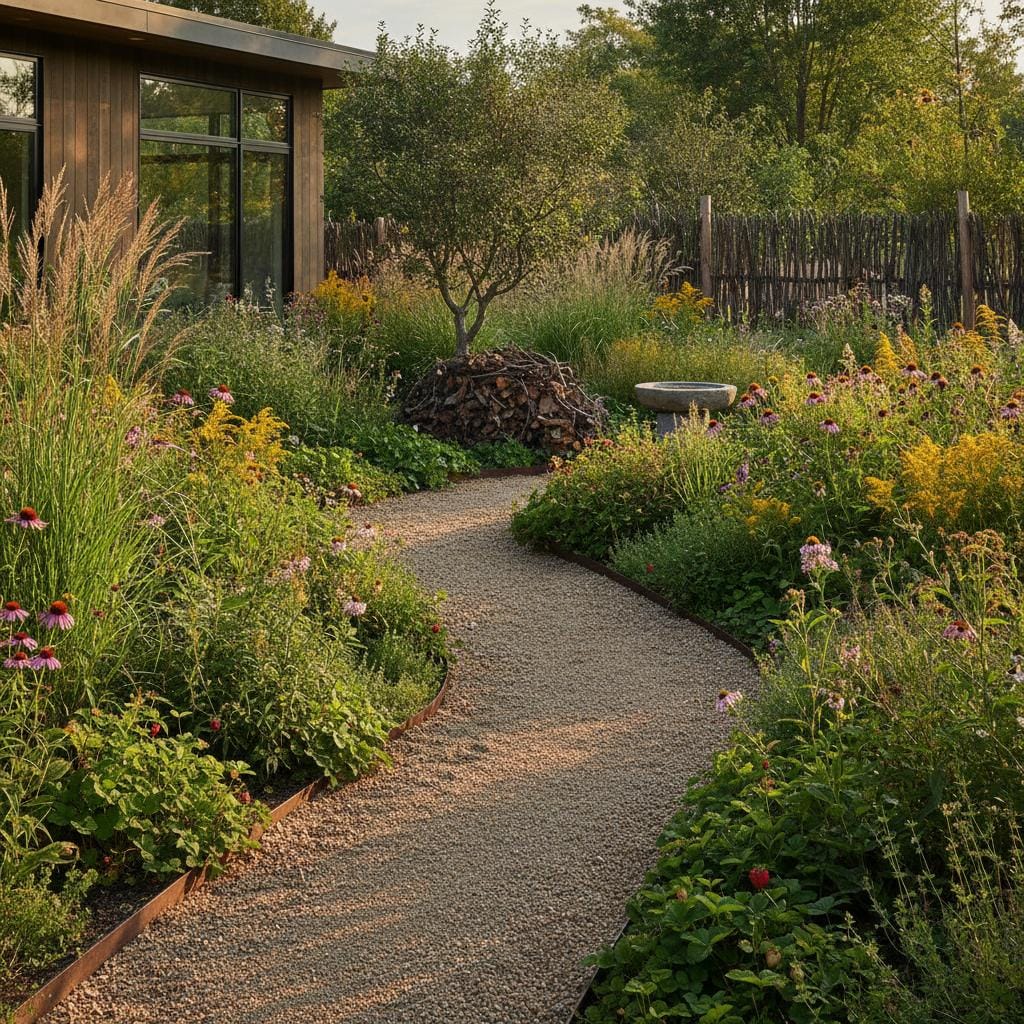
Define the area with a mown border or low stones to signal intention. Spend time watching changes before further action. These measured adjustments build familiarity and demonstrate that the space remains cared for rather than abandoned.
Shifting Ideas of Beauty
A rewilded lawn values diversity over sameness. Tall grasses bend, wildflowers bloom at different times, and bees move among clover. The resulting quiet abundance arises from coexistence instead of control.
Many people initially feel discomfort because tidy lawns have long signaled care. Yet those who persist often report stronger connections to their surroundings. They notice more movement and seasonal patterns. The sense of participation replaces the earlier preference for uniformity.
Ecological Outcomes
Diverse root systems aerate soil and improve structure. Taller vegetation shades the ground, limits evaporation, and retains moisture. Native plants sustain pollinators that support nearby fruit trees and vegetable beds. Birds find seeds and insects, while small mammals aid seed dispersal.
Reduced mowing lowers fuel consumption and emissions. Healthier soil decreases the need for added nutrients. Over time the yard requires less intervention while delivering greater resilience.
Ongoing Care Practices
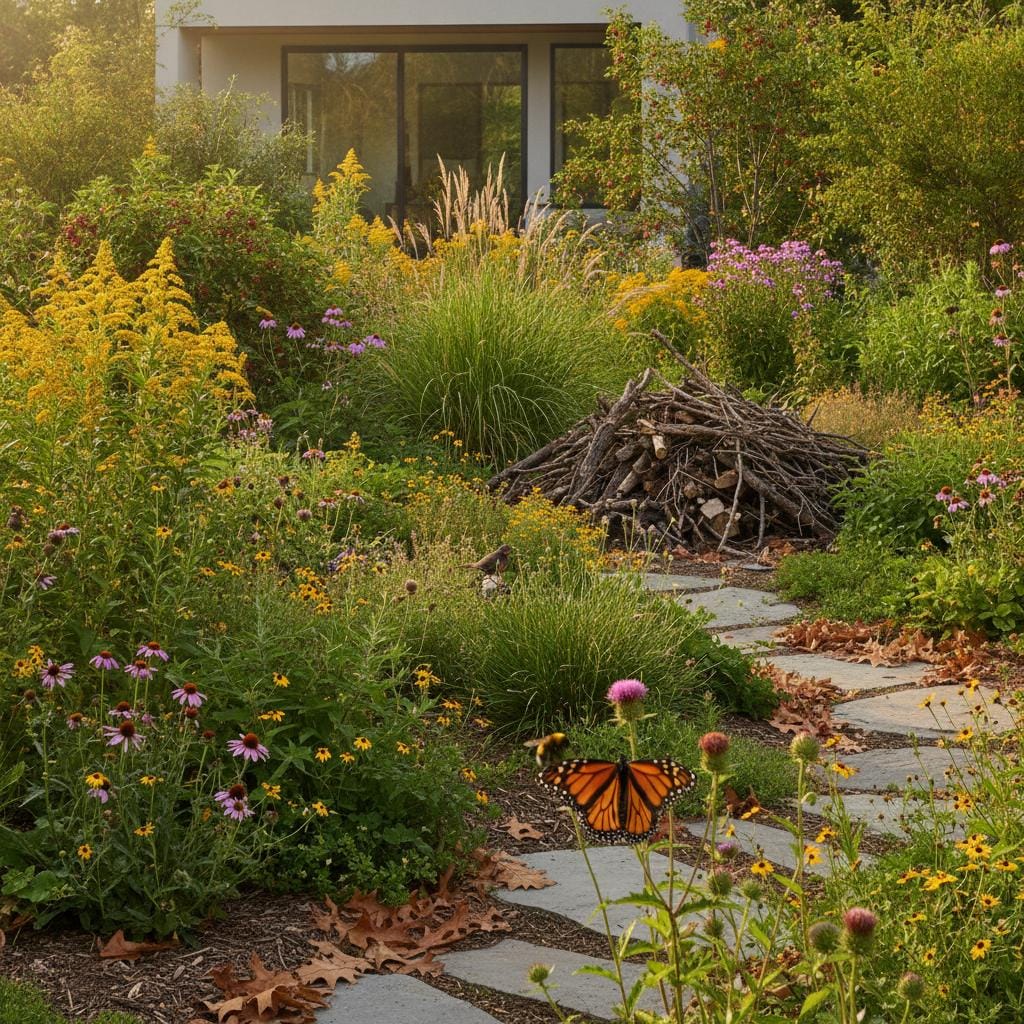
Once established, the area benefits from light seasonal guidance. Cut back growth once or twice annually in late fall or early spring to prevent woody stems and allow light to reach seedlings. Leave fallen leaves in place except where they obstruct paths, because they shelter insects and enrich soil as they break down.
Add one or two new native species each year to maintain variety. Monitor moisture patterns and adjust plant choices accordingly. The space evolves week to week and season to season, reflecting ongoing collaboration between the gardener and natural processes.
Beginning the Transition
Rewilding requires no large property or costly materials. It starts with willingness to accept variation where uniformity once prevailed. Allowing more plant types gives local wildlife a place to thrive. The yard gains activity, stability, and a form of calm that uniform turf cannot provide.