Why Mycelium Pavers Revolutionize Eco-Hardscaping
During a visit to a garden exhibit emphasizing living materials, mycelium pavers captured attention through their subtle vitality. Positioned amid mossy patches, these stepping stones offered a firm yet textured surface reminiscent of compressed natural fibers. The exhibitor explained the role of mycelium, the fungal network, in forming these durable structures, prompting reflection on how fungi could enhance landscape design.
Hardscaping traditionally serves as the unchanging framework in gardens, with stone, brick, or concrete providing stability while plants introduce dynamism. Growing environmental consciousness now prompts questions about integrating vitality into these elements. Mycelium pavers address this need, enabling pathways, patios, and borders that evolve alongside living greenery.
Understanding Mycelium
Mycelium forms the thread-like structure of fungi, thriving underground or within decomposing organic matter. It functions as a natural decomposer, processing waste and enriching soil with nutrients. In controlled environments, mycelium grows into predefined molds, then undergoes heat or drying to halt development and yield a sturdy, lightweight composite.
This fungal network acts as a biological binder, fusing substrates like hemp hurds, sawdust, or straw into solid forms. The outcome proves resilient yet fully biodegradable, contrasting with concrete's resource-intensive permanence. Such attributes attract architects and gardeners seeking eco-friendly options for exterior applications.
Characteristics of Mycelium Pavers
Conventional pavers depend on quarried aggregates or factory-processed components, often involving energy-intensive kilns and chemical stabilizers that generate emissions. Mycelium pavers emerge through cultivation, harnessing biological growth with low energy input. Agricultural residues serve as the base, while the fungus orchestrates binding without artificial additives.
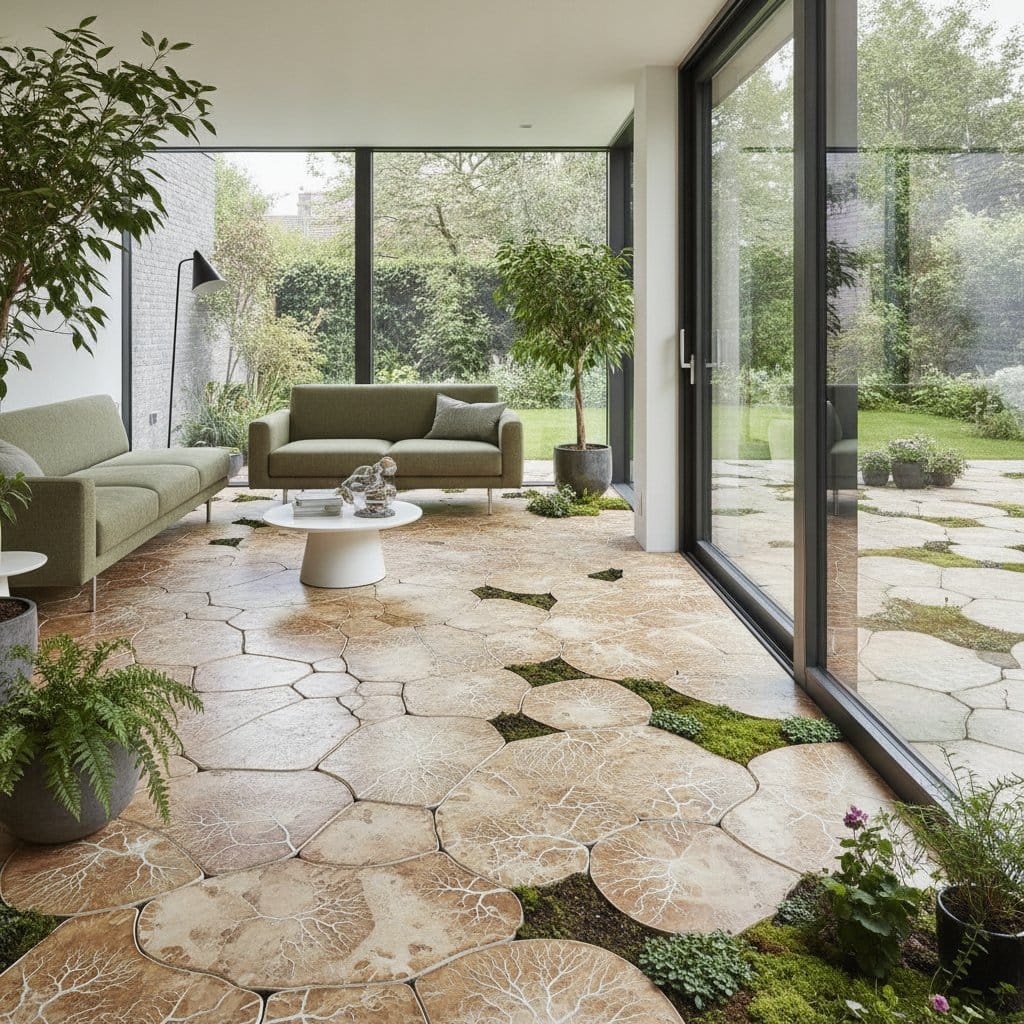
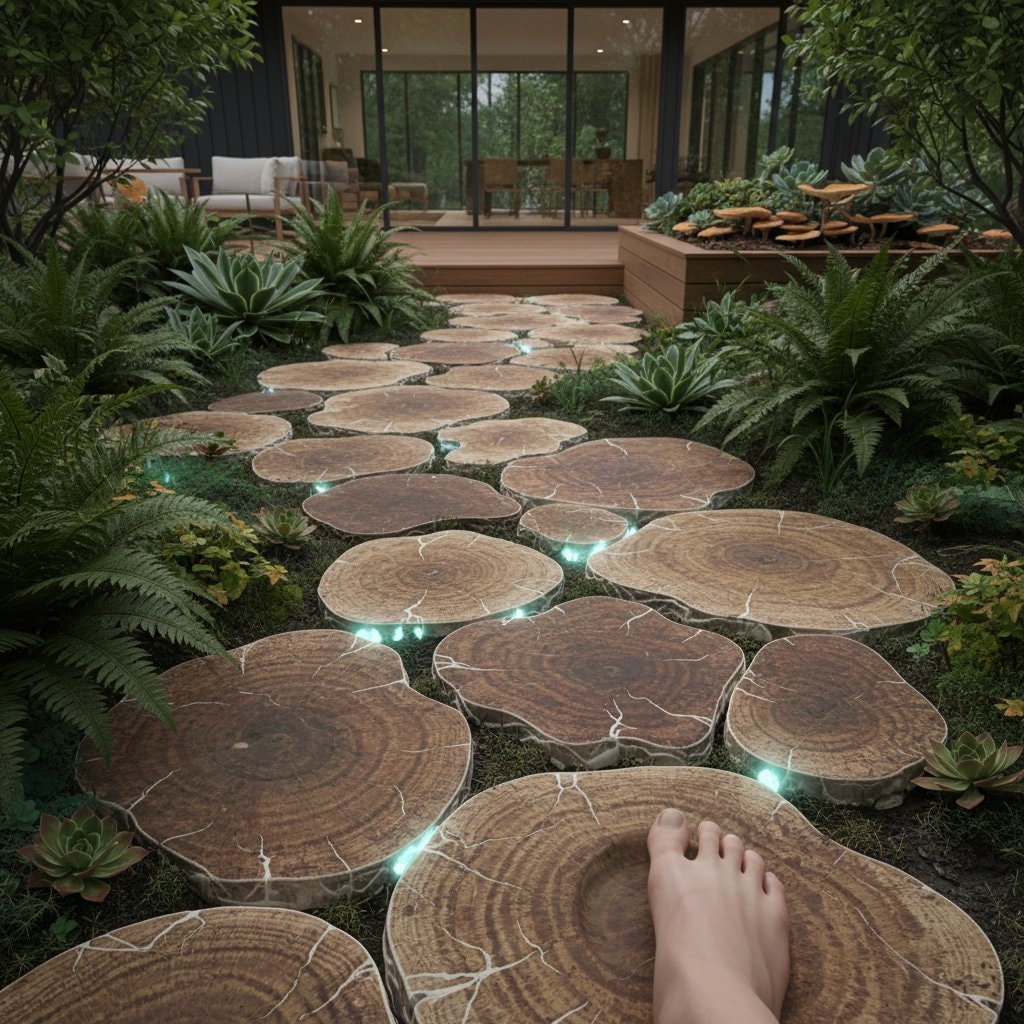
Shaping options range from precise tiles to organic forms suitable for pathways. Their natural hues, often light brown or beige, vary with substrate choices and can include subtle veining. Sealing with plant-based coatings enhances water resistance, while unsealed versions develop a patina that integrates with foliage over seasons.
Homeowners appreciate this adaptive aging, where mycelium softens gracefully rather than fracturing like rigid alternatives. In garden contexts, this impermanence aligns with themes of renewal, allowing removed pavers to enrich compost rather than burden waste streams.
Mycelium Versus Traditional Materials
Skepticism often arises regarding mycelium's viability against established options. Suitability hinges on application specifics.
- Weight and Load Capacity: Lighter than natural stone, mycelium eases installation but suits light-duty areas like pedestrian paths or ornamental terraces, not vehicular surfaces.
- Water Resistance: Natural sealants protect against precipitation and routine use; untreated pieces gradually biodegrade, ideal for transient installations.
- Thermal Properties: Inherent insulation keeps surfaces cooler in sunlight, mitigating urban heat effects and benefiting adjacent vegetation.
- Visual Appeal: Organic textures and tonal variations provide warmth and uniqueness, diverging from concrete's stark consistency.
This balance favors sustainability over indefinite durability. While concrete endures for generations, it demands significant ecological costs; mycelium encourages periodic refreshment in harmony with natural processes.
Integrating Mycelium into Designs
Incorporating mycelium demands embracing its dynamic nature over rigid ideals. This mindset fosters innovative layouts where gradual changes enhance the overall narrative.
Repetition of forms or shades ensures visual unity amid weathering. For instance, uniform pavers along a trail maintain guidance while retaining an earthy feel.
Complement with ground-hugging plants such as creeping thyme or sedum to bridge hard and soft elements. These fillers soften joints, promoting biodiversity and reducing erosion.
Begin modestly for those testing the material: install a short trail in a vegetable plot or accent a seating area. Monitor responses to local weather, including humidity and exposure, to inform broader implementations.
Broader Ecological Advantages
Mycelium production repurposes farm byproducts that might otherwise decompose unused. The fungus metabolizes these inputs into viable goods, minimizing waste and synthetic dependencies. This approach streamlines resource cycles from agriculture to construction.
Low-temperature growth contrasts sharply with cement's high-energy demands, which involve calcining limestone and emitting substantial CO2. Mycelium operates efficiently at room conditions, curbing carbon footprints from the outset.
At disposal, the material integrates back into soil ecosystems, fostering microbial activity without toxic residues. Even treated variants degrade more benignly than plastics or treated woods, supporting closed-loop sustainability.
Overcoming Limitations and Future Developments
Moisture vulnerability poses a primary hurdle, particularly in wet climates or areas prone to freezing. Ongoing innovations focus on permeable coatings that bolster resilience without compromising breathability.
Initial costs exceed those of standard concrete due to nascent scaling. However, expanding production promises affordability, appealing to eco-conscious budgets.
Hybrids blending mycelium with recycled aggregates or bio-polymers are emerging, enhancing load-bearing for versatile uses. These composites preserve core benefits while broadening applicability in eco-hardscaping.
Embracing Mycelium in Everyday Gardens
Adopting mycelium pavers signals a commitment to fluid, nature-aligned spaces. Gardens featuring such elements participate in ecological rhythms, evolving beyond static compositions.
Surfaces may yield to time, inviting lichen or sprouts in fissures, which enrich rather than detract from the scene. This progression underscores the interplay between human intent and environmental forces.
Care involves sweeping debris and reapplying sealants seasonally in damp zones. Shaded spots benefit from occasional clearing to manage overgrowth. Decommissioned pieces enrich compost, completing a restorative loop absent in conventional hardscapes.
Steps to Incorporate Mycelium Pavers
Approach exploration with inquiry: seek samples at eco-suppliers or design events to assess tactility and aroma firsthand. Envision their placement amid existing plantings for contextual fit.
For hands-on enthusiasts, starter kits enable home cultivation using simple molds and local organics. This process demystifies the material, building confidence for larger projects.
Mycelium pavers illustrate how fungal ingenuity and thoughtful design yield enduring, vibrant landscapes that honor natural vitality.