Recycled Glass: Eco-Luxury for Sustainable Yards
Sustainable landscaping demands materials that balance aesthetics, endurance, and environmental impact. Recycled glass emerges as a premier choice for homeowners seeking these qualities in a single, versatile option. This material infuses outdoor spaces with vivid colors, varied textures, and a subtle sparkle, all while repurposing waste from bottles and jars. In pathways, patios, or garden features, recycled glass delivers a sophisticated elegance that harmonizes with natural surroundings.
The appeal lies in its fusion of artistic expression and ecological stewardship. By diverting glass from landfills and requiring less energy for production than virgin glass, it aligns with broader sustainability goals. Homeowners upgrading their yards will find recycled glass an ideal selection for achieving upscale visuals alongside responsible practices.
What Recycled Glass Is and How It Is Made
Landscaping-grade recycled glass derives primarily from post-consumer sources such as bottles, jars, and containers. Manufacturers clean the collected glass, crush it into smaller fragments, and sort it by color to preserve vibrancy. The pieces undergo tumbling or controlled melting to eliminate sharp edges, resulting in products that range from polished pebbles to luminous chips or structured pavers.
Common forms for outdoor applications include the following:
- Glass aggregate: Fine fragments serve as ornamental mulch or interstitial filler in paver joints.
- Glass pavers or tiles: Formed into precise shapes, these create seamless patios or resilient surrounds for fire pits.
- Resin-bound glass surfaces: Crushed glass blended with transparent resin forms durable coatings for driveways and walkways.
These variations provide distinct aesthetics and tactile experiences. Sunlight-refracting options enhance daytime brilliance, whereas frosted finishes offer a muted, contemporary subtlety.
Why Recycled Glass Appeals to Homeowners
Homeowners value recycled glass for its seamless integration of environmental benefits and design adaptability. It suits minimalist modern gardens as readily as lush, organic settings. Unaffected by fading, decay, or infestation, the material proves reliable over extended periods.
Key advantages include:
- Eco-friendly profile: It minimizes landfill contributions and conserves natural resources like sand and aggregates.
- Minimal upkeep: Impervious to moisture absorption and mold growth, it maintains clarity without sealants or stains.
- Diverse aesthetics: Colors span from intense cobalt blues to warm amber tones, enabling coordination with surrounding flora or bold accents.
- Robust performance: The material endures harsh weather without degradation.
- Light-enhancing properties: Its reflective surface amplifies depth, particularly near water elements or illuminated zones.
For those desiring a material that combines visual impact with practicality, recycled glass delivers exceptional versatility.
Cost and Installation Factors
Recycled glass typically exceeds the price of conventional gravel or concrete, yet its longevity and reduced maintenance offset initial expenses. Costs fluctuate with particle size, hue, and fabrication technique. Expect decorative aggregate to range from two to ten dollars per square foot, factoring in coverage depth; resin-bound applications or pavers may climb to fifteen or twenty dollars per square foot.
Installation demands careful groundwork for optimal results:
- Site preparation: Clear vegetation, level the ground, and compact a foundation of crushed stone or sand to avert subsidence.
- Edging installation: Secure borders with metal, plastic, or stone restraints to contain the material and preserve edges.
- Material placement: Distribute loose glass uniformly using a rake, or arrange pavers in intentional patterns.
- Final touches: Rinse lightly to dispel residue and reveal luster; allow resin-bound surfaces to cure for one to two days.
Professional contractors guarantee even distribution and structural integrity, particularly for expansive areas like driveways.
Design Ideas for Using Recycled Glass
Recycled glass integrates effortlessly across yard elements, from base layers to focal points. It complements wood, stone, and metal accents, accommodating sleek modern schemes or textured traditional layouts.
Consider these practical applications:
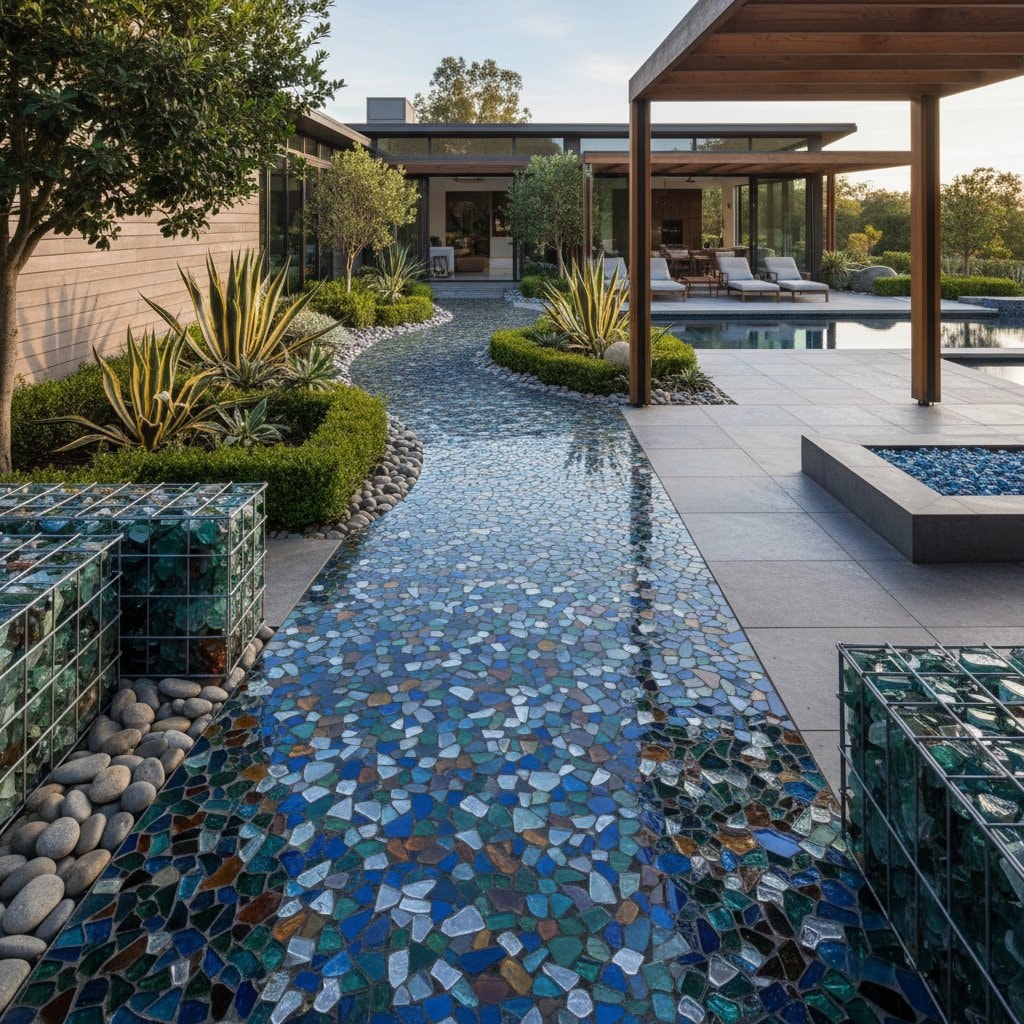
- Pathways: Embed crushed glass in gravel blends or resin for illuminated trails; translucent or azure shades amplify evening glow from pathway lights.
- Mulch alternative: Surround plantings with aggregate to conserve soil moisture, suppress weeds, and introduce chromatic interest.
- Patio edging: Frame paver or concrete surfaces with linear glass strips to infuse subtle radiance.
- Fire elements: Encircle fire pits with heat-resistant chips that mirror flames, or line interior bowls for dynamic effects.
- Water installations: Disperse glass along fountain bases or simulated streambeds to evoke fluid motion.
- Ornamental details: Layer colored fragments in raised planters or retaining walls for sculptural flair.
With extensive size and shade options, designers craft understated harmonies or striking focal points tailored to individual tastes.
Maintenance and Longevity
Compared to biodegradable alternatives, recycled glass demands scant attention. It resists decomposition, discoloration, and pest activity. A periodic water rinse restores cleanliness and sheen.
Loose installations may require replenishment every few years in trafficked zones to sustain depth. Resin or paver setups endure for decades under routine care. Steer clear of abrasive cleaners that might compromise finish; opt for sweeping or mild washing instead.
Proper processing ensures safety for households with children or pets, as edges remain rounded and foot-friendly.
Comparing Recycled Glass to Other Materials
Selecting hardscaping involves weighing aesthetics, durability, and effort against budget constraints.
- Gravel: More affordable, yet prone to displacement and lacking in visual depth.
- Concrete: Sturdy and utilitarian, but limited in palette and tactile appeal.
- Natural stone: Visually rich, though installation proves labor-intensive and costly due to weight.
- Rubber mulch: Cushioned and persistent, yet forfeits the refinement and luminosity of glass.
Recycled glass occupies a balanced niche, surpassing gravel's mundane look while simplifying placement relative to hefty stones.
Seasonal Care
Recycled glass tolerates climatic extremes, but proactive measures sustain its allure. Following storms or melts, assess for displacement and realign with a rake or broom. In planted areas, clear debris like autumn foliage to prevent surface muting.
Integrating Recycled Glass into Your Landscape
To incorporate recycled glass effectively, evaluate zones where it can elevate both form and utility. Assess sunlight patterns to position reflective elements for maximum effect, and select colors that enhance or contrast existing features.
Consult suppliers at local garden centers specializing in sustainable goods. They assist with quantity estimates and pairings like stabilizing bases or containment edges.
Ultimately, recycled glass imparts distinctive vitality to outdoor environments, curbing waste while fostering enduring, imaginative spaces that honor ecological principles.