Why Mycelium Pavers Revolutionize Eco Hardscaping
Sustainable design principles now form the foundation of practical home improvement projects. Homeowners increasingly seek materials that align performance with environmental responsibility. Mycelium emerges as a standout innovation in this field. Derived from the root-like filaments of fungi, mycelium serves as the building block for pavers that redefine outdoor surfaces. These pavers form through a growth process in molds, resulting in solid, lightweight blocks that mimic the appearance of conventional concrete while delivering a superior ecological profile.
For anyone designing a walkway, patio, or garden path, mycelium pavers present a compelling option. Their unique properties address common challenges in hardscaping, from installation ease to long-term sustainability. Understanding these attributes reveals why they represent a pivotal advancement in eco-friendly outdoor design.
How Mycelium Pavers Compare to Traditional Options
Concrete and brick dominate patio and driveway construction due to their proven durability, straightforward installation, and broad availability. These materials withstand heavy use and require minimal maintenance over decades. However, their production processes impose significant environmental burdens. Concrete manufacturing alone accounts for approximately eight percent of global carbon emissions, stemming from the energy-intensive calcination of limestone. Brick production demands high-temperature firing in kilns, which consumes substantial fossil fuels and generates airborne pollutants.
Mycelium pavers contrast sharply with these conventional choices. They incorporate agricultural waste, such as corn stalks or hemp hurds, as primary substrates, eliminating the need for cement or synthetic binders. The growth process occurs at ambient temperatures, typically between 68 and 86 degrees Fahrenheit, in controlled environments that last just days to weeks. This method not only minimizes energy inputs but also repurposes materials that might otherwise contribute to landfill volumes.
Consider the key differences in a side-by-side evaluation:
- Production Process: Traditional pavers involve mining raw materials and high-heat curing, often exceeding 1,400 degrees Fahrenheit. Mycelium develops through natural fungal colonization, requiring only humidity and organic matter.
- Weight and Handling: A standard concrete paver weighs around 20 pounds per square foot, complicating transport and labor. Mycelium versions tip the scales at half that, allowing one person to manage larger quantities without mechanical aids.
- Durability and Strength: While concrete offers compressive strength up to 4,000 psi, mycelium pavers achieve 500 to 1,000 psi, sufficient for pedestrian areas and light loads. They resist cracking from freeze-thaw cycles better than brittle clay bricks.
- Lifecycle Management: Discarded concrete contributes to non-biodegradable waste streams. Mycelium pavers decompose in soil within months, enriching it with nutrients, or integrate into compost systems for reuse in gardening.
These comparisons highlight how mycelium shifts the balance toward sustainability without sacrificing essential functionality.
Step-by-Step Installation Guide
The installation of mycelium pavers mirrors techniques used for concrete or brick, ensuring accessibility for DIY enthusiasts and professionals alike. Proper preparation guarantees stability and longevity. Begin by marking the project area with stakes and string lines to define boundaries accurately.
Follow these detailed steps for a secure setup:
-
Site Preparation: Clear vegetation and excavate to a depth of six to eight inches, depending on soil type. Remove roots and debris to create a level foundation. In clay-heavy soils, incorporate geotextile fabric to prevent weed growth and base migration.
-
Base Layer Construction: Spread four inches of crushed gravel or stone, compacting it in six-inch lifts using a plate compactor. This layer provides drainage and load distribution. Add a one-inch layer of coarse sand on top, then screed it level with a straight board.
-
Paver Placement: Start from a straight edge, such as a house wall or fixed border. Position mycelium blocks tightly, tapping them into the sand bed with a rubber mallet. Maintain consistent spacing of one-eighth inch for joints, using spacers for uniformity.
-
Joint Filling and Securing: Sweep polymeric sand or fine crushed stone into the gaps, then mist with water to activate binding properties. For permeable designs, opt for loose gravel to enhance water infiltration. Install plastic or metal edging along the perimeter, securing it with stakes driven every two feet.
-
Final Adjustments: Sweep away excess material and inspect for levelness. Allow the installation to settle for 24 hours before heavy use. In high-traffic zones, apply a sealant derived from natural oils to boost weather resistance.
The reduced weight of mycelium pavers streamlines this process, often cutting labor by 30 percent compared to heavier alternatives. They excel in applications like patios, walkways, and garden borders, supporting foot traffic up to 500 pounds per square foot without deformation.
Core Environmental Advantages
Mycelium pavers advance the bio-based materials sector by addressing multiple sustainability pillars. Their production avoids the greenhouse gas emissions associated with cement, potentially reducing a project's carbon footprint by up to 90 percent. Fungi efficiently bind substrates, forming structures that sequester carbon during growth.
Key environmental gains include:
- Energy-Efficient Manufacturing: Room-temperature cultivation eliminates kilns and ovens, relying instead on renewable energy sources like solar-powered incubators in forward-thinking facilities.
- Resource Conservation: By utilizing crop residues, mycelium diverts tons of waste from incineration or disposal, supporting circular economy principles. One cubic yard of pavers can incorporate over 200 pounds of agricultural byproducts.
- End-of-Life Integration: Unlike inert concrete, these pavers biodegrade harmlessly, breaking down via microbial action into humus that improves soil health. This feature suits temporary installations or sites where disassembly proves necessary.
- Water Management: Permeable variants filter rainwater, mitigating urban flooding and replenishing groundwater. They reduce the heat island effect in paved areas by absorbing less solar radiation than dark concrete surfaces.
Homeowners pursuing certifications like LEED for residential projects find mycelium pavers instrumental in earning credits for sustainable site development.
Creative Design Applications
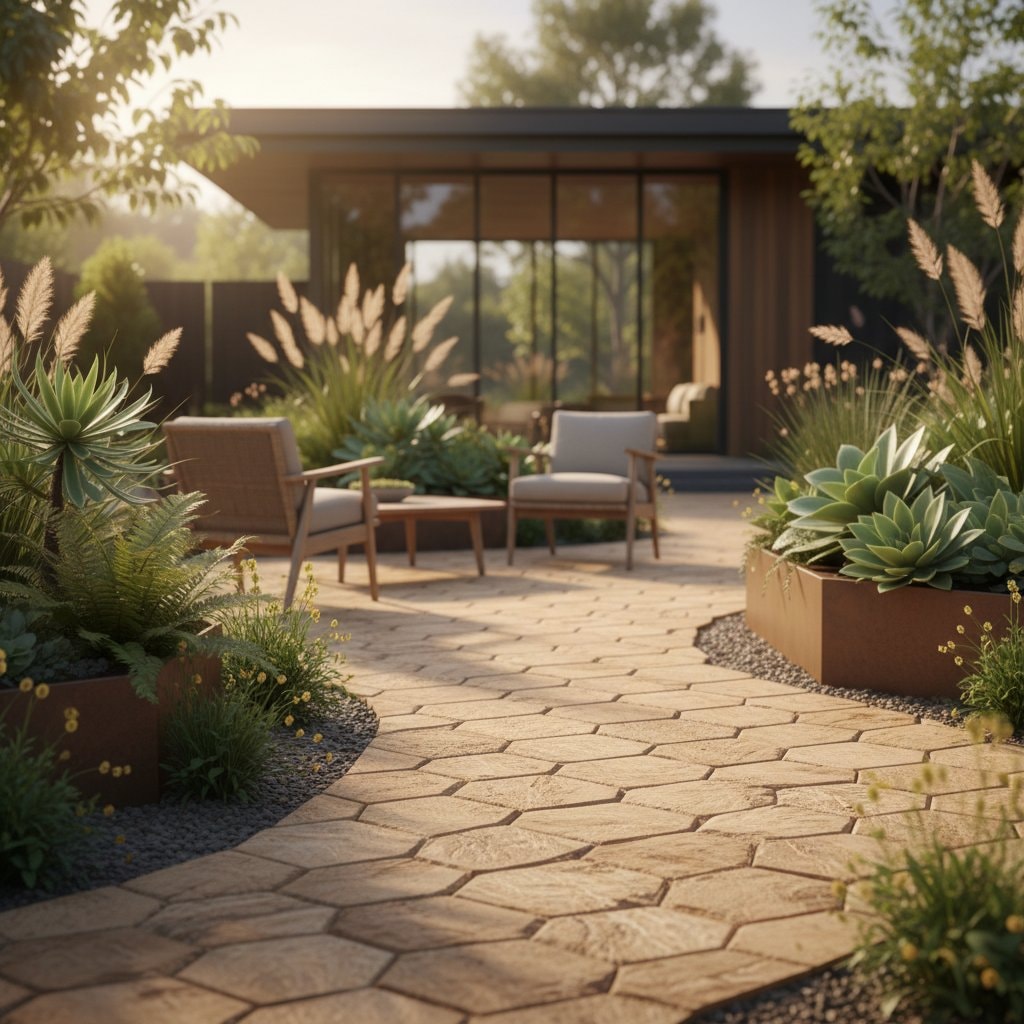
Versatility defines the appeal of mycelium pavers in landscape architecture. Available in rectangular, hexagonal, or irregular forms, they adapt to diverse aesthetics. Smooth finishes suit contemporary patios, while embossed textures evoke natural stone for cottage-style gardens.
Customization enhances their integration into broader designs. Molds allow for intricate patterns, such as interlocking mosaics or curved edges, produced at scale without excessive tooling costs. Their earthy hues, ranging from warm buffs to subtle grays, complement native perennials, succulents, and pollinator gardens.
Incorporate mycelium into mixed-media features for enhanced impact:
- Patio Expansions: Combine with raised planters filled with compostable liners, creating seamless transitions from hardscape to softscape.
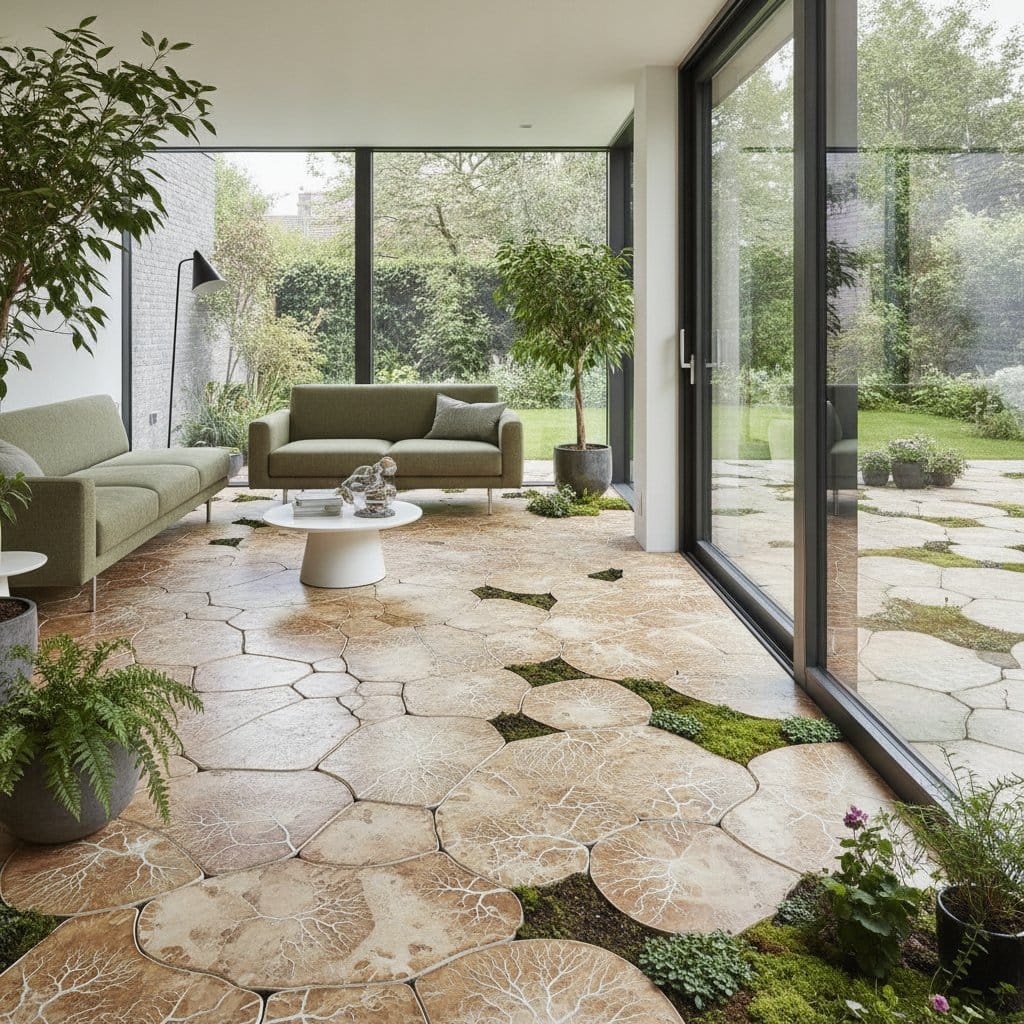
- Pathway Variations: Alternate with moss-filled joints to foster biodiversity and a living surface that evolves over time.
- Structural Elements: Use for low walls or steps in sloped terrains, pairing with timber accents for rustic charm.
These applications not only beautify spaces but also promote ecological harmony, inviting wildlife and reducing maintenance demands.
Embracing Sustainable Hardscaping Choices
Opting for mycelium pavers extends beyond aesthetic upgrades; it embodies a commitment to regenerative practices. These materials harmonize human needs with planetary health, fostering outdoor environments that endure without exploitation. As production scales, costs align closer to traditional options, broadening access to innovative solutions.
Consult local experts to source mycelium pavers suited to your climate and soil conditions. Experiment with small-scale projects to experience their benefits firsthand. Through such informed decisions, homeowners contribute to a landscape legacy that prioritizes resilience and renewal.