Gravel Gardens: 2026's Budget Hardscape Revolution
The subtle crunch of gravel underfoot provides a grounding sensation that connects individuals to their surroundings. This natural texture integrates seamlessly into diverse settings, creating spaces that appear intentional yet relaxed. As homeowners prioritize cost-effective methods to enhance outdoor environments, gravel emerges as a versatile cornerstone of contemporary hardscaping.
Gravel gardens build on established concepts but attract renewed interest through their equilibrium of expense, visual allure, and functionality. They deliver form without constraint and aesthetics without extravagance. Suitable for compact courtyards or expansive lawns, gravel elevates unadorned terrain into unified, economical landscapes that convey refinement and ease.
The Appeal of Gravel Gardens
Gravel gardens resonate with those who value understated elegance. They avoid intensive construction or premium resources, yet rival the sophistication of formal patios. The material's light-reflecting properties introduce dynamic shifts and dimensionality across daylight hours. Combined with appropriate vegetation, gravel establishes an organic cadence that harmonizes with the environment.
Homeowners favor gravel for its adaptability. Pathways may meander, seating zones expand, and planting zones evolve without extensive overhauls. To modify arrangements, individuals simply redistribute the gravel, redefine borders, and revitalize the appearance. This resilience suits gradual experimentation or progressive garden development.
Comparing Gravel to Other Hardscape Materials
Selecting a ground cover benefits from evaluating gravel against conventional alternatives such as concrete or pavers.
- Concrete delivers a sleek, resilient finish but appears harsh amid natural elements. It demands substantial groundwork and risks fracturing with age.
- Pavers present appealing patterns and stability but incur higher expenses, including installation and bordering costs.
- Gravel strikes an optimal balance. It remains economical, straightforward to lay, and complements styles from pastoral to sleek.
Gravel's primary consideration involves upkeep. Periodic raking maintains evenness, and periodic additions sustain volume every few years. For numerous individuals, this modest effort enhances engagement with the terrain, allowing minor tweaks to sustain vitality and attentiveness.
Designing with Texture and Tone
Gravel varieties differ significantly, from powdery decomposed granite to robust ornamental pebbles, each imparting distinct ambiance. Color selections shape the garden's overall atmosphere.
- Warm hues such as tan, gold, or rust evoke a radiant, Mediterranean vibe.
- Cool shades like grays and whites impart contemporary minimalism.
- Blended palettes introduce diversity and link botanical and structural features.
Texture influences usability as well. Finer particles form compact, even surfaces ideal for frequent traversal, whereas coarser aggregates yield a rugged essence. For high-traffic zones, select medium-sized gravel to achieve comfort alongside firmness; test samples by walking on them to confirm suitability.
Pairing Gravel with Plants
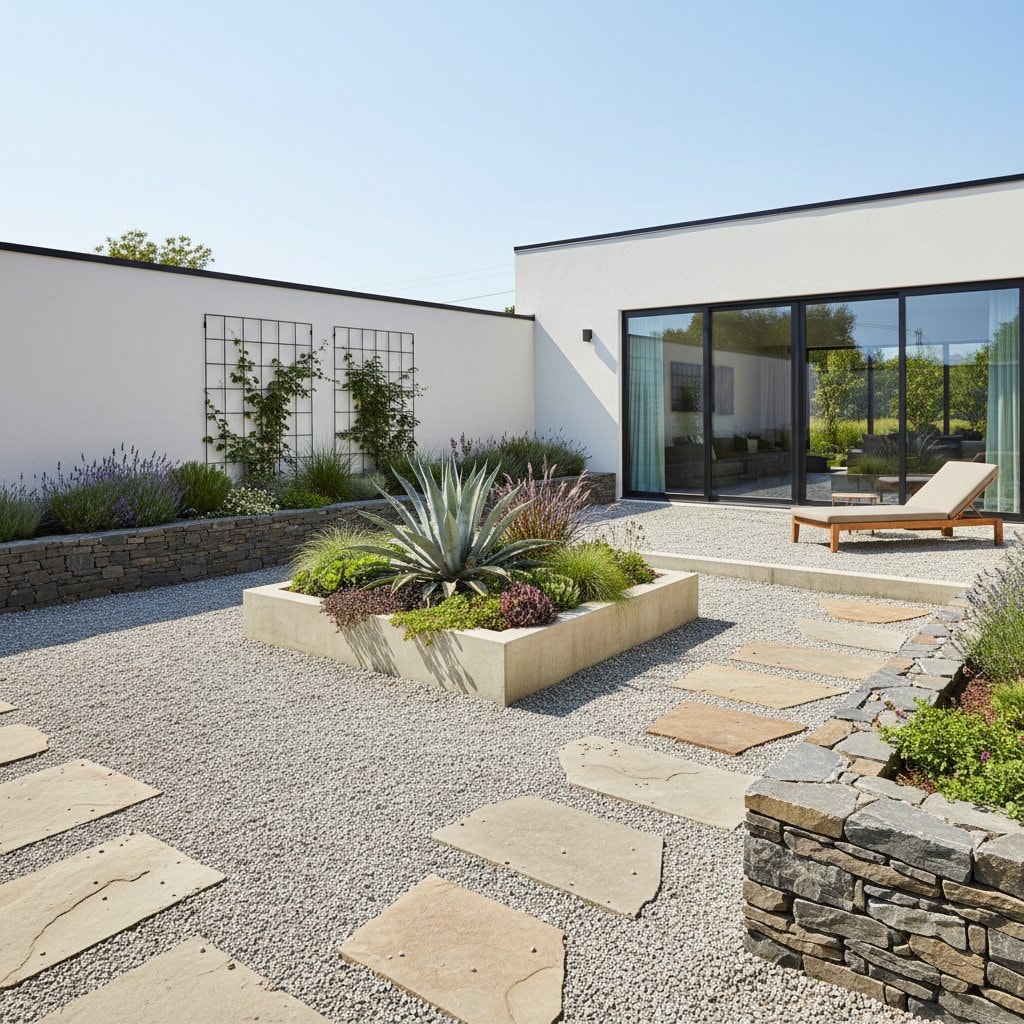
Gravel gardens excel when vegetation tempers the stone's solidity. Arid-adapted varieties flourish here, as gravel conserves heat and facilitates drainage. Consider lavender for fragrant purple blooms, thyme for evergreen mats, sedum for succulent resilience, and fescue grasses for swaying accents. These elements interrupt gravel expanses, fostering visual intrigue and fluidity.
Arrange flora in informal groupings for authenticity or align them precisely along routes. Ground-hugging creepers weave among boulders, while upright perennials provide elevation. Aim for equilibrium where stone and growth complement each other. As specimens establish and proliferate, the composition acquires an innate, timeless presence.
Budget-Friendly Benefits
Financial constraints frequently guide landscape decisions, and gravel presents compelling efficiencies. Its installation involves basic excavation and spreading, minimizing labor fees. Sourcing regional aggregates cuts delivery charges, and availability spans garden centers nationwide. Small-scale endeavors require no advanced equipment or expert teams.
For fiscal prudence, gravel serves as an accessible foundation. Initiate with a modest walkway or lounge spot, then scale up progressively. This phased methodology permits trial without full-scale obligation, enabling budget allocation across seasons.
Creating Structure and Definition
Effective gravel gardens rely on defined perimeters to preserve integrity. Uncontained gravel migrates into adjacent beds or turf, diluting intent. Install metal edging, reclaimed bricks, or fieldstone borders to secure the material and sharpen contours. Such delineations direct sightlines, highlighting circulation and focal points.
Repetition reinforces cohesion. Mirror gravel tones or grains in ancillary features for unity. For instance, light quartz gravel adjacent to a terrace could recur in a connecting trail to a secluded seat. These echoes cultivate serene continuity across the property.
Caring for a Gravel Garden
Gravel upkeep proves undemanding yet consistent. Rake surfaces quarterly to redistribute and avert settling. Initial weed incursions respond to underlayment fabrics or deep gravel bases that block germination. Mature plantings provide canopy to deter intruders.
Erosion from use or weather may thin coverage; inspect annually and replenish depleted zones with matching material. This ritual fosters mindfulness, integrating routine stewardship into daily life.
Living with Your Design
Gravel gardens captivate through their organic progression. Moisture and illumination alter appearances subtly, while usage polishes paths to subtle sheen. Spontaneous plant dispersal adds serendipity. These nuances impart authenticity and longevity.
This mutability aligns with practical and artistic needs. Alterations demand minimal resources; integrate elements like fire features or fountains by excavating and refilling. The landscape accommodates life's shifts, evolving alongside preferences.
Implementing Your Gravel Garden
Launch with a delimited zone, such as a 10-foot path or 100-square-foot enclosure. Assess existing hues and architecture to select compatible gravel; procure samples for on-site evaluation. Incorporate three to five resilient plants, monitor interactions, and refine iteratively.
Build expertise by incorporating varied textures and forms. Gravel's forgiving nature encourages deliberate growth, yielding enduring satisfaction.