Embrace Controlled Chaos for a Natural Low-Maintenance Yard
There is a quiet beauty in a landscape that feels alive. Plants mingle freely and textures shift with the light. Over the years the most inviting yards are often those that do not look too polished. They carry a sense of ease as if nature had a hand in their design.
This is the heart of what many gardeners now call controlled chaos. It welcomes wildness but with enough thought to keep it balanced and manageable. For homeowners seeking a low-maintenance yard that feels natural yet intentional this approach can be both freeing and deeply rewarding.
What Controlled Chaos Really Means
Controlled chaos is not about letting your yard run wild. It is about creating a design that celebrates natural growth patterns while keeping maintenance demands low. Think of it as guiding nature rather than fighting it. You establish a framework, choose resilient plants, and then allow them to fill in the spaces in their own way.
This approach also invites a shift in mindset. Instead of aiming for perfection you begin to value the spontaneous beauty that arises from diversity and movement. A self-seeded daisy between stones or a patch of moss by the walkway becomes part of the story rather than an imperfection to be corrected.
The result is a landscape that feels alive and self-sustaining. It draws birds, butterflies, and beneficial insects while reducing the need for constant pruning or fertilizing.
Finding the Balance Between Wild and Tidy
The key to controlled chaos lies in balance. Too much structure and the garden can feel stiff. Too little and it may appear neglected. Striking the right middle ground gives you a yard that looks intentional but relaxed.
A few simple principles help create that balance.
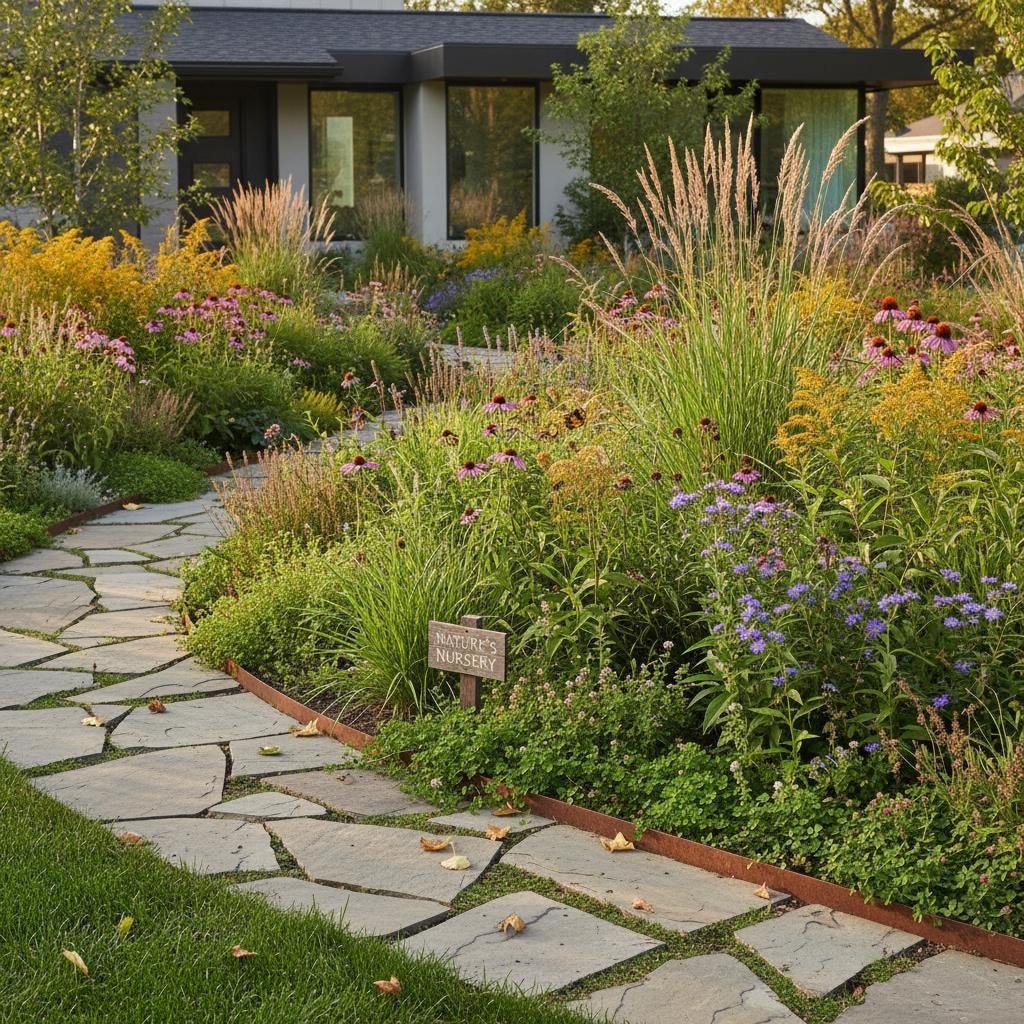
- Define edges clearly. Crisp borders around planting beds, paths, or patios give the eye a place to rest. They act like picture frames allowing the wilder plantings within to feel contained.
- Use repetition. Repeating certain plants or materials throughout the space ties everything together. It brings a sense of rhythm even when the planting itself feels loose and varied.
- Layer thoughtfully. Taller plants at the back, medium in the middle, groundcovers at the front. This structure helps keep the garden readable while maintaining a natural flow.
- Leave breathing space. Allow open areas of mulch, gravel, or lawn to contrast with dense plantings. These pauses make the lively areas more striking.
When these elements work together even the most free-spirited garden feels cohesive and welcoming.
Choosing Plants that Thrive with Minimal Care
A controlled chaos landscape depends on the right plant palette. The goal is to select species that can fend for themselves once established. Native plants are often the best choice since they are already adapted to the local conditions.
Look for plants that share similar needs in terms of sunlight and soil type. Then mix them to create texture and movement. Grouping by growing habits rather than color alone tends to produce a more natural result.
Some reliable candidates include native grasses like little bluestem or switchgrass that sway gracefully and provide structure across seasons. Perennials such as coneflowers, bee balm, and black-eyed Susans attract pollinators and spread gently over time. Groundcovers like creeping thyme or sedum fill gaps and help suppress weeds. Shrubs that offer form and year-round interest include ninebark, serviceberry, or native viburnum.
These plants create a living system that supports itself. Once established they handle dry spells, resist pests, and compete effectively with weeds.
Designing with Movement and Texture
A naturalistic yard depends less on bright flower color and more on texture, structure, and motion. The subtle rustle of grasses, the shimmer of sunlight on leaves, or the contrast between rough bark and smooth stone gives depth to the space.
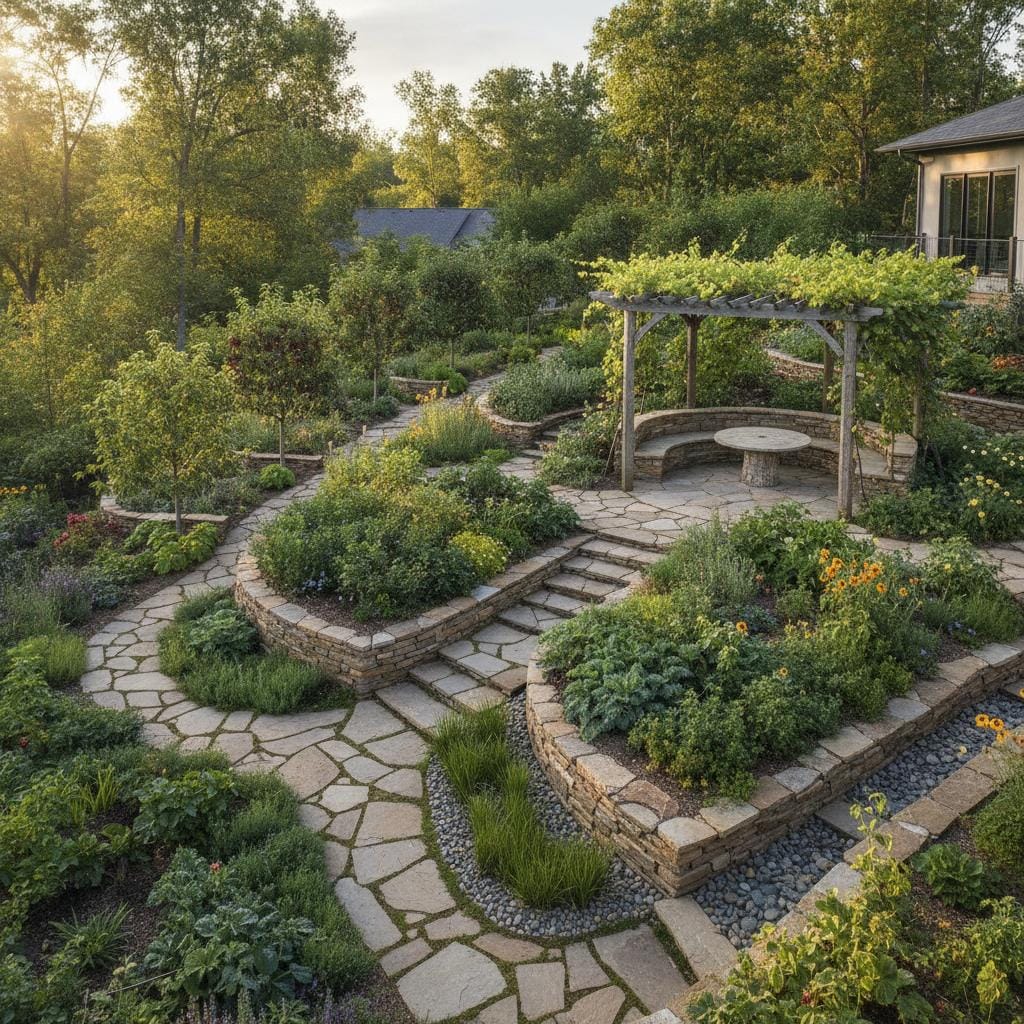
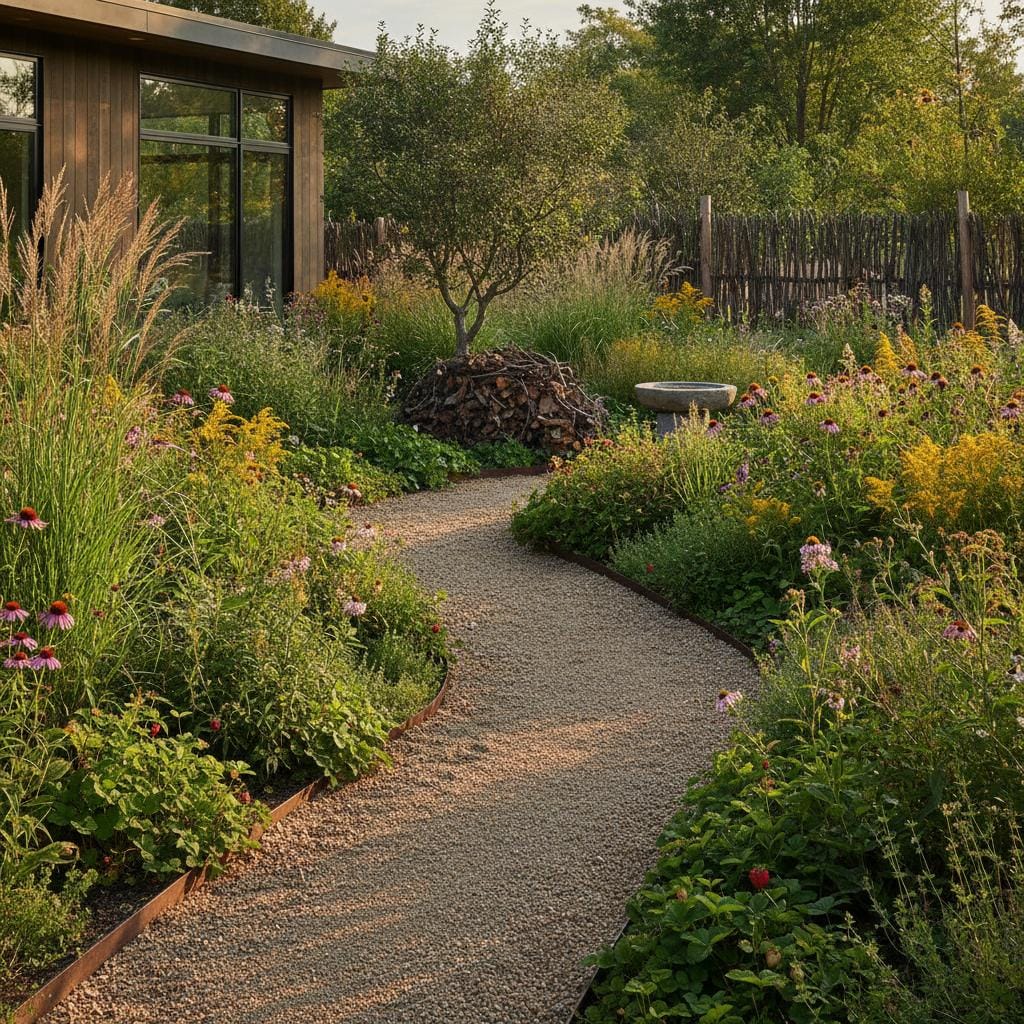
Instead of planting in rigid rows try soft drifts or irregular clusters. Let plants mingle slightly so their edges blur. Curved paths or meandering borders enhance this feeling of discovery. Using natural materials strengthens the connection to the landscape. Gravel paths, weathered wood, and local stone feel grounded and timeless.
Letting Nature Do Some of the Work
One of the most appealing aspects of controlled chaos is how it shifts the workload from the gardener to nature itself. Instead of fighting weeds you use dense planting to crowd them out. Mulching with shredded leaves or bark helps retain moisture and discourage unwanted growth. Over time this organic layer breaks down and feeds the soil naturally.
Even maintenance becomes gentler. Cutting back perennials in early spring rather than late fall leaves seed heads for birds and adds winter texture. Allowing leaves to collect under shrubs provides habitat for insects and enriches the soil.
Accepting Imperfection as Beauty
The hardest part for many homeowners is learning to accept imperfection. A naturalistic yard will never have the crisp symmetry of a formal garden and that is part of its charm. There will be moments when a plant sprawls further than expected or a volunteer seedling appears in a surprising spot. These details add character and tell the story of a living landscape evolving in its own rhythm.
Over time you start to see these changes as part of the design rather than flaws. The irregular shapes, the soft transitions, and the seasonal ebb and flow create a setting that feels honest and grounded.
Starting Small and Growing Naturally
If the idea of controlled chaos feels daunting begin with a small area. A border along a fence, a corner of the yard, or even a single bed near your patio can serve as a testing ground. Observe how plants interact, how they spread, and how the space feels as it matures. Starting small also helps you build confidence.
You learn which plants truly thrive with minimal care and which may need more attention than expected. Patience is essential. A naturalistic yard does not reveal its full character right away. It develops layers and connections as plants settle in and find their balance.
Observing Your Evolving Landscape
Once your controlled chaos garden is established the best thing you can do is step back and enjoy it. Walk through it often. Notice how the light changes, how new plants appear, and how wildlife responds. If a section becomes too crowded thin it gently rather than overhauling it. If an area feels sparse add a few more plants of the same kind to keep the visual rhythm.
The reward is a landscape that feels deeply connected to its place. It hums with life yet demands little from you. It offers color, movement, and texture without the endless cycle of mowing, pruning, and watering that many traditional yards require.