Edible Hedges Turn Property Lines Into Food Sources
Every garden has its quiet edges. These are the spaces where one yard meets another or where a path gives way to open ground. Over time many homeowners have come to see their boundaries not as barriers but as opportunities. Planting edible hedges offers one of the most rewarding ways to use these borders. The hedges provide privacy, structure, and food in a single thriving line of green.
The Beauty of Useful Boundaries
A hedge has always been more than a fence. It defines space with something alive that breathes and changes with the seasons. Traditional hedges are chosen for density and shape. An edible hedge adds another layer of purpose by feeding pollinators, people, and wildlife while still delivering the privacy you want.
The idea appeals to gardeners who like their plantings to work hard. Each shrub in an edible hedge earns its place by offering both beauty and yield. A row of currants or blueberries can be clipped into a neat shape while producing a crop that rewards regular care. The result is a living wall that feels generous rather than defensive.
Choosing the Right Plants
When planning an edible hedge, begin with the same questions you would ask of any landscape project. What kind of soil is present? How much sunlight reaches the area? How tall should the hedge grow? These answers guide plant choices and help create a hedge that thrives for years.
Reliable options include the following:
- Blueberries for adaptability and striking fall color
- Raspberries for quick growth and high yields
- Gooseberries or currants for cooler, shadier spaces
- Serviceberries for early blossoms and sweet summer fruit
- Hazelnuts for a taller, more structural hedge
- Rugosa roses for edible hips and fragrant blooms
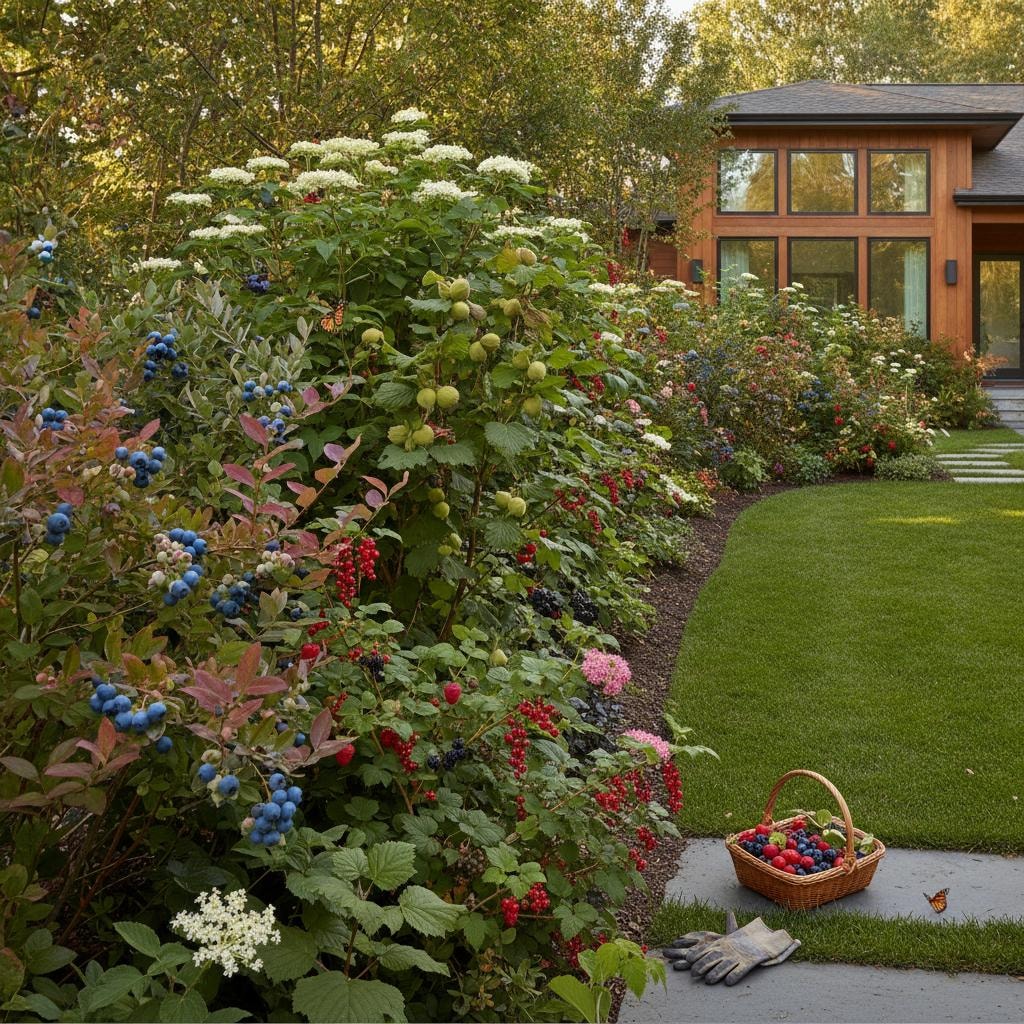
Mixing species brings visual interest and a staggered harvest. A layered planting of blueberry, serviceberry, and hazelnut creates a rhythm of fruiting over several months while offering texture and height variation that feels natural.
Balancing Practicality and Aesthetics
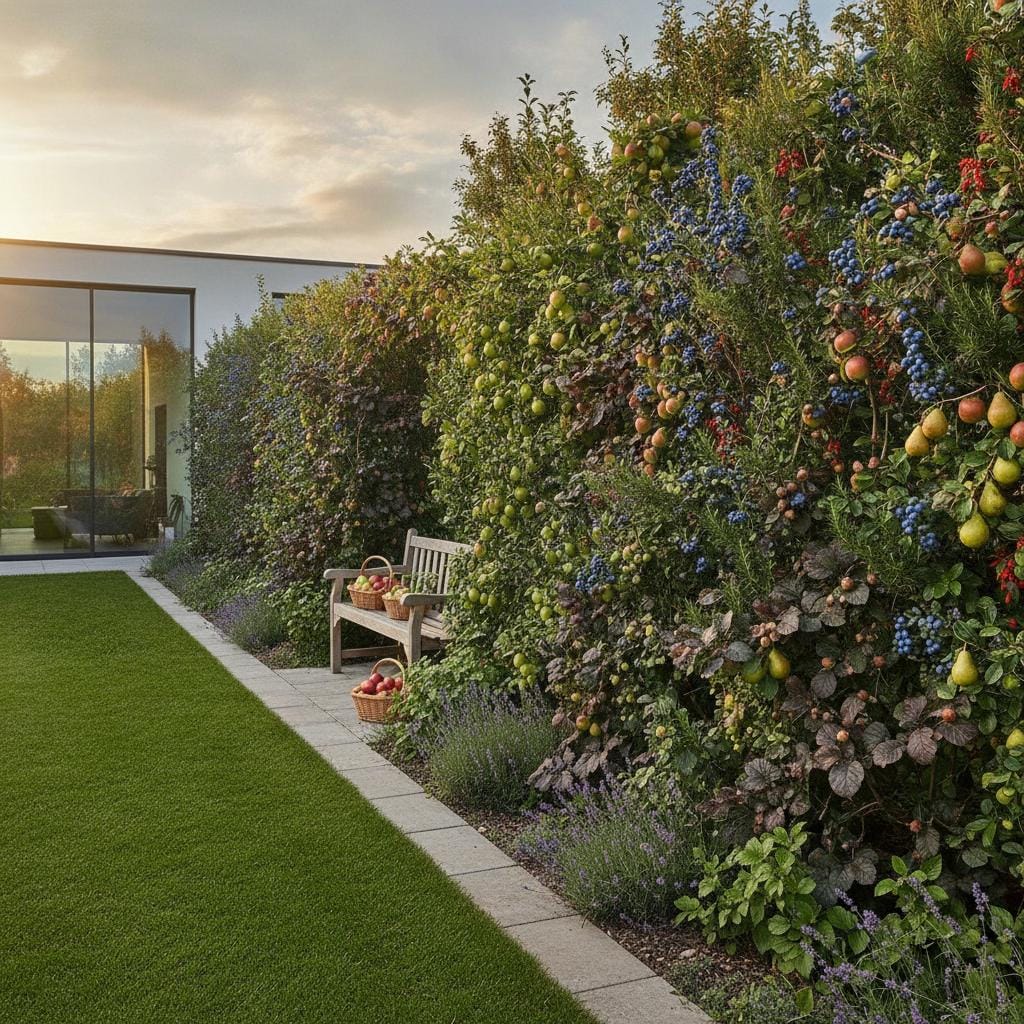
The best edible hedges look intentional and match the character of the home and surrounding landscape. A rustic property suits a loose, mixed hedge with brambles and flowering shrubs. A modern garden benefits from a single species clipped into clean lines.
If privacy is a main goal, choose plants that form dense growth or can be pruned to fill gaps. For wind protection, a taller hedge with sturdy stems such as hazelnut or elder softens breezes without feeling heavy. In smaller yards, dwarf fruiting shrubs keep the hedge at a comfortable height while remaining productive.
Pruning forms part of the rhythm of hedge care. With edible species, timing matters because fruiting wood must be preserved while the shape stays tidy. Light trimming after harvest often works well and allows plants to regrow healthy shoots for the next season.
The Functional Beauty of Diversity
A single-species hedge can be striking, yet mixing varieties adds resilience. Different root systems draw nutrients from varying soil depths, which reduces competition and improves overall health. Diversity also helps manage pests. When the hedge combines fruiting shrubs, herbs, and even perennial vegetables, it attracts beneficial insects that keep balance in the ecosystem.
A hedge where thornless blackberries wind through sage or lavender with low-growing strawberries filling the base brings fragrance, color, and usefulness. Pollinators visit the blossoms, birds find shelter, and the gardener gains a steady supply of fruit through much of the warm season.
Planning for Harvest and Maintenance
Edible hedges invite closer engagement with the landscape. The gardener checks ripening fruit, notes which plants handle heat or shade better, and adjusts as experience grows. This connection makes gardening more personal and rewarding.
When planning for harvest, consider access. Leave enough space between the hedge and walkways or fences so both sides remain reachable. Position thorny species such as raspberries or roses where picking stays easy without scratching arms or clothing. Mulching beneath the hedge retains moisture and keeps weeds under control.
Feeding the hedge with compost or organic fertilizer once or twice a year keeps growth strong. Because many fruiting shrubs have shallow roots, regular watering during dry spells ensures consistent yields. Over time the hedge becomes less demanding and settles into its environment with steady productivity.
Environmental and Emotional Rewards
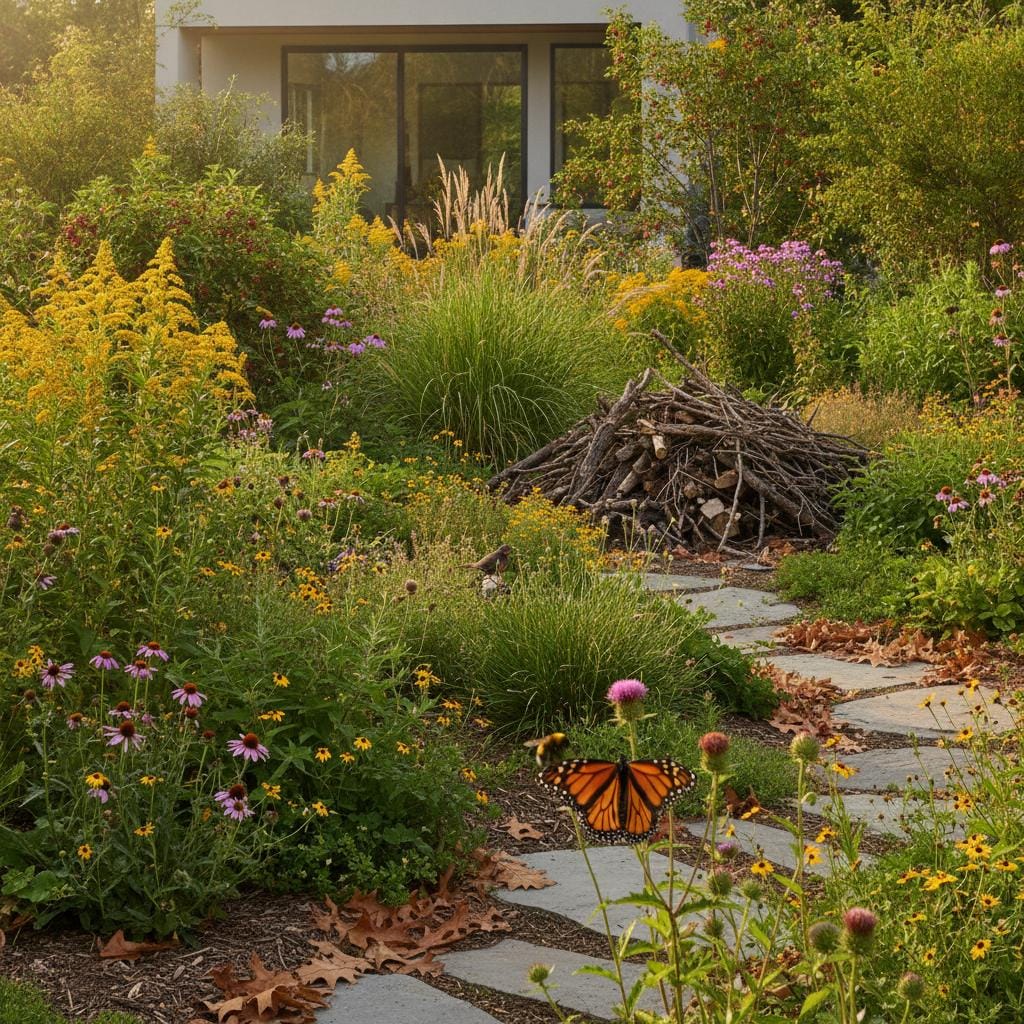
Edible hedges offer more than privacy and produce. They add texture to the landscape and promote biodiversity. Birds nest in the branches, bees visit the flowers, and the soil beneath stays cool and rich with organic matter. In settings where paved surfaces often dominate, this kind of living boundary restores a sense of natural rhythm.
There is also quiet satisfaction in harvesting from the edge of your own property. Picking berries or nuts from a hedge that marks the boundary connects the gardener to the land in a small but meaningful way.
Living with Your Design
Once established, an edible hedge becomes part of daily life. It greets you each time you step outside and changes with the light and seasons. You might notice the first flowers of spring, the hum of bees in midsummer, or the bare structure of twigs in quieter months. Over time the hedge feels less like a project and more like a companion to the home.
If you are new to the idea, start small. Plant a single stretch along one boundary, perhaps a mix of currants and serviceberries. Watch how it grows and how it fits the space. As confidence grows, extend the planting or experiment with new varieties. Repetition is key to cohesion. Echo the same plants in other parts of the yard to tie the design together.
Edible hedges show that boundaries need not divide. They can connect, nourish, and soften the edges of daily life.