The Resurgence of Sunken Patios in Contemporary Landscapes
Design trends often cycle back with renewed relevance. Sunken patios exemplify this pattern, evolving from historical roots into a modern solution for intimate outdoor areas. Homeowners frequently express delight at the immediate sense of comfort these spaces provide, fostering deeper connections with nature and one another.
The appeal lies in their ability to create a sheltered environment that encourages relaxation. Unlike expansive flat patios, sunken designs draw the eye downward, adding layers to otherwise uniform yards. This subtle elevation change promotes a feeling of seclusion, ideal for small properties seeking greater perceived space.
Understanding the Core Concept
A sunken patio consists of a seating or gathering area positioned below ground level, typically one to three feet deep. This setup mirrors indoor conversation pits but adapts to outdoor settings, emphasizing natural integration. The surrounding earth acts as a gentle barrier, enhancing privacy without the need for tall fences.
In small yards, this design counters monotony by introducing vertical contrast. While elevated structures like decks extend outward, sunken patios invite inward focus, making compact areas feel more expansive. Homeowners benefit from a space that supports quiet reflection or lively discussions, depending on the occasion.
Essential Elements of Construction
Building a sunken patio requires precision to ensure longevity and usability. Begin with site assessment to determine soil type and slope, which influence excavation depth. Professional input helps avoid common pitfalls, such as uneven settling.
Key components include:
- Excavation and support: Dig to the planned depth, then install retaining walls using durable materials like stacked stone or poured concrete for stability.
- Drainage systems: Incorporate a base layer of gravel topped with permeable pavers to channel water away; install French drains if heavy rainfall is common.
- Entry points: Add wide steps with non-slip surfaces or ramped edges for easy access, ensuring compliance with local building codes.
These steps create a seamless transition from yard to patio, resulting in a feature that enhances rather than disrupts the landscape.
Psychological Benefits of Enclosed Spaces
Humans respond positively to semi-enclosed environments, which evoke safety and focus. A sunken patio provides this through natural contours, shielding against breezes while allowing sky views. The result is a versatile area suitable for year-round use in moderate climates.
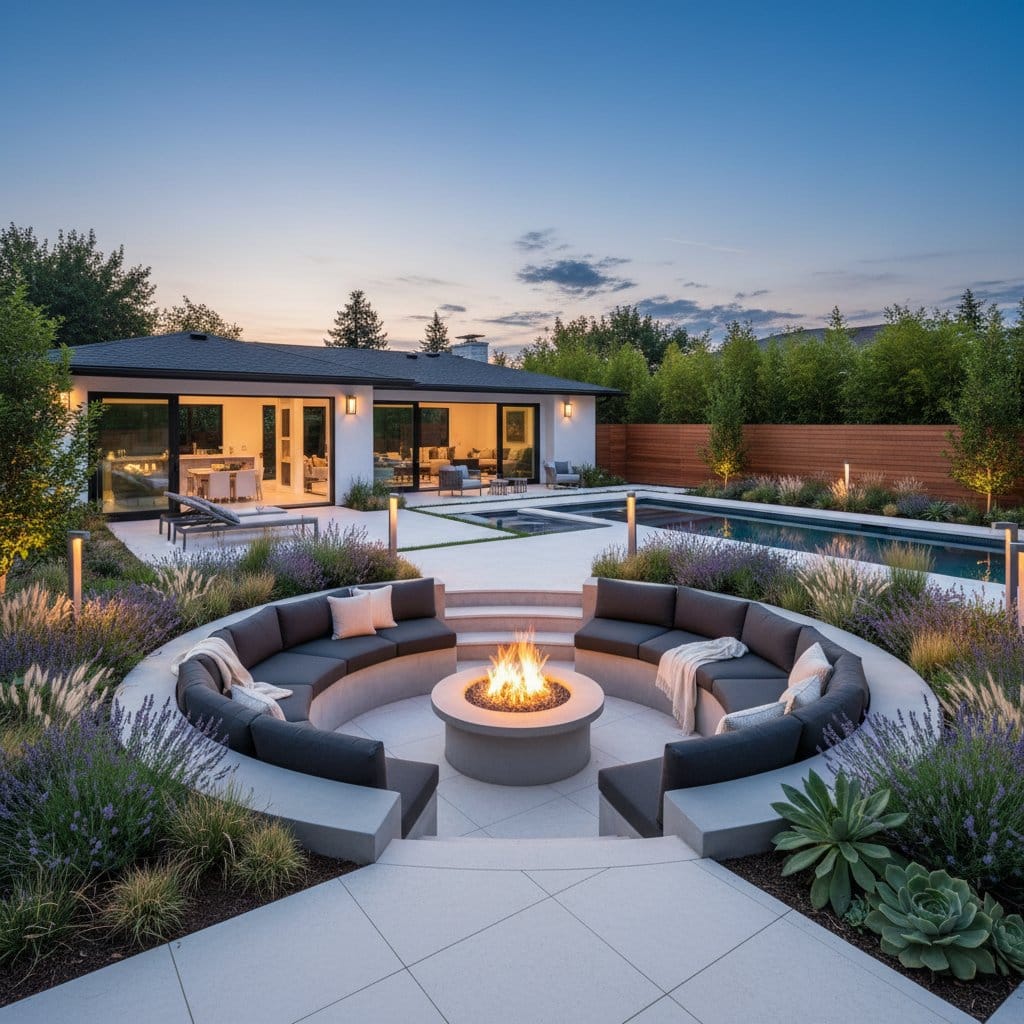
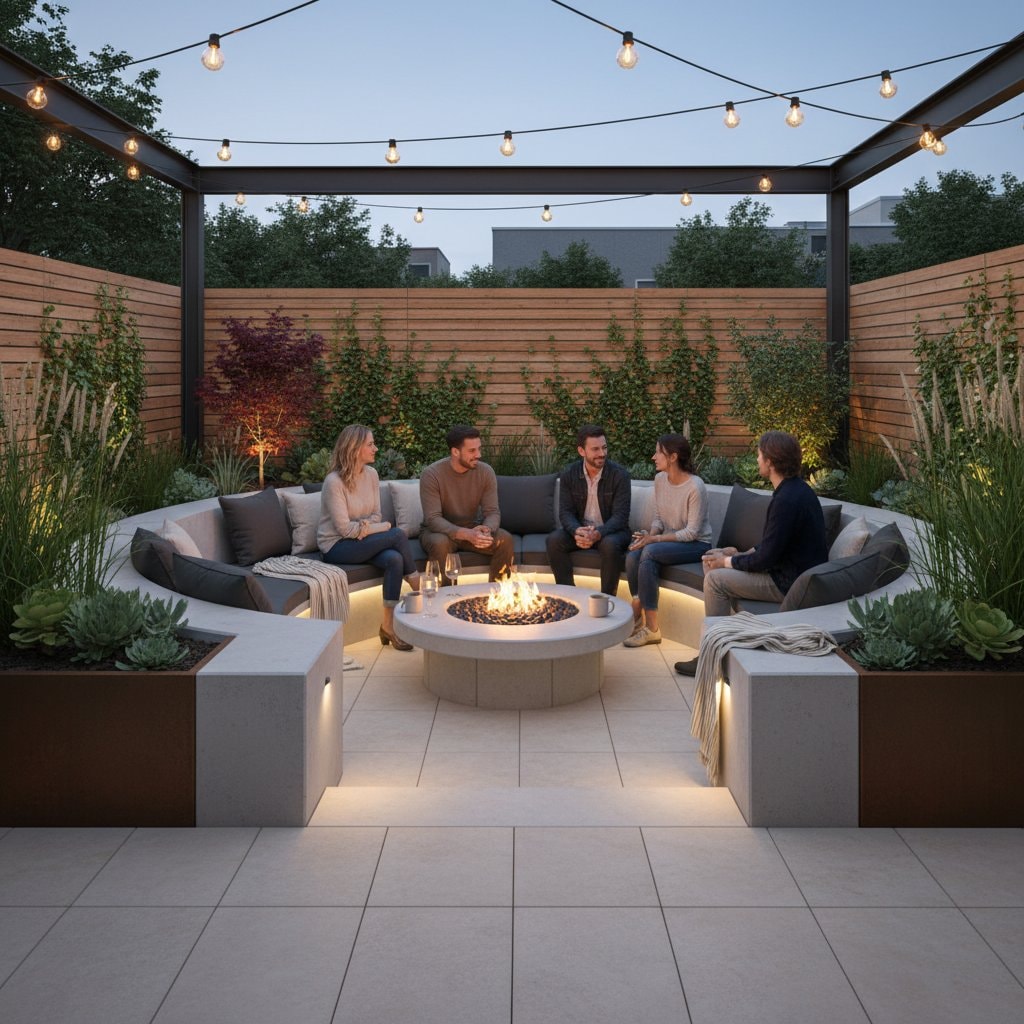
During evenings, the design amplifies coziness around a central fire feature. Conversations flow more naturally in this contained setting, as external distractions fade. This emotional pull transforms routine outdoor time into memorable experiences.
Selecting Materials for Aesthetic Harmony
Material selection shapes the patio's character and durability. Opt for weather-resistant options that complement the home's architecture.
- Natural stone: Choose flagstone or fieldstone for a rustic vibe; it weathers gracefully and pairs well with native plants.
- Concrete or pavers: Select polished concrete slabs for a sleek finish, ideal for urban settings with clean lines.
- Brick patterns: Use modular bricks in herringbone layouts to add texture and warmth, echoing traditional garden paths.
To achieve cohesion, match wall materials to existing yard elements, such as siding or fencing. Test samples in natural light to confirm color compatibility before final installation.
Incorporating Fire Features and Illumination
A fire pit serves as the heart of many sunken patios, its flames contained by the lowered edges for added safety and drama. Position it centrally to warm the space evenly, selecting gas or wood-burning models based on local regulations.
Lighting enhances usability after dark. Install low-voltage path lights along steps and wall-mounted fixtures to accentuate textures without overwhelming the ambiance. Layer sources—ambient uplights and task-oriented spots—to guide movement while preserving the intimate mood.
Enhancing with Greenery and Furnishings
Surrounding plants define the patio's boundaries and soften hardscapes. Plant drought-tolerant perennials along edges to create a living frame, or use evergreen shrubs for year-round structure.
Within the space, limit vegetation to potted accents that add color without overcrowding. Select weatherproof furniture like teak benches or modular seating to promote comfort. Cushions in neutral fabrics withstand exposure while inviting prolonged stays.
Exploring Layout Options
Sunken patios adapt to diverse needs beyond casual seating. Design an oval-shaped dining zone with integrated benches for al fresco meals, accommodating four to six people comfortably.
For contemplative areas, incorporate built-in ledges for books or cushions, screened by bamboo for subtle privacy. In sloped terrains, terrace the design to level the site, creating distinct zones for play or cultivation. These variations turn challenges into customized solutions.
Addressing Installation Hurdles
Potential issues demand proactive measures for a successful outcome.
- Water management: Schedule annual inspections of drainage channels; clear debris promptly to prevent pooling.
- Accessibility features: Include handrails on steps and level flooring to accommodate varying mobility levels.
- Neighbor considerations: Assess sightlines from adjacent properties and plant fast-growing vines for natural screening.
- Budget planning: Allocate funds for permits and labor; phase the project, starting with core excavation to evaluate fit.
Consulting experts early minimizes surprises and ensures code adherence.
Shifting Viewpoints for Design Impact
The patio's dual perspectives add intrigue: from above, it appears as an artful depression enriching the yard's texture; from below, it offers sanctuary. This interplay fosters a sense of discovery, encouraging exploration.
Socially, the circular arrangement promotes eye contact and inclusivity. Guests orient toward the group rather than distant views, strengthening bonds in a compact footprint.
Embracing Long-Term Integration
A completed sunken patio evolves with the seasons, becoming a yard anchor. Early mornings suit solitary routines, with sunlight filtering softly over edges. Nights host gatherings, illuminated by stars and subtle lights.
Over years, patina develops on surfaces, deepening character. The feature influences surrounding designs, prompting additions like winding paths or complementary plantings. Ultimately, it elevates daily life, maximizing small spaces for enduring enjoyment.