Dark Garden Rooms: Creating Outdoor Spaces That Feel Both Calm and Lively
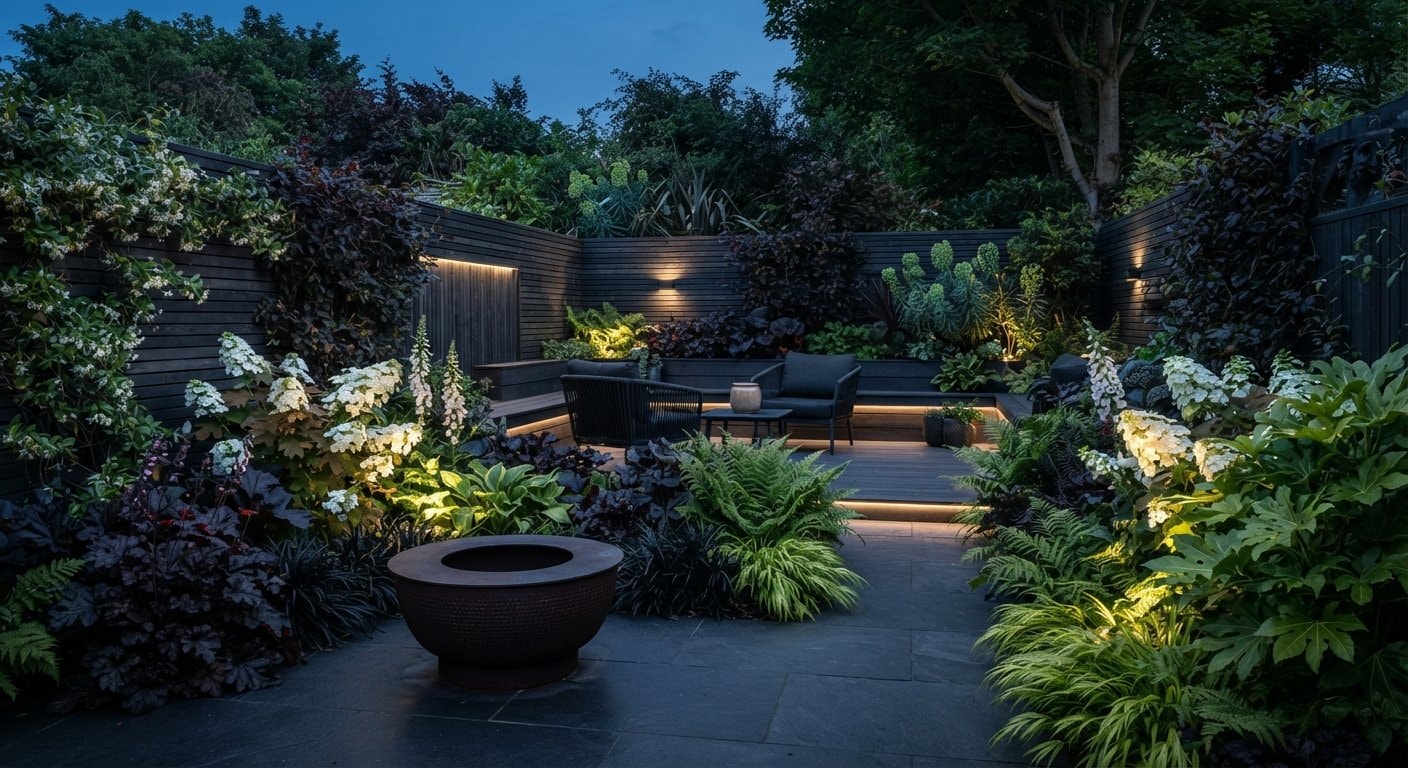
Some gardens feel restful because they leave room for shadow. A deep green hedge, a dark fence, or a shaded corner can make nearby flowers and foliage seem brighter. This quiet contrast forms the heart of a dark garden room. Rather than making an entire yard feel gloomy, the design uses rich colors, layered plants, and considered lighting to create an inviting place to pause.
A garden room is an outdoor area with a distinct mood and purpose. It might be a small patio for reading, a sheltered dining spot, or a planting bed that feels like a private retreat. Dark garden design builds that sense of enclosure with charcoal, black, deep brown, and saturated green. The result can feel polished or natural, depending on the materials and plants you choose.
Begin with Intention Rather Than Color
It is tempting to begin with a black fence or a dramatic planter. Before making that commitment, consider how you want the space to feel. A formal garden might use crisp edges, dark metal, and repeated shapes. A more relaxed setting might pair weathered timber with loose grasses, ferns, and leafy ground covers.
Think about the light as well. A shaded corner already has a quiet quality, while a sunny patio may benefit from dark surfaces that give its edges definition. Observe the area at different points in the day. Notice where the sun lands, where water collects, and which views you want to soften.
A simple plan can help:
- Choose one small area to develop first.
- Pick a main dark tone, such as charcoal or espresso brown.
- Add a few lighter or brighter plants to keep the scene legible.
- Repeat a material or plant in several places for a connected look.
Starting small lets you live with the design before extending it across the yard. A dark planter beside a bench can tell you more than a stack of samples ever will.
Build Contrast with Plants
Black plants and deep-toned foliage bring depth, but a garden made entirely of dark leaves can flatten into a single mass. Contrast gives each plant room to be seen. Look for foliage in silver, soft green, cream, or blue-green, and mix different leaf shapes. Broad leaves beside fine grasses create a gentle rhythm, while pale flowers stand out against a dark backdrop.
Plant choices depend on your climate, soil, and available light. Heuchera varieties with burgundy or near-black leaves can add low color, while dark-leaved elderberry offers a larger shrub form where growing conditions suit it. Purple basil can bring a rich tone to a sunny container. For shade, ferns and hostas provide varied texture, with lighter cultivars helping the bed stay open.
Rather than collecting many unrelated plants, repeat a small group. Repetition makes a planting feel deliberate, even when the forms are informal. Try three plants with dark foliage, then echo one of them near the path or seating area. The eye recognizes the connection, and the garden begins to feel like a room rather than a collection of separate purchases.
Choose Materials That Support the Mood
Dark materials can frame a garden without demanding attention. Black-painted wood, charcoal pavers, dark gravel, and aged metal each create a different character. Smooth surfaces lean modern and composed. Rough stone and timber feel more rustic, especially when softened by planting.
Use dark hardscaping with care. A large paved surface can absorb heat and make a small area feel heavy. A narrow border, a low wall, or a few dark stepping stones may provide enough structure. If you are considering a painted fence, test a sample on a less visible section first. Colors shift outdoors, and the surrounding foliage changes how they read.
Texture matters as much as color. Matte finishes tend to recede, while glossy surfaces catch light and draw the eye. Combining a few textures can keep a restrained palette from feeling stark. For example, a charcoal planter may sit comfortably beside a rough stone path and soft ornamental grasses.
Use Light to Keep the Space Welcoming
A moody garden should still be easy to use. Low, warm lighting can trace a path, reveal the shape of a tree, or make a bench feel inviting. Avoid lighting every corner. A few carefully placed fixtures preserve shadow and help the garden retain its calm character.
Think about where people will walk and sit. Light near steps and changes in level helps prevent trips. A shielded fixture aimed toward a wall or plant can create a soft glow without shining into neighboring windows. In a small space, even one lantern or a subtle wall light may be enough.
Living with Your Design
Let the garden change through the seasons and as your preferences settle. Plants grow, surfaces weather, and a once empty corner may become the part of the yard you use most. Check that dark surfaces remain safe underfoot, trim plants that block paths, and replace any struggling specimen with one better suited to the conditions.
For a practical first step, choose a corner, add one dark feature, and pair it with contrasting foliage. Watch how the light moves across it and how it feels to sit nearby.