Edible Hardscaping: Build Food Forests That Last
Your yard may feel cluttered or disconnected from how you want to live outdoors. Perhaps you remember a garden that once fed your family, or you wish your landscape offered more than grass and decoration. An edible food forest can bring purpose back to the space, blending useful plants with sturdy paths, walls, terraces, and gathering areas.
Edible hardscaping combines permaculture, a gardening approach that works with natural systems, and durable landscape features. The result can look welcoming while producing fruit, herbs, vegetables, and shelter for beneficial wildlife. With thoughtful planning, your food forest can grow into a lasting part of your home.
Begin With a Careful Site Assessment
Walk through your property before choosing plants or materials. Notice where sunlight falls, where water collects, and which areas stay dry. Watch how people move through the yard. A beautiful planting plan will struggle if it blocks a walkway or places sun loving crops beneath dense shade.
Make a simple map that marks full sun, partial shade, and deep shade. Mark existing trees, fences, buildings, and utility lines. Note slopes, low spots, and areas prone to erosion. Record water sources and convenient access points. Identify views you want to preserve or improve.
Healthy food forest design depends on matching each plant to the conditions it can handle. This early observation also helps you protect valuable trees and avoid unnecessary excavation.
Shape the Land With Purpose
Hardscaping gives your edible landscape structure. Paths, terraces, retaining walls, steps, and seating areas can guide movement while improving soil and water management.
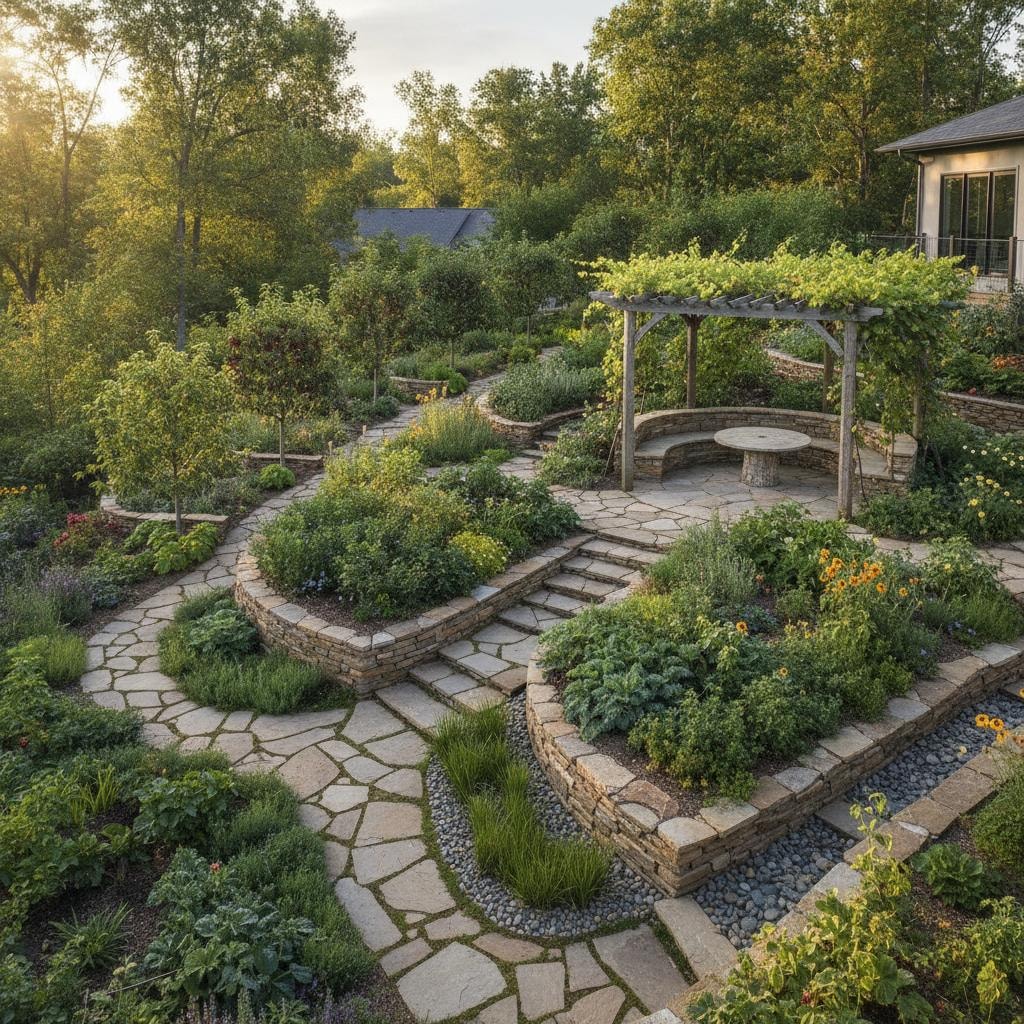
On a slope, a series of broad planting terraces can slow runoff and reduce soil loss. Low retaining walls made from stone, brick, or other suitable materials can hold planting beds in place. Paths covered with gravel, wood chips, or compacted natural material keep feet out of wet soil and make harvesting easier.
Place paths where you will naturally walk, not where a drawing says they should go. Keep enough room to carry a basket, wheelbarrow, or hose. A small sitting area near the most productive part of the garden can encourage regular care. When the garden feels easy to enter, you are more likely to notice problems early.
Build Layers for Food and Shelter
A food forest imitates the layered structure of a woodland. Each layer serves a purpose, and together they create a stable growing community.
Upper Layer
Choose fruit or nut trees that fit your space and local growing conditions. Keep mature size in mind, especially near roofs, paths, and overhead lines. Trees provide harvests, shade, leaf litter, and habitat.
Middle Layer
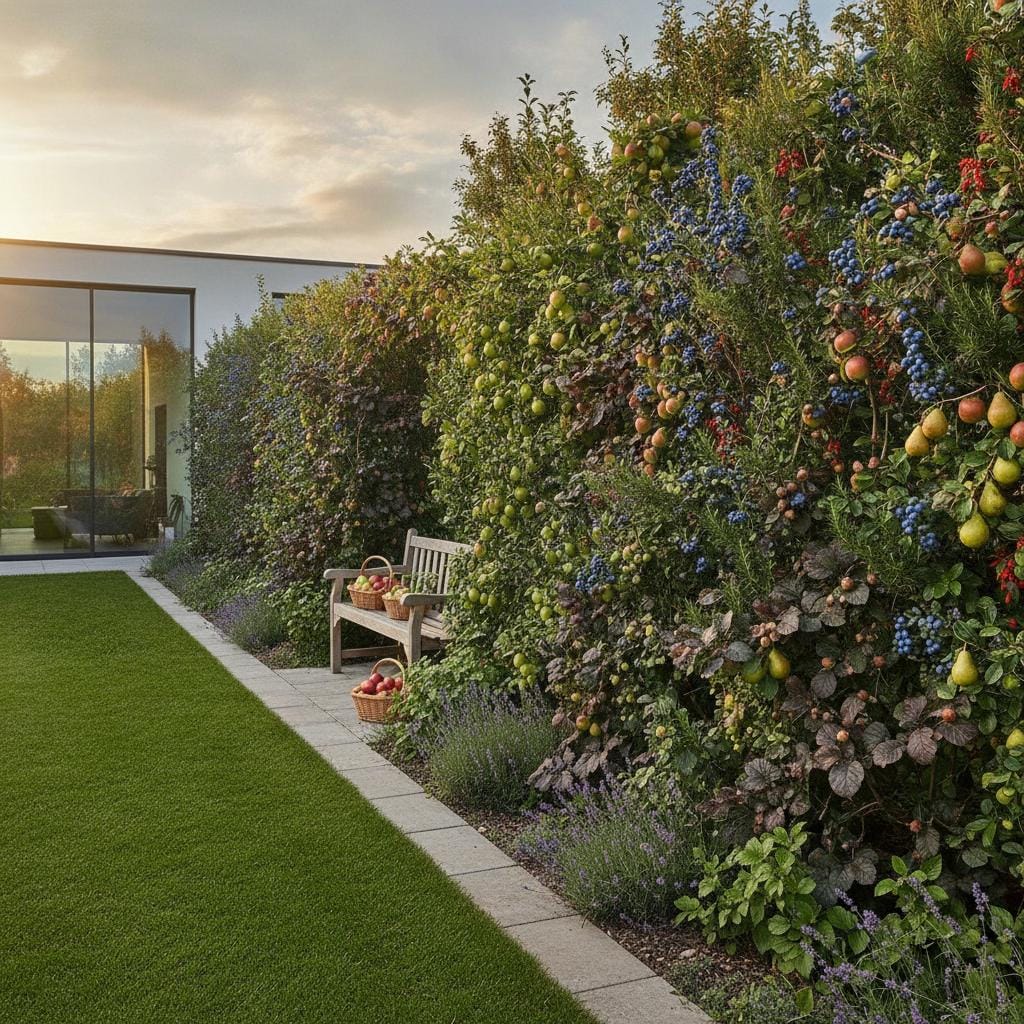
Shrubs such as currants, blueberries, or other regionally suitable plants fill space beneath taller trees. They can soften retaining walls and define the edges of paths.
Ground Layer
Low herbs, strawberries, perennial vegetables, and spreading plants protect soil from drying and erosion. Select varieties that will not overwhelm nearby crops or escape into unwanted areas.
Root and Vertical Layers
Root crops occupy space below the surface, while vines can climb trellises, fences, or sturdy arches. Vertical supports let you grow more food without expanding the garden footprint.
Choose plants with different harvest periods so the landscape offers useful produce across a broad portion of the growing season. Mix plants with varied forms and textures to keep the design attractive even when a crop is not producing.
Choose Materials That Age Well
Durable materials reduce repairs and help the landscape mature gracefully. Stone, brick, untreated wood suited to outdoor use, and well installed gravel can all support an edible garden. Select materials that fit your home and local character.
Avoid placing treated or questionable materials where they will touch edible soil. Use clean soil and compost in planting areas, especially near walls or reclaimed materials. Leave small gaps in some stonework when appropriate, since these spaces can offer shelter for beneficial insects and small wildlife.
Design for water from the start. Swales, shallow channels, rain gardens, and permeable paths allow water to soak into the ground rather than rush away. A simple rain barrel can provide supplemental water for containers and young plants, subject to local regulations.
Plant for Resilience
A lasting food forest needs diversity. Avoid relying on one tree, one crop, or one plant family. If a pest or disease affects one species, a mixed planting gives the landscape a better chance to keep producing.
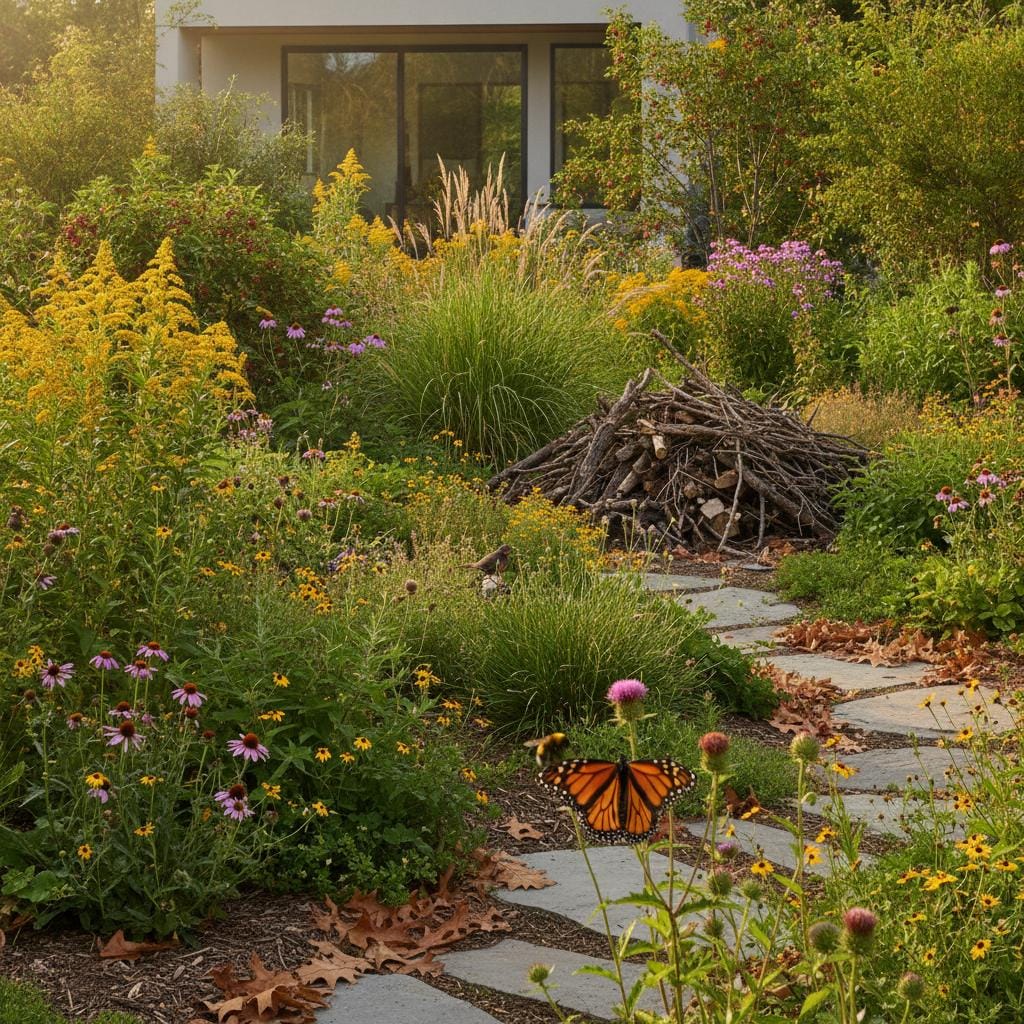
Include flowering herbs and native plants near edible crops. Their blooms can attract pollinators and predatory insects. Mulch bare soil with leaves, compost, or suitable organic material, keeping it away from direct contact with trunks and stems. Mulch helps conserve moisture, soften temperature changes, and feed soil life as it breaks down.
Start with a manageable area. A smaller food forest that receives steady care will usually thrive better than an ambitious installation that becomes difficult to maintain.
Keep the System Healthy
Walk through the garden regularly and look closely. Check for blocked drains, leaning walls, compacted paths, damaged supports, and signs of plant stress.
Let some fallen leaves remain where they are useful, while keeping paths and drainage points clear. Harvest often, since gathering fruit, herbs, and vegetables encourages fresh growth and helps you notice changing conditions.
Watching Your Garden Thrive
Your food forest will change as trees mature, roots spread, and hardscape settles into its surroundings. Treat the design as a living plan.
Start with one path, one terrace, or one productive planting bed. With steady attention, your outdoor space can become easier to use, richer in life, and generous with food.