The Appeal of Gravel Gardens in Modern Low-Maintenance Design
Traditional gardens often evoke images of rich soil and abundant blooms, yet they require significant effort through watering, pruning, and weeding. Homeowners increasingly seek alternatives that deliver beauty with far less labor. Gravel gardens emerge as an ideal choice, supporting drought-tolerant plants and natural textures while demanding minimal ongoing care.
These gardens integrate stone and vegetation seamlessly, fostering a modern aesthetic that avoids the rigidity of synthetic surfaces. Pollinators flock to the resilient flora, and the overall design promotes a sense of calm. As interest in sustainable, time-saving landscapes grows, gravel gardens stand out for their ability to maintain vibrancy with little intervention.
Achieving Vibrancy Through Strategic Plant Selection
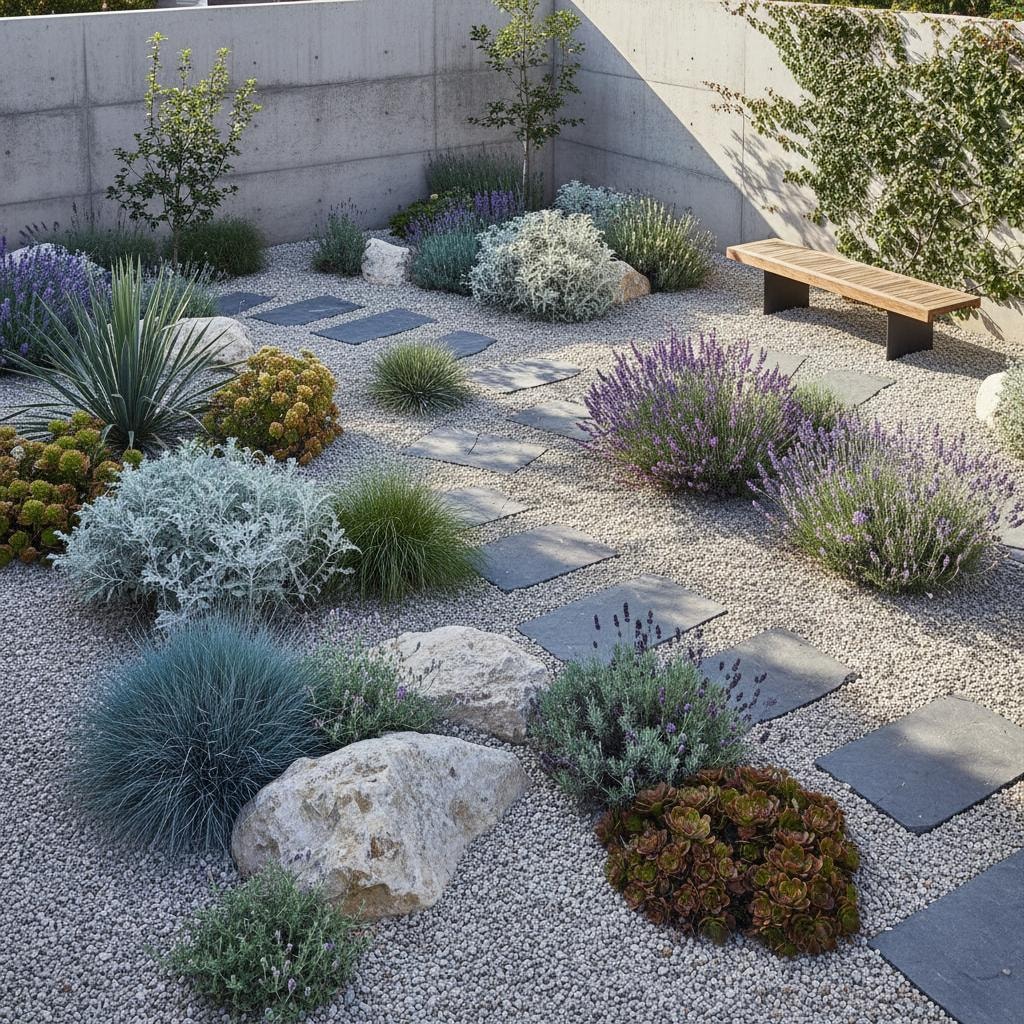
Low-maintenance designs need not sacrifice life or color. Gravel gardens achieve this balance by prioritizing plants adapted to arid conditions, which flourish without frequent feeding or irrigation. The gravel backdrop enhances their forms, creating a cohesive and enduring display.
Select species that align with your climate and site. Reliable choices include:
- Lavender (Lavandula spp.) and rosemary (Rosmarinus officinalis), offering evergreen structure, aromatic foliage, and purple blooms that persist through dry spells.
- Sedum (Sedum spp.) and sempervivum (Sempervivum spp.), low-growing succulents that form mats over gravel, requiring no division or staking.
- Ornamental grasses such as blue fescue (Festuca glauca) or Mexican feather grass (Nassella tenuissima), providing movement and silver-blue tones with annual trimming at most.
- Echinacea (Echinacea purpurea) and yarrow (Achillea millefolium), hardy perennials that deliver summer color, seed heads for winter interest, and nectar for bees and butterflies.
- Additional options like agave (Agave spp.) or Russian sage (Perovskia atriplicifolia), which add architectural height and silvery accents without supplemental water.
These plants peak in performance under neglect, their muted hues harmonizing with gravel for a timeless effect. Position taller varieties at the back and groundcovers in front to build depth.
Key Practical Benefits for Homeowners
Gravel gardens provide tangible advantages that extend beyond aesthetics, making them a wise investment for busy lifestyles.
-
Water Conservation
Established gravel gardens rely on natural rainfall, as the stone layer retains moisture and selected plants have deep roots. This approach can reduce water usage by up to 70 percent compared to lawns, aligning with conservation efforts. -
Effective Weed Suppression
Install a landscape fabric beneath the gravel to block weed seeds, then plant densely in pockets. Routine checks involve light raking or spot removal, typically once per season, preventing overgrowth. -
Durable Appearance
Unlike organic mulches that decompose, gravel maintains its clean look for a decade or more. Refresh by redistributing stones annually with a rake, a task that takes under an hour for most yards. -
Superior Drainage
Water filters through gravel rapidly, avoiding puddles and root rot in clay-heavy soils. This feature suits sloped or low-lying areas, reducing erosion and supporting plant health. -
Eco-Friendly Impact
Minimal inputs mean lower reliance on fertilizers or pesticides, while diverse plantings boost biodiversity. Gravel gardens contribute to urban heat reduction and soil stabilization without the carbon footprint of frequent maintenance.
These elements combine to free up time for enjoyment, transforming yards into relaxing retreats.
Steps to Begin Your Gravel Garden
Approach the project incrementally to build familiarity. Identify a suitable area, such as a sunny border or patio edge, measuring 10 to 20 square feet for an initial trial.
Prepare the site by removing sod and tilling lightly to a depth of four inches. Lay weed barrier fabric, secure it, and spread two to three inches of gravel, selecting sizes from 1/4-inch pea gravel for fine texture or 3/4-inch crushed stone for stability. Plant immediately, spacing according to mature size, and water deeply once to establish roots.
Observe daily light patterns and soil moisture over the first month. Adjust placements if needed, favoring full sun for Mediterranean species. This methodical start minimizes risks and informs future expansions.
Nurturing and Evolving Your Gravel Garden
Over time, gravel gardens develop a natural patina as plants spread and self-seed. Expect gradual filling of spaces, with perennials like yarrow dispersing lightly to add variety.
Annual tasks include a spring cleanup to remove debris and a fall trim of faded grasses. Monitor for pests, though resilient selections rarely attract them. Embrace changes, such as relocating volunteers, to refine the layout without intensive labor.
This evolving nature encourages experimentation, like introducing gravel in complementary colors or testing new drought-adapted varieties. The result is a personalized space that grows with minimal guidance.
Building a Sustainable Gravel Landscape
To implement a gravel garden, assess your property's exposure and existing features. Opt for gravel tones that echo your home's siding or nearby stonework, ensuring visual unity.
Source plants from local nurseries suited to your zone, and consider native species for optimal adaptation. With these foundations, your garden will deliver enduring beauty and efficiency, rewarding your initial effort for years to come.