Illuminate Your Landscape Responsibly: Dark-Sky Lighting Essentials
Outdoor lighting transforms gardens and pathways into inviting spaces after dusk. Proper illumination accentuates architectural elements, ensures safe navigation, and fosters a sense of tranquility. However, excessive or misdirected light contributes to glare, energy inefficiency, and diminished visibility of the celestial sky. Dark-sky compliant solutions address these issues by directing light precisely where it serves a purpose, preserving the natural beauty of the night.
Understanding Light Pollution and Its Impacts
Light pollution occurs when artificial illumination intrudes upon unintended areas, such as the night sky or neighboring properties. This phenomenon washes out stars and constellations, making stargazing nearly impossible in urban or suburban settings. Beyond aesthetics, it disrupts ecosystems by altering animal behaviors, including bird migration and insect navigation. For residents, uncontrolled light creates harsh glare that impairs vision and increases energy consumption. Implementing targeted lighting mitigates these effects without sacrificing functionality or style.
Selecting Shielded Fixtures for Controlled Illumination
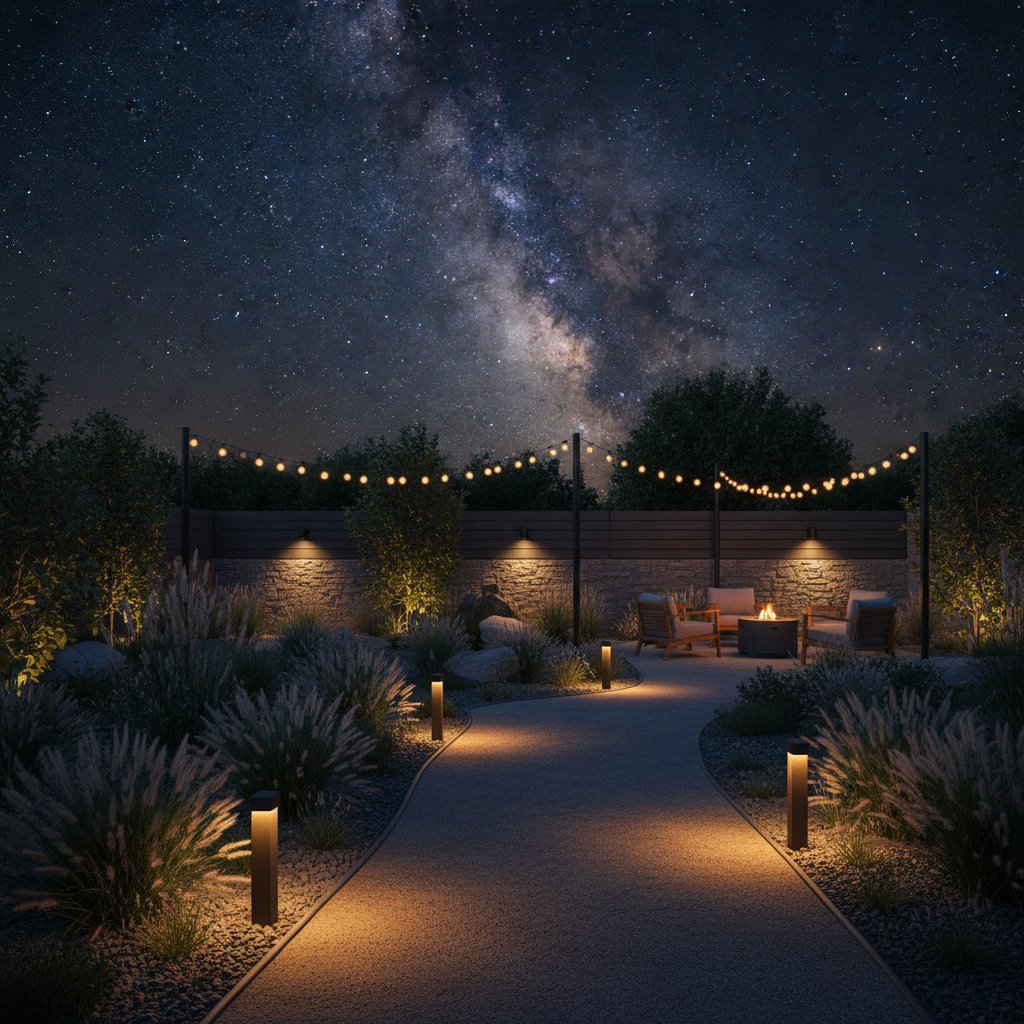
Fully shielded fixtures represent the cornerstone of dark-sky design. These units feature enclosures that block light from escaping upward or sideways, ensuring all output focuses downward onto surfaces like walkways or plantings. Seek products certified as dark-sky compliant, which adhere to rigorous standards set by organizations dedicated to preserving nocturnal environments.
Consider these fixture types tailored to common outdoor needs:
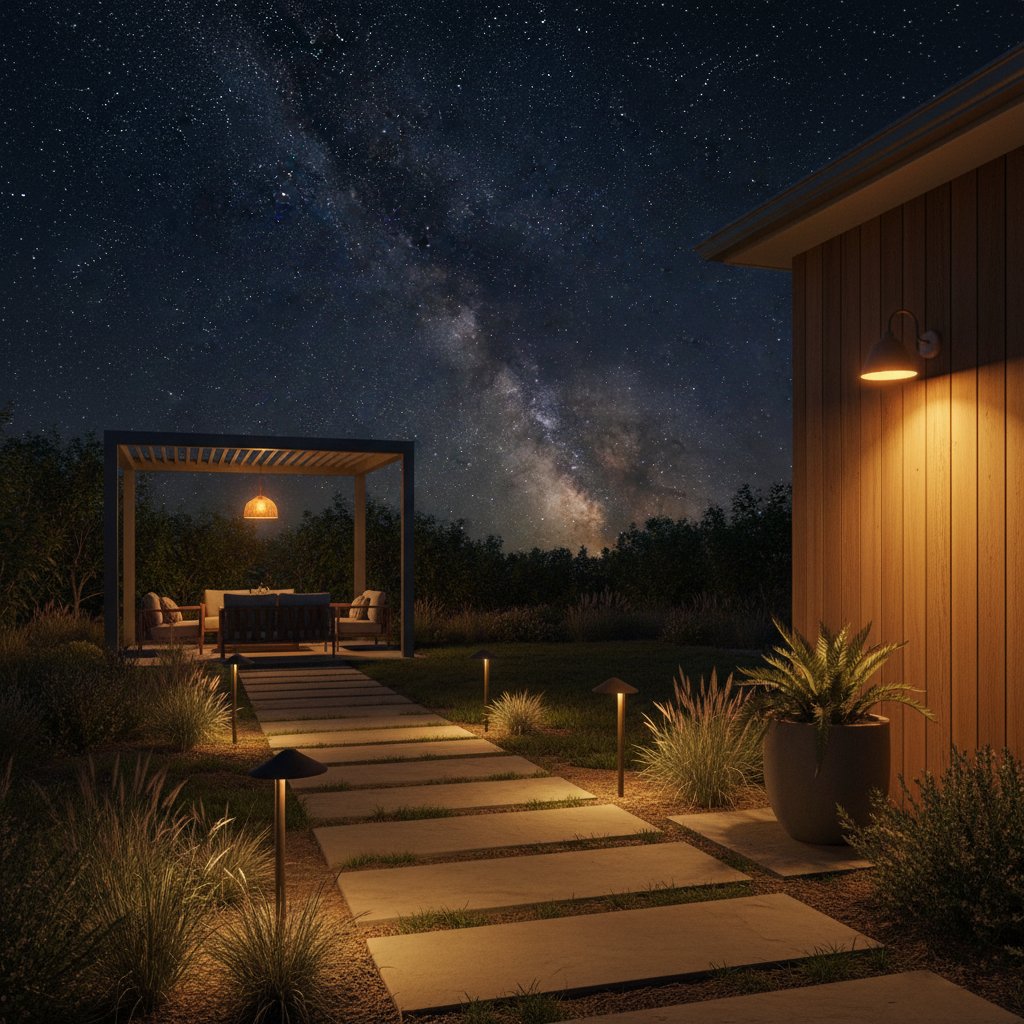
- Pathway illuminators: Compact, ground-directed models that provide subtle guidance without casting broad beams.
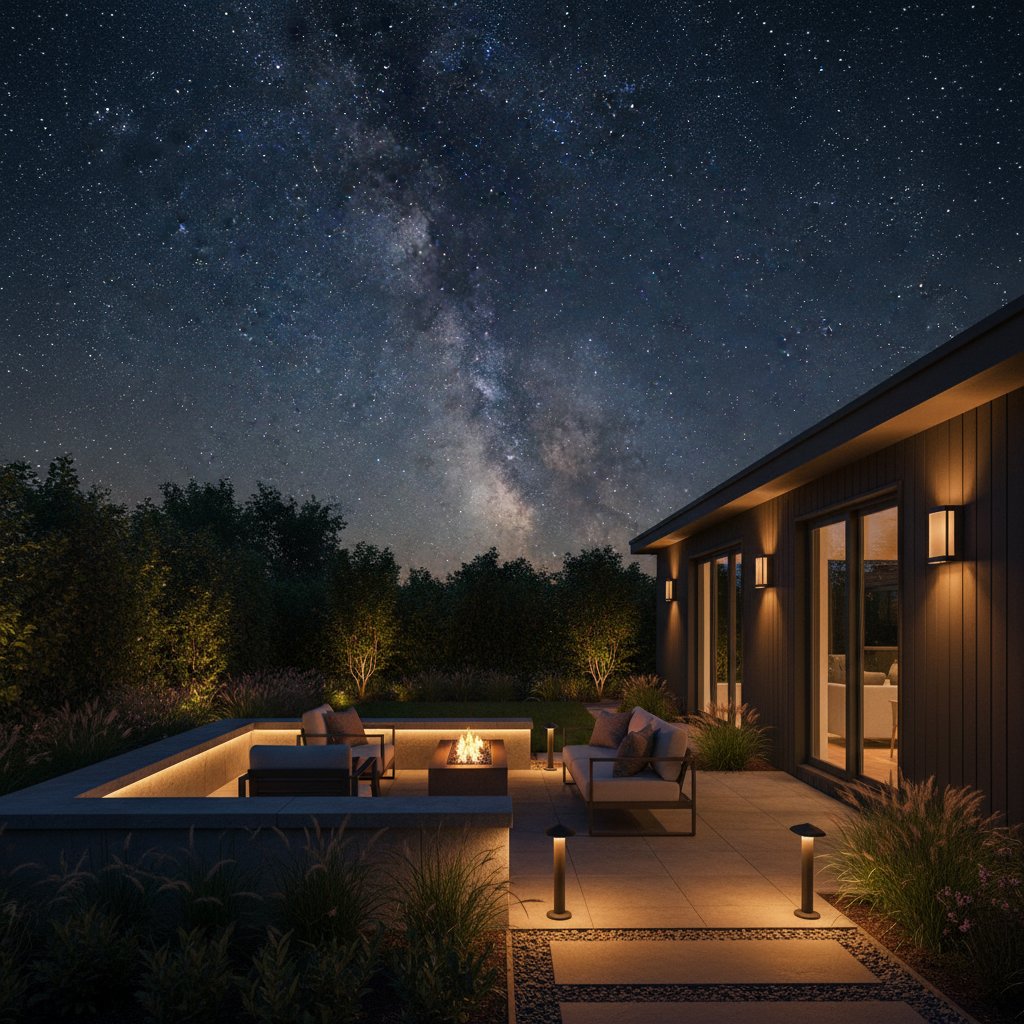
- Wall-mounted lanterns: Downward-oriented designs with solid hoods to illuminate entryways softly.
- Accent spotlights: Adjustable, narrow-angle units for highlighting trees, sculptures, or focal features.
- Integrated step lighting: Flush-mounted options that emit low-level glows for stairs and decks.
When purchasing, verify compatibility with low-voltage systems, which enhance safety and reduce installation complexity.
Optimizing Bulbs for Efficiency and Warmth
The bulb within a fixture determines its overall performance and environmental footprint. Measure output in lumens to gauge brightness accurately, as wattage varies with technology. For residential pathways and borders, 100 to 300 lumens suffice to create inviting pools of light. Driveways or larger patios may require 400 to 800 lumens, but exceeding this threshold often leads to over-illumination and unnecessary spill.
Color temperature influences ambiance profoundly. Opt for warm white bulbs rated at 2700 to 3000 Kelvin, which mimic the soft hues of incandescent lighting and minimize sky interference. Avoid cool-toned options above 4000 Kelvin, as they produce a stark, bluish cast that exacerbates light pollution. LEDs dominate modern choices due to their longevity, which spans 25,000 hours or more, and low energy use. Select dimmable variants for further customization, allowing adjustments based on occasion or time of night.
Strategic Placement to Maximize Effectiveness
Effective lighting demands thoughtful positioning to balance utility and subtlety. Conduct a nighttime assessment of your property to pinpoint essential zones, prioritizing high-traffic areas like entrances and slopes. Layer illumination by combining functional and decorative elements, such as uplights for vertical accents paired with downlights for horizontal coverage.
Adhere to these placement principles:
- Direct beams horizontally or downward to contain light within your boundaries.
- Employ reflective surfaces, like light-colored walls, to diffuse illumination indirectly and reduce direct glare.
- Maintain consistent spacing, typically 6 to 10 feet apart for path lights, to avoid patchy shadows or hotspots.
- Position sources at or below eye level to foster a grounded, immersive atmosphere.
Incorporate automation features, including photocell sensors that activate at twilight and timers that dim or deactivate post-midnight. These tools not only conserve resources but also align usage with actual needs, further curbing pollution.
Budgeting and Upkeep for Long-Term Success
Investing in dark-sky lighting yields returns through durability and efficiency. Entry-level kits with basic path and bollard lights range from 200 to 400 dollars, covering modest yards. Advanced systems incorporating smart controls or custom accents may total 800 to 1500 dollars. Low-voltage setups invite DIY installation over a weekend, requiring minimal tools like a transformer and wiring staples. For 120-volt applications, professional electricians ensure code compliance and hazard-free results, often at an additional 300 to 600 dollars.
Routine maintenance sustains performance. Inspect and clean fixtures biannually to clear pollen, dust, or moisture buildup that could scatter light unpredictably. Realign any shifted units and replace aging bulbs promptly to uphold consistent output. Weather-resistant materials, such as bronze or powder-coated aluminum, withstand elements, extending lifespan beyond a decade with proper care.
Benefits of a Harmonious Nighttime Environment
Dark-sky lighting cultivates outdoor areas that invite relaxation and appreciation of nature. It safeguards wildlife habitats, lowers utility bills by up to 50 percent through LEDs and controls, and enhances property values with sophisticated, eco-aware design. Residents gain safer, more enjoyable spaces where the transition from day to night feels seamless and restorative.
Implement Changes for Lasting Impact
Audit your existing setup by noting sources of upward spill or excessive brightness. Prioritize replacements with shielded alternatives and warm-spectrum bulbs. Experiment with repositioning and automation to refine the scheme iteratively. These adjustments not only refine your landscape's evening allure but also contribute to broader efforts in conserving the pristine night sky.