Why Gravel Gardens Transform Drought Yards
Landscapes that maintain appeal during dry spells provide quiet satisfaction for homeowners. Those who contend with parched soil, fading turf, and relentless irrigation routines know the frustration of a demanding yard. Gravel gardens shift the perspective on landscape beauty, emphasizing texture, form, and endurance as core elements of allure.
Gravel gardens align with aridity instead of resisting it. They incorporate materials and plants suited to dry environments, forgoing thirsty lawns and finicky blooms. The outcome is a serene, rooted area that achieves lushness through restraint.
The Appeal of Gravel Gardens
A gravel garden extends beyond scattered rocks on soil; it functions as a deliberate planting zone where gravel serves as mulch and aesthetic feature. This layer supplants much of the conventional lawn, minimizing evaporation and conserving moisture. Underneath lies a blend of soil and sand that nurtures deep-rooted, drought-resistant plants.
Simplicity defines its charm. Reduced reliance on water-intensive species and frequent care allows the garden to flourish with little intervention. Styles range from precise and architectural to flowing and organic, shaped by selected forms and hues.
Observers often appreciate the subdued ambiance. Stone's neutral shades, light's play on surfaces, and the subtle sway of grasses foster a timeless tranquility.
Core Design Principles
Balance underpins gravel gardening, with each component fulfilling aesthetic and functional roles. Gravel unifies plant clusters and directs visual paths while suppressing weeds, stabilizing soil temperatures, and curbing evaporation.
Select gravel thoughtfully for optimal results. Fine stones form compact, even surfaces; coarser ones introduce dimension and play of shadows. Light-colored gravel illuminates dim areas; darker varieties provide contrast against foliage like silver-leafed varieties.
Position plants strategically. Species such as lavender, rosemary, euphorbia, and sedum perform best with ample spacing for air circulation. Cluster those with matching hydration requirements to streamline care and eliminate excess watering.
Natural Versus Formal Styles
Gravel gardens adapt to preferences, from unstructured to orderly arrangements.
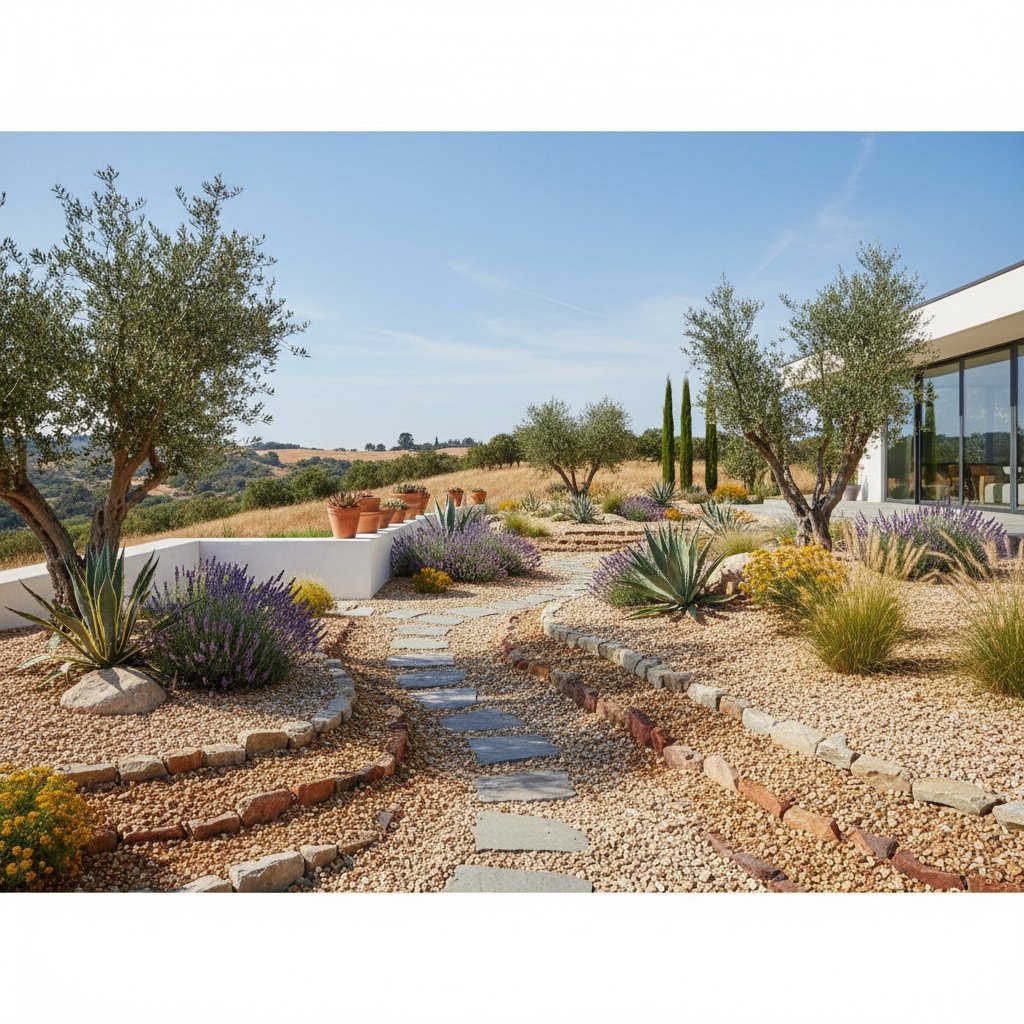
- Natural style: Echoing rugged terrains like Mediterranean slopes or arid fields, plants receive casual placement with uneven gaps that evolve organically. Opt for muted tones such as beige or soft gray gravel. This method permits gradual infilling by spreading growth.
- Formal style: Ideal for contemporary residences or patios, it features defined paths to highlights like ornate containers or lounging spots. Symmetrical plantings and trimmed shapes prevail. Crushed dark stone delivers sharp definition.
Style selection affects daily experience. Natural versions promote exploration; formal ones instill disciplined serenity. Both sustain beauty and efficiency through intentional planning.
Key Practical Advantages
Gravel gardens address drought and soil challenges while enhancing aesthetics.
-
Water conservation: The covering retards moisture loss and facilitates rainfall infiltration. Deep-rooted companions form a system requiring scant supplemental watering post-establishment.
-
Minimal upkeep: Absent mowing or fussing with fragile blooms, efforts concentrate on basic tasks like spot weeding and selective trimming.
-
Endurance: Stone endures intense exposure to sun, gales, and use without fracturing or degrading like alternatives.
-
Superior drainage: During intermittent storms after prolonged dryness, permeable gravel averts waterlogging and soil washout.
These traits appeal to those desiring lasting elegance without ongoing labor.
Mediterranean Roots and Adaptation
Gravel gardening draws from time-honored Mediterranean practices, where stone, evergreens, herbs, and arid-adapted bushes craft welcoming environs. Silvery leaves, aromatic breezes, and light gravel define the essence.
Adapt this to residential settings with measured choices. Employ curving trails and stone- or clay-framed rests. Repeat plant motifs for rhythmic unity rather than eclectic mixes.
Beyond efficiency, these gardens exalt sensory qualities. Contrasts like textured tree bark against polished pebbles or wispy fronds near firm rock weave a dynamic scene that shifts by hour and season.
Selecting Suitable Plants
Success hinges on matching plants to site specifics like sunlight, soil composition, and percolation. Proven options include:
- Lavender: Valued for scent and gray-green foliage, it excels in arid beds.
- Rosemary: Robust evergreen shrub useful in cooking.
- Euphorbia: Provides architectural form with distinctive verdant shades.
- Sedum: Ideal low grower offering vivid leaves and blooms.
- Thyme: Perfect for edging, releasing fragrance when trod upon.
- Ornamental grasses such as fescue or miscanthus: Introduce motion and gentleness.
These selections tolerate dryness; excess moisture poses greater risk than scarcity. Established roots access subsurface water enduringly.
Site Preparation Essentials
Thorough groundwork distinguishes vibrant from faltering gardens. Remove vegetation and aerate the earth. Incorporate grit into dense clays for better flow; incorporate a gentle incline to divert runoff from bases.
Apply gravel to two inches thick to retain dampness and block intruders without impeding roots. Bypass synthetic barriers to preserve soil vitality, if desired.
Define edges with metal or rock to contain material and sharpen outlines. Uniform bordering reinforces cohesion across the layout.
Harmonizing Texture and Color
Effective gardens blend tactile and visual elements seamlessly. Polished stones paired with billowy grasses yield soothing cadence; angular gravel with rigid succulents conveys drama.
Hues set the tone. Golden or tan varieties evoke warmth; neutrals like gray impart elegance. In bright exposures, blend tones to diffuse reflection.
Echo shades for integration. Match plant silvers to adjacent gravel or align pot terracotta with path stones for understated links.
Incorporating Paths and Seating
Gravel's tactile crunch suits circulation routes, drawing attention to accents like seats or basins. Embed level pavers for secure footing amid the loose medium.
Enclose lounging zones with gravel for unassuming repose. Compact sub-bases beneath ensure stability for furniture.
Subtle illumination at evening enhances contours. Ground-level lights illuminate stones and silhouettes without dominance.
Ongoing Care Strategies
Low demands do not equate to neglect. Regular light efforts sustain appeal.
- Weed control: Prompt removal curbs proliferation despite the barrier.
- Surface renewal: Rake to even distribution and restore vibrancy.
- Shaping growth: Clip perennials to promote vigor.
- Material refresh: Replenish thin gravel layers periodically for renewed depth.
Such routines foster maturity without overwhelm.
Evolution and Engagement
Gravel gardens mature dynamically, with expansions, additions, and seasonal variances. Flexible designs accommodate shifts, turning voids into opportunities.
Interaction evolves from toil to appreciation. Observe sunlight on aggregates or herbal encroachments for fulfillment.
Initial sparseness yields to patient establishment. Slow development yields enduring stability over fleeting arrangements.
Cultivating Enduring Harmony
Established gravel gardens embody adaptation to locale. They affirm that elegance arises from moderation and that eco-friendliness enhances rather than limits.
These spaces invite outdoor dwelling sans exhaustive tending, supplanting strain with simplicity. For arid-challenged properties, they blend utility with subtle grace through deliberate execution, resilient selections, and attunement to nature's pace.