Edible Hedges: Multifunctional Boundaries for Privacy and Produce
Gardens reveal much about their caretakers through their features. Some emphasize floral displays, others incorporate hardscaping elements. Certain designs integrate fruit-bearing plants, providing a rewarding experience of strolling beside a barrier that conceals while supplying berries or herbs. This concept of a nourishing hedge draws from historical practices yet aligns with contemporary efficiency.
Advantages of Productive Screening
Hedges extend beyond mere division of space. They guide movement, temper architectural lines, and establish zones. An effective hedge delivers seclusion without rigidity. When plants produce edibles, the hedge fulfills dual roles as both barrier and resource.
Select hedges that match local conditions, including climate and soil type, for optimal performance. Options vary from structured, pruned alignments to informal, mixed plantings that evolve seasonally. Preferences dictate the style: precise trimming for formality or natural growth for a relaxed appearance.
Selecting Suitable Plants
Determine the desired level of screening first. Opt for dense evergreens for constant coverage or deciduous varieties for lighter winter profiles. This decision guides choices that balance aesthetics with harvest potential.
Consider these proven options for various hedge types:
-
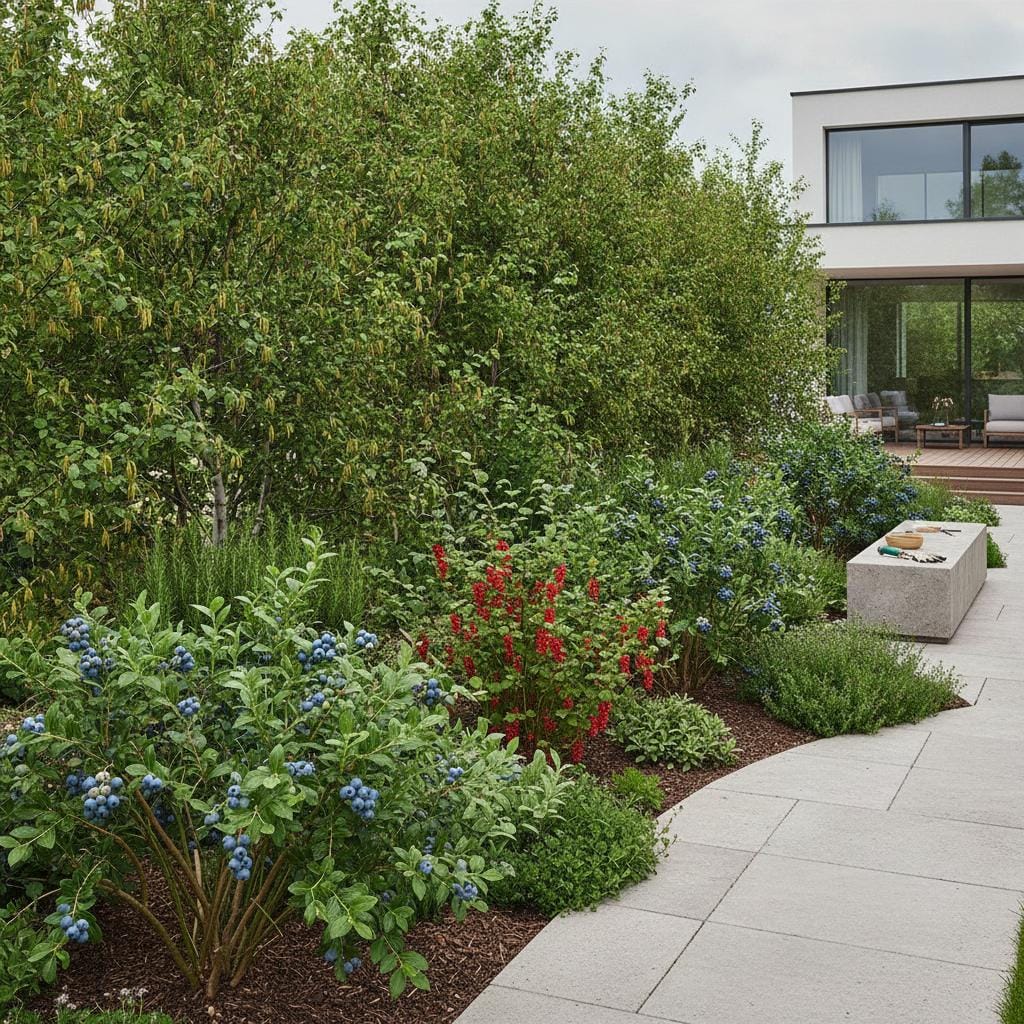
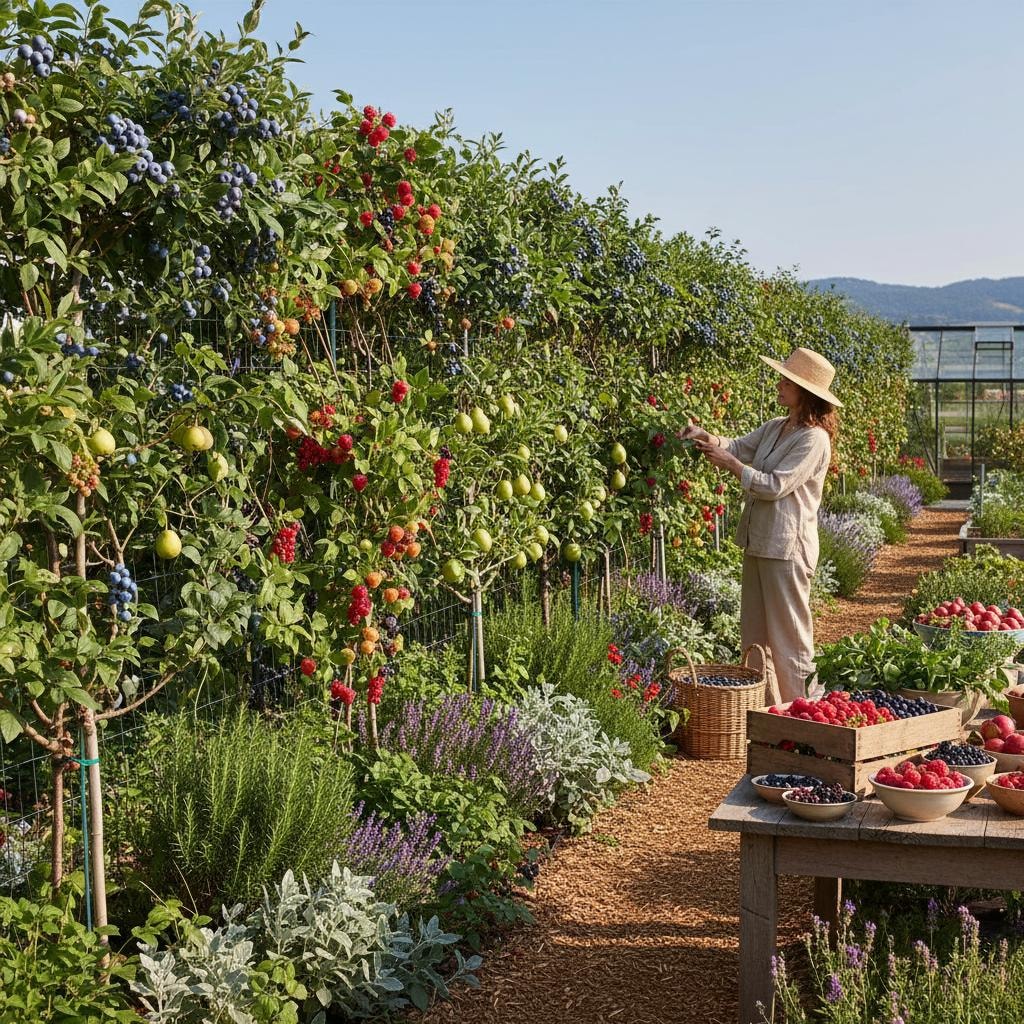
Berry Producers: Plant blueberries, currants, or gooseberries for abundant fruit in temperate zones. These require acidic soil with consistent watering. Install bird netting to protect yields from wildlife.
-
Compact Fruit Trees: Use dwarf apples, pears, or plums spaced closely and shaped through pruning. Train them via espalier on wires or supports to form artistic boundaries resembling orchards.
-
Aromatic Herbs: Choose rosemary, lavender, or sage for compact, scented edges in full sun. These offer culinary uses and subtle definition, though they provide partial rather than total privacy.
-
Nut Producers: Form tall screens with hazelnuts or filberts, allowing time for establishment. They deliver both enclosure and nuts, but allocate sufficient width for branching.
-
Brambles: Establish raspberries or blackberries for informal, thorny barriers. Their canes deter access while bearing fruit; add trellises to manage growth and facilitate picking.
Planning Layout and Planting
Success hinges on precise spacing to promote healthy development. Position plants so they occupy approximately three-quarters of their expected spread before overlapping, ensuring uniform density without resource strain.
Prepare the planting area by tilling soil to alleviate compaction and incorporating organic matter for nutrient access. Apply a two-to-three-inch layer of mulch post-planting to maintain soil moisture and limit weed competition, particularly in initial years. Established hedges demonstrate notable durability.
Integrating Screening and Yield
Edible hedges provide a nuanced form of seclusion compared to rigid fencing. They muffle sounds, diffuse sightlines, and adapt to environmental shifts. This organic approach demands initial investment in time for maturation, yet yields a dynamic, life-sustaining edge.
For continuous coverage, blend evergreens with fruiting deciduous plants. Intersperse blueberries amid upright evergreens like bay laurel or holly. Evergreens maintain form during dormancy, while fruits contribute vibrancy and output in active seasons, creating layered visual depth.
Essential Upkeep Practices
Routine care sustains hedge vitality without complexity. Prune selectively in late winter or early spring to balance branches and stimulate production. Eliminate damaged or rubbing limbs to enhance circulation and minimize pest issues.
Apply balanced, organic amendments in early spring to foster growth. During rooting and fruit set, deliver deep, infrequent waterings; install subsurface lines for efficient delivery that avoids foliage contact. Organic mulches such as bark or leaves further aid hydration and soil health.
Regular harvesting encourages engagement with the garden. Observe weekly for ripeness cues, gathering produce to promote further yields. This hands-on process deepens the bond between space and steward.
Enhancing Design Harmony
Beyond utility, edible hedges elevate garden composition through sensory elements. Foliage textures, bloom colors, and fruit hues interact dynamically. Pair sage's gray tones with currant berries for striking contrast, or incorporate spring flowering from stone fruits for delicate charm.
Achieve unity by repeating motifs along the hedge. A pattern of two or three species establishes flow, guiding the gaze smoothly. Limit diversity to prevent disorder, while varying just enough to avoid uniformity.
Adapting to Garden Size
Scale designs to available area. In compact settings, line fences with trained dwarf trees for dual ornament and utility. Containerized columnar varieties or berry shrubs can form portable screens around patios, yielding convenient edibles.
On expansive grounds, deploy hedges to segment areas, such as isolating edibles from turf or framing perennials. Maintain core techniques of site prep, selection, and tending, adjusted proportionally.
Nurturing Long-Term Growth
Mature hedges integrate seamlessly into seasonal cycles, alternating between bounty and rest. Master timing for interventions like pruning post-harvest or feeding during bud break. Adjustments refine performance over years.
Embrace gradual changes; relocate underperformers if needed, and allow sparse starts to densify naturally. Persistence rewards with a cohesive, evolving feature.
Steps to Establish Your Hedge
Implementing an edible hedge proves feasible and rewarding. Assess site conditions for sun, soil pH, and drainage. Select three to five compatible plants and plant in fall or spring for root development.
Monitor progress, adjusting supports or watering as required. Within seasons, this setup conserves area, secures privacy, and supplies nourishment, embodying thoughtful stewardship.