The Benefits of Gravel Gardens for Effortless Landscaping
Many homeowners face the challenge of maintaining a yard that requires extensive time and effort. Weeds invade flower beds, lawns demand frequent mowing, and watering schedules disrupt daily routines. Gravel gardens provide an effective alternative, combining aesthetic appeal with reduced upkeep to create outdoor spaces that enhance relaxation and sustainability.
These landscapes utilize stone mulches and drought-tolerant plants to minimize labor while maximizing visual interest. Property owners achieve a polished look without the ongoing demands of traditional gardening. The following sections outline the process to design and implement a gravel garden tailored to specific site conditions.
Embracing Simplicity in Landscape Design
Visualize a yard where natural elements harmonize without overwhelming maintenance. Gravel gardens emphasize restraint, replacing expansive turf or elaborate plantings with composed arrangements of stone and resilient vegetation. This approach fosters tranquility through clean lines and organic textures.
The design reduces common issues such as mud accumulation or bare soil exposure. Homeowners benefit from a surface that remains stable underfoot and resists erosion. Established gardens require minimal intervention, allowing focus on enjoyment rather than toil.
Evaluating Site Conditions
Conduct a thorough assessment of the yard to inform design decisions. Observe sunlight patterns throughout the day, noting full-sun exposures ideal for gravel installations. Identify low-lying areas prone to pooling water, as gravel excels in promoting infiltration.
Test soil drainage by digging a hole and filling it with water; effective percolation occurs within hours. Amend heavy clay soils by incorporating coarse sand or gypsum to enhance permeability. In sandy or fast-draining sites, integrate organic mulch layers under the gravel to retain subsurface moisture for plant roots.
Incorporate existing elements like boulders, retaining walls, or established perennials to integrate the new design seamlessly. These features provide focal points and reduce the need for complete overhauls.
Building Layered Foundations
Construct the garden in distinct layers to ensure longevity and functionality. Begin by clearing debris and leveling the surface to prevent uneven settling.
- Barrier layer: Install a permeable landscape fabric or overlapping sheets of newspaper to suppress weed emergence without impeding water flow.
- Sub-base layer: Spread 4 to 6 inches of angular gravel, such as 3/4-inch crushed stone, to facilitate drainage and provide stability.
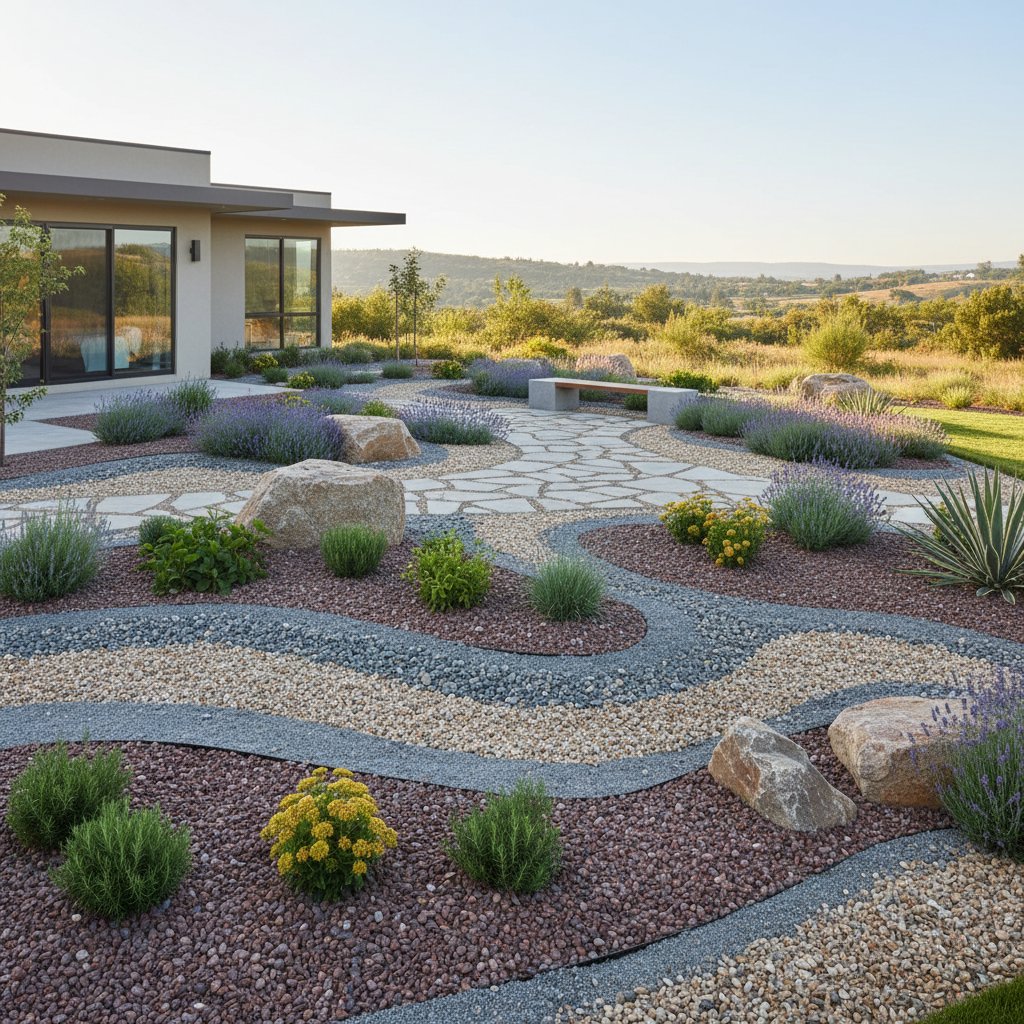
- Top layer: Apply 2 to 3 inches of pea gravel or river rock, selecting sizes between 1/4 and 1/2 inch for optimal coverage and aesthetics.
Select gravel hues that complement the home's exterior; for instance, beige tones suit neutral palettes, while slate grays add contemporary contrast. The material's subtle crunch underfoot enhances sensory appeal, inviting leisurely strolls.
Selecting Drought-Tolerant Plants
Choose vegetation adapted to arid conditions to complement the gravel base. Prioritize species with deep root systems that access underlying moisture efficiently. Recommended options include:
- Lavender (Lavandula spp.): Fragrant blooms attract pollinators and release silvery foliage for year-round structure.
- Yucca (Yucca filamentosa): Sword-like leaves offer dramatic form and tolerate neglect once rooted.
- Sedum (Sedum spectabile): Succulent varieties provide late-season color with minimal watering.
- Ornamental grasses like switchgrass (Panicum virgatum): Add height and motion without aggressive spreading.
- Native perennials such as black-eyed Susan (Rudbeckia hirta): Support local ecosystems and require no fertilization.
Plant in clusters of three to five individuals, spacing them 12 to 18 inches apart to allow gravel expanses to dominate. Mulch around bases with additional gravel to conserve soil moisture and deter pests. Water deeply but infrequently during the establishment phase, typically the first growing season, then reduce to natural rainfall.
Implementing Routine Care Practices
Gravel gardens demand far less attention than conventional landscapes, yet periodic tasks preserve their vitality.
- Weed management: Inspect biweekly and hand-remove seedlings, focusing on the fabric edges where intrusion occurs most.
- Gravel refresh: Rake the surface annually to redistribute material, and replenish thin spots with matching stone every two to three years.
- Plant maintenance: Shear back faded foliage in early spring; for grasses, cut to 6 inches above ground in late winter to stimulate fresh growth.
Seasonal shifts enhance the garden's allure: frost accents stone edges in winter, while summer heat intensifies plant colors. These cycles underscore the design's adaptability to local climates.
Enhancing with Thoughtful Details
Tailor the gravel garden to reflect personal style, from cottage charm to sleek minimalism. Blend coarse and fine gravels for varied texture, or edge beds with low-profile bricks for definition.
Incorporate functional elements like winding paths of compacted gravel for accessibility. Position a weathered Adirondack chair amid swaying grasses to encourage contemplation. Install solar-powered path lights to illuminate contours after dark, extending usability into evenings.
For water features, embed a shallow basin filled with polished pebbles to evoke a dry streambed, promoting biodiversity without irrigation needs.
Realizing Long-Term Rewards
Patience yields a self-sustaining haven as plants mature and integrate with the stone matrix. Initial efforts in site preparation pay dividends through reduced water bills and eliminated chemical use.
Homeowners report greater satisfaction from spaces that evolve naturally, fostering connections to the environment. A gravel garden not only simplifies yard care but also cultivates a sense of enduring harmony with the outdoors.