The Rise of Rewilded Gardens: Achieve Beauty with Minimal Effort
Many homeowners experience the conflict of desiring an attractive yard while resenting the ongoing maintenance it demands. Weeds may overtake beds, and blooms might diminish over time, leading to frustration. Rewilding offers a solution by permitting natural processes to shape the landscape, resulting in a vibrant, balanced space that requires far less intervention.
This approach shifts the focus from rigid control to harmonious coexistence with the environment. Gardens flourish when aligned with local ecology, providing aesthetic appeal alongside ecological benefits. Homeowners discover that such spaces evolve naturally, delivering satisfaction without exhaustive labor.
What Rewilding Means for Your Backyard
Rewilding extends beyond vast wilderness areas; it applies effectively to residential gardens. The core principle involves restoring natural systems through the use of native species, fostering soil biodiversity, and promoting plant diversity that aids pollinators, birds, and insects. Rather than relying on synthetic chemicals or frequent trimming, this method collaborates with ecological rhythms.
The outcome creates intentional wildness that tempers stark lines and revitalizes the yard. As the garden emulates regional habitats, maintenance needs decrease significantly. Seasonal variations emerge organically, yielding a dynamic yet serene environment.
Step 1: Assess Your Existing Landscape
Start by examining your current yard without immediate changes. Identify plants that persist with little attention and those that falter repeatedly. Observe water drainage patterns after rainfall, sunlight exposure across areas, and concentrations of birds or insects.
These observations reveal essential insights into site-specific conditions. Thriving, neglected plants often suit the local soil and climate, making them ideal for retention. Struggling specimens may require replacement to align with rewilding goals, conserving resources in the process.
Step 2: Select and Plant Native Species
Native plants form the foundation of a rewilded garden due to their adaptation to regional climate and soil. Established specimens typically demand no supplemental irrigation or nutrients. Moreover, they sustain local fauna, including insects essential for pollination and pest control.
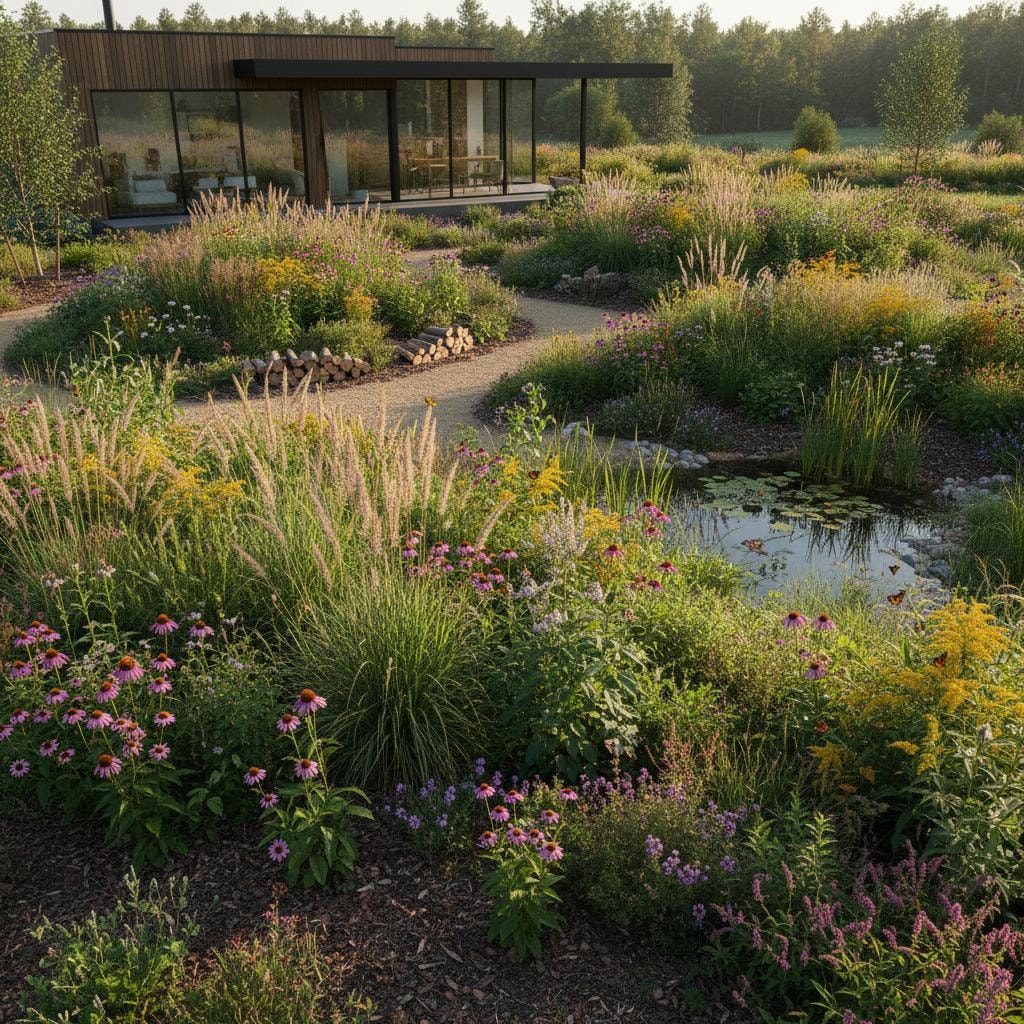
Consult a nearby nursery focused on natives to source appropriate varieties. Opt for combinations of grasses, perennials, and shrubs offering varied heights and textures for visual interest. Examples include coneflowers for summer color, black-eyed Susans for hardy blooms, milkweed to attract monarch butterflies, and sedges for ground-level coverage.
Arrange plants in groups of five to seven individuals per species to facilitate natural expansion. This clustering encourages seamless integration, producing flowing patches of color that respond to sunlight throughout the day.
Step 3: Reduce and Replace Lawn Areas
Conventional turf grass consumes substantial time and water through regular mowing, irrigation, and fertilization. Rewilding encourages scaling back these expanses in favor of native meadows or groundcovers. Such substitutions maintain usability while slashing upkeep.
For retained open spaces, consider eco-friendly options like microclover or fine fescue mixes, which remain verdant with infrequent care. Introduce wildflower patches or native grass islands to diversify the layout and draw pollinators. These elements enhance biodiversity and prevent soil erosion.
Step 4: Foster Wildlife Integration
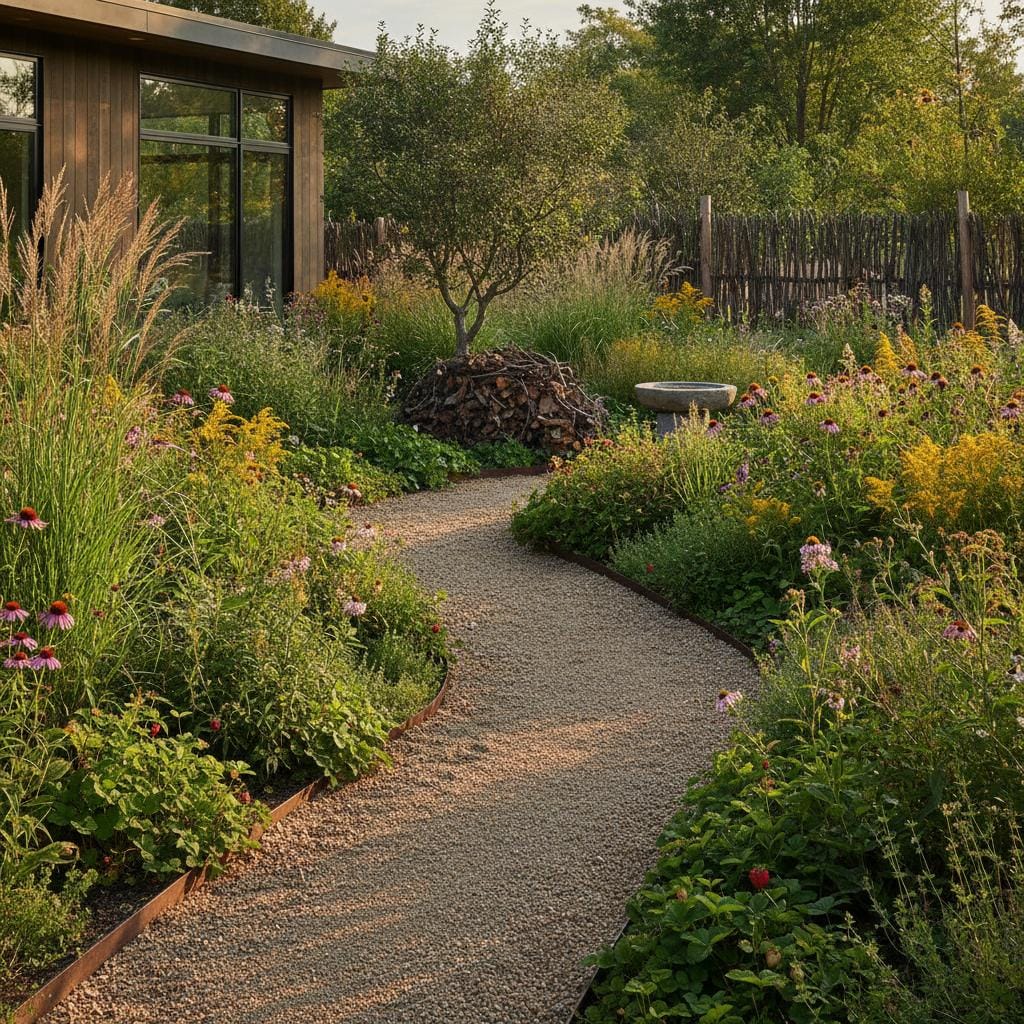
A rewilded garden thrives as a dynamic habitat rather than a fixed display. Incorporate features to attract and support local wildlife, such as a shallow basin filled with water for birds to drink and bathe. Stack branches or stones in discreet corners to provide insect refuges.
Prioritize plant variety to interconnect species within the ecosystem. Allow fallen leaves to accumulate beneath shrubs and trees, as they conserve moisture and offer overwintering sites for beneficial organisms. Initially, the space may appear untamed, but it soon buzzes with activity from foraging bees and nesting birds.
Step 5: Implement Seasonal Maintenance
Rewilded gardens require periodic attention, though at a relaxed pace aligned with natural cycles. In late winter, prune spent stems while preserving some for seed sources that feed birds. Remove aggressive non-native weeds promptly to protect desired growth, permitting natives to self-sow.
Apply organic mulch, such as compost or leaf litter, to bolster soil fertility and retain hydration. As microbial activity increases, the ground gains resilience, accommodating greater plant variety. This stewardship resembles gentle oversight rather than domination.
Step 6: Incorporate Intentional Design Elements
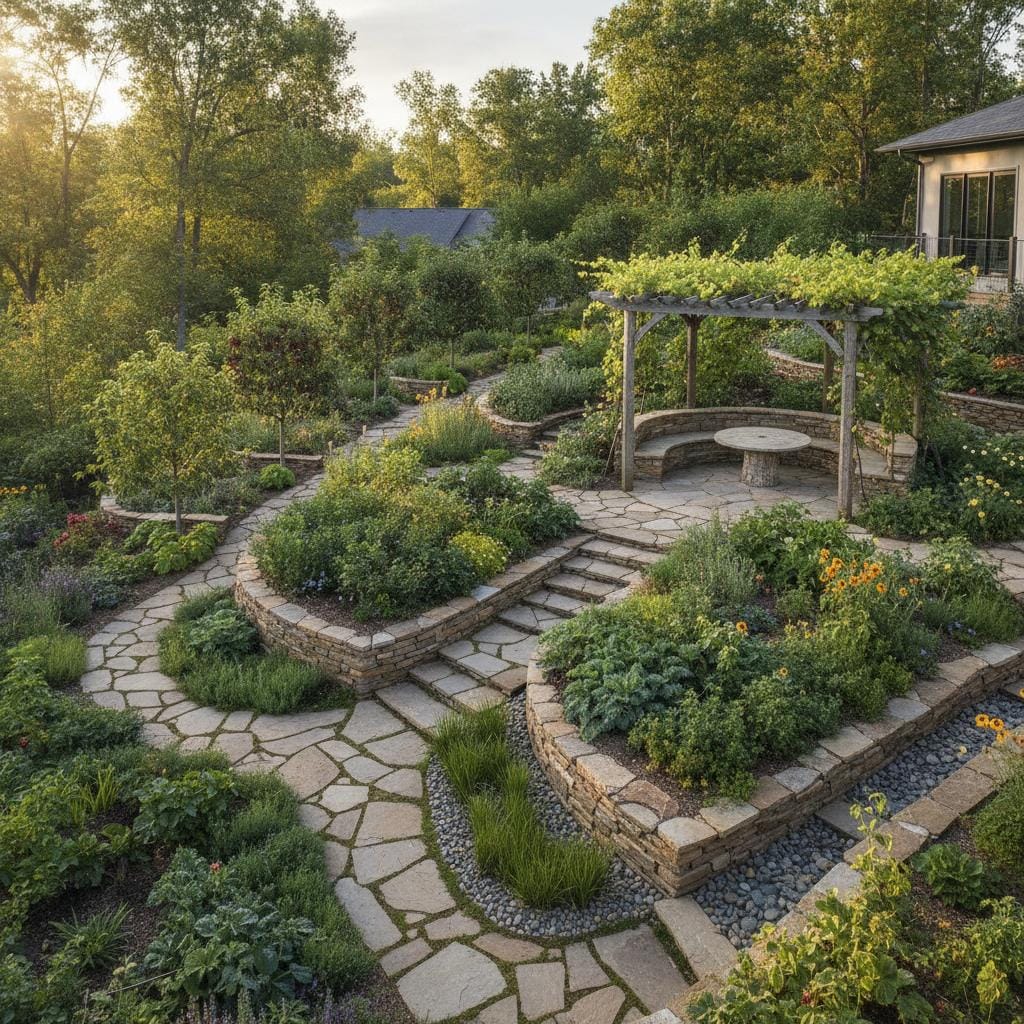
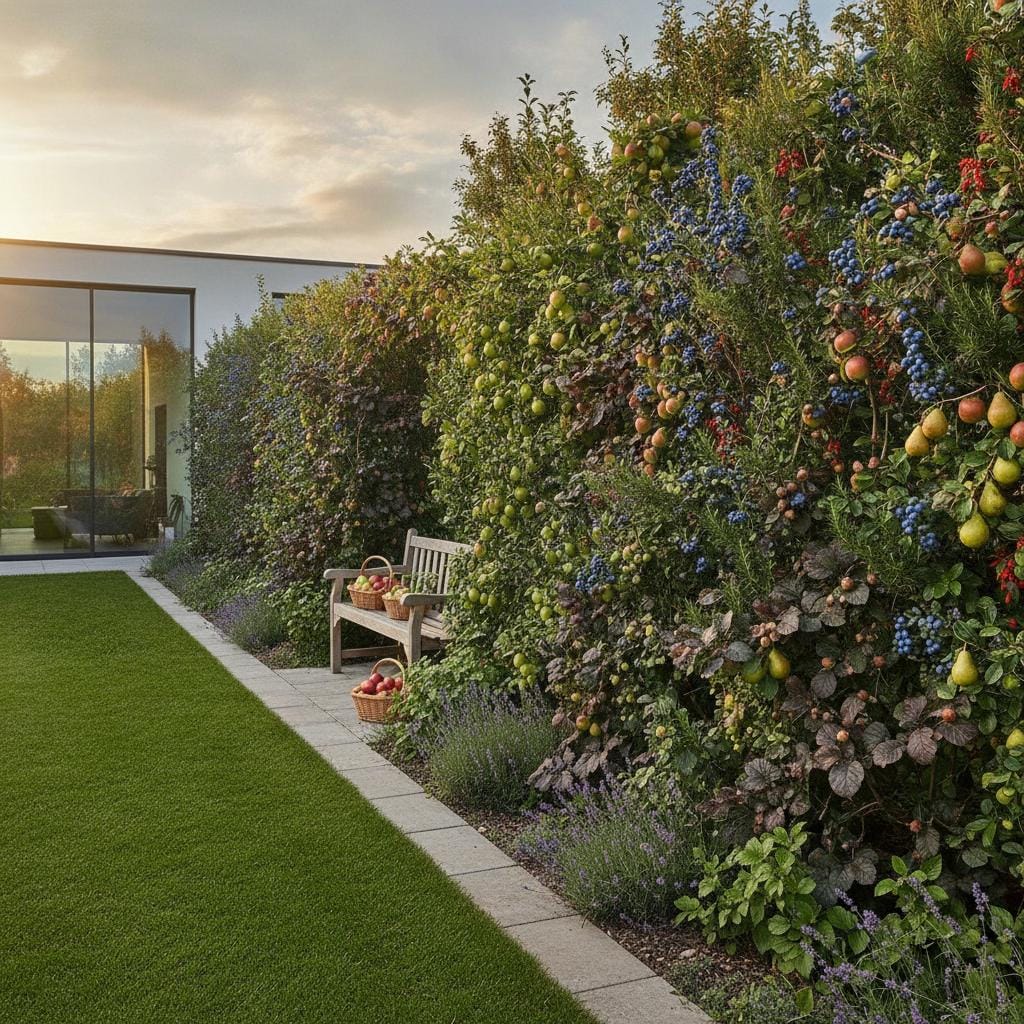
Rewilding harmonizes with purposeful aesthetics to avoid chaos. Carve mowed pathways through taller plantings to guide movement and impose subtle order. Position a wooden bench amid foliage or edge beds with natural stone for focal points.
View the garden as an evolving composition where open vistas contrast with lush clusters, and light filters through layered heights. These choices ensure the space feels curated, blending wild exuberance with structured appeal.
Observe the Transformation Unfold
As your rewilded garden establishes, unexpected vitality emerges. Avian visitors increase, drawn by seeds and shelter. Pollinators target compatible blooms, while subterranean life like earthworms and mycorrhizal fungi enriches the earth.
This evolution stems from reduced imposition, allowing suited elements to dominate. Time shifts from laborious interventions to appreciative moments amid authentic growth. The yard embodies equilibrium, proving that elegance and simplicity coexist seamlessly.
Realize Lasting Ecological and Personal Rewards
A rewilded garden cultivates mindfulness through its unhurried progression. Spring sprouts yield to summer profusion, followed by autumn seed dispersal and winter dormancy. Each phase underscores nature's resilience.
Sustained involvement deepens the bond between caretaker and landscape. The space transcends mere ornamentation, becoming an integral extension of daily life. Through rewilding, homeowners forge enduring ties to the environment, yielding beauty grounded in sustainability.