Why Gravel Gardens Excel in Low-Maintenance Landscaping for 2026
Many homeowners view their yards with frustration rather than enthusiasm. Overgrown weeds dominate former flowerbeds, and parched soil resists revival efforts. For those seeking beauty without endless labor, gravel gardens provide an ideal solution. These designs restore vitality to outdoor spaces through sustainable practices and minimal demands on time.
Gravel gardens extend beyond mere stones and isolated plants. They foster resilient landscapes that withstand drought and require little intervention. Suitable for urban plots or expansive properties, this style adapts to diverse conditions while promoting environmental harmony.
Step 1: Evaluate Your Yard
Begin by examining your outdoor area closely. Track sunlight patterns from morning to evening, and identify zones prone to dryness or moisture retention. Gravel gardens perform best in locations with excellent drainage, so this assessment informs your overall strategy.
Target sloped sections or patches where grass fails to thrive. Clear away existing vegetation, weeds, or turf within the designated boundaries. Such preparation establishes a durable base that endures for years with proper care.
For heavy clay soils, incorporate sand or crushed stone to enhance permeability. This amendment supports root development and averts gravel displacement from water runoff.
Step 2: Choose Appropriate Materials
Select gravel types that complement your climate and aesthetic preferences. Decomposed granite offers a fine, natural texture ideal for subtle elegance, while larger pea gravel provides bold contrast and stability. Consider colors such as soft grays, warm buffs, or river-rounded pebbles to harmonize with surrounding elements.
Layer materials for depth and functionality. Start with landscape fabric to suppress weeds, followed by a base layer of coarser gravel for drainage. Top with finer gravel to create a polished surface that reflects light and reduces heat absorption.
Budget for quality over quantity. High-grade gravel resists shifting and maintains appearance longer, minimizing future replacements. Source materials from local suppliers to ensure compatibility with regional weather patterns.
Step 3: Choose Drought-Tolerant Plants
Success in a gravel garden hinges on selecting resilient vegetation. Opt for xeric plants that flourish in arid conditions and full sunlight exposure. Combine perennials, grasses, and shrubs to achieve diverse textures and seasonal appeal.
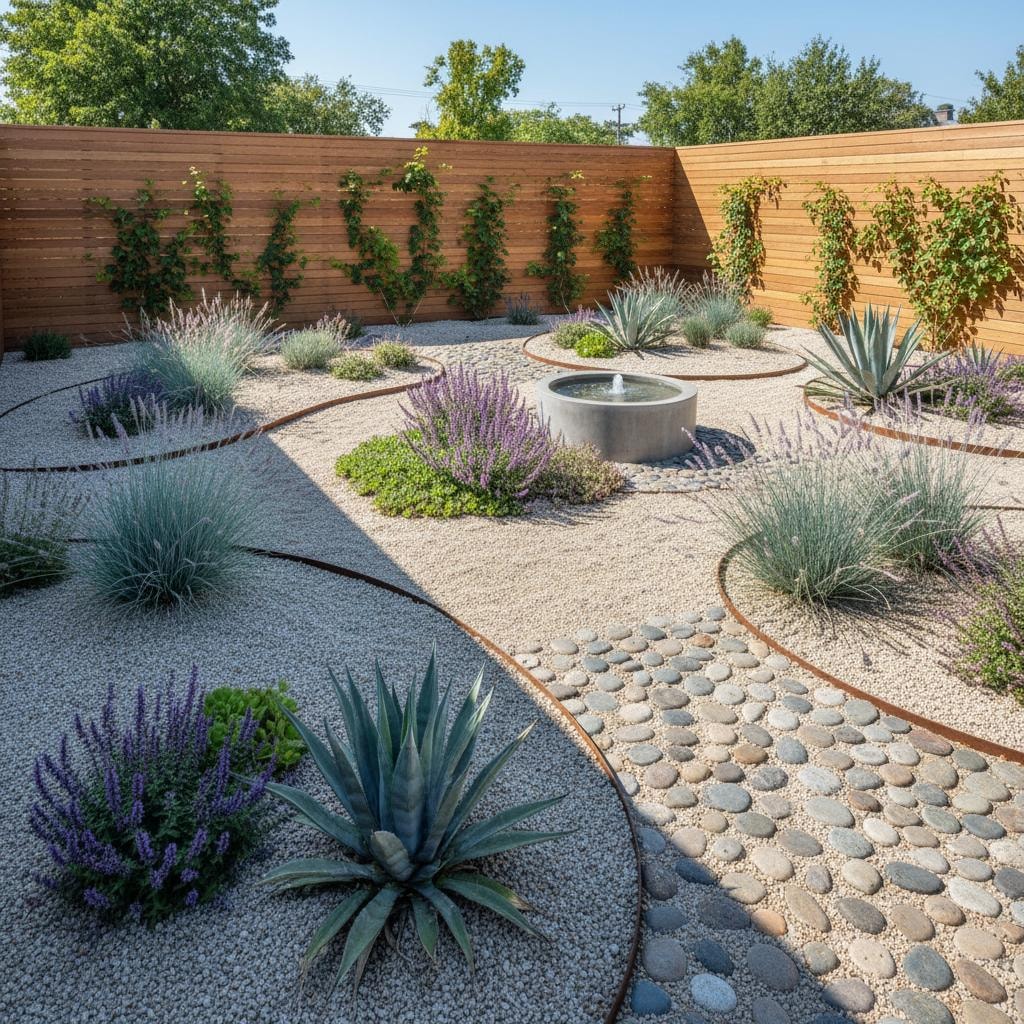
Recommended options include lavender for its aromatic blooms, yarrow for feathery foliage, and salvia for vibrant spikes. Incorporate sedum for ground cover and low shrubs like dwarf butterfly bush for structure. Grasses such as blue fescue add movement, while herbs like thyme offer sensory delight through scent.
Plant with intentional spacing to emphasize individual forms. Allocate plants to roughly one-third of the area, leaving gravel expanses to showcase their contours. This arrangement curbs overgrowth and simplifies ongoing care.
Step 4: Design and Install the Layout
Plan the arrangement to guide the eye and maximize impact. Sketch pathways or focal points using gravel borders to define zones. Integrate larger rocks or boulders as anchors, positioning plants in clusters for natural flow.
During installation, dig shallow pockets for plants amid the gravel base. Mulch around roots with additional gravel to conserve moisture and deter weeds. Step back frequently to adjust placements, ensuring balance between open spaces and vegetation.
Incorporate subtle features like stepping stones or a central urn for added interest. These elements enhance usability without complicating maintenance. Finalize by watering deeply to settle the gravel and encourage initial rooting.
Step 5: Implement Simple Maintenance Routines
Gravel gardens demand infrequent but effective upkeep. Remove emerging weeds promptly with a hand tool or rake to prevent establishment. Refresh gravel layers every two to three years to preserve uniformity and depth.
Water established plants sparingly, focusing on deep infusions during extended dry periods. Avoid shallow sprinkles that promote weak growth. This method builds robust root systems resilient to environmental stresses.
Clear fallen leaves or debris regularly to maintain cleanliness. Raking prevents organic buildup that could foster weed seeds. With these habits, the garden remains tidy and vibrant through minimal weekly attention.
Observe Seasonal Evolution
Over time, your gravel garden acquires a distinctive character. Plants expand gradually, creating layered visuals as textures evolve with the weather. Gravel develops a weathered sheen that enhances the overall serenity.
Regular observation reveals subtle changes and guides light adjustments. This passive involvement shifts focus from labor to appreciation. The design proves that thoughtful simplicity yields enduring rewards.
Embrace gravel gardens as a testament to efficient stewardship. They align beauty with practicality, transforming challenging yards into welcoming havens. Invest in this approach for landscapes that sustain themselves and enrich daily life.