Why Decomposed Granite Excels in Budget-Friendly Hardscaping
Homeowners often gaze at their yards and ponder initial steps for improvement. Cracked concrete paths, uneven lawns, or uninviting spaces prompt questions about affordable enhancements. Decomposed granite emerges as a versatile, natural solution that infuses warmth, texture, and economy into outdoor environments.
Understanding Decomposed Granite
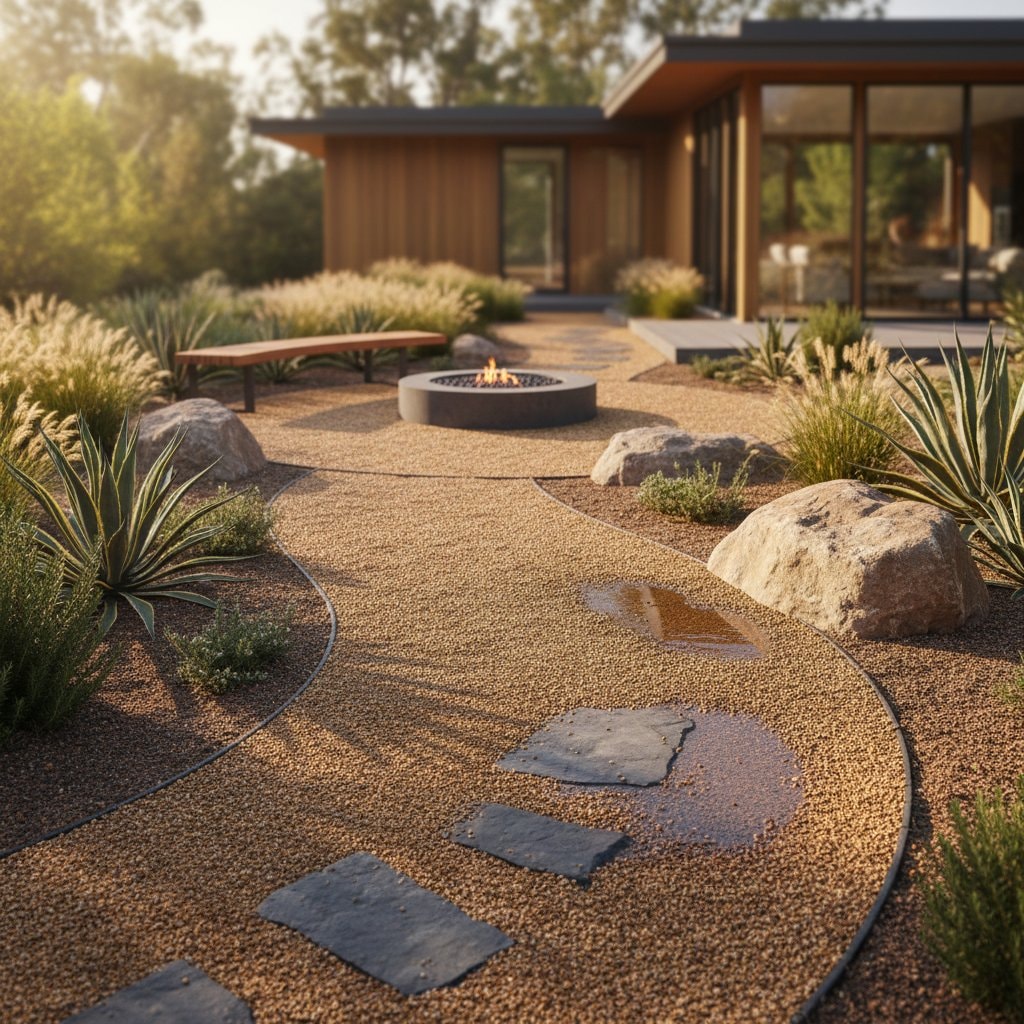
Decomposed granite, commonly abbreviated as DG, results from the natural weathering of solid granite into finer particles. This process yields a material with a fine, sandy consistency available in shades such as warm gold, neutral tan, or subtle gray. Upon compaction, it forms a stable surface that supports foot traffic while permitting water infiltration, rendering it suitable for patios, walkways, and garden trails.
In contrast to rigid options like poured concrete or interlocking pavers, decomposed granite integrates harmoniously with surrounding terrain. Its permeable nature promotes breathability and a welcoming ambiance. This equilibrium of aesthetics and utility attracts homeowners seeking practical landscape solutions.
Assessing Your Space
Prior to any project, conduct a thorough inspection of your yard. Observe high-traffic routes, areas prone to water accumulation, and zones where vegetation faces challenges. Such observations pinpoint opportunities for decomposed granite to enhance functionality and appearance.
Consider installing a clear path amid garden beds or establishing a gentle base for seating zones. Sketch a basic diagram highlighting priority areas. Given its permeability, decomposed granite proves advantageous in regions requiring improved drainage or susceptible to pooling after rainfall.
Planning Your Hardscape
With identified areas in mind, outline how decomposed granite will complement existing landscape elements. Account for edging materials, boundary definitions, and seamless transitions to adjacent surfaces. Options like metal strips, natural stone, or timber borders maintain containment and avert migration into turf or soil beds.
To determine material volume, calculate the project's square footage by multiplying length and width. Factor in a compacted depth of two to four inches, depending on intended use; lighter paths require less, while patios benefit from greater thickness. Consult garden center staff for precise tonnage estimates based on these measurements. Select hues that echo your home's facade and nearby foliage for cohesive visual appeal.
Bringing Your Plan to Life
Installation of decomposed granite demands minimal expertise and tools. Begin by excavating the site to remove weeds, roots, and loose debris, achieving a level base at least four inches deep for stability. Install landscape fabric across the prepared soil to suppress weed growth, securing it with stakes if necessary.
Distribute the decomposed granite in even layers, starting with a base of coarser material if available, followed by finer topcoats. Lightly moisten the surface with a hose to facilitate binding, then compact using a manual tamper for small areas or a rented plate compactor for larger expanses. Repeat layering and compaction until reaching the desired depth, ensuring a uniform, firm finish.
For enhanced stability in demanding locations, incorporate a stabilizer additive. Mix this resin-based liquid directly into the dampened granite before compaction; it cures to minimize erosion and dust without fully hardening the surface. This step suits driveways or frequently used patios, extending longevity with modest additional cost.
Why It Fits a Budget
Decomposed granite appeals to cost-conscious homeowners through its upscale appearance at a fraction of traditional material prices. Bulk purchases typically range from $30 to $60 per ton, far below the $100-plus per square foot for concrete or stone installations. DIY application eliminates labor fees, often saving thousands on professional services.
Ongoing care remains uncomplicated and inexpensive. Rake the surface periodically to redistribute particles, and replenish thin spots with a modest amount of fresh material every two to three years. Permeability prevents water-related issues, such as erosion or foundational damage, that necessitate expensive repairs in impermeable systems.
Furthermore, decomposed granite mitigates urban heat island effects by remaining cooler than dark asphalt or concrete, potentially lowering cooling costs for adjacent structures. Reduced runoff nourishes nearby plants, curbing the need for supplemental irrigation and fostering a more resilient garden ecosystem.
Sustainable Beauty That Lasts
Decomposed granite aligns with eco-friendly practices by leveraging a naturally occurring resource. Its infiltration properties recharge groundwater and prevent pollutant-laden runoff into stormwater systems. This approach sustains soil health, minimizes erosion on slopes, and supports biodiversity in yard habitats.
The material's organic aesthetic pairs ideally with indigenous flora and xeriscape designs, promoting water conservation in arid climates. Over years of exposure, it acquires a subtle patina that evolves with seasonal changes, enhancing the timeless quality of your landscape.
Maintaining and Enjoying Your Enhanced Yard
Once installed, decomposed granite requires attentive yet simple upkeep to preserve its appeal. Remove debris with a stiff broom or leaf blower after storms, and inspect borders annually to reinforce containment. In arid regions, occasional watering helps settle dust without over-saturating the base.
This surface fosters an inviting outdoor retreat, where the subtle texture encourages barefoot strolls and gatherings. As your garden matures around it, observe how integrated elements create a unified, low-effort oasis. Decomposed granite thus bridges affordability with enduring outdoor satisfaction.