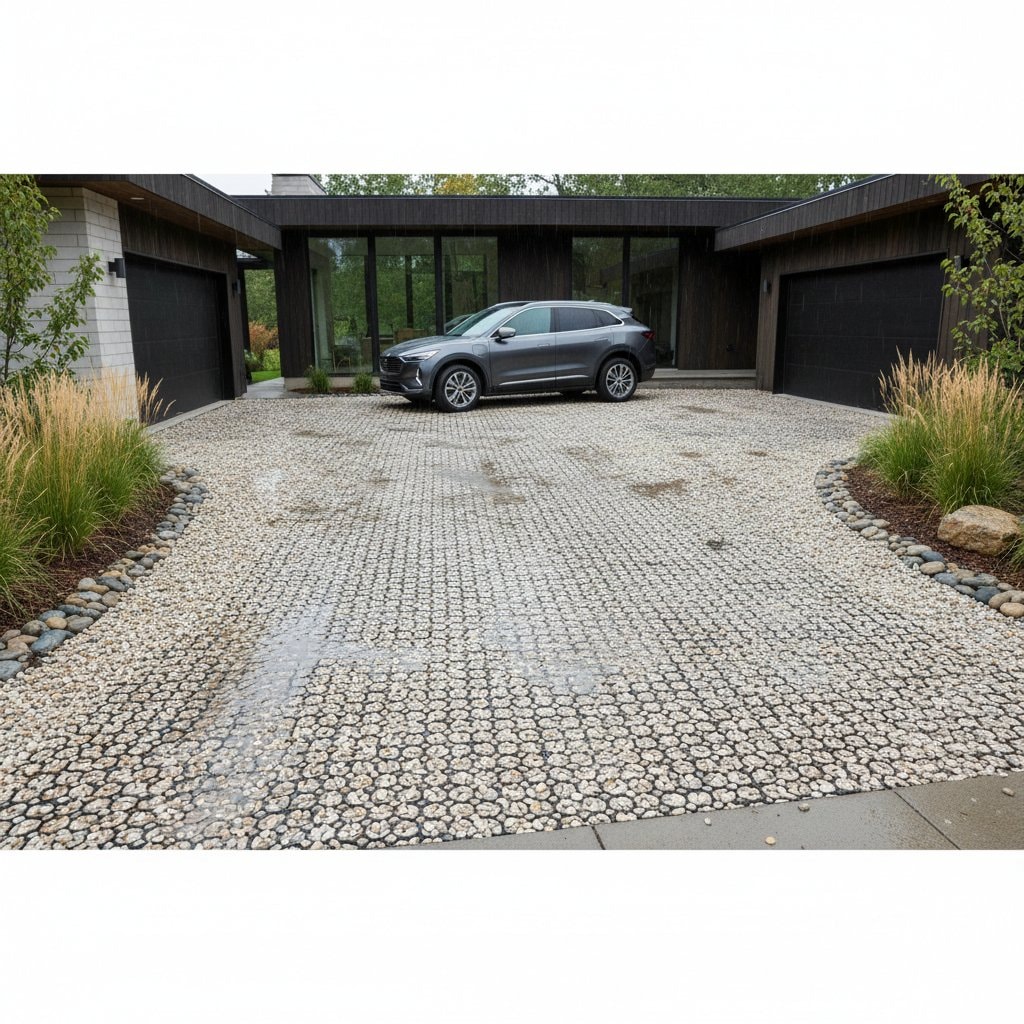
Unlock Mud-Free Parking with Permeable Gravel Grids
Homeowners often face the challenge of driveways that turn into muddy quagmires after rainfall. Vehicles sink into soft spots, and gravel scatters unpredictably, creating an uneven and uninviting surface. Permeable gravel grids provide a reliable solution by stabilizing the ground while allowing natural drainage, resulting in a firm, attractive parking area that withstands seasonal changes.
This guide explains the components of gravel grids, their operational principles, and the process for implementing them effectively. Readers gain practical insights to evaluate existing conditions, prepare the site, install the system, and maintain its performance over time.
Assessing Your Current Driveway or Parking Space
Start the evaluation process by inspecting the area following a rain event. Observe locations where water pools or the soil softens underfoot. Identify ruts deeper than two inches, exposed soil patches, or regions where gravel has eroded due to water flow or traffic.
Consider these specific questions to guide your assessment:
- Do puddles form in low-lying areas that persist for hours after rain?
- Are tire tracks deeper than one inch in soft ground?
- Does the surface slope unevenly, causing water to channel toward certain points?
- Has gravel volume decreased noticeably over the past year from displacement?
These observations inform the extent of site preparation required. A thorough assessment prevents future issues by addressing weak points early in the planning phase.
Preparing the Ground for Installation
Site preparation forms the foundation of a successful gravel grid installation. Clear the area of vegetation, roots, and existing loose material to expose the native soil. Excavate to a depth of six to eight inches for standard passenger vehicles, or up to twelve inches for heavier loads like trucks or RVs, ensuring space for sub-base layers and the grids themselves.
Proceed with these detailed steps:
- Install a geotextile fabric across the excavated surface. This non-woven material, typically 4 to 6 ounces per square yard, blocks soil migration into the base while permitting water infiltration at rates exceeding 100 gallons per square foot per minute.
- Spread and compact a sub-base layer of angular crushed stone, such as 3/4-inch minus aggregate, in 4-inch lifts. Use a plate compactor to achieve 95 percent density, testing with a nuclear density gauge if available for precision.
- Verify levelness using a 4-foot spirit level and a straight 2x4 board dragged across the surface. Adjust by adding or removing base material until variations do not exceed 1/4 inch over 10 feet.
Invest time in this phase to avoid settling or drainage problems later. Proper compaction distributes loads evenly, enhancing the longevity of the entire system.
Why Permeable Gravel Grids Work So Well
Permeable gravel grids excel through their design that distributes vehicle weight and facilitates water movement. The interlocking plastic panels, often made from high-density polyethylene, feature open cells that hold gravel in place. This structure disperses pressure from tires across the grid's surface area, reducing point loads on the soil by up to 90 percent.
Key advantages include:
- Elimination of muddy ruts, as the grids prevent tire penetration into the subsoil even during prolonged wet conditions.
- Superior drainage, with water percolating through the cells at rates that mimic natural infiltration, minimizing surface ponding.
- Reduced maintenance demands, since the contained gravel requires replenishment only every two to three years under moderate use.
- Environmental benefits, including groundwater recharge and filtration of pollutants through the soil profile, in compliance with stormwater management standards.
- Exceptional durability, with UV-stabilized materials resisting degradation for 20 years or more in temperate climates.
This approach delivers a surface that integrates functionality with aesthetic appeal, suitable for residential settings where natural textures are preferred over rigid pavements.
Installing the Gravel Grids
Installation begins once the base is prepared and level. Select grids sized to fit the area, typically 40 by 40 inches per panel, with cell depths of 2 to 4 inches to accommodate 1.5- to 2-inch gravel. Connect panels using integral clips or stainless steel fasteners for secure interlocking.
Follow this sequence:
- Place the first row of grids along the perimeter, aligning edges precisely. Secure with 12-inch landscape pins driven through pre-molded holes every 2 feet.
- Interlock subsequent rows, ensuring cells align without gaps. For slopes greater than 5 percent, add terracing or retaining features to maintain stability.
- Fill cells with washed angular gravel, such as 3/8-inch pea gravel, to within 1/4 inch of the top. Vibrate or broom the material to settle it evenly, achieving a flush, uniform finish.
Test the completed surface by driving vehicles over it slowly, checking for any movement. Adjustments at this stage ensure optimal performance from the outset.
Caring for Your Permeable Surface
Routine care sustains the integrity and appearance of the gravel grid system. Perform inspections quarterly or after major storms to identify potential issues early.
Implement these maintenance practices:
- Remove debris such as leaves or sediment using a stiff-bristle broom or leaf blower on low speed. Avoid high-pressure washing, which can dislodge gravel.
- Top up gravel levels annually, adding approximately 1/2 cubic yard per 500 square feet if displacement occurs. Rake evenly to redistribute.
- Address any uneven sections by removing grids, re-compacting the base with a tamper, and reinstalling. Monitor for weed growth and treat with vinegar-based solutions if needed.
- Reinforce edges with plastic or metal edging buried 6 inches deep to contain the system against lateral forces.
Consistent upkeep extends the surface's lifespan and preserves its drainage efficiency, requiring minimal effort compared to traditional alternatives.
Comparing Gravel Grids to Other Driveway Alternatives
Homeowners evaluate options based on durability, cost, and environmental impact. Permeable gravel grids offer a middle ground between rigid and loose surfaces.
Consider these comparisons:
- Concrete provides high compressive strength over 4,000 psi but blocks water entirely, leading to runoff and potential cracking from freeze-thaw cycles.
- Asphalt delivers flexibility and a paved finish, yet it contributes to urban heat islands and demands resealing every three to five years at costs of $2 to $4 per square foot.
- Loose gravel remains inexpensive at under $1 per square foot but migrates readily, necessitating frequent redistribution and edging repairs.
Gravel grids enhance gravel's permeability with structural support, costing $5 to $8 per square foot installed, while integrating seamlessly into landscaped environments. Select gravel tones like buff or gray to complement surrounding features for a cohesive property design.
Sustaining Long-Term Performance
A well-installed gravel grid system transforms daily routines by providing reliable access without the hassles of mud or erosion. Vehicles park securely, and foot traffic remains clean and steady across seasons. The permeable design supports broader landscape health, reducing irrigation needs and fostering native plant growth nearby.
Extend these benefits to walkways or overflow parking to unify your outdoor spaces. Over years, the investment yields a resilient, low-impact solution that enhances property value and usability.