Why Decomposed Granite Tops Budget Hardscape Lists
Consider your yard after a long day. The grass appears sparse in spots, the patio shows signs of age, and pathways erode underfoot. You envision an inviting outdoor area, but expenses and labor for extensive hardscaping seem prohibitive. Fortunately, options exist to refresh your space without excessive spending or professional help. Decomposed granite stands out as a prime choice for such transformations.
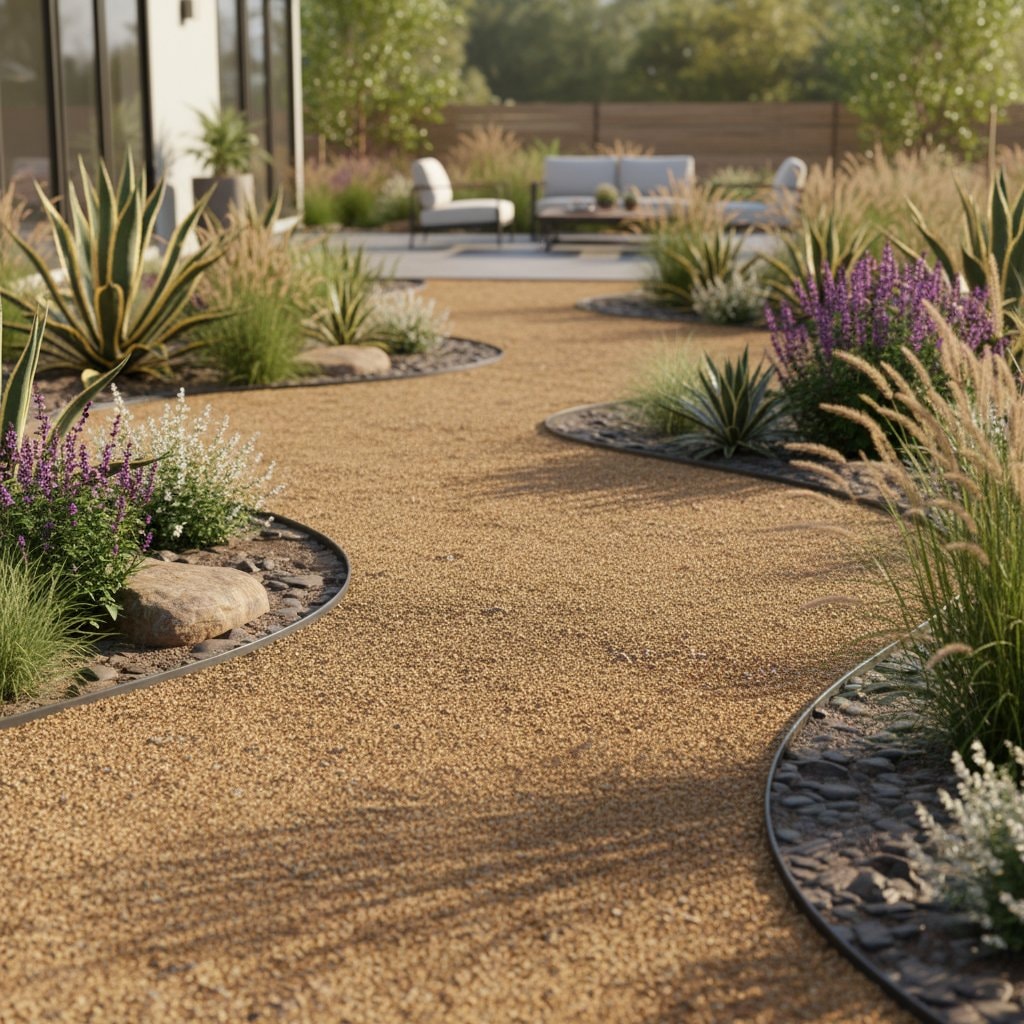
Decomposed granite, commonly known as DG, consists of weathered granite particles that mimic the appearance of gravel while providing stability. This material delivers the aesthetic of natural stone at reduced expense and performs reliably across diverse landscapes. Homeowners use it to renew walkways, establish seating areas, or accent planting zones, resulting in attractive, resilient features.
Key Reasons Homeowners Select Decomposed Granite for Cost-Effective Hardscaping
Decomposed granite ranks highly on budget lists due to its balance of visual appeal, longevity, and economy. It costs significantly less than poured concrete, interlocking pavers, or quarried stone, often by half or more. Installation requires basic tools, allowing DIY approaches that cut labor expenses.
DG integrates seamlessly with natural surroundings, featuring subtle hues like tan, gray, and reddish-brown that complement foliage and soil. The fine texture offers a gentle surface for bare feet, ideal for casual strolls or social gatherings. Superior drainage reduces water accumulation and soil washout, unlike solid surfaces that promote runoff.
Once established, decomposed granite demands little attention. Periodic raking redistributes particles, and occasional watering settles dust. It resists cracking from freeze-thaw cycles and remains stable under regular traffic, minimizing repairs compared to rigid alternatives.
- Affordability: Bulk DG sells for $30 to $60 per ton, covering large areas economically.
- Versatility: Suits sloped terrains, arid climates, and high-traffic zones.
- Eco-Friendliness: Permeable design supports groundwater recharge and reduces urban heat.
Planning a Decomposed Granite Project
Approach your project with deliberate preparation to ensure success. Survey the site on foot, noting daily routes and desired functions. Identify needs such as a direct trail from the driveway to the backyard, a level pad for outdoor furniture, or a mulched border around play zones. Decomposed granite adapts to these purposes when sited appropriately.
Draw a simple site plan, incorporating contours for drainage and irrigation lines. Select locations with firm soil to support the base layer; redirect water flow if necessary using shallow swales. Outline borders with string lines or flexible tubing to test proportions against nearby elements like shrubs or fences.
Calculate material quantities accurately to avoid waste. Measure the area in square feet, then determine depth: 4 inches for pathways, 6 inches for patios. Standard DG weighs about 1.6 tons per cubic yard, so a 100-square-foot path at 4 inches requires roughly 1.5 tons. Factor in 10 percent extra for compaction and settling. Consult local suppliers for stabilizer options if enhanced binding is needed.
Step-by-Step Installation of Decomposed Granite
Installation proceeds efficiently with methodical steps. Clear the site first by excavating 4 to 6 inches of topsoil, removing roots and rocks. Install geotextile fabric over the subgrade to block weed emergence and stabilize the foundation.
Prepare the base by adding 2 inches of crushed rock or sand, then compact it firmly with a roller or tamper. Distribute decomposed granite in 2-inch lifts, moisten each with a hose to aid binding, and compact thoroughly. Repeat layers until achieving the planned thickness; the surface should yield slightly under pressure yet hold shape.
For stabilized versions, blend in resin or cement per product guidelines before spreading. Cure the mixture as directed, typically 24 to 48 hours under cover. Install borders using metal edging, timber, or boulders to contain the material and prevent migration.
Final settling occurs after a gentle watering. Restrict access for one to two days, allowing fines to lock in place. The finished area presents a cohesive, walkable expanse that enhances usability.
- Excavate and level the site.
- Lay weed barrier and base material.
- Spread and compact DG layers.
- Add edging and water to set.
Maintaining Decomposed Granite Surfaces
Decomposed granite sustains its form with routine care. Inspect after storms or events for displaced stones or depressions. Rake evenly to refill low spots, then sprinkle water to integrate particles.
Replenish the top 1 inch of material annually in high-use areas to preserve vibrancy and uniformity. Pull emerging weeds promptly by hand, as the dense cover limits seed germination. Avoid heavy machinery that could disrupt the matrix.
For resin-stabilized DG, use soft brushes for cleaning and skip high-pressure methods, which weaken adhesives. In dry regions, light misting prevents cracking; in wet areas, ensure edges direct runoff away. These practices extend the surface's life to 10 years or more.
Integrating Decomposed Granite into Your Landscape
With decomposed granite in place, observe how it elevates everyday outdoor routines. Walkways guide movement smoothly, seating zones anchor relaxation, and borders highlight plantings against a neutral backdrop.
This material bridges utility and design, enabling custom landscapes without complexity. Regular use patinas the surface, embedding it into the site's character. Your hardscape evolves as a supportive element, fostering gatherings and growth in harmony with nature.