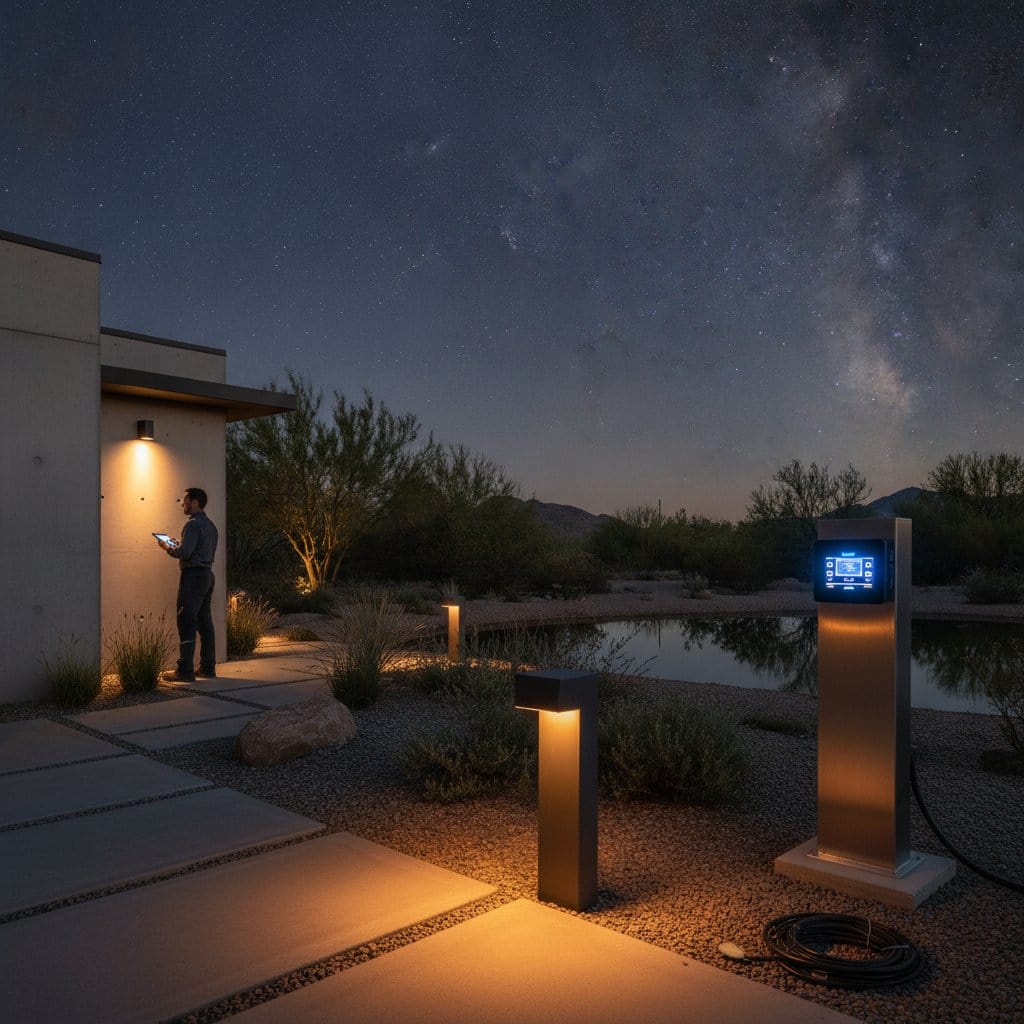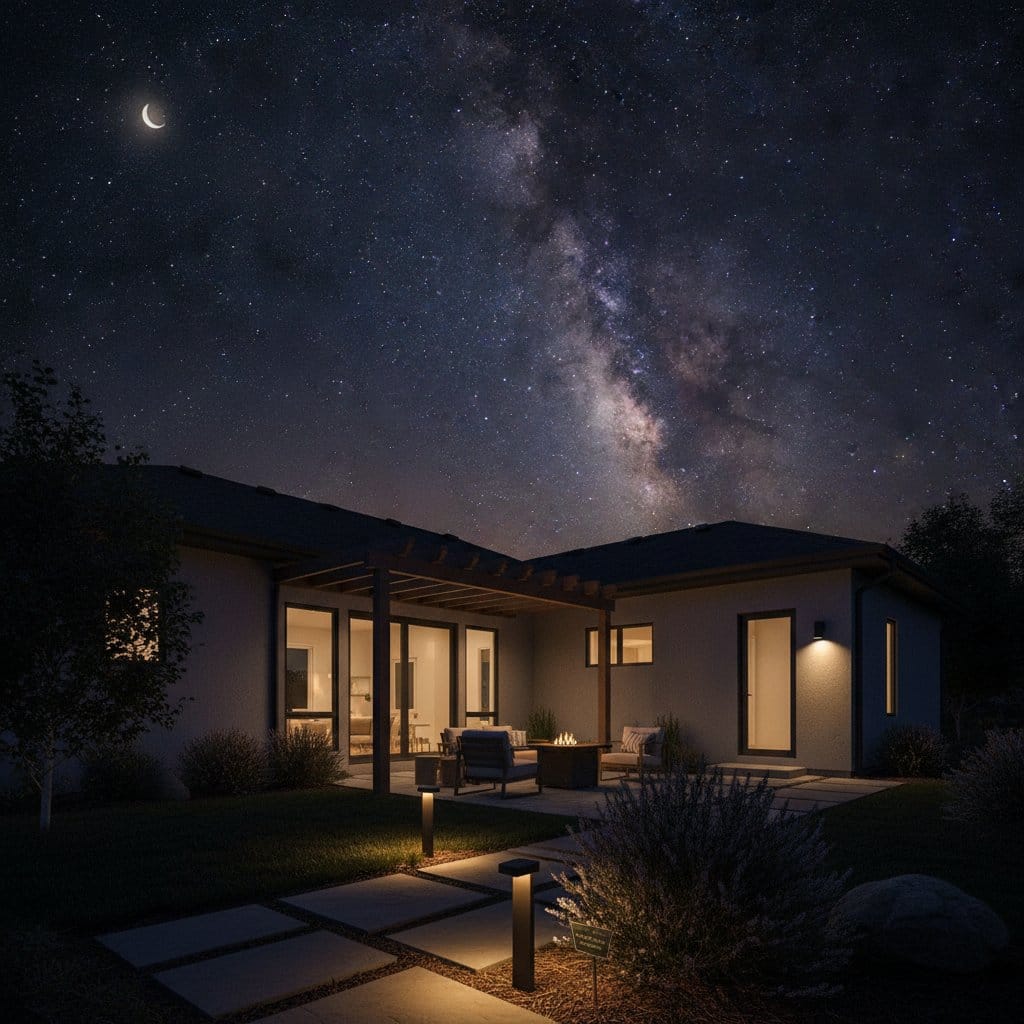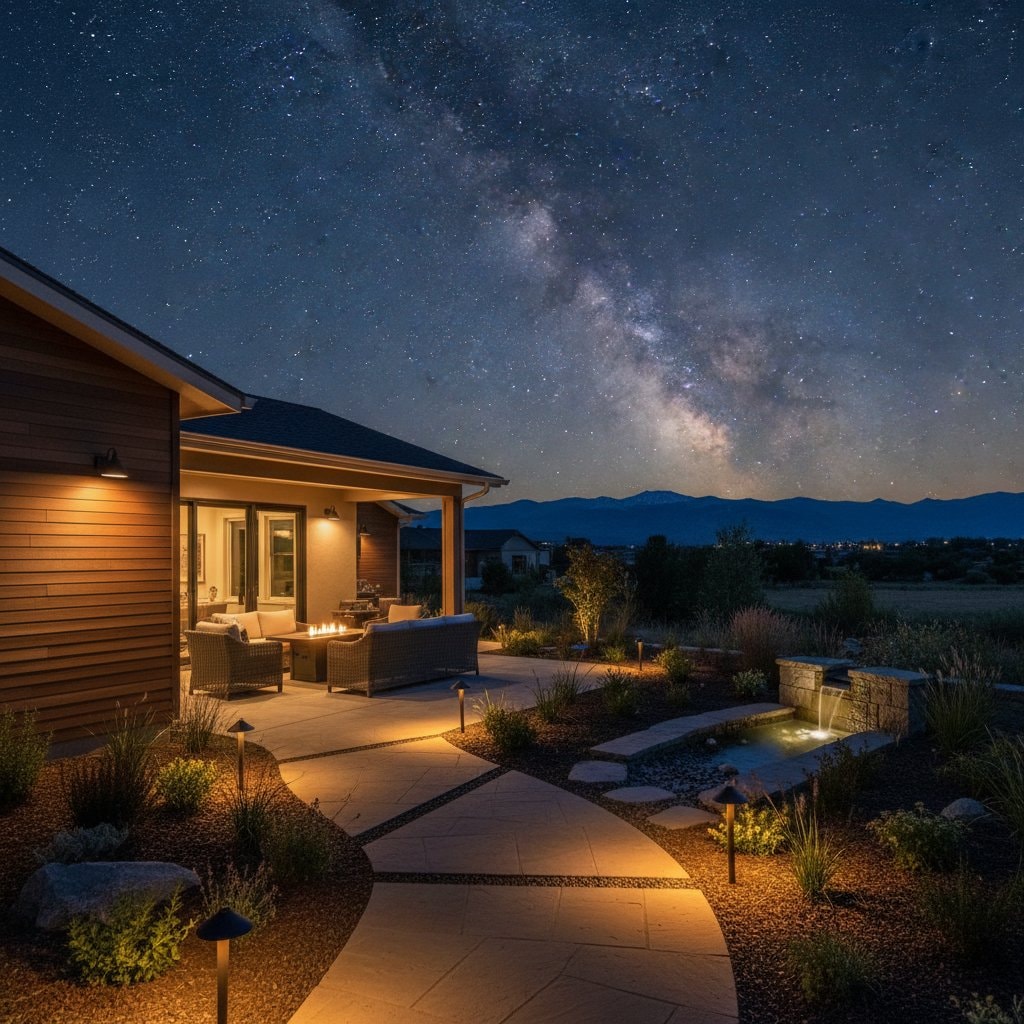
- Shield the light source. Direct illumination downward to concentrate glow on intended surfaces and minimize glare or skyward spill.
- Apply only necessary illumination. Select the minimal intensity required for secure navigation, as excess brightness seldom improves sightlines.
- Choose warmer color temperatures. Avoid cool blues or stark whites that scatter widely and disturb biological rhythms; prefer soft ambers for a more harmonious effect.
- Incorporate timers or motion sensors. Automate activation to conserve energy and maintain natural darkness when illumination proves unnecessary.
These guidelines function as both legal mandates and effective design strategies. They instill a structured serenity that elevates the overall outdoor ambiance.
The Design Shift: From Bright to Thoughtful
Traditional landscape lighting prioritized intensity, with homeowners deploying robust floodlights or spotlights to illuminate structures and plantings. This often produced a stark, uniform wash that diminished depth and subdued natural contrasts. Dark sky approaches advocate for a refined alternative.
Rather than saturating areas, targeted accents draw the eye to specific features. For instance, low-profile path lights ensure safe footing without overwhelming vision, while shielded sconces highlight textures on walls and preserve shadowy outlines in foliage. The resulting environment evokes intimacy, akin to subtle candle glow rather than theatrical beams.
This method reshapes perception of outdoor spaces. Dimmed settings encourage deliberate movement, emphasizing shapes, surfaces, and subtle motions. Gardens regain vitality, free from the stasis imposed by harsh light.
Comparing Styles: Rustic, Modern, and Natural
Dark sky principles adapt seamlessly to diverse aesthetic preferences, enhancing each home's unique identity.
- Rustic gardens pair well with aged metal lanterns fitted with amber LEDs, casting a warm flicker that complements rugged wood and stone elements.
- Modern landscapes employ sleek, recessed fixtures that skim surfaces with precise beams, highlighting clean lines and geometric forms without intrusion.
- Natural or woodland settings rely on sparse installations, such as solar-powered path markers in key zones, integrating darkness to allow celestial and lunar light to contribute meaningfully.
All styles adhere to the central tenet: illumination supports the environment rather than overpowering it.
The Broader Effects: Wildlife and Wellbeing
Dark sky initiatives extend influence beyond visual design to ecological and human health dimensions. Nocturnal species, including birds, insects, and mammals, rely on unlit conditions for orientation, foraging, and migration. Persistent artificial glow disorients these creatures, potentially destabilizing local habitats.
For residents, moderated exterior lighting reduces indoor light intrusion, fostering better rest and circadian alignment. Community-wide adoption cultivates serene neighborhoods where evenings retain their inherent quietude. Darkness reasserts its role in daily life.
Practical Steps for Homeowners
Transitioning to dark sky compliance requires targeted adjustments rather than comprehensive redesigns. Incremental modifications yield significant improvements in functionality and compliance.
- Audit existing setups. Traverse the property after dusk to identify upward or lateral light leaks and areas of excessive glare that impair visibility.
- Upgrade fixtures. Install downward-directed or fully enclosed models, such as bollards or pie-shaped shades, to contain output effectively.
- Modify bulb specifications. Transition to 2700K warm white LEDs at 300-800 lumens, ensuring sufficient yet restrained brightness.
- Integrate automation. Employ programmable timers for dusk-to-dawn cycles or PIR sensors that activate only upon detected movement.
- Layer illumination strategically. Blend pathway guides, focal accents, and diffused uplighting to distribute light evenly without singular dominance.
These actions align with regulations while refining the space for greater appeal and efficiency.
The Aesthetic Reward of Restraint
Mastery in landscape design often emerges from judicious limitation. Sparse lighting restores shadows and amplifies material nuances, allowing gardens to evolve narratively through twilight transitions.
Such minimalism bridges indoor and outdoor realms seamlessly. A gently illuminated terrace integrates with surrounding night, rather than isolating as a luminous outlier. Visibility of constellations enhances spatial awareness and tranquility.
Living with Your Design
Embracing dark sky lighting often leads to a preference for its subtlety. Evenings gain clarity and invitation, with natural elements like dew-kissed leaves or rustling branches standing out vividly.
Upkeep simplifies under these conditions; components endure longer without strain, and reduced consumption lowers utility costs. Future expansions should mirror initial choices in beam control, spectrum, and restraint to sustain cohesion.
Embracing Purposeful Illumination
Dark sky laws prompt a reevaluation of evening aesthetics, shifting focus from intensity to intentionality. This evolution safeguards ecosystems, optimizes resource use, and revives celestial vistas.
Homeowners gain tangible and intangible benefits: secure, serene landscapes that harmonize with their settings. Observe the interplay of light and shadow on your next evening stroll; that equilibrium defines an authentic night garden, sparked by deliberate choices.