Embrace Dark Sky Principles for Captivating Nightscapes
Outdoor lighting enhances your yard's appeal after dusk by accentuating architectural details, ensuring safe navigation, and fostering a welcoming ambiance. However, excessive or poorly directed illumination can obscure the night sky and increase energy consumption. Dark sky principles address these issues by promoting targeted lighting that preserves celestial views while delivering practical benefits.
These guidelines emphasize responsible design to minimize light pollution, which arises from upward or scattered light emissions. By adhering to them, you create an inviting outdoor environment that aligns with both aesthetic and ecological priorities.
Understanding Dark Sky Principles
Dark sky principles aim to curb light pollution through precise control of light direction and intensity. Light pollution manifests as skyglow, where artificial brightness dims stars; glare, which impairs vision; and light trespass, which intrudes on adjacent areas. Compliant systems direct 90 percent or more of light downward, ensuring it serves its purpose without escaping into the atmosphere.
Core objectives include eliminating direct eye glare, confining light to your property boundaries, applying only necessary illumination levels, and safeguarding the night's natural darkness. Such practices extend beyond urban zones; numerous rural and suburban areas enforce similar regulations via zoning ordinances. Voluntary adoption elevates your landscape's sophistication and demonstrates environmental stewardship.
Key Advantages of Dark Sky Lighting
Implementing dark sky compliant lighting yields multifaceted rewards, from enhanced visibility to ecological contributions.
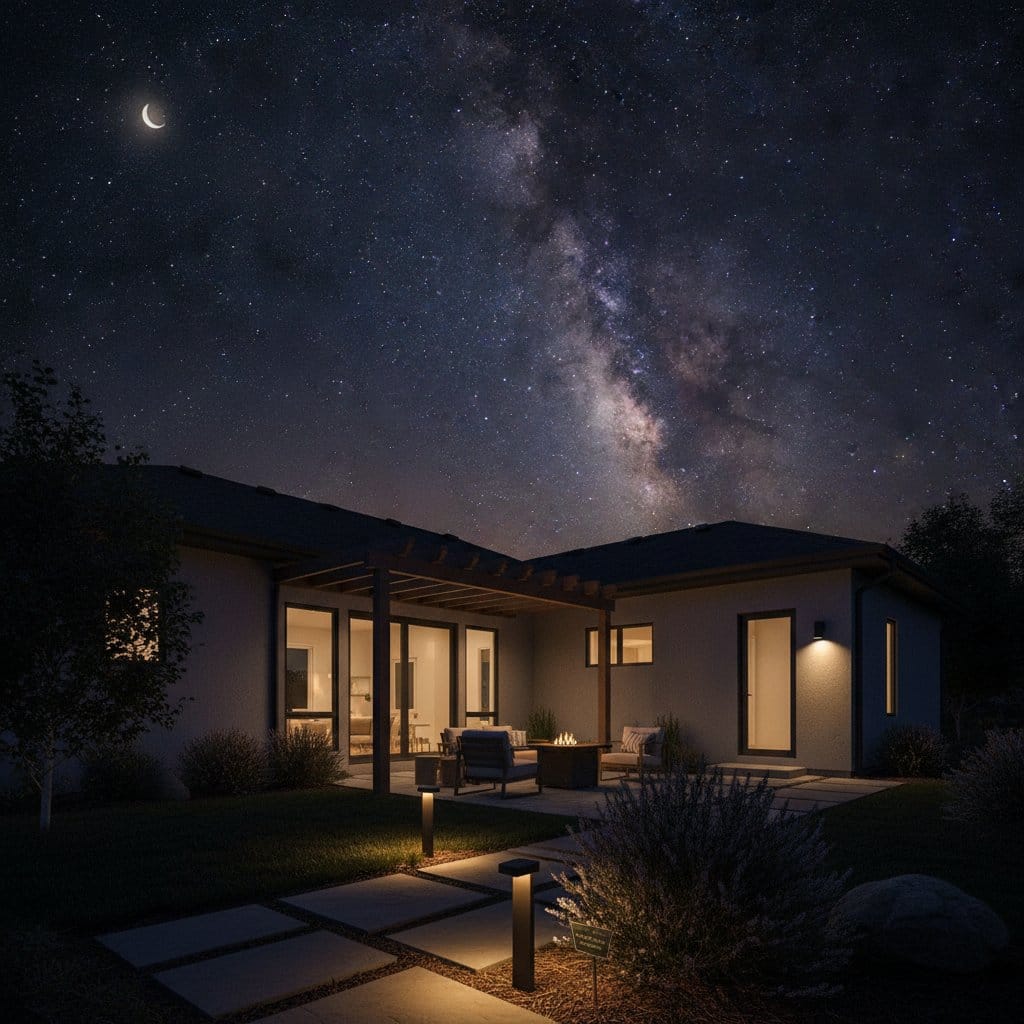
- Preserved Celestial Visibility: Downward-focused beams maintain the yard's tranquil darkness, allowing clear views of constellations and fostering a serene stargazing experience.
- Reduced Glare for Safety: Shielded designs eliminate blinding reflections, sharpening focus on pathways and reducing trip hazards during evening strolls.
- Substantial Energy Efficiency: Targeted application cuts electricity usage by 30 to 50 percent compared to traditional setups, yielding noticeable reductions in utility expenses over time.
- Respectful Boundary Control: Contained light prevents disturbances to neighbors, promoting harmonious community living.
- Support for Local Wildlife: Diminished artificial glow aids nocturnal creatures like birds, insects, and mammals in their natural behaviors, such as migration and foraging.
These benefits combine to create a yard that functions effectively while harmonizing with its surroundings.
Essential Features of Compliant Fixtures
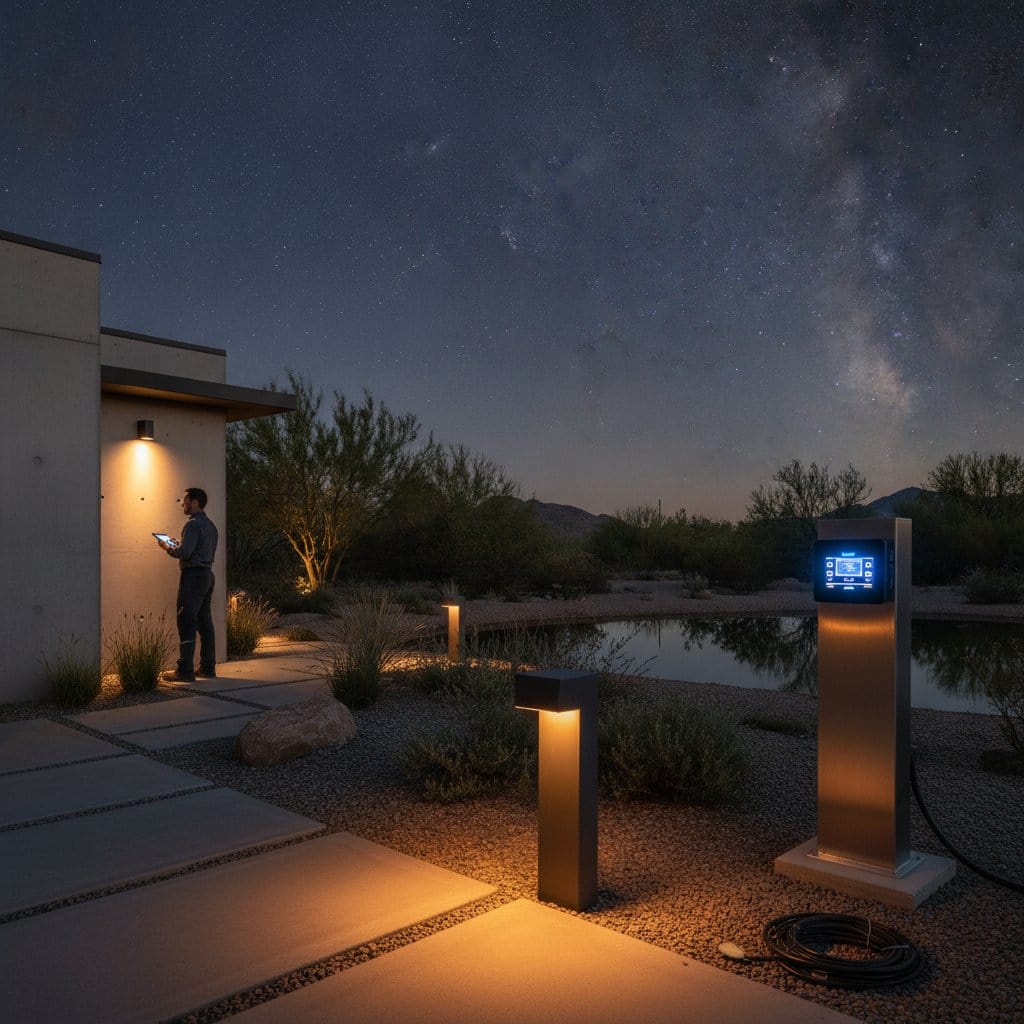
Fixture selection forms the foundation of dark sky compliance, prioritizing designs that shield light sources completely. From ground level, the bulb remains invisible, with all output angled toward the intended surface. Available in diverse aesthetics, from sleek contemporary to ornate traditional, these options integrate seamlessly with various architectural styles.
Effective fixture categories include:
- Pathway Illuminators: Compact, ground-mounted units that cast a gentle glow along trails, typically 12 to 18 inches tall to avoid upward spill.
- Wall Sconces: Models featuring hooded tops and diffused covers that project light downward onto entryways or facades.
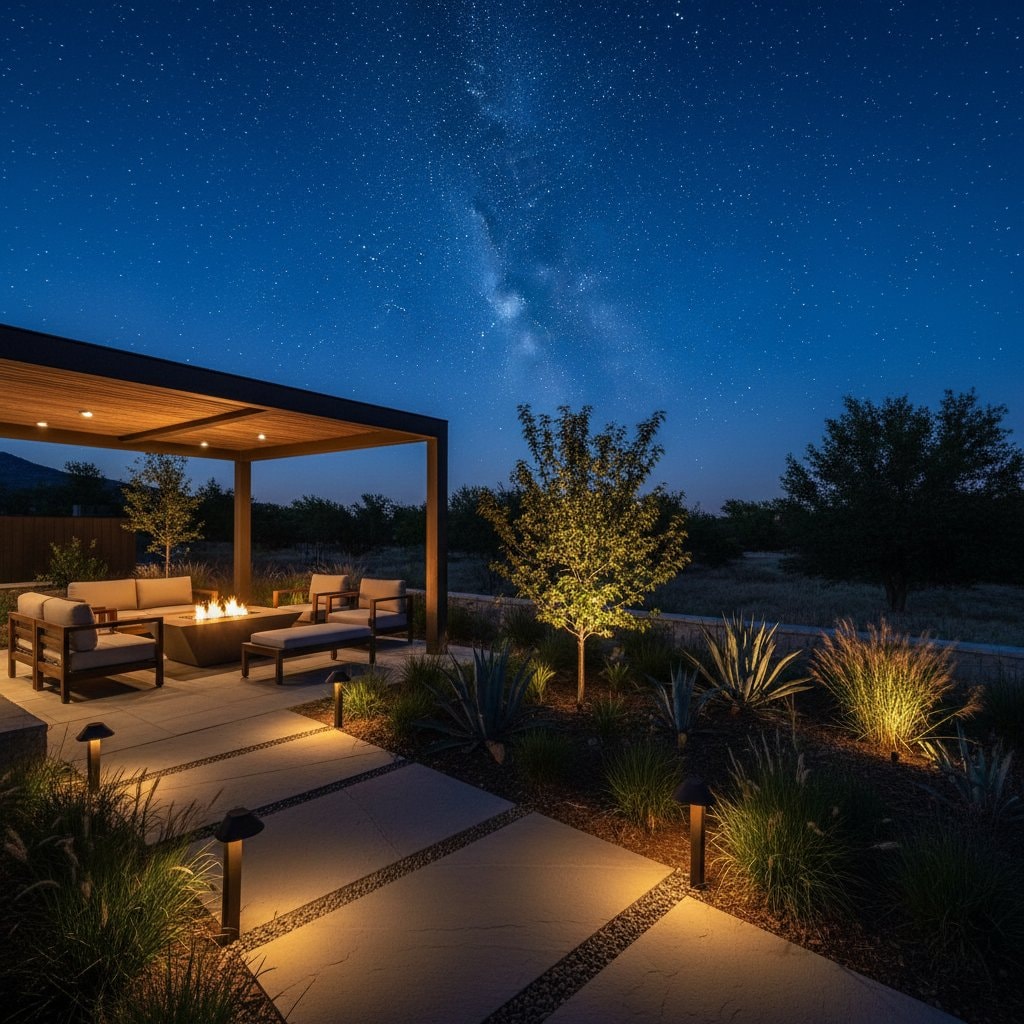
- Recessed Canopy Lights: Embedded in eaves or pergolas to deliver even coverage over seating zones without overhead brightness.
- Feature Spotlights: Adjustable down-aimed heads for trees or sculptures, simulating subtle moonlight with minimal wattage.
Steer clear of upward-oriented options like bare-bulb floods or wall-washing uplights, which amplify glare and skyglow disproportionately.
Selecting Optimal Bulbs and Intensity Levels
Fixture efficacy depends on bulb specifications; mismatched choices undermine even the best designs. Prioritize options that deliver soft, even illumination without overwhelming the scene.
- Color Spectrum: Select warm white tones between 2700K and 3000K for a cozy, non-intrusive effect; higher Kelvin ratings produce stark blue hues that disrupt night vision and mimic daylight harshly.
- Lumen Output: Match intensity to application; pathway lights require 100 to 300 lumens for subtle guidance, while sconces benefit from 500 to 800 lumens to cover broader areas adequately.
- Power Source: Opt for LEDs due to their longevity, low heat emission, and customizable dimming capabilities, often lasting 25,000 hours or more.
Incorporate smart controls like dimmers for gatherings or photocell timers for automatic dusk-to-dawn operation, allowing real-time adjustments to suit activities.
Designing an Effective Dark Sky Layout
Strategic planning ensures lighting complements rather than competes with the night. Map out functional zones first, prioritizing safety needs like stair risers and driveway edges, then incorporate decorative elements in gardens or focal points.
Layer illumination for balanced coverage:
- Core Safety Layers: Install low-profile lights along high-traffic routes, using narrow-beam optics to highlight treads without broad scatter.
- Selective Accents: Position one or two spots on standout features, such as a water element or specimen plant, at 20 to 40 percent of maximum brightness to draw attention subtly.
- General Ambiance: Deploy diffused sources around lounging spots, ensuring even distribution that invites relaxation without stark shadows.
Maintain 5- to 8-foot intervals for path lights, adjusting based on lumen strength to prevent hot spots or dark voids. This methodical layering guides movement fluidly while upholding sky clarity.
Navigating Regulations and Best Practices
Local jurisdictions often mandate dark sky elements in building codes, capping fixture heights at 20 feet, lumen totals per acre, or operational hours post-midnight. Consult your municipal planning office early to align designs with requirements, avoiding costly retrofits.
In ecologically sensitive regions, such as near parks or habitats, additional guidelines may restrict blue-spectrum lights to protect species like sea turtles or bats. Compliance not only satisfies legal standards but optimizes performance, ensuring lights activate precisely when required.
Proven Installation Techniques
Execution determines long-term success; improper setup can introduce inefficiencies. Aim for uniform ground coverage by mounting path lights at knee height and tilting overhead units 10 to 15 degrees downward.
Additional strategies encompass:
- Attaching visors or louvers to contain side spill.
- Integrating PIR sensors on perimeter lights for on-demand activation, conserving energy during quiet periods.
- Testing placements with portable lamps to refine angles before committing to hardwired systems.
This iterative process refines the scheme, achieving seamless integration with your landscape.
Sustaining Peak Performance
Routine upkeep preserves illumination quality and compliance. Accumulating grime on lenses can scatter light unpredictably, while overgrown foliage may redirect beams.
Schedule these tasks seasonally:
- Wipe fixtures with a soft cloth and mild solution to restore clarity.
- Replace any dimmed bulbs to maintain uniform output and color fidelity.
- Prune encroaching vegetation that alters light paths.
- Examine seals and conduits for moisture ingress, preventing electrical faults.
Consistent attention extends system lifespan and upholds the intended dark sky integrity.
Realizing a Harmonious Outdoor Haven
Dark sky lighting transforms your yard into a sanctuary where safety, style, and nature coexist. Navigate paths with confidence, admire highlighted flora under gentle glows, and gaze at unaltered stars overhead. Begin by retrofitting existing lights with shields and warm LEDs, then expand thoughtfully to cultivate enduring nighttime allure.