Outdoor Lighting That Protects Dark Skies at Night
I have always loved the quiet of a garden after dark. There is something calming about how the world settles into shadow, how the soft sounds of night take over, and how a bit of light can make even the simplest path feel magical. Yet that same light, if handled carelessly, can rob the night of its depth. Too many yards glow like parking lots, washing out the stars and tiring the eyes. The challenge for homeowners is finding a way to enjoy light outdoors without drowning the night in it.
Understanding Light Pollution in the Landscape
Light pollution is not only a problem for city planners or astronomers. It touches every neighborhood where outdoor lighting spills beyond its purpose. In simple terms, light pollution happens when artificial light shines upward or outward instead of where it is needed. The result is glare, wasted energy, and a sky that loses its natural darkness.
There are three main kinds of light pollution that homeowners can influence directly:
- Glare happens when light is too bright for comfort, often from exposed bulbs or unshielded fixtures.
- Light trespass occurs when light spills into areas where it is not wanted, such as a neighbor’s window or a nearby field.
- Skyglow is the faint, hazy brightness that hides stars, often visible even miles from a city.
Each of these can be reduced through careful design choices. Good outdoor lighting should serve a purpose, whether for safety, beauty, or navigation, while keeping the night intact for everyone.
The Principle of Dark-Sky Lighting
Dark-sky lighting is a thoughtful approach that respects both function and atmosphere. It means using fixtures that direct light downward, minimize glare, and prevent spillover. The idea is not to remove light altogether but to use it wisely, much as a painter uses contrast to bring attention to certain details while leaving space for shadow.
A dark-sky-friendly fixture has three main qualities:
- Full shielding so that no light escapes upward.
- Warm color temperature, often described as soft white or amber, which feels natural to the eyes and less harsh to wildlife.
- Controlled brightness, enough to see clearly without overpowering the surroundings.
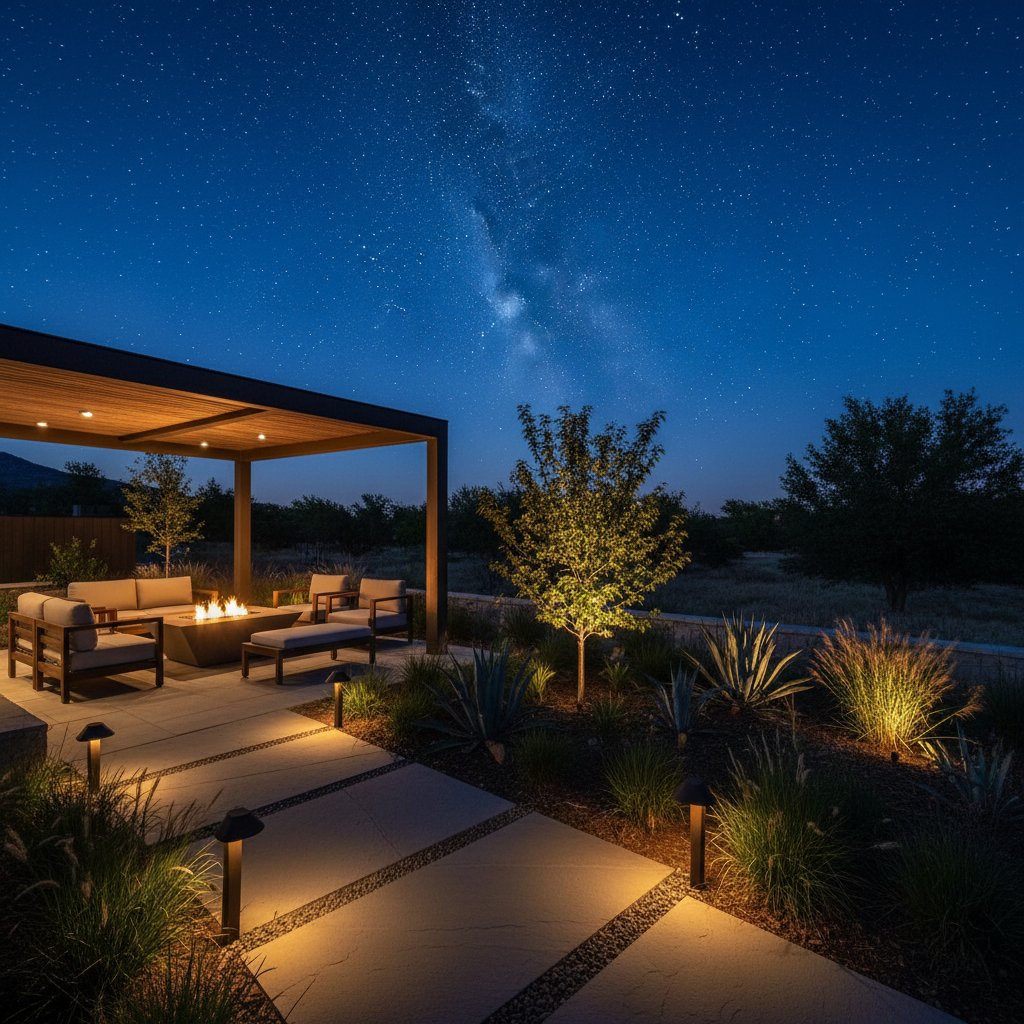
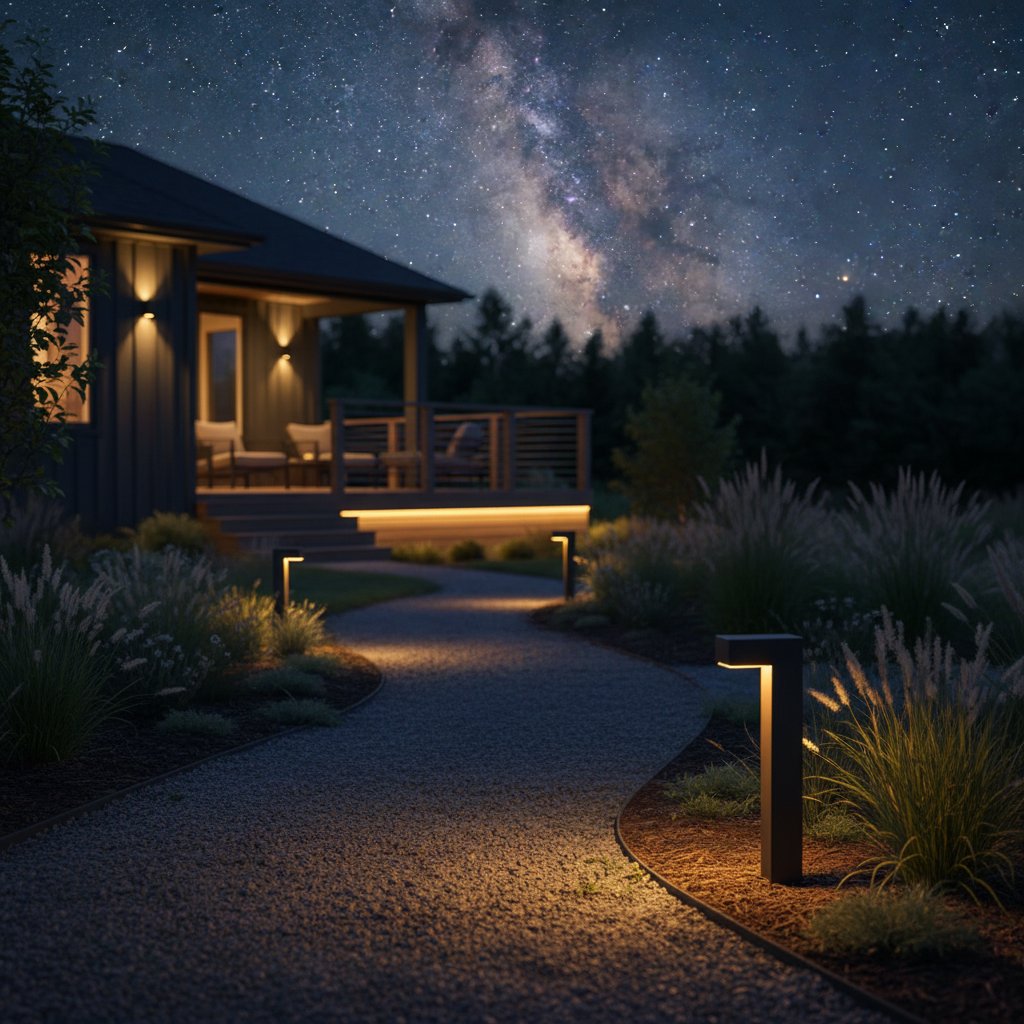
When these principles are applied, a yard feels peaceful rather than overexposed. Paths are clear, trees are outlined softly, and the stars remain visible above.
Choosing Fixtures That Work with the Night
Finding the right lighting fixtures can feel overwhelming, but a few simple guidelines can make the process easier. Start by thinking about what you truly need to illuminate. A driveway, a porch step, or a seating area may require different levels of light, and not every space needs the same treatment.
Here are a few fixture types that support dark-sky goals:
- Downlights: Mounted under eaves or on walls, these shine light directly downward, creating calm pools of illumination.
- Bollard lights: Low, shielded posts that gently mark pathways without glare.
- Step lights: Built into risers or railings, they blend into the design while improving safety.
- Motion-sensor lights: Activate only when movement is detected, saving energy and avoiding constant brightness.
- Solar fixtures: Use stored sunlight to produce a soft, localized glow that fades naturally through the night.
A good rule of thumb is to keep the source of light hidden from direct view. When the eye is not drawn to a bright bulb, the space feels more balanced and restful.
The Role of Color and Intensity
Brightness alone does not define good lighting. The color of the light also sets the mood and influences how the garden feels after dark. Cool white light, often seen in commercial areas, can feel harsh and sterile in a residential yard. Warmer tones, in the range of soft white or amber, create a welcoming glow that flatters plants and stonework.
Intensity should match the task. A path may need only subtle guidance, while a working area like an outdoor kitchen might require stronger illumination. The trick is to layer light sources so that brightness builds only where necessary. Dimmers and adjustable fixtures can help you fine-tune the look as the evening unfolds.
How Poor Lighting Affects the Environment
Misplaced light reaches far beyond the boundaries of a single yard. It influences how birds migrate, how insects behave, and even how plants grow. Many species depend on natural darkness to feed, rest, or reproduce. When that rhythm is disrupted, ecosystems change in ways that are hard to reverse. Even human sleep patterns can be affected by excessive nighttime brightness.
By choosing dark-sky lighting, homeowners take part in restoring a balance that benefits both people and wildlife. The effect may seem small at first, but thoughtful lighting choices add up across neighborhoods and communities. When several homes use shielded fixtures and reduce glare, the night sky becomes clearer for everyone.
Designing for Function and Beauty
A well-lit garden does more than improve safety. It reveals textures and forms that might go unnoticed by day. The way light grazes the surface of a stone wall or filters through the leaves of a tree can change the entire mood of a space.
When planning your lighting design, think about how you want to move through the yard after dark. Start with essential lighting for paths and steps, then consider accent lighting for focal points like sculptures or water features. Avoid lighting every corner. Leaving some areas in shadow creates depth and draws attention to the areas you want to highlight.
Repeating elements can bring harmony to the design. Matching fixtures or consistent color tones help tie the space together. Even subtle cues, like using the same style of downlight along a walkway and near the patio, can make the whole yard feel cohesive.
Starting Small and Learning as You Go
Homeowners often feel pressure to finish their outdoor lighting project all at once, but gradual progress leads to better results. Begin with a few key fixtures, live with them for a while, and observe how they change the atmosphere. Notice whether the light feels comfortable from inside the house as well as outside. See how it interacts with moonlight and seasonal changes.
If you find certain areas still too bright, consider swapping bulbs for lower wattage options or repositioning fixtures. Sometimes even angling a light slightly downward can make a big difference. The process is as much about observation as installation. Every yard has its own rhythm, and finding the right balance takes patience.
Living with Your Lighting Design
Once your lighting plan feels settled, treat it as part of the garden’s ongoing care. Fixtures gather dust, bulbs age, and plants grow taller, all of which can change how light behaves. Cleaning lenses and trimming foliage help maintain the quality of illumination. This is also a good time to reassess whether any lights remain on longer than needed. Timers or smart controls can keep energy use in check without constant attention.
The reward for this care is more than a beautiful yard. It is the return of quiet evenings where the stars still shine, where pathways glow just enough, and where the night feels alive rather than obscured. A well-lit garden should never compete with the sky.
Moving Toward a Gentler Night
Outdoor lighting can serve both people and nature when it is designed with restraint. Each thoughtful choice, from fixture style to bulb color, shapes how the night feels and how the environment responds.
In the end, dark-sky lighting is less about restriction and more about respect. It respects the needs of wildlife, the comfort of neighbors, and the beauty of the stars above.