Outdoor Lights That Minimize Glare and Light Pollution
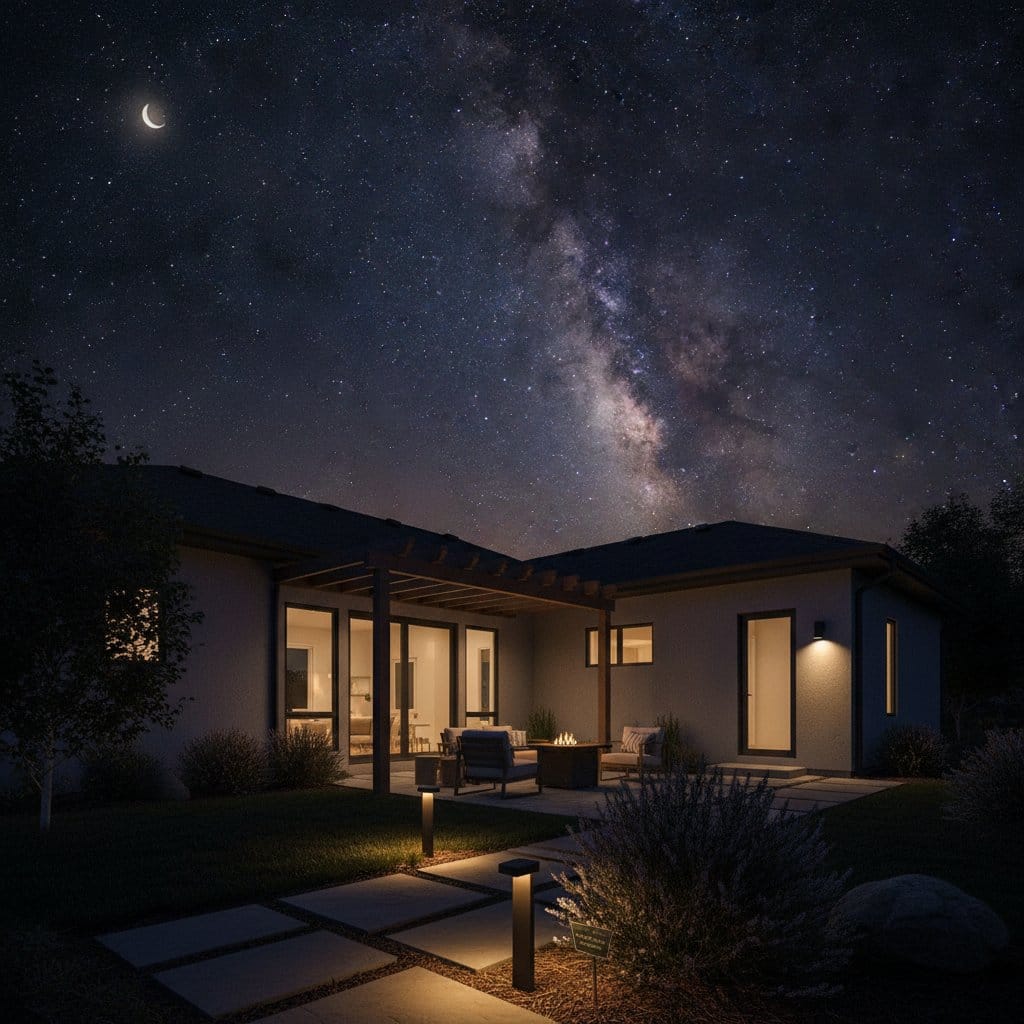
Consider the transformation in a garden under uncontrolled lighting. A majestic oak tree, which casts gentle shadows by day, appears stark and lifeless when bathed in harsh floodlight. Stars vanish behind an artificial haze, underscoring how light must enhance rather than dominate the night. Proper outdoor illumination reveals landscape details while preserving the serene beauty overhead.
Understanding Light Pollution in Practical Contexts
Light pollution extends beyond urban centers to backyards and rural properties. It refers to unintended light spill from fixtures that exceeds necessary boundaries. Common manifestations include glare, skyglow, and light trespass, each diminishing the natural ambiance of outdoor spaces.
- Glare produces intense brightness that impairs vision, leading to eye strain or momentary disorientation from direct exposure.
- Skyglow forms a luminous veil over areas, obscuring constellations and altering the night's tranquil atmosphere.
- Light trespass intrudes light into unintended areas, such as neighboring windows or secluded garden corners.
These issues erode the depth and texture of landscapes, replacing nuanced shadows with uniformity. Addressing them involves directing light precisely, ensuring illumination serves its purpose without excess.
Core Principles of Dark Sky Lighting
Dark sky lighting focuses on delivering light solely to targeted areas with measured intensity. This approach combines technical design with intentional planning. Begin by identifying specific visibility needs, such as pathways or focal plants, instead of defaulting to maximum output.
The foundation rests on three key elements:
- Shielding directs illumination downward or toward surfaces, concealing bulbs to prevent upward or lateral escape.
- Color Temperature favors warm hues, akin to incandescent glows around 2700K, over stark cool tones that mimic daylight.
- Timing and Control employs automated systems to activate lights briefly, aligning usage with actual activity.
These guidelines foster innovative designs that harmonize with nocturnal cycles, enhancing rather than disrupting the environment.
Selecting Fixtures Aligned with Dark Sky Standards
Prioritize fixture architecture over mere lumen ratings when choosing outdoor lights. Effective designs incorporate hoods, diffusers, and cut-off mechanisms to contain light spill. Seek products certified as full cut-off or dark sky compliant, verified by organizations like the International Dark-Sky Association.
Recommended options include:
- Downlights installed beneath eaves or on vertical surfaces, casting even pools on walkways or patios.
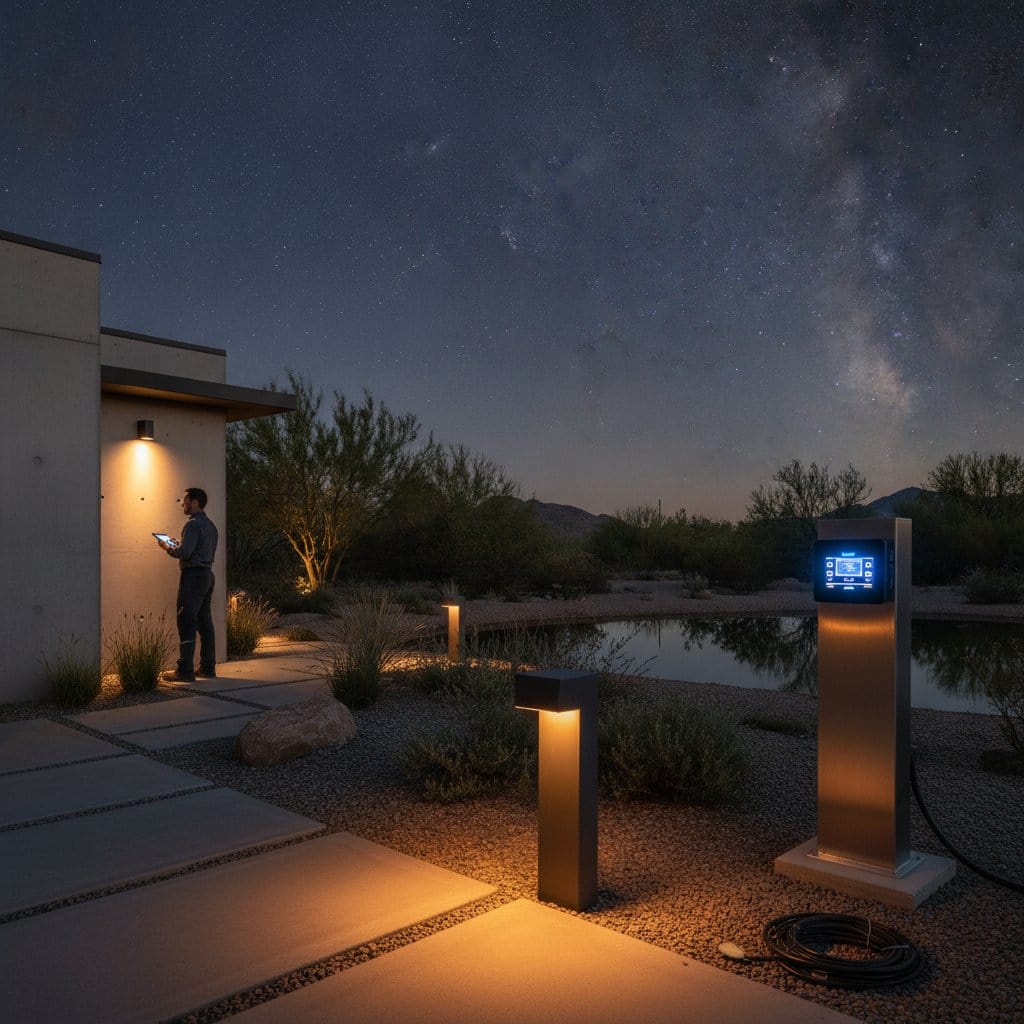
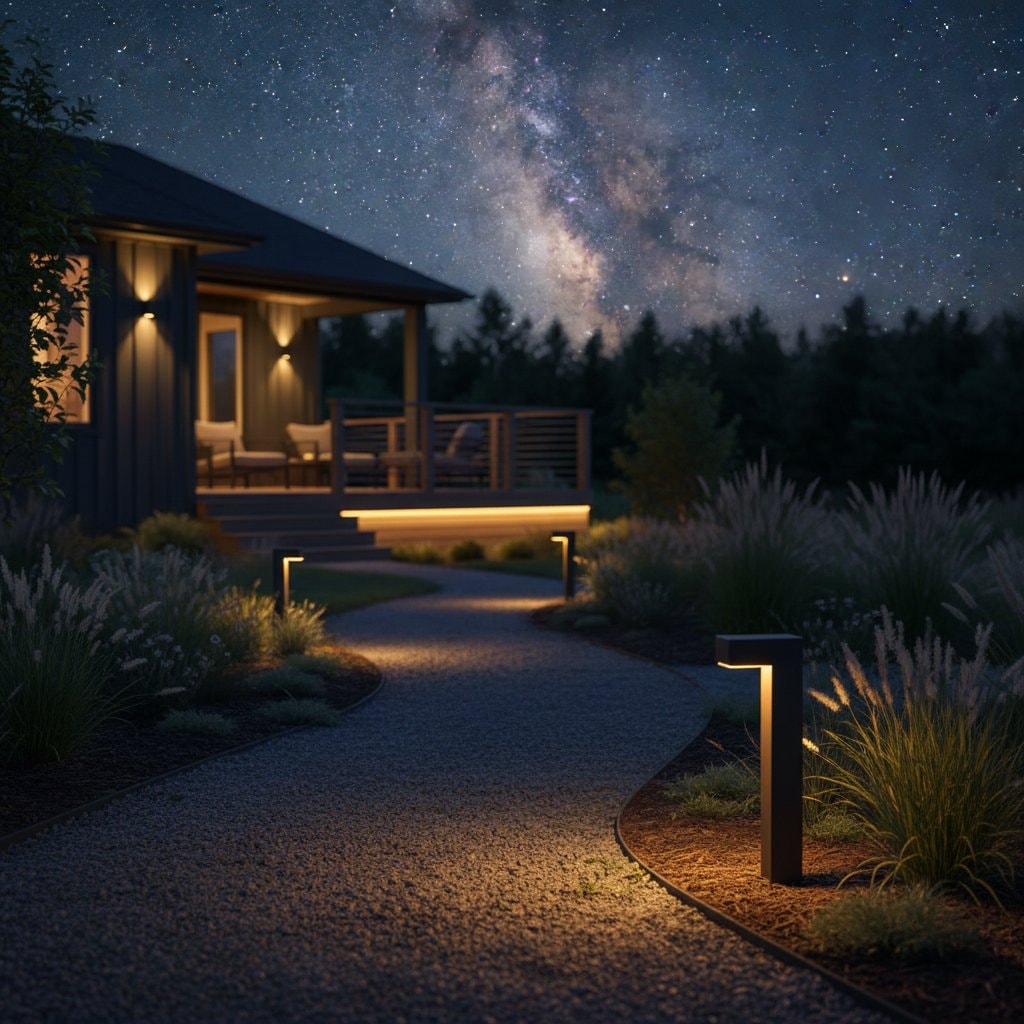
- Path lights featuring hooded tops that illuminate ground-level paths without elevating beams skyward.
- Recessed step lights embedded in walls or stairs, providing subtle guidance for safe navigation.
- Bollard lights with directional louvers positioned along borders, limiting spread to essential zones like driveways.
Steer clear of exposed-bulb models, including unshielded floods or spherical lanterns, which promote inefficiency and pollution despite initial appeal.
Optimizing Color and Intensity for Harmony
Selecting appropriate color temperature transforms outdoor scenes. Warm lights, measuring 2200K to 3000K, evoke sunset tones that integrate seamlessly with foliage and stone. In contrast, cool variants above 4000K create clinical effects, exacerbating glare and interfering with wildlife behaviors like bird migration or insect pollination.
Match intensity to functional requirements rather than fixture capacity. Overly bright setups trigger pupil constriction, reducing overall visibility in adjacent dim areas. Employ a layered strategy: base layers for general safety at 5-10 lumens per square foot, supplemented by accents for highlights on architectural elements or specimen plants.
Crafting Balanced Lighting Designs
Effective plans emphasize cohesion over dominance, weaving light into the landscape's contours. Visualize daytime forms to pinpoint nocturnal emphases, such as grazing a pergola with sidelight or silhouetting a fountain. Consistent styles and temperatures across installations promote unity, avoiding visual discord from mismatched sources.
Experiment iteratively with portable options like LED stake lights to preview effects. Position them to assess shadow play, adjusting for even coverage without hotspots. This method refines placements, preventing costly permanent errors and ensuring adaptability to seasonal changes.
Preserving the Night Sky Through Collective Effort
Individual lighting decisions influence broader ecosystems. Shielded installations collectively dim regional skyglow, benefiting astronomy enthusiasts and reducing energy demands. Community initiatives often promote these practices via guidelines or incentives, amplifying local impacts.
Beyond celestial views, controlled light sustains biodiversity. Nocturnal species, including bats that control pests and amphibians vital to food chains, navigate by natural darkness cues. Minimizing intrusion maintains these balances, while efficiency cuts utility bills by up to 50 percent in optimized systems.
Blending Utility with Aesthetic Appeal
Lighting serves dual roles: ensuring security and evoking ambiance. Steady, moderated beams on approaches foster confidence without intrusion. In leisure zones like seating nooks, varied intensities reveal textures, such as moonlight filtering through vines enhanced by low uplights.
Incorporate shadows deliberately as compositional tools. Unlit expanses provide respite, heightening illuminated features' impact. For instance, a 10-watt spot at a tree's base can sculpt dramatic forms, far surpassing broad washes in evocative power.
Refining Installations Seasonally
Outdoor setups evolve with landscapes and lifestyles. Annual reviews address shifts, like overgrown hedges redirecting beams or new patios requiring adjustments. Inspect for dust on lenses or degraded seals, which diminish performance over time.
Integrate responsive technologies, such as PIR motion detectors activating at 20-foot ranges for brief intervals. Dimmers enable graduated settings, from 100 percent at dusk to 30 percent overnight. These adaptations sustain efficacy and subtlety amid changing conditions.
Embracing Restrained Illumination
An ideal system operates seamlessly, drawing focus to the garden rather than its mechanics. Emerge at twilight to encounter defined paths and subtle highlights amid lingering stars. Over time, reliance on fewer, strategic fixtures emerges, cultivating a profound connection to the night's inherent serenity.
Refinement yields enduring satisfaction, where light amplifies nature's quiet drama. This mindful approach not only beautifies personal spaces but also stewards shared nocturnal heritage for future enjoyment.