Dark Garden Design with Black and Plum Plants
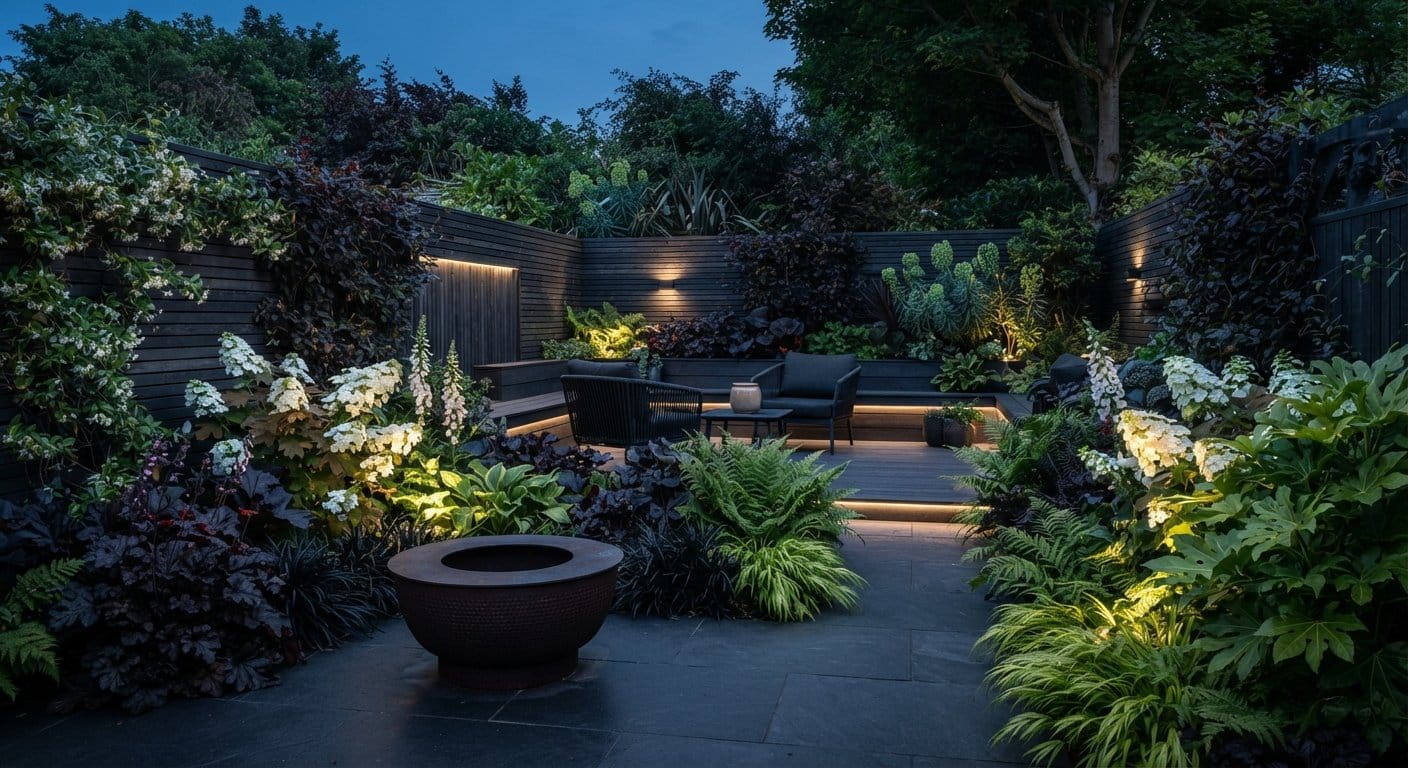
Some gardens linger in memory because of a single contrast. A pale stone path winds through nearly black leaves. A plum colored flower catches the last light of the day. Dark planting feels intimate and settled when balanced with texture and softer tones. For homeowners exploring black and plum plants, the goal is not to darken every corner. The goal is to give these rich colors enough room and contrast to feel intentional.
A dark garden suits a small courtyard, a border beside a porch, or a broad landscape with layered beds. Black foliage rarely appears pure black. Leaves often carry undertones of burgundy, bronze, green, or purple. These shifts become clearer as light changes throughout the day. Plum shades also shift from reddish violet to deep wine. Choosing plants by their actual leaf and flower colors, rather than by a label alone, helps a design feel grounded.
Start with Light and Contrast
Dark leaves absorb light, so placement matters. In deep shade, very dark plants can disappear into the background. Give them morning sun or dappled light when the plant's needs allow. Set them near a lighter surface such as a cream wall, gravel path, or silver foliage. In a sunny spot, check each plant's water needs and exposure before planting. A dark leaf does not automatically mean a plant can tolerate heat or dry soil.
Consider the view from inside the house as well as the view from the garden path. A cluster of dark foliage near a bright doorway can frame the entrance. A plum toned shrub at the back of a border can draw the eye outward. Small contrasts often prove more effective than a large sweep of one color.
Helpful partners for dark plants include:
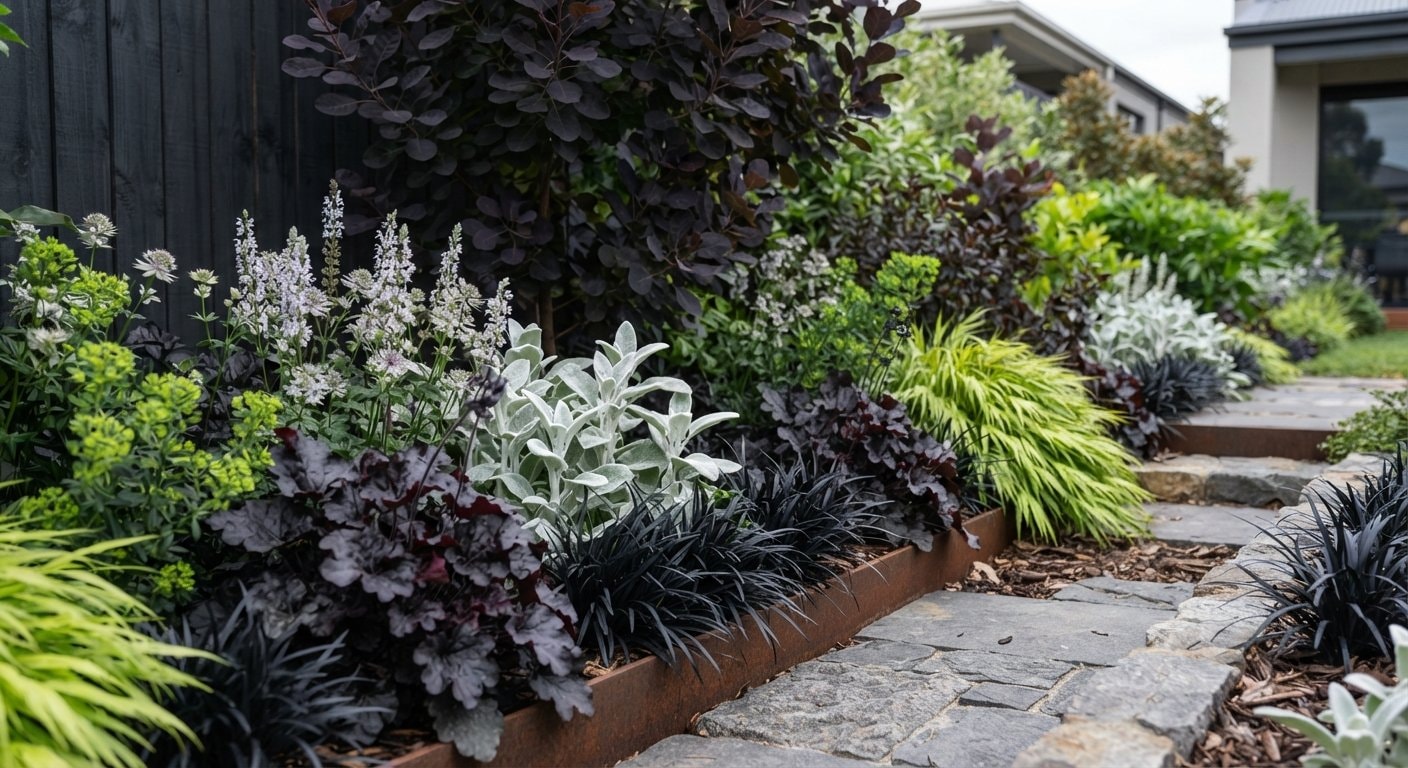
- Silver and soft gray foliage, which reflects light and gives deep colors breathing room.
- Cream, white, and pale pink flowers, which stand out clearly against dark leaves.
- Fresh green plants, which keep a moody palette from feeling heavy.
- Natural materials such as weathered wood, stone, and muted gravel, which lend the planting a settled look.
These combinations can be tested with pots before anything goes into the ground. Moving a container through the day also reveals where its color reads best.
Choose Plants for More Than Color
Dark foliage can come from perennials, shrubs, annuals, and ornamental grasses. Their shapes and growing habits matter as much as their color. A broad leaf creates a different feeling from a narrow, upright blade, even when both are nearly black. Repeating a few plants helps the garden feel connected. Varying height and leaf shape keeps the planting from looking flat.
For a dramatic focal point, consider plants such as Black Lace elderberry with finely cut, dark leaves. Ninebark cultivars with deep purple foliage bring a fuller shrub form. Check the mature size of any shrub before placing it near a path or foundation. Give it room to develop rather than relying on repeated pruning to keep it small.
For lower layers, dark coral bells offer a range of leaf colors from near black to deep plum. Their mounded shape works well along the front of a border. Their foliage can carry the design even when flowers are absent. Dark sweet potato vine can spill over the edges of containers. Purple fountain grass adds movement and a soft, arching outline. Both can be useful seasonal choices, though their care and suitability depend on local conditions.
When choosing plants, ask these questions:
- How much sun and moisture does this spot receive?
- What will the plant's mature width and height be?
- Does it keep its foliage through the growing season, or is its color temporary?
- Will the plant need regular dividing, pruning, or replacement?
- Does it suit the soil and growing conditions in the yard?
These questions help a beautiful color choice become a practical one.
Use Plum Tones to Soften the Mood
Plum flowers and leaves can make black foliage feel less stark. Deep purple salvia, burgundy dahlias, and plum colored petunias can echo the dark tones without making every plant look alike. Their blooms bring seasonal variation. Shrubs and perennials provide a steady framework.
A useful approach is to choose one dominant dark foliage plant, then repeat its color in smaller amounts elsewhere. For example, a dark shrub near the back of a bed might be echoed by coral bells near the path and a few plum flowers in a container. That repetition gives the eye a gentle route through the garden. It also makes the palette feel considered without requiring every plant to match.
Texture can temper the mood too. Pair cut leaves with rounded ones. Pair upright grass with low groundcover. Pair glossy foliage with matte surfaces. When all the leaves share the same shape and finish, dark planting may read as a solid mass. A few differences create depth and keep the composition lively.
Build a Border in Layers
Think of a planting bed as a sequence of heights. Taller shrubs or grasses can anchor the rear. Medium perennials fill the middle. Low plants soften the edge. Leave openings for light colored flowers or foliage so dark plants remain visible. In a narrow bed, fewer well placed plants usually look calmer than many varieties crowded together.
Hardscape choices can help establish the tone. Pale gravel or light stone gives dark foliage a crisp edge. A charcoal planter can blend quietly with the leaves. A clay pot introduces warmth. Repeating one or two materials in several places makes separate beds and containers feel related.
Before planting a large area, arrange pots in place and observe them from different viewpoints. Notice how the colors look at the doorway, from a window, and along the route people use most. A composition that works only from one angle may need a small adjustment. Taking time at this stage is easier than moving established plants later.
Living with Dark Planting
Dark gardens benefit from ordinary care done thoughtfully. Keep plants suited to their location. Water deeply when needed. Avoid letting containers dry out unnoticed. Mulch can help conserve moisture and make a bed look finished, but keep it from pressing directly against plant stems. Remove damaged leaves so healthy foliage remains the focus. Divide perennials when they outgrow their space.
Start with one border or a few containers rather than redesigning the whole yard at once. Live with the palette through changing light and weather. If the effect feels too somber, add a pale flower, a silver leaf, or a brighter green. If it feels scattered, repeat one dark plant in two or three locations.
A successful moody garden is personal, not prescriptive. Choose black and plum plants that thrive in the conditions you have. Repeat their colors with care. Let contrasting textures do some of the work. A few deliberate choices can give a familiar landscape a quieter, richer character.