Sustainable Yards: Upcycled Pavers for Eco-Conscious Hardscaping
Homeowners seek ways to craft appealing outdoor spaces without relying solely on fresh materials. Upcycled pavers emerge as a practical choice for constructing patios, walkways, and driveways that balance aesthetics with environmental care. These reclaimed elements cut expenses, limit landfill contributions, and introduce distinctive character absent in mass-produced options. For any hardscape endeavor, incorporating upcycled pavers fosters a greener yard design.
Defining Upcycled Pavers
Upcycled pavers consist of salvaged concrete, brick, or stone retrieved from past construction or demolition sites. Rather than disposal, workers clean, categorize, and repurpose these items for contemporary applications. Sources include decommissioned roadways, dismantled building bases, surplus from landscaping operations, or manufacturing batches with non-standard dimensions or hues. This approach conserves energy and virgin resources otherwise required for novel production.
Reasons Homeowners Select Upcycled Pavers
Sustainability drives the preference for upcycled pavers among many. Repurposing cuts emissions tied to manufacturing and shipping processes. It also prevents materials from accumulating in waste sites. Financial savings arise as these pavers typically price lower than equivalents, while their patinated surfaces impart historical depth and tactile interest to landscapes.
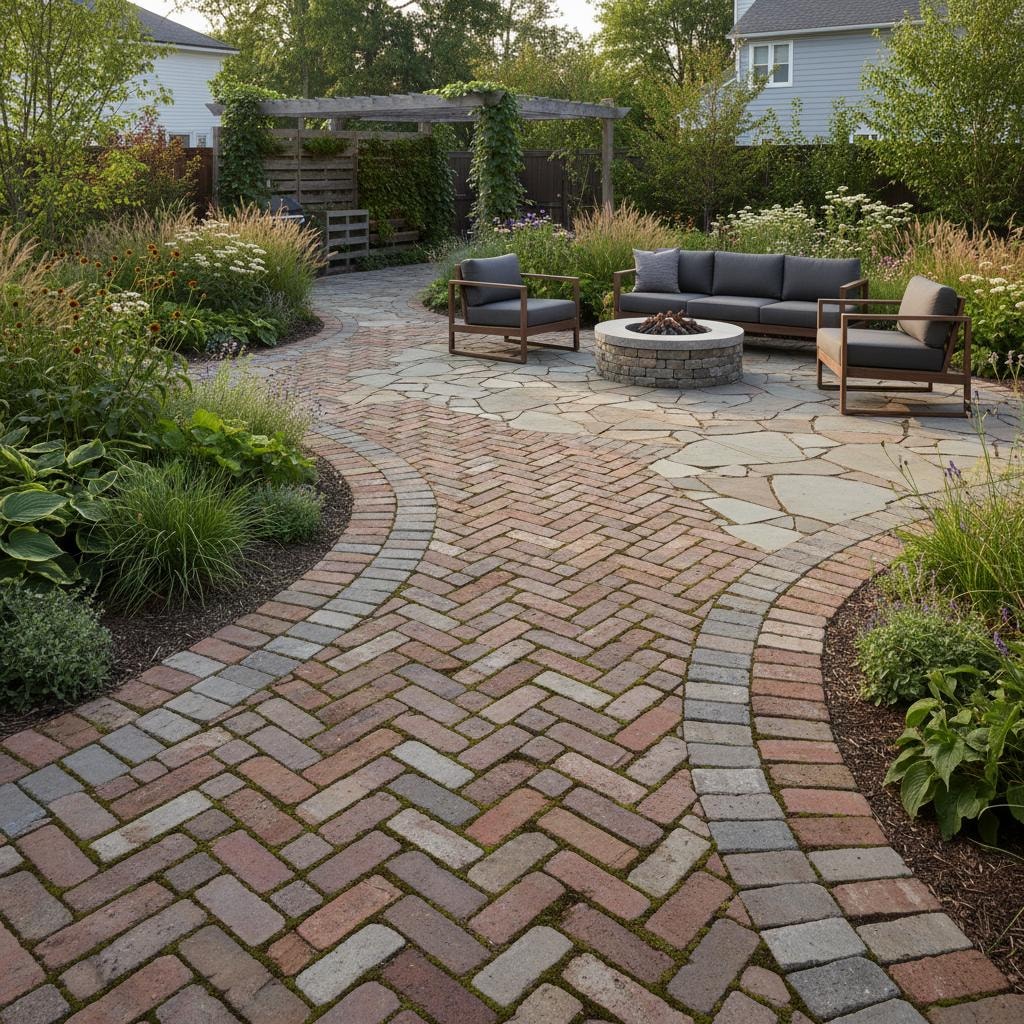
Design versatility stands out as another advantage. Blend upcycled pavers with contemporary ones to craft dynamic compositions. Consider employing reclaimed bricks across a central patio expanse complemented by fresh stone borders for precise contours. Such combinations yield layered visuals and optimize resource allocation.
Pricing and Sourcing Options
Prices for upcycled pavers fluctuate based on type, quality, and origin. Reclaimed bricks generally fall between one and three dollars per square foot, with salvaged concrete pavers positioned marginally below that range. Factor in delivery charges, which escalate with supplier distance. Landscaping outlets often offer these by pallet quantities, or permit selection of singular units.
Consult contractors about reclaimed inventory from regional demolition partnerships. Numerous firms now segregate components for recirculation. Investigate reuse depots for building supplies or digital platforms for bargains. Opting for proximate vendors trims transport expenses and bolsters local sustainability initiatives.
Project Planning Essentials
Commence by precisely dimensioning the intended area and clarifying its purpose. Paver dimensions, configurations, and arrangements shape both form and utility in the hardscape. Given the variability in salvaged stock, devise layouts that embrace diversity, such as irregular mosaics, herringbone arrangements, or basketweave motifs.
Base preparation remains essential regardless of material origins. Establish a firm underlayer using compressed gravel topped with sand to avert future settlement or irregularities. Position flawed or uneven pavers in less-traveled zones or as decorative edges. Integrate fine gravel into seams to secure placement and promote water runoff.
Ensuring Durability Through Maintenance
Proper installation equips upcycled pavers to rival the lifespan of pristine counterparts. Routine care involves clearing surface litter, eradicating joint weeds, and periodically refreshing sand or gravel infills. Sealing provides an elective safeguard against fading tones and moisture ingress. Pre-aged exteriors resist evident deterioration, concealing subtle marks and simplifying long-term preservation.
Weighing Advantages and Drawbacks
Advantages:
- Economical compared to virgin pavers
- Diminished ecological impact
- Distinctive, timeworn aesthetics
- Robust endurance
- Adaptable across diverse styles
Drawbacks:
- Variable availability and dimensions
- Increased effort in preparation and sorting
- Inconsistent pigmentation
- Necessity for adaptive patterning
These considerations guide alignment with project visions and fiscal plans.
Steps to Implement Your Vision
Embracing reclaimed resources extends beyond waste diversion; it integrates your space into a regenerative resource loop. Transitioning to eco-practices becomes accessible through upcycled pavers, yielding elegance intertwined with intent. Begin with local prospecting, draft adaptable schematics, and prioritize foundational stability. The outcome manifests as a resilient, narrative-rich yard that sustains both environment and enjoyment for generations.