Mycelium Pavers Bring Living Materials to Hardscaping
Many homeowners notice that patios and driveways feel disconnected from the surrounding garden. Mycelium pavers address this gap by creating surfaces that support airflow, allow minor self-repair, and integrate with nearby plants.
How Mycelium Functions as a Building Material
Mycelium consists of the thread-like networks that fungi use to absorb nutrients. Grown inside molds filled with straw or sawdust, the threads bind into solid blocks within five to seven days. After the blocks reach full density, a low-heat drying step halts growth and leaves a firm, lightweight panel.
These panels require far less energy to produce than concrete or fired brick. They store carbon absorbed during the growth phase and can be composted at the end of their service life.
Evaluating Your Site Conditions
Walk the area at different times of day. Note spots where water pools, where foot traffic is heaviest, and where existing plants already soften the edges. Mycelium pavers suit paths, seating pads, and borders around raised beds because they permit drainage and root movement.
Record soil type and sun exposure. Shaded zones favor moss or thyme between joints, while sunny zones support low clover. These observations guide both layout and plant choices.
Designing the Layout
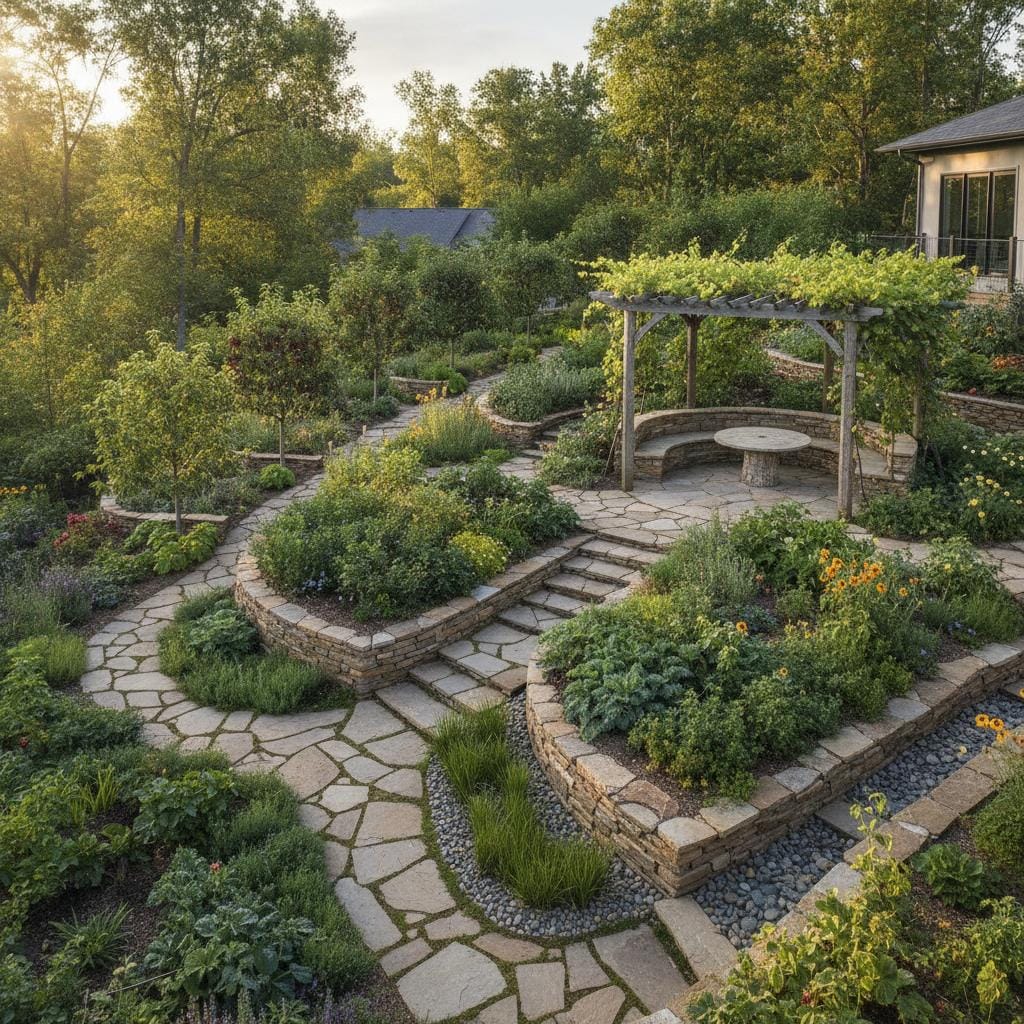
Sketch the desired routes first, keeping curves gentle to match plant growth patterns. Mycelium pavers can be ordered in irregular shapes, so sharp ninety-degree corners are unnecessary. Allow four to six inches of compacted gravel and two inches of coarse sand beneath each panel for stability and drainage.
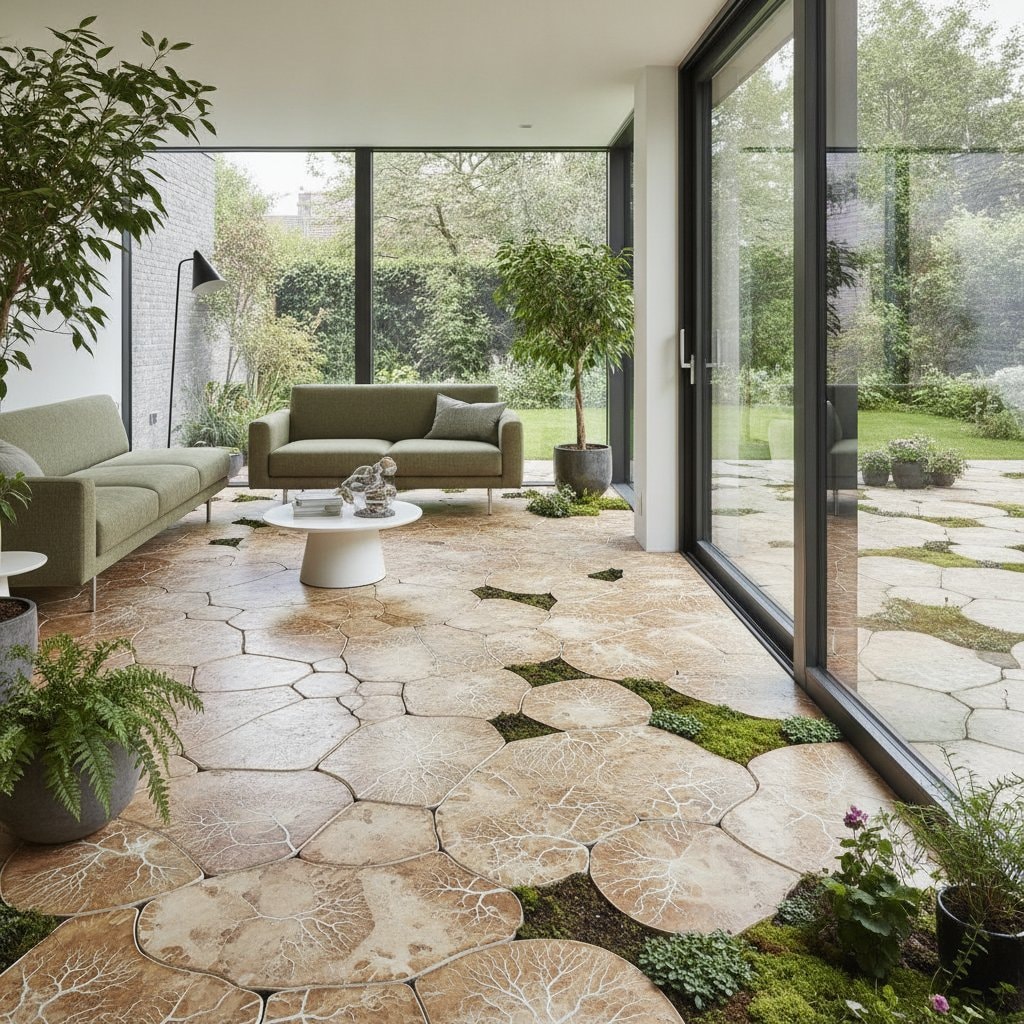
Leave quarter-inch gaps between panels. These spaces let water reach the soil and give roots room to expand without lifting the surface.
Installation Steps
Clear vegetation and roots, then level the base. Place panels by hand; their light weight removes the need for machinery. After setting each panel, check level with a straight board and adjust the sand layer as needed. Fill the gaps with fine gravel, moss plugs, or creeping thyme seedlings.
Ongoing Maintenance
Sweep loose debris monthly. In humid regions, a light rinse with a garden hose prevents surface dust from settling into pores. Avoid sealers or paints that close the material to air exchange. If a panel cracks under heavy point loads, lift it out and replace it with a spare grown to the same dimensions.
Pairing Pavers with Plants
Creeping thyme, Irish moss, and blue star creeper fill joints quickly and soften the transition from path to bed. The porous mycelium surface moderates soil temperature, which helps roots in adjacent plantings. Use the same pavers as edging for raised beds to maintain a consistent material language throughout the garden.
Environmental Performance
Cement production releases roughly one ton of carbon dioxide per ton of finished concrete. Mycelium panels reverse that equation by sequestering carbon during growth. At the close of their useful period, the panels break down in a standard compost pile within one season, returning nutrients to the soil.
Long-Term Garden Integration
Over successive seasons the pavers weather to a muted tone that matches surrounding bark and foliage. Small organisms colonize the gaps, increasing local biodiversity. Regular observation of drainage and plant spread allows minor adjustments that keep the surface functional and visually cohesive.
This approach turns hardscaping into an active part of the garden ecosystem rather than a barrier to it.