Elevating Shade Gardens: Premier Plants for Low-Light Areas in 2025
Gardens often include secluded spots where sunlight arrives gently, sifting through branches in subtle patterns. These shaded zones present opportunities rather than obstacles for gardeners. By embracing the unique conditions of shade, individuals can cultivate serene landscapes that enhance the overall yard. The key lies in observing and adapting to the environment rather than imposing demands upon it.
Assessing Your Garden's Light Dynamics
Shade varies considerably across a property. It encompasses full shade under dense canopies, partial shade with intermittent sun exposure, and dappled light from filtered overhead growth. To identify these patterns, spend time tracking sunlight movement from dawn to dusk over several days. Note areas that receive direct rays for less than two hours daily versus those with prolonged soft illumination.
This evaluation informs plant selection precisely. For instance, full shade suits moisture-loving species that prefer consistent coolness, while partial shade accommodates plants tolerant of brief brighter periods. Tools such as a simple journal or smartphone app can record these observations, ensuring choices align with actual conditions. Understanding this rhythm prevents common errors like planting sun-dependent varieties in persistently dim locations.
Spotlight on Shade-Adapted Plant Varieties
Low-light gardens emphasize foliage form, color variation, and subtle bloom accents over vivid floral displays. Selecting resilient species creates visual interest through layered textures and tonal shifts. Below are standout options for 2025, each chosen for reliability in shaded settings.
-
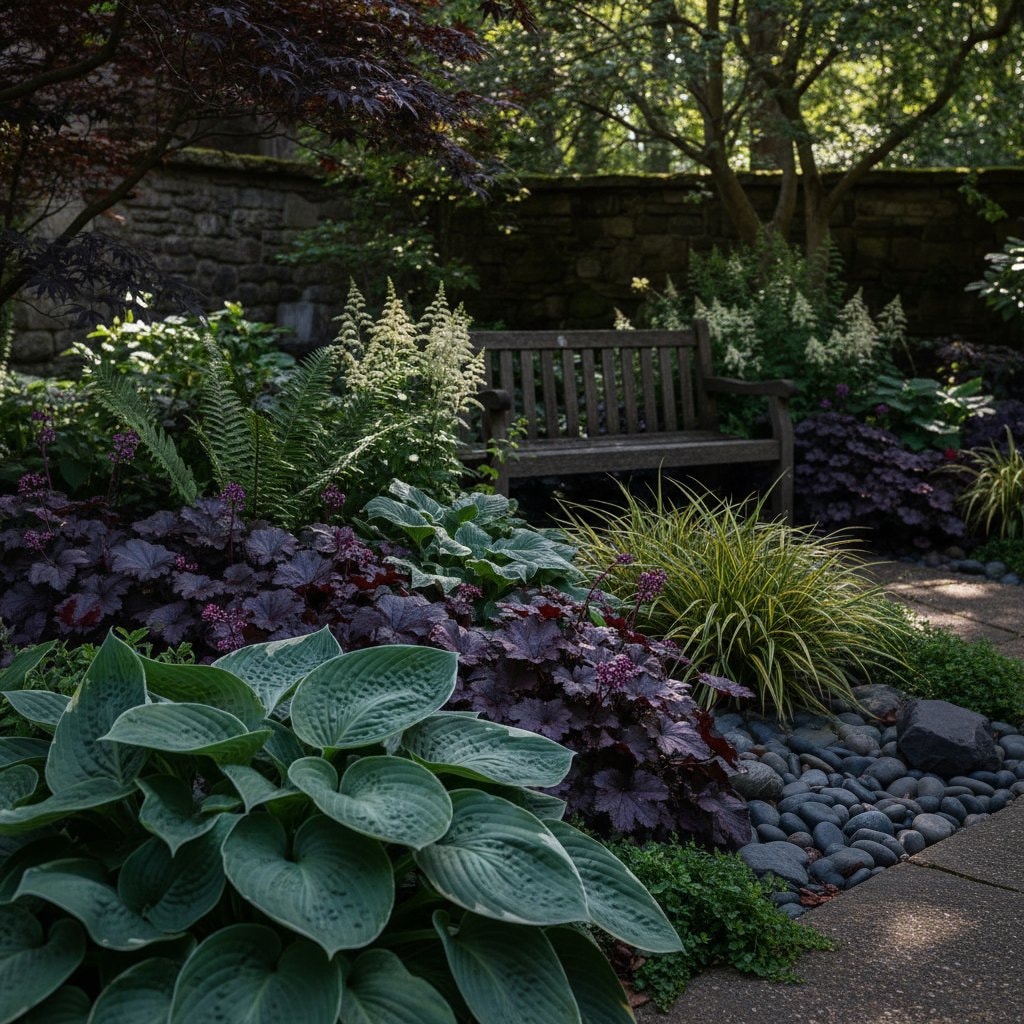
Hosta Varieties: These perennials feature broad, heart-shaped leaves in hues from chartreuse to near-black. Popular cultivars include 'Halcyon' for its powdery blue foliage and 'Sum and Substance' for large, golden leaves that brighten dim corners. Plant hostas in groups of three to five for impact; they require moist, organic-rich soil and benefit from slug protection via diatomaceous earth barriers.
-
Hakonechloa macra (Japanese Forest Grass): This ornamental grass offers cascading, fine-textured blades that sway gently, introducing motion to static shade beds. The 'Aureola' variety displays golden stripes, reflecting minimal light effectively. Position it at garden edges for spillover effect; it thrives in average soil with consistent moisture and divides every three years to maintain vigor.
-
Astilbe Species: Known for plume-like flower clusters in pink, white, or red, astilbe rises above divided leaves on sturdy stems. 'Rheinland' provides early summer blooms ideal for partial shade. Amend soil with compost for drainage while retaining humidity; divide clumps in spring to encourage denser growth and prolonged flowering.
-
Heuchera (Coral Bells): These evergreens boast ruffled leaves in colors like plum-purple ('Palace Purple') or caramel ('Amber Waves'), providing year-round appeal. They tolerate dry shade once established and attract hummingbirds with delicate bell flowers. Space plants 12 inches apart in well-drained, humus-laden soil; mulch to suppress weeds and retain coolness.
-
Fern Collections: Diverse options such as Athyrium filix-femina (lady fern) with lacy fronds or Matteuccia struthiopteris (ostrich fern) for bold height add prehistoric elegance. Ferns excel in acidic, woodland-like soil; water deeply during dry spells and remove spent fronds in late winter to promote fresh growth.
Integrating these plants involves considering mature sizes and growth habits. For example, pair low-growing heuchera with taller ferns for vertical interest. Test soil pH annually, aiming for 6.0 to 7.0, and incorporate slow-release fertilizers in spring to support establishment without excess nitrogen that could weaken shade tolerance.
Crafting Cohesive Shade Designs
Effective shade layouts balance simplicity with intentional variety. Begin by sketching a basic plan, marking existing trees or structures as anchors. Cluster plants by type to foster unity; for instance, repeat hosta varieties along borders to guide the viewer's gaze smoothly.
Incorporate hardscape elements judiciously. Gravel paths or flat stepping stones provide access without dominating the scene, while a modest birdbath introduces reflective sparkle. Opt for organic shapes over rigid lines to echo nature's fluidity. To enhance depth, plant taller species at the back and fillers like moss or low perennials in front, creating a sense of receding space.
Seasonal adjustments refine the design further. In early spring, add spring ephemerals such as trillium for fleeting blooms before canopy closure. Monitor for overcrowding as plants mature, thinning as needed to preserve air circulation and prevent disease.
Nurturing and Evolving Your Shade Sanctuary
Shade gardens demand attentive yet minimal intervention. Mulch annually with shredded bark or leaf mold to conserve moisture and suppress competition from weeds. Water established beds during prolonged dry weather, targeting the root zone to avoid leaf wetness that invites fungi.
Observe changes yearly; some plants may self-seed or spread, filling gaps organically. Prune overhanging branches to regulate light if patterns shift with tree growth. This ongoing dialogue with the garden yields rewards: a maturing shade area that offers respite, supports wildlife, and delivers enduring aesthetic pleasure.
Through patient cultivation, these low-light spaces transform into cherished retreats, blending utility with beauty in harmony with the site's natural constraints.