Harvest Endless Food from Suburban Perennial Borders
Many gardeners gaze at their landscapes and sense untapped potential. Flower borders often dazzle in spring yet transition to unremarkable foliage by summer. Homeowners frequently desire spaces that combine aesthetics, ease of care, and productivity. Perennial borders hold the key to this vision. Through strategic planting and a focused approach, ordinary gardens evolve into perennial food sources that yield harvests annually.
Consider the advantages of this transformation. Edible perennials establish deep roots, drawing nutrients and water efficiently. They demand less intervention than annual crops, freeing time for enjoyment. A well-designed border integrates beauty with utility, attracting pollinators while providing meals. This method aligns with sustainable practices, enriching soil naturally over time.
Assessing Your Garden's Potential
Begin with a thorough evaluation of your existing space. Walk the perimeter slowly, observing sunlight patterns throughout the day. Note areas where water pools after rainfall or where drought persists. These observations determine suitable plant choices. Full-sun locations suit sun-loving edibles like alpine strawberries or currant bushes. Partial shade favors leafy perennials such as lovage or perennial kale.
Examine current plantings for balance and performance. Identify species that require excessive pruning or watering. Replace high-maintenance ornamentals with resilient edible alternatives. For instance, substitute daylilies with ramps in woodland edges. Retain thriving elements as anchors. Test soil pH and texture to match plants accordingly; most edibles prefer neutral, well-drained loam.
Document your findings in a simple sketch. Mark sun exposure, soil conditions, and desired harvest types. This map guides selections, ensuring compatibility with your climate zone. Consult local hardiness ratings to select perennials that endure winters and thrive in summers. Such preparation prevents common pitfalls and sets the stage for success.
Implementing Changes in Gradual Phases
Approach modifications incrementally to build confidence and minimize disruption. Select one border section for initial experimentation. Remove a few non-productive plants and introduce edibles that mimic their form and height. For example, swap out a row of irises for sea kale, which offers tender shoots and broccoli-like florets.
Choose perennials adapted to your region for optimal results. In temperate zones, consider good king Henry for spinach-like leaves or skirret for carrot-flavored roots. Plant in clusters to foster biodiversity and natural pest resistance. Space according to mature size: allow 18 inches between strawberry plants and 4 feet for rhubarb crowns.
Enhance establishment with proper techniques. Dig holes twice as wide as root balls, incorporating compost to boost fertility. Apply a 3-inch layer of organic mulch immediately after planting to conserve moisture and deter weeds. Water thoroughly at planting, then reduce frequency as roots develop. Introduce companion flowers like lavender or salvia to draw bees and add visual appeal.
Expand progressively each season. Monitor growth and adjust as needed. This phased method allows observation of interactions, such as how taller shrubs provide shade for understory greens. Over time, the border integrates seamlessly, blending productivity with ornamental charm.
Nurturing the Edible Border Long-Term
Shift focus from intensive labor to mindful oversight once plants take hold. Observe seasonal changes closely. Trim aggressive spreaders like mint varieties to contain them within designated areas. Divide overcrowded clumps, such as chives or lovage, every three years in early spring to rejuvenate vigor and expand your harvest.
Prioritize soil health through ongoing practices. Maintain a living mulch with low-growing strawberries or clover to shield earth from erosion and nurture microbial activity. Apply compost annually in fall, targeting 2 inches around bases without burying crowns. This feeds the symbiotic fungi and bacteria that aid nutrient uptake.
Irrigate strategically during establishment and dry spells. Deliver deep soakings every 10 to 14 days rather than frequent shallow watering. Mature perennials often access groundwater, reducing supplemental needs. Scout for pests weekly; hand-pick aphids or encourage ladybugs as natural controls. These routines foster resilience, yielding robust plants with minimal intervention.
Reaping Rewards from a Living Harvest
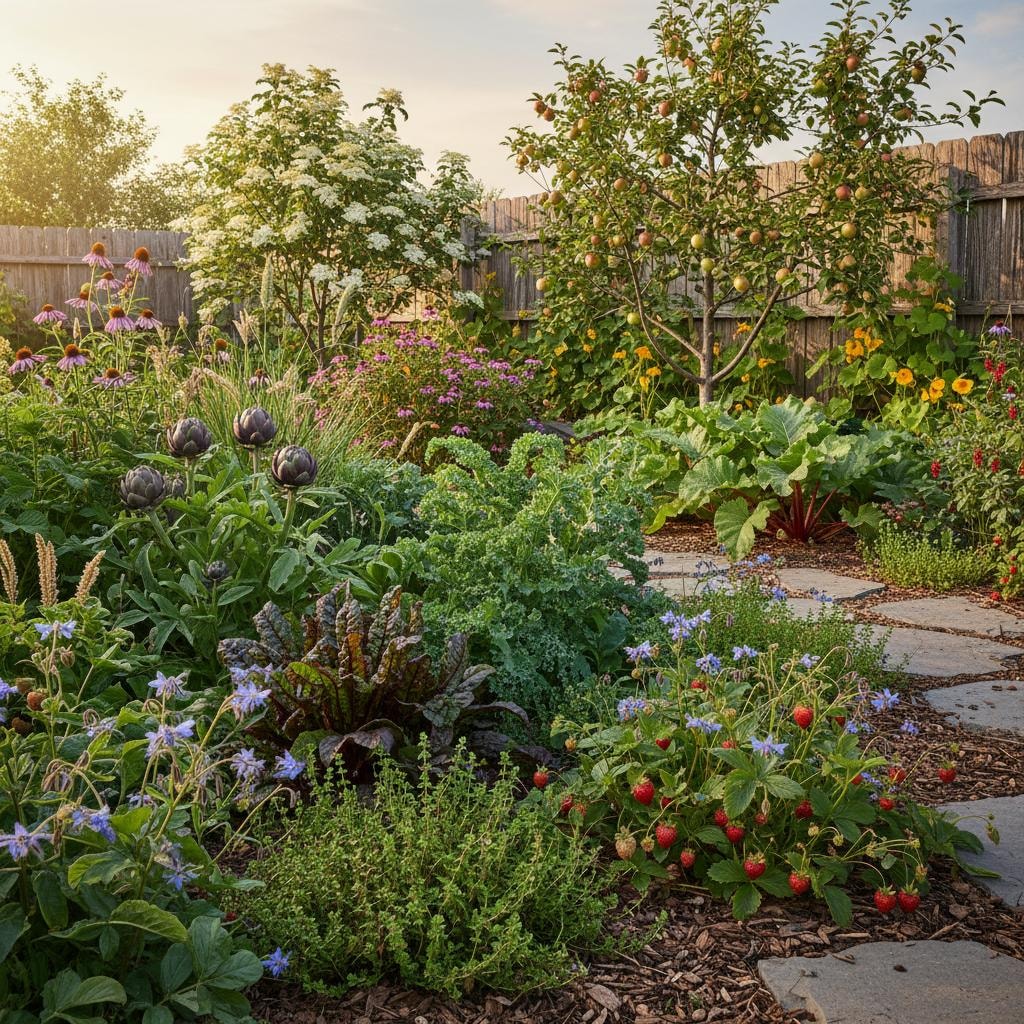
Experience the fulfillment of gathering ingredients from your own border. Pluck fresh sorrel for tangy salads, collect gooseberries for pies, or harvest cardoon stalks for hearty soups. These moments highlight the harmony of form and function in garden design.
As seasons progress, the system matures into a cohesive ecosystem. Deeper roots improve drought tolerance, while diverse plantings deter diseases. Pollinators flourish amid blooms, ensuring bountiful fruits. What begins as a modest project evolves into a reliable source of nourishment and serenity.
Embrace the rhythm of perennial gardening. Tend gently, allowing nature's cycles to unfold. This approach cultivates not only food but also a deeper connection to the land. Your border stands as testament to thoughtful stewardship, delivering sustenance and solace year after year.