Edible Landscaping Takes Root in Front Yards for 2026
Homeowners increasingly view their front yards as untapped resources. Rather than maintaining expansive lawns that demand constant mowing and offer little return, many now envision spaces that deliver both visual delight and practical benefits. This shift toward edible landscaping represents a significant trend for 2026, where front yards evolve into multifunctional gardens producing fresh herbs, fruits, and vegetables while enhancing curb appeal.
The appeal lies in integration. Traditional ornamental features merge seamlessly with food-producing elements, creating landscapes that serve multiple purposes. This approach not only reduces reliance on store-bought produce but also promotes sustainability by minimizing water use and chemical inputs compared to conventional turf.
Evaluating Your Front Yard's Potential
Begin by conducting a thorough site analysis to identify opportunities and constraints. Observe sunlight patterns throughout the day; most edible plants require at least six hours of direct sun for optimal growth. Note soil drainage by observing water movement after rainfall; heavy clay soils may need amendment with organic matter to prevent waterlogging, while sandy soils benefit from added compost to retain moisture.
Consider your lifestyle and preferences next. For busy schedules, select resilient perennials such as perennial onions, rhubarb, or sorrel that demand minimal upkeep. Enthusiasts with more time might incorporate annuals like tomatoes or annual herbs, which offer higher yields but require seasonal replanting. Factor in family involvement; child-friendly options like dwarf apple trees or easy-to-harvest raspberries encourage participation.
Document these observations in a simple journal or sketch. Include measurements of available space, noting fixed features like walkways or utilities that influence layout. This foundational step ensures selections align with site conditions and personal goals.
Designing an Intentional Layout
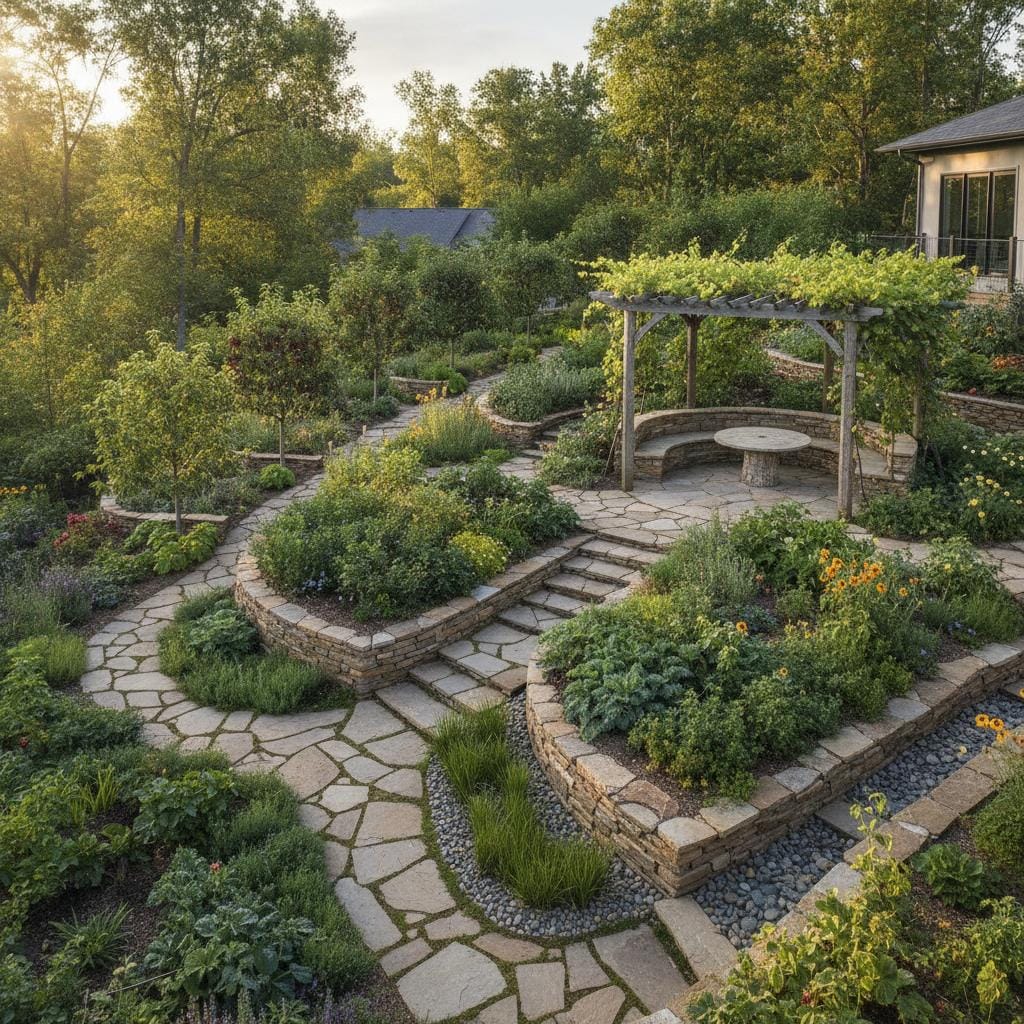
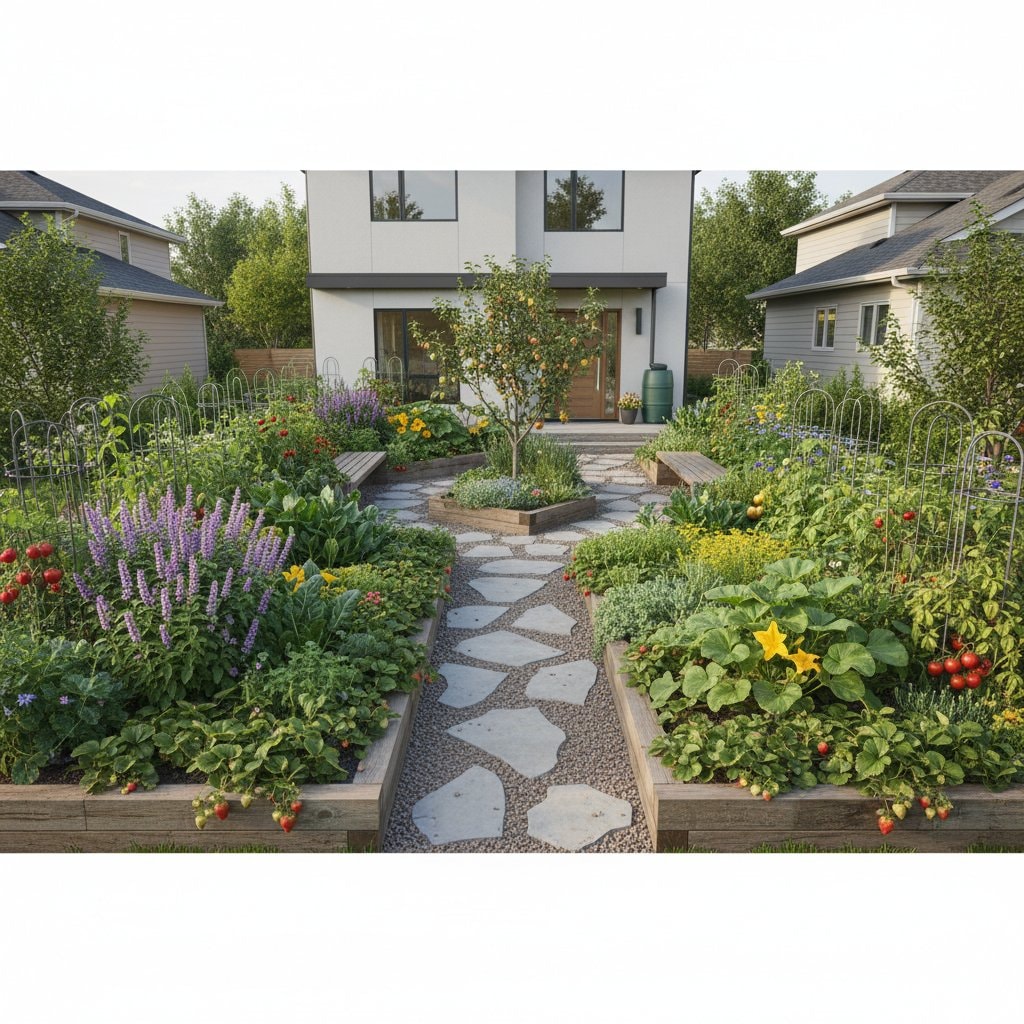
With assessment complete, develop a blueprint that balances form and function. Visualize the garden from key viewpoints, such as the street and home entry, to maintain an orderly appearance. Incorporate meandering paths made from permeable materials like gravel or flagstone to direct foot traffic and prevent soil compaction.
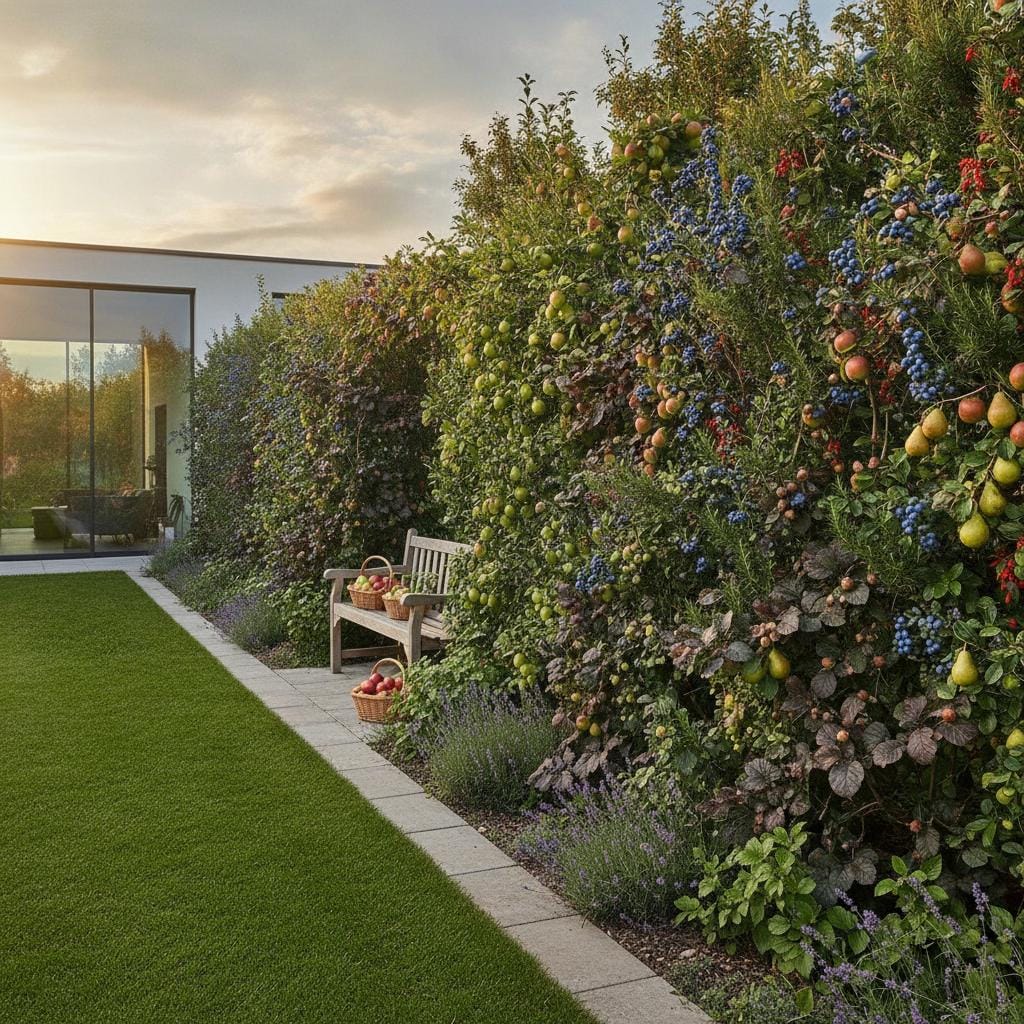
Group plants by their cultural requirements to promote efficiency. Place sun-loving crops like peppers and basil in full-exposure zones, while shade-tolerant options such as mint or lettuce suit cooler spots. Employ vertical elements, including espaliered fruit trees against walls or trellises for vining peas, to maximize space without overwhelming the footprint.
Draw inspiration from natural ecosystems by creating layered plantings. Establish canopy layers with semi-dwarf varieties of pears or cherries for dappled shade. Mid-level shrubs like serviceberries or elderberries provide berries and habitat. Ground covers such as strawberries or low-growing herbs suppress weeds and add color. This stratification fosters biodiversity, reduces maintenance, and yields harvests across seasons.
Implementing the Garden Plan
Transition from design to execution by preparing the site methodically. Remove sod in targeted areas using a sod cutter or by smothering with cardboard and mulch for six to eight weeks, allowing decomposition without tilling. Test soil pH and nutrients; aim for a neutral range of 6.0 to 7.0, adjusting with lime for acidity or sulfur for alkalinity as needed.
Incorporate amendments like well-rotted compost to a depth of six inches, improving structure and fertility. Plant during mild seasons, such as spring or fall, to minimize transplant shock. Space items appropriately: allow three to five feet between fruit trees for air circulation, and cluster herbs in drifts of three to five plants for visual impact and easier harvesting.
Apply two to three inches of organic mulch, such as shredded bark or straw, around new plantings to conserve water and deter weeds. Install drip irrigation if feasible, delivering water directly to roots and reducing evaporation. Start modestly, perhaps with a 10-by-10-foot bed, to build confidence before expanding.
Maintaining Balance and Productivity
Ongoing stewardship ensures long-term success. Establish a watering routine based on weather; deliver one inch per week during dry periods, checking soil moisture two inches deep to avoid overwatering. Fertilize organically in spring with a balanced mix high in phosphorus for root and fruit development.
Monitor for issues proactively. Inspect leaves weekly for pests like aphids, addressing them with insecticidal soap or introducing beneficial insects such as ladybugs. Prune annually: remove dead wood from trees in late winter and shape berry bushes post-harvest to encourage vigorous new growth.
Seasonal adjustments keep the garden dynamic. Rotate annual crops to prevent soil depletion, and succession-plant quick-maturing varieties like radishes every two weeks for continuous supply. These practices sustain yields and adapt to evolving needs.
Fostering Neighborhood Engagement
Edible front yards often extend beyond personal use, sparking interactions that build community. Offer surplus zucchini or basil cuttings to passersby, turning the space into a shared resource. Host informal tours or workshops to demonstrate techniques, inspiring others to adopt similar transformations.
Address potential restrictions by selecting dual-purpose plants that comply with guidelines. Variegated lemon thyme doubles as ground cover with ornamental foliage, while colorful kale varieties blend with flower borders. As awareness grows, many local policies evolve to support these eco-friendly designs.
Educational value emerges naturally. Children gain appreciation for agriculture by observing pollination and growth cycles firsthand. Such gardens model sustainable living, demonstrating how small changes yield substantial environmental and social benefits.
Sustaining Harvests and Growth
Over time, the garden rewards investment with reliable production. Perennials establish deep roots after the first year, increasing drought tolerance and output. Experiment with techniques like interplanting marigolds among tomatoes to naturally repel nematodes.
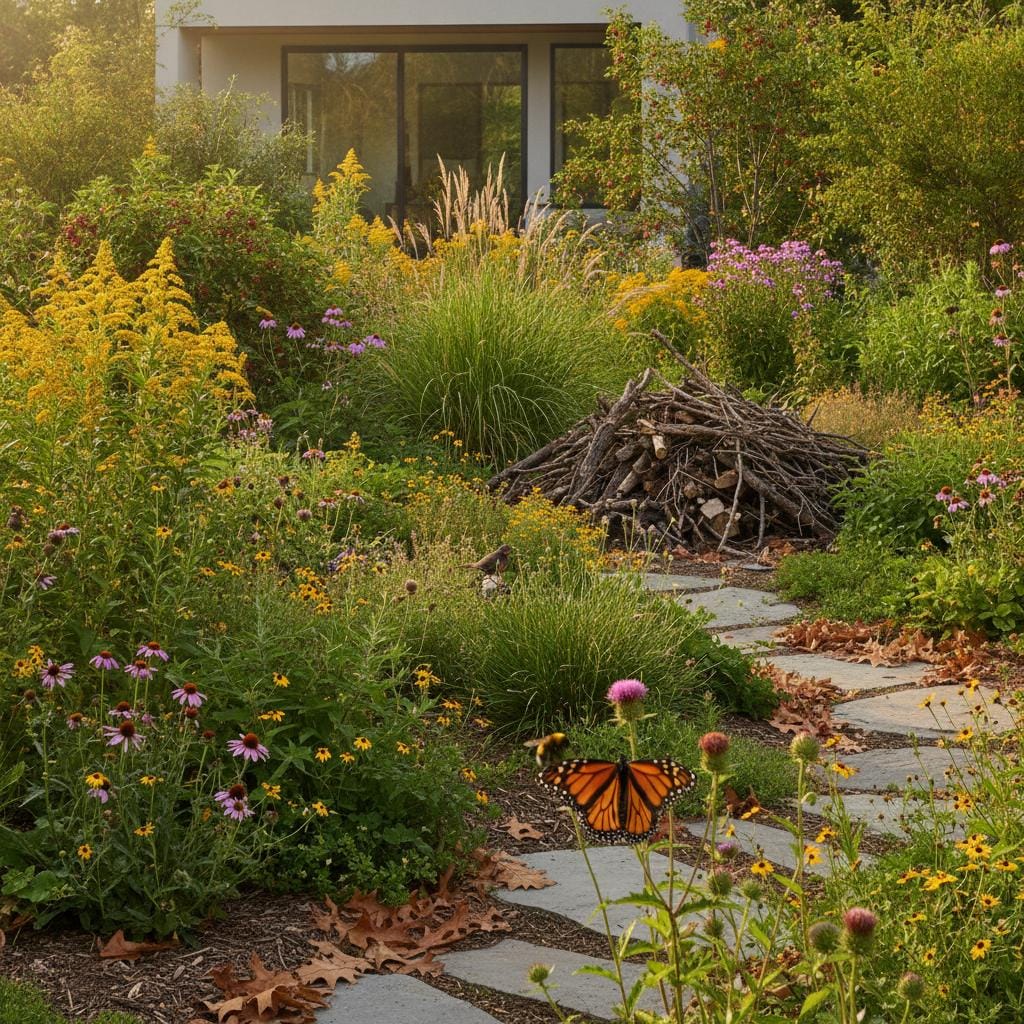
Track progress through a garden log, noting successful combinations and adjustments. This reflection refines future efforts, allowing gradual enhancements such as adding a pollinator strip with native wildflowers. The result is a resilient landscape that evolves, providing ongoing nourishment and aesthetic pleasure.
Ultimately, this approach redefines front yards as vital extensions of daily life. Through deliberate design and attentive care, these spaces deliver fresh abundance while cultivating a deeper connection to nature and community.