Harvest Fresh Flavors from Fruit Tree-Enhanced Patios and Walls
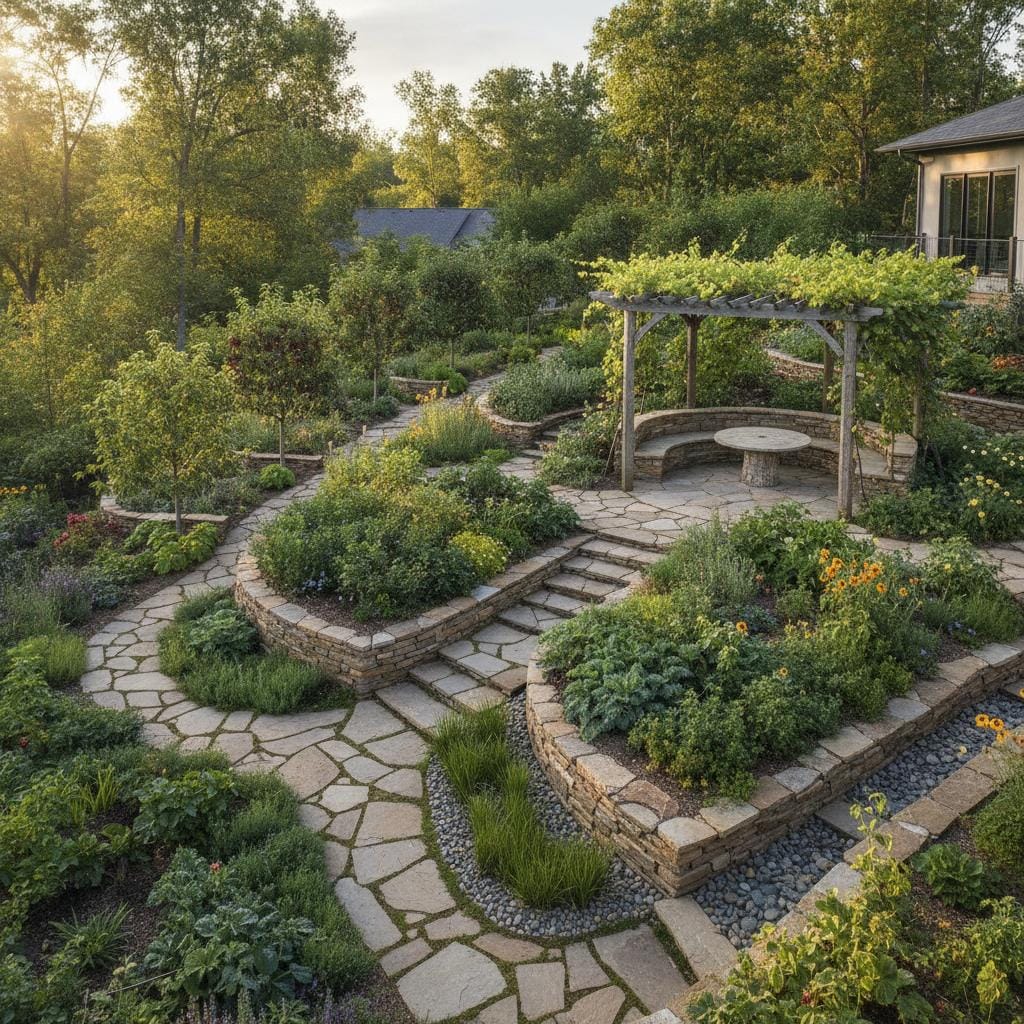
A patio or wall adorned with fruit-bearing trees elevates an ordinary outdoor area into a multifaceted retreat. These designs deliver shade, aromatic blooms, vibrant hues, and delectable yields in a single cohesive arrangement. Suitable for expansive yards or compact courtyards, such landscapes merge visual appeal with practical productivity.
This method integrates horticultural elements with structural features. Fruit trees or espaliered specimens align with patios, fences, or vertical surfaces to form refined, welcoming zones that yield harvests season after season.
The Role of Fruit Trees in Patio Configurations
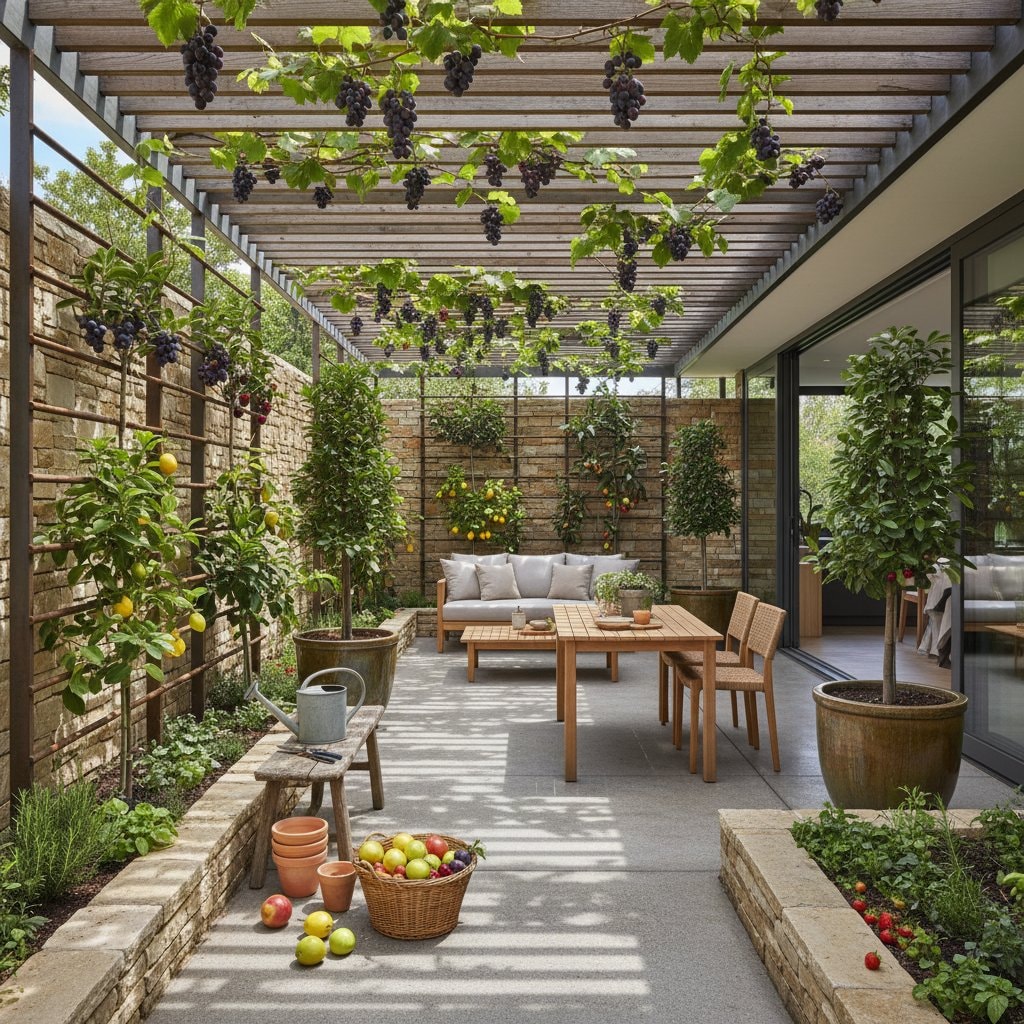
Fruit trees typically reside in expansive garden settings, yet they adapt seamlessly to patio environments. Numerous cultivars flourish in containers, elevated planters, or slender soil borders adjacent to walls. Homeowners require no vast orchard to savor apples, figs, lemons, or cherries; targeted maintenance enables a single tree or pair to furnish fresh produce over extended periods.
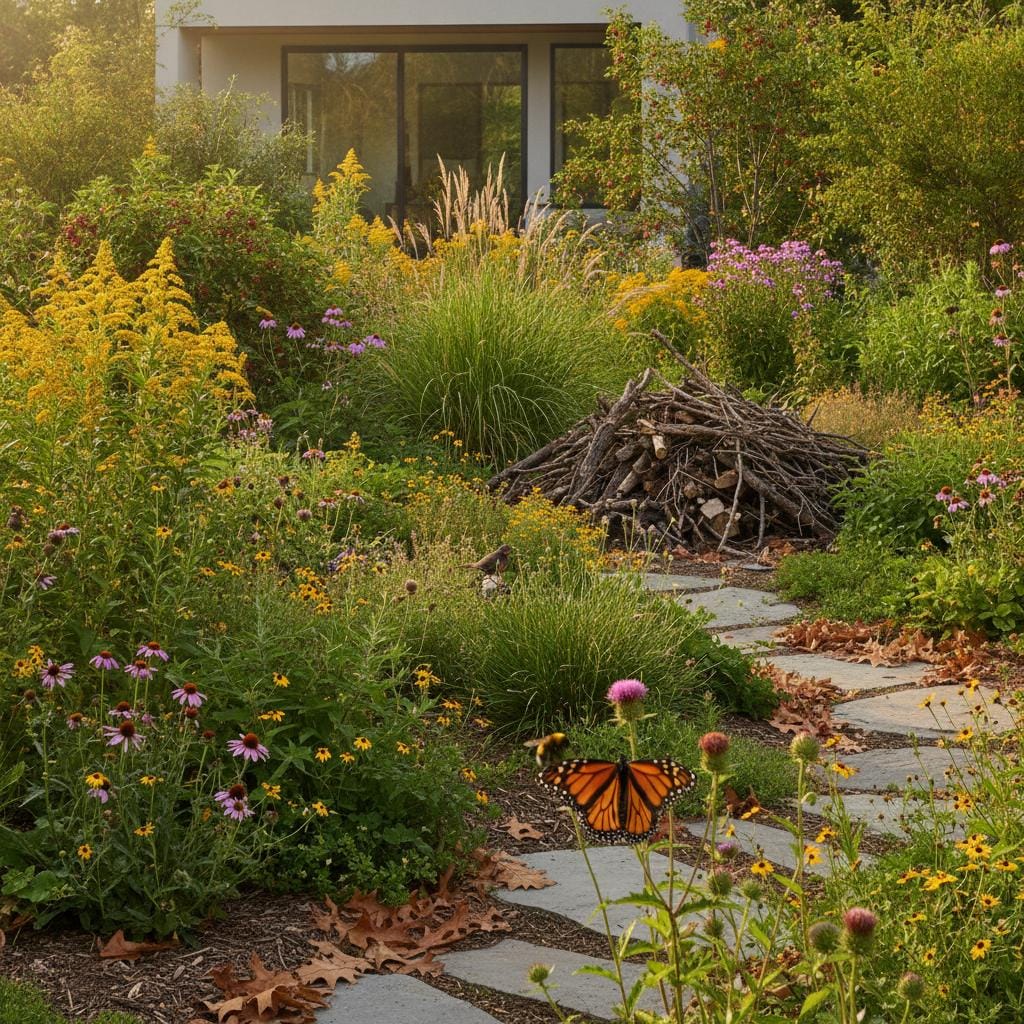
Patios establish defined zones for outdoor activities. Incorporating fruit trees introduces organic textures and subtle fragrances. Spring blossoms draw pollinators like bees and butterflies, while maturing fruits inject seasonal color and intrigue. These elements furnish dappled shade and seclusion, tempering the rigidity of paved or stone surfaces to foster a more organic, serene atmosphere.
For individuals who appreciate cultivation alongside social gatherings, fruit trees serve as engaging centerpieces. Visitors admire their presence, young ones explore their growth, and residents experience the satisfaction of harvesting directly from relaxation spots.
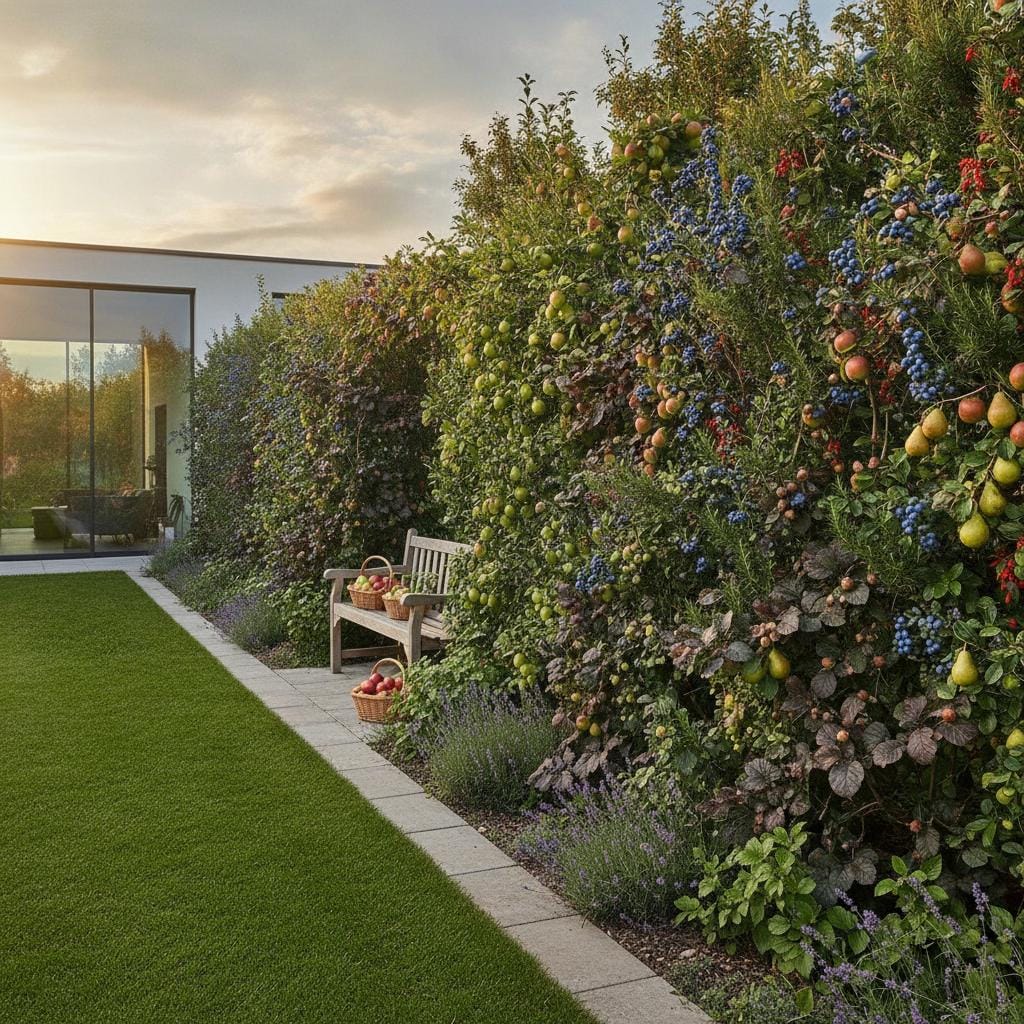
Exploring Edible Walls and Vertical Fruit Systems
An edible wall constitutes a vertical planting system featuring food-producing flora. Incorporating fruit trees frequently involves espalier techniques, where branches train flat against supports in horizontal or ornamental configurations, yielding a fruitful facade with minimal footprint.
Espaliered trees suit fences, exterior walls, or independent partitions. They excel in constrained areas or where conventional planting might encroach on circulation paths. Shapes can align with architectural motifs, ranging from sleek contemporary forms to charming vernacular patterns.
Edible walls often incorporate diverse elements such as shrubs, climbers, and aromatics. Varieties like blueberries, raspberries, strawberries, and figs integrate effectively. Pairing these with groundcovers such as creeping thyme, rosemary, or mint yields both fruits and culinary herbs. This assortment bolsters biodiversity, aids pollinators, and sustains visual interest across seasons.
Selecting Appropriate Fruit Trees for Your Area
Compatibility hinges on aligning a tree's eventual dimensions, root habits, and light requirements with site constraints. Dwarf or compact selections prove optimal for typical residential setups; they remain manageable, fruit sooner, and simplify trimming and collection.
Consider these versatile choices:
- Apples and Pears: Prime candidates for espalier or pot culture. Opt for dwarf or semi-dwarf rootstocks. They demand full sun exposure and freely draining substrates.
- Figs: Excel in containers, endure high temperatures, and shape readily into bounded forms. Their broad foliage evokes subtropical elegance.
- Citrus Varieties: Lemons, limes, and oranges offer citrus scents and vivid tones. They perform best in temperate, illuminated locales or movable pots for winter relocation.
- Cherries and Plums: Deliver stunning floral displays and luscious yields. Compact forms integrate near lounging zones without overwhelming.
- Blueberries and Strawberries: Ideal for modest vertical features or base plantings. They require acidic conditions and steady hydration.
Prioritize self-fertile cultivars for solitary plantings. For others, verify pollination partners to ensure reliable yields.
Designing the Layout
Prior to installation, evaluate patio usage patterns and solar access. Optimal fruiting demands a minimum of six hours of unobstructed sunlight daily. South- or west-facing walls typically afford superior illumination.
Position elements according to purpose and ergonomics. A modest tree might stabilize a conversational nook, cast gentle shadows, or accentuate vistas. For screening, align specimens along perimeters or employ espalier against barriers.
Allocate clearance for ventilation and access. Proximity to furnishings or routes complicates upkeep; maintain two to three feet between stems and surfaces, except in flat-trained applications.
In soil-scarce patios, utilize troughs or modular beds. Select vessels exceeding 20 inches in depth and breadth, equipped with drainage provisions and constructed from resilient substances like glazed terracotta, cast stone, or treated timber with liners.
Constructing Fruiting Walls
Establish a robust framework for vertical systems using trellises, cable arrays, or lumber scaffolds affixed to walls or posts. Galvanized wires provide enduring support; space them 12 to 16 inches apart vertically and tension securely to bear limb and crop loads.
Position plantings 6 to 8 inches from the substrate. Secure nascent shoots to guides with flexible bindings or horticultural strips, loosening as growth advances. Gradually sculpt into fan, cordon, or cord-like motifs.
Pruning remains essential. Excise perpendicular sprouts and channel development along supports. This regimen flattens profiles, enhances circulation, and distributes light evenly. Mature installations endure for generations under diligent oversight.
Harmonizing Fruit Trees with Hardscape Elements
Rigid features such as flagstone terraces, masonry barriers, and cement walks capture and radiate thermal energy. This warmth aids fruit maturation, with surfaces storing daytime heat for nocturnal release, thereby prolonging viable growth periods.
Trees mitigate hardscape austerity through foliage and branching that interrupt linearity and introduce dynamism. To counter barrenness, position a specimen in an oversized urn for equilibrium.
Address hydrology in hybrid designs. Direct runoff from tree bases to avert pooling. In new constructions, incorporate drainage vents or aggregate bases to safeguard rhizomes from saturation.
Illuminate strategically: ground-directed fixtures accentuate silhouettes after dusk. For walls, embed pathway LEDs to facilitate nocturnal gathering and infuse ambient warmth.
Budgeting and Effort Considerations
Expenses for edible patio or wall projects vary by scale, components, and selections. A foundational setup with one or two containerized trees may total several hundred dollars. Espalier frameworks, bespoke vessels, and watering systems elevate outlays to thousands.
Typical allocations include:
- Specimens and Flora: Dwarf trees cost $30 to $100 apiece, influenced by maturity and type.
- Vessels or Beds: Units range from $50 to $300, based on fabrication.
- Supports or Cables: Basic wiring under $100; ornate assemblies surpass $500.
- Substrates and Enhancers: Premium blends, organics, and coverings approximate $50 to $100 for modest endeavors.
- Professional Services: Engage specialists for builds or installs at regional hourly fees, scaled to intricacy.
Numerous owners manage propagation and forming independently, particularly for potted units. Structural undertakings benefit from expert input for durability and compliance.
Ongoing Care and Seasonal Management
Sustained vitality demands routine interventions: irrigation, nutrition, shaping, and monitoring.
- Irrigation: Establish deep watering for juveniles until anchorage forms. Potted subjects desiccate rapidly, requiring multiple sessions weekly in arid conditions.
- Nutrition: Distribute equilibrated nutrients or organics at spring onset and midsummer to bolster production.
- Shaping: Annually excise deceased or dense limbs. For trained forms, shear extensions thrice yearly to preserve contours.
- Threats and Pathogens: Scout for infestations like aphids or blights. Prompt intervention via neem derivatives or natural remedies curtails harm.
- Collection: Gather at peak ripeness, when hues deepen and texture yields slightly. Prompt removal deters vermin and preserves future outputs.
Apply organic layers at bases for hydration retention and weed suppression. Annually renew surface media in containers; overhaul entirely triennially for fertility.
Advantages Extending Past Yields
Edible installations transcend mere produce to forge bonds with the environment. Tending routines heighten attunement to natural rhythms.
Such enhancements boost real estate appeal through form and utility. Thoughtful arrangements spark discourse and advance eco-practices by minimizing imported goods' ecological footprint.
Youth benefit from tangible education on origins of sustenance. Modest gatherings encourage culinary exploration and community exchange. Blossoms' perfumes and fruits' progression deliver multisensory gratification unmatched by conventional ornamentals.
Resolving Frequent Challenges
Patio or wall trees occasionally falter; prompt diagnosis facilitates recovery.
- Subpar Yields: Stem from inadequate light, misguided cuts, or deficiencies. Confirm solar intake and supplement as required.
- Foliar Discoloration: Signals excess hydration or impeded flow. Probe saturation levels and recalibrate routines.
- Infestations or Ailments: Vigilance enables early excision and benign applications.
- Surface Splits: Arise from erratic moisture. Sustain uniform dampness through swelling phases.
- Stunted Development: Trace to dense media or confined quarters. Aerate surrounds or transplant as necessary.
Interpreting cues evolves with practice, refining expertise each cycle.
Steps to Launch Your Edible Outdoor Haven
Assess your site's sun, soil, and scale to select fitting trees and supports. Acquire materials and plant during mild seasons for optimal rooting. Commit to consistent care, adjusting based on observations, to realize a bountiful, enduring landscape that enriches daily life.