Edible Hardscaping Using Herb Spirals and Fruiting Walls
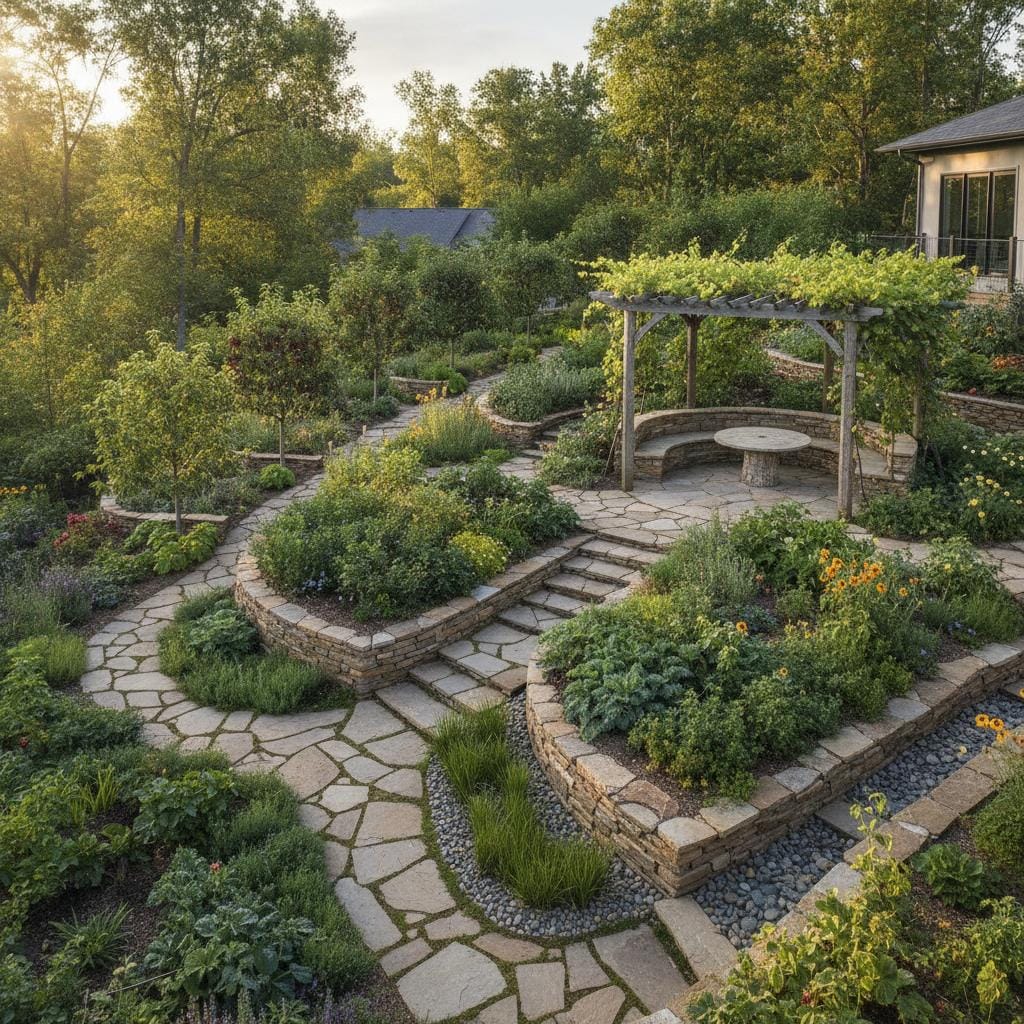
Many yards contain underused areas that could supply fresh herbs and fruit. Edible hardscaping combines durable materials with productive plants to create features that deliver harvests while improving garden structure.
Assessing Site Conditions
Walk the property at different times of day to track sun exposure and drainage patterns. Identify walls or fences that receive at least six hours of sunlight and level ground near the kitchen for easy access. These observations determine the best locations for new features.
Edible hardscaping pairs stone, brick, or timber with living plants. The result is a garden that offers both visual order and seasonal produce.
How an Herb Spiral Functions
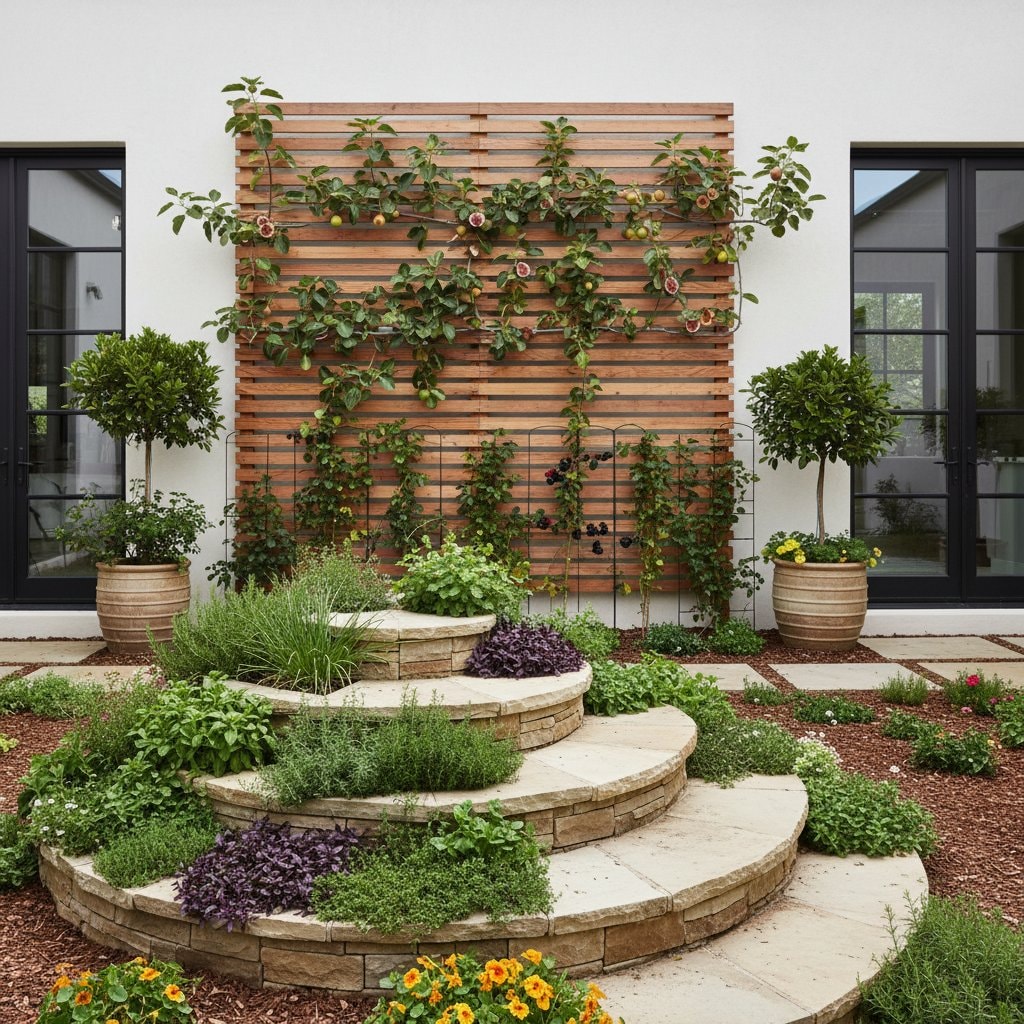
An herb spiral is a compact, mounded bed that creates several microclimates in one structure. The raised center drains quickly and warms faster, suiting Mediterranean herbs, while the base retains moisture for thirstier plants. This vertical arrangement lets gardeners grow eight to twelve herb varieties in a space only a few feet across.
Steps to Construct an Herb Spiral
Select a sunny, accessible circle three to six feet in diameter. Lay a low retaining wall of stone or brick that spirals inward and rises to a center height of two to three feet. Backfill with a blend of topsoil and compost, firming the mix as the wall ascends.
Plant according to moisture needs:
- Top level: rosemary, thyme, oregano, and sage
- Middle level: chives, basil, and cilantro
- Base level: parsley, mint, and lemon balm
Water the finished spiral thoroughly. The plants will fill in within one season and require only occasional trimming.
Advantages of a Fruiting Wall
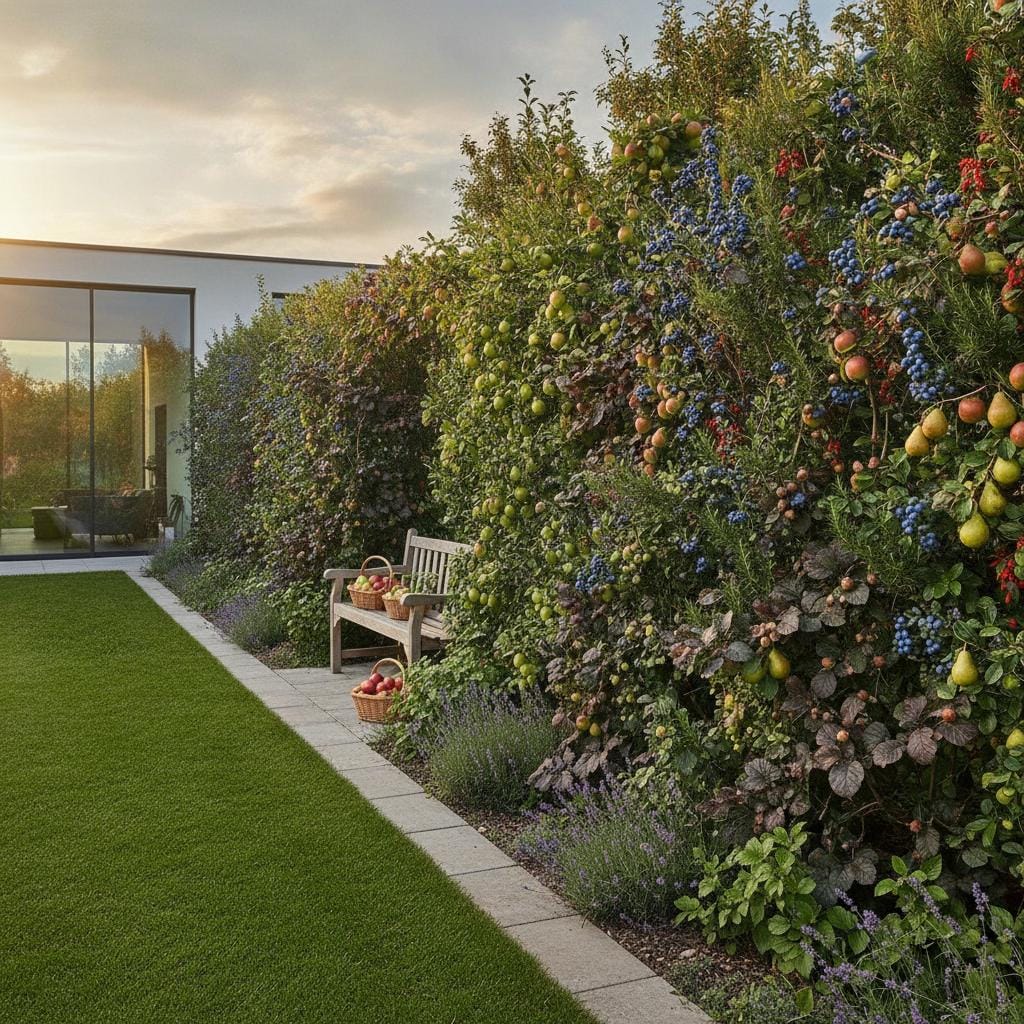
A fruiting wall turns a vertical surface into a productive growing area. Masonry or brick absorbs daytime heat and radiates it at night, extending the ripening period for many fruits. Espaliered trees or cane fruits grown against the wall also create a living screen that defines garden rooms.
Installing a Fruiting Wall
Choose a fence or wall with morning or afternoon sun. Secure horizontal wires or a sturdy trellis at twelve-inch intervals. Select dwarf or semi-dwarf apple trees for espalier training, or vigorous cane fruits such as raspberries and blackberries for a less formal appearance.
Tie new growth to the support system each spring. Prune in late winter to maintain the flat profile and stimulate fruiting spurs. Consistent summer watering and an annual compost application keep yields steady.
Unifying Elements Across the Landscape
Repeat materials or plant colors to connect the spiral and wall visually. A gravel path leading from one feature to the other, or a border of strawberries along the base of the wall, creates cohesion. These details turn separate projects into a single, functional design.
Ongoing Seasonal Maintenance
Inspect herb spirals weekly for weeds and spent blooms. Top-dress with compost each spring. On fruiting walls, remove crossing branches and tie in new canes during dormancy. Regular harvesting prevents disease and encourages continued production.
Daily Enjoyment of Productive Structures
Once established, these features supply ingredients steps from the kitchen while adding year-round interest. The same structures that organize the garden also reduce grocery needs and increase time spent outdoors.