Replace Ornamental Shrubs with Fruit-Bearing Hedges
A garden delivers greater satisfaction when it produces food alongside visual appeal. Many yards feature shrubs that define space and add greenery. Swapping those plants for fruit-bearing varieties turns passive landscaping into an active source of fresh produce while preserving structure and privacy.
Blend Beauty with Productivity
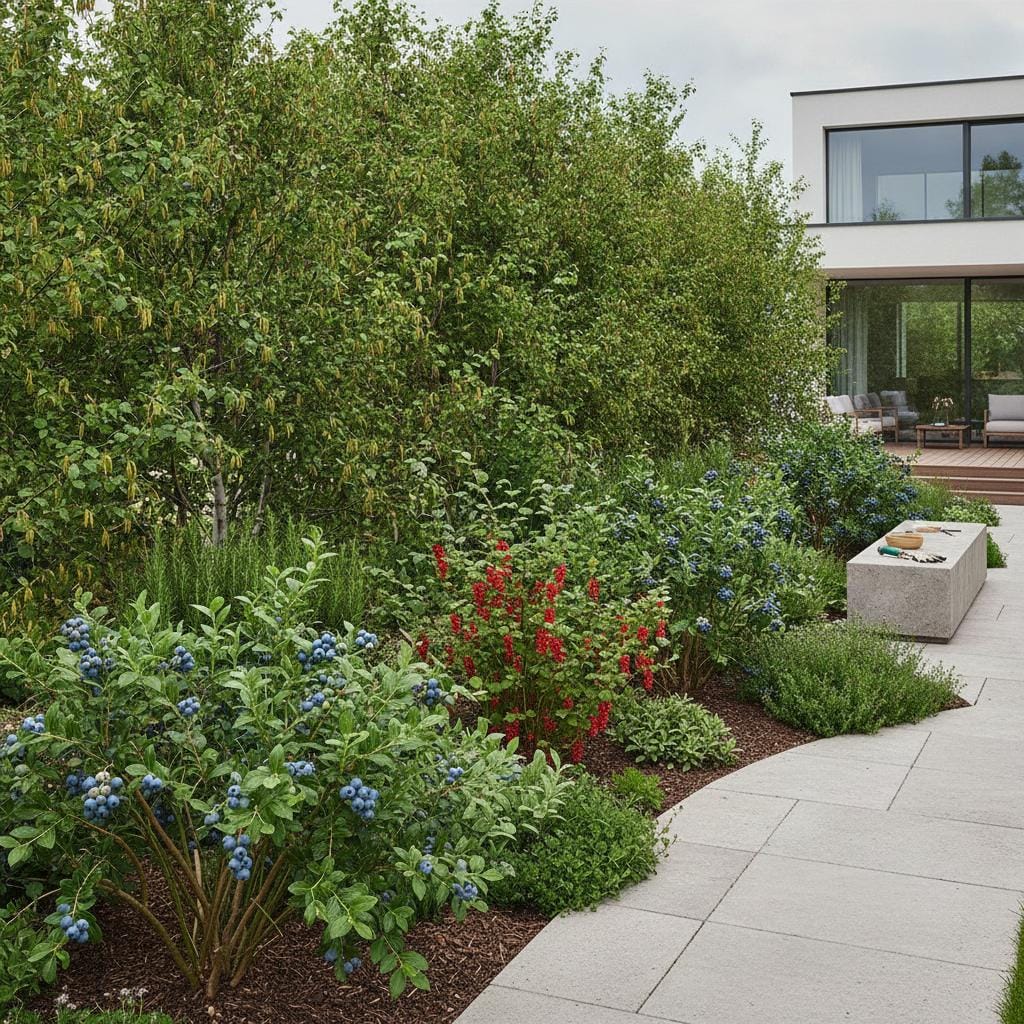
Traditional designs place vegetable beds apart from ornamental areas. Fruitful hedges remove that separation by combining screening, boundary definition, and seasonal harvests in one planting. Currant or blueberry hedges display attractive foliage that shifts color through the year before yielding edible berries.
Gardeners increasingly choose this approach because every element of the landscape serves multiple purposes. The result feels cohesive rather than divided.
Select Plants Suited to Your Site
Match hedge species to local soil, light, and climate conditions. Consider whether you need dense screening or a more open form, and whether you prefer steady small harvests or one larger annual crop.
Reliable options include:
- Blueberries planted four to five feet apart in soil with pH between 4.5 and 5.5, offering compact growth and crimson fall color.
- Currants and gooseberries spaced three to four feet apart in cooler regions, producing tart berries for fresh use or preserves.
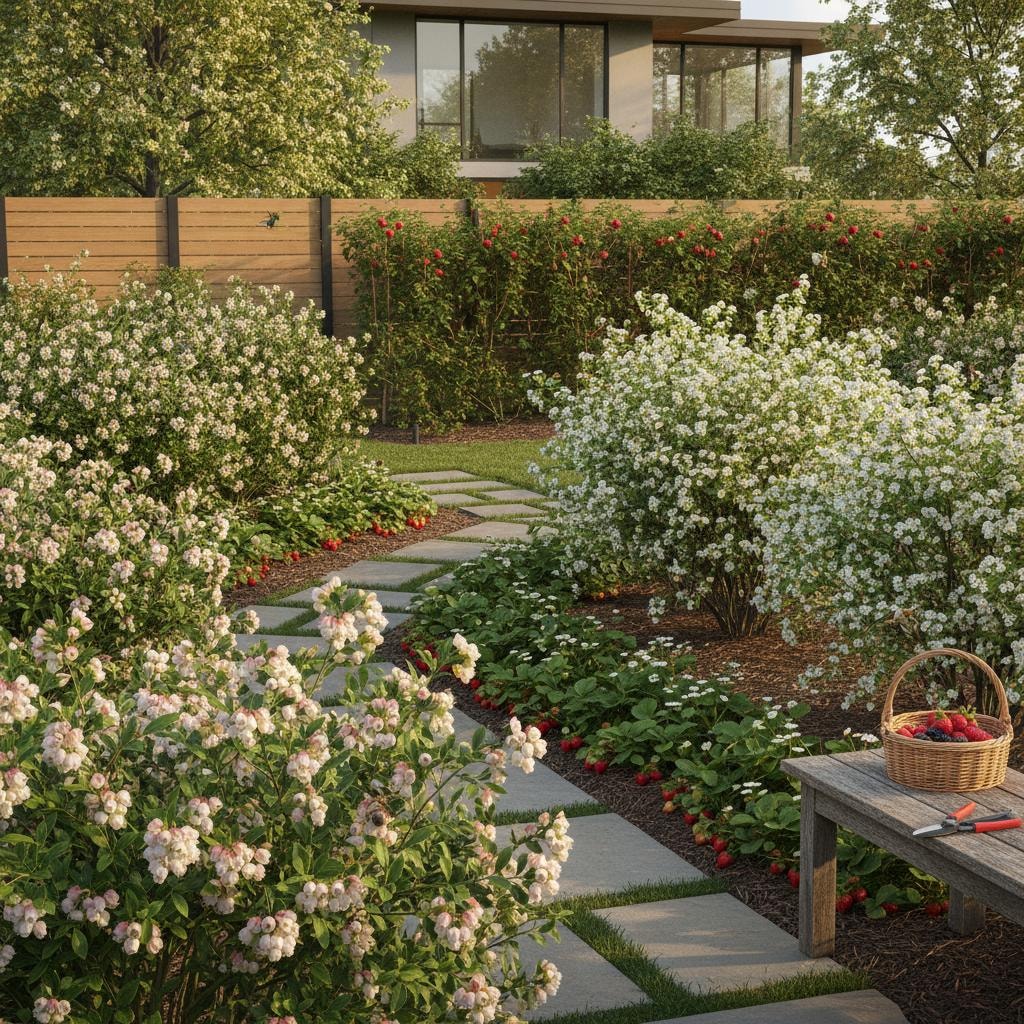
- Raspberries and blackberries installed with trellis support every two to three feet, delivering high yields after regular pruning.
- Aronia shrubs placed four feet apart, valued for antioxidant berries and vivid autumn foliage across varied soils.
- Serviceberries positioned five to six feet apart, providing early flowers, sweet June fruit, and graceful form.
Mixing two or three species extends the harvest window and improves resilience.
Choose Formal or Informal Styles
Formal hedges require plants that tolerate shearing. Blueberries and aronia maintain clean lines when pruned once or twice each season. Informal plantings suit the natural shapes of currants, raspberries, and serviceberries, creating softer edges beside flower borders.
Account for year-round appearance. Spring blooms, summer fruit, fall foliage, and winter branch structure all contribute to lasting garden rhythm.
Prepare Soil and Plant Correctly
Remove existing shrubs and loosen soil to a depth of twelve inches. Incorporate two inches of compost to improve drainage and nutrient availability. Space plants according to mature width to prevent crowding and disease.
Position the hedge where it receives at least six hours of sun. Apply mulch two inches deep around each plant, keeping material several inches from stems. Water thoroughly after planting and maintain even moisture during the first two seasons.
Maintain Shape and Productivity
Prune each winter to remove dead wood and crossing branches, opening the canopy for light and air. Apply compost around the base each spring. Water deeply during dry periods rather than misting foliage.
Harvest berries in stages as they ripen. Regular picking encourages continued production and reduces waste. Netting installed only during peak ripening protects fruit while allowing wildlife access to other garden resources.
Integrate Hedges into Existing Landscapes
Replace one section at a time to observe plant performance. Use taller aronia or serviceberry along property lines for privacy. Place lower blueberries or currants as transitions between lawn and perennial beds. Repeat the same species along pathways to create visual unity.
Follow a Simple Annual Routine
- Prune in late winter to maintain shape and stimulate fruiting wood.
- Top-dress with compost each spring.
- Renew mulch and check soil moisture weekly during summer.
- Inspect for pests early and remove affected growth or introduce beneficial insects.
- Pick fruit frequently to sustain production.
These steps keep the hedge healthy and productive for many years.
Experience Daily Connection
Once established, the hedge becomes part of routine observation. Buds open, fruit colors change, and leaves turn with the seasons. Family members and visitors sample berries directly from the branches, turning the landscape into an interactive space. The planting supplies both nourishment and a tangible link to garden cycles.