Revamp Shade Gardens: Top Low-Light Plants for 2025
Shade gardens possess a unique allure. They offer tranquility compared to vibrant sun-filled borders, with beauty emerging gradually through foliage and subtle light play. Homeowners often view these areas as challenging, assuming few plants will succeed. In reality, selecting appropriate species and applying thoughtful design principles can turn shaded spots into serene, thriving landscapes.
Assessing Shade Types
Effective shade gardening begins with evaluating light conditions. Shade varies significantly, influencing plant choices and success rates.
- Partial shade involves two to four hours of direct sun, typically in mornings or late afternoons.
- Dappled shade occurs when sunlight filters through overhead foliage, providing indirect illumination that shifts with the sun's position.
- Deep shade features minimal light, such as under dense canopies or on north-facing walls.
Observe your site over a full day to categorize the shade level accurately. This step ensures plants receive conditions suited to their needs, promoting vigorous growth and longevity.
Benefits of Shade Gardening
Shade gardens deliver a serene aesthetic distinct from sun-drenched displays. They emphasize texture, form, and subtle hues rather than bold colors, fostering a cooling retreat during warm seasons.
Designers appreciate the creative opportunities in low light. Gardeners focus on leaf variations, such as variegation or tonal contrasts, to build depth and visual interest. This approach shifts perspective, highlighting plants' architectural qualities over floral spectacle.
Recommended Shade Perennials
Reliable perennials form the backbone of shade gardens, offering consistent performance with minimal maintenance. These selections excel in low light, providing structure and returning annually.
1. Hosta
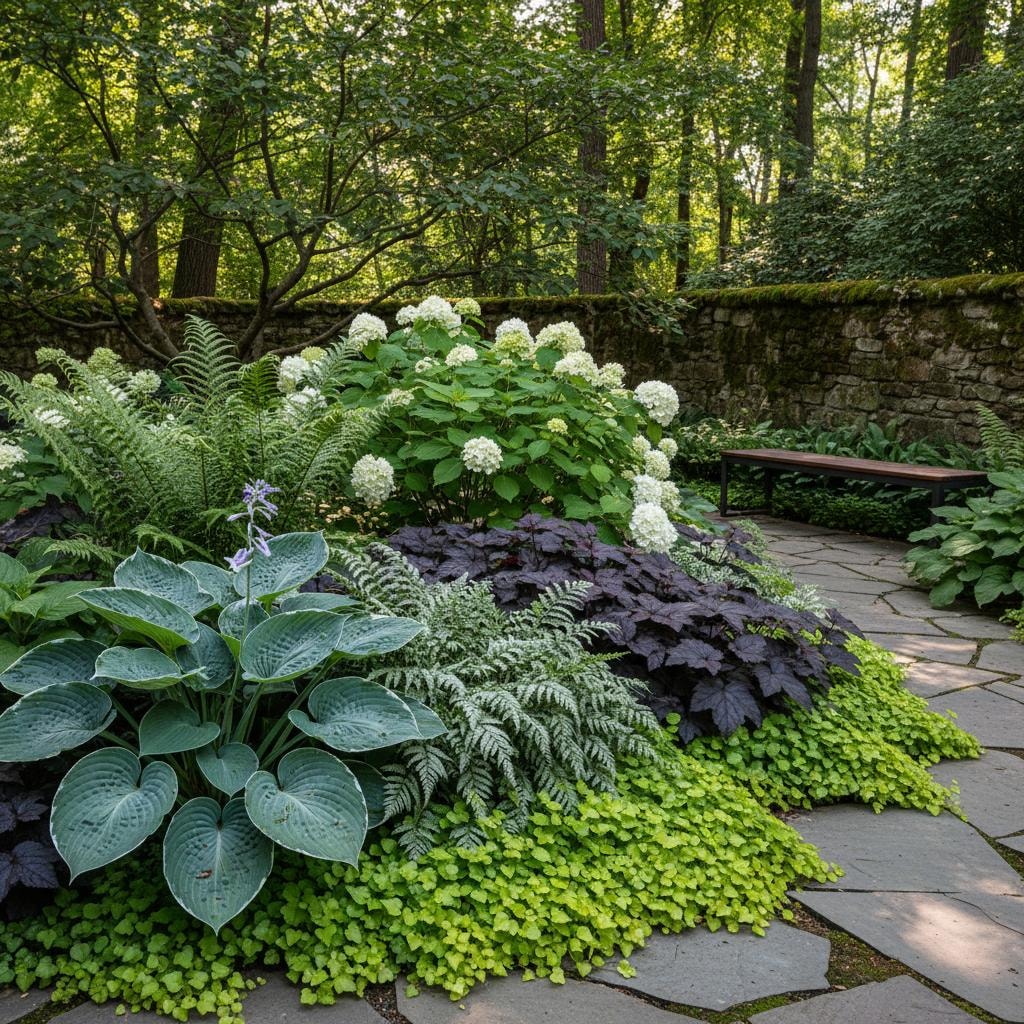
Hostas dominate shade planting for their diverse foliage. Leaves span colors from bright chartreuse to rich blue-green, frequently featuring white margins or streaks. Opt for compact varieties along pathways or bold specimens to define larger areas; they multiply steadily to fill spaces.
2. Heuchera (Coral Bells)
Heucheras contribute color via leaves in shades of bronze, purple, lime, or silver, complemented by airy flower spikes. They require evenly moist, well-drained soil and perform best in clusters. Position them to edge hardscapes, where their mounded habit contrasts with upright neighbors like ferns.
3. Ferns
Ferns embody the essence of shaded environments with their feathery fronds. The Japanese painted fern introduces silvery highlights to gloomy spots, while lady ferns lend lightness through delicate structure. Combine species for multi-level texture, ensuring soil remains consistently damp.
4. Astilbe
Astilbe produces fluffy flower clusters in pink, white, or red atop lustrous basal leaves. It demands reliable moisture, making it ideal near shaded streams or low-lying areas. Site it along walkways to showcase its ethereal quality in filtered light.
5. Solomon's Seal
Solomon's seal features arching stems with paired leaves and pendant white flowers. It spreads gradually in fertile, humus-rich soil, creating naturalistic clumps. Its understated elegance suits woodland-style gardens, enhancing composure without overwhelming surrounding elements.
Groundcovers for Coverage and Unity
Groundcovers complete shade designs by suppressing weeds, conserving soil moisture, and establishing a polished appearance. They weave perennials into cohesive compositions.
- Wild ginger develops dense mats of broad, heart-shaped leaves that persist through much of the year.
- Foamflower displays frothy spring blooms and evergreen foliage patterns, integrating seamlessly with ferns and hostas.
- Sweet woodruff yields fragrant white stars in spring and tolerates dry shade under trees.
Incorporate these trailers to cover bare soil, selecting based on moisture availability. Their low stature prevents competition while enhancing overall harmony.
Enhancing Texture and Form
Texture drives visual appeal in shade, where bold surfaces like hosta or ligularia leaves offset delicate fern fronds. Glossy leaves catch and reflect scant light, while matte varieties create softer shadows.
Vary plant shapes to establish flow: mound-forming types provide bases, plumes add height, and sprawlers soften edges. Repeat key elements across the bed to foster cohesion. This technique guides the viewer's eye, balancing diversity with familiarity.
Incorporating Structure and Subtle Color
Shade need not sacrifice vibrancy; strategic elements introduce life without demanding full sun.
- Foliage variations: Select plants with cream-edged or burgundy leaves for inherent contrast.
- Hardscape features: Incorporate pale gravel paths, light stone borders, or pale benches to bounce light inward.
- Seasonal bursts: Plant early bloomers such as snowdrops or hellebores for pre-foliage color.
These additions elevate dim areas. A simple reflective element, like a shallow basin, can brighten and focalize the space effectively.
Maintenance Essentials for Shade Gardens
Though spared intense sun, shade gardens face competition from tree roots and potential drying. Apply two to three inches of organic mulch annually to maintain soil hydration and temperature.
Supplement with compost in spring to enrich nutrients. Thin overhead branches selectively to admit beneficial dappled light. Monitor plant vigor and tweak conditions incrementally; gradual adjustments yield optimal results.
Evolving Seasons in Shade
Shade gardens evolve dynamically across the year, each phase revealing distinct charms. Spring unveils fresh growth and ephemeral blooms; summer builds lush layers under shifting shadows.
Autumn brings warm foliage tones in gold and copper. Engage with the space through regular visits, noting light patterns and microclimates. Such attentiveness refines the design, ensuring enduring balance.
Implementing Your Shade Garden Plan
Begin transformation by selecting a modest area and two compatible plants. Test their adaptation in pots before permanent planting, adjusting soil as needed.
Scale up by replicating successes, maintaining open spaces for individual forms to shine. Emphasize restraint to preserve subtlety. This methodical approach unlocks the rewarding potential of shade gardening.