Transform Shade Gardens: Explore Alternatives to Hostas in 2025
Many gardeners experience a sense of uninspiration when surveying their shade gardens. These spaces often begin with enthusiasm, filled with hostas in various shapes and shades of green. Over time, however, the repetition leads to predictability and fatigue. Gardeners frequently seek greater texture, color, and movement to revitalize these areas. Shade gardens hold untapped potential for surprise and vitality, achieved by incorporating plants beyond hostas.
Unlock the Possibilities of Shaded Spaces
Shaded areas present unique conditions, including low light, persistent moisture, and competition from tree roots. These factors challenge many plants, yet they also foster a serene environment with enhanced color depth and lush textures. View shade not as a restriction but as an opportunity to cultivate a woodland-inspired retreat.
Start by conducting a thorough assessment of your shade garden. Walk through the space and identify patterns of light penetration, moisture retention, and soil dryness. Evaluate the current plant heights, spreads, and any gaps. This observation reveals opportunities for layering and contrast, transforming a monotonous bed into a dynamic composition.
Design a Diverse Plant Palette
Hostas provide reliability, but an excess creates uniformity. Develop a planting plan that emphasizes diversity and equilibrium, treating plants as interdependent elements contributing distinct qualities.
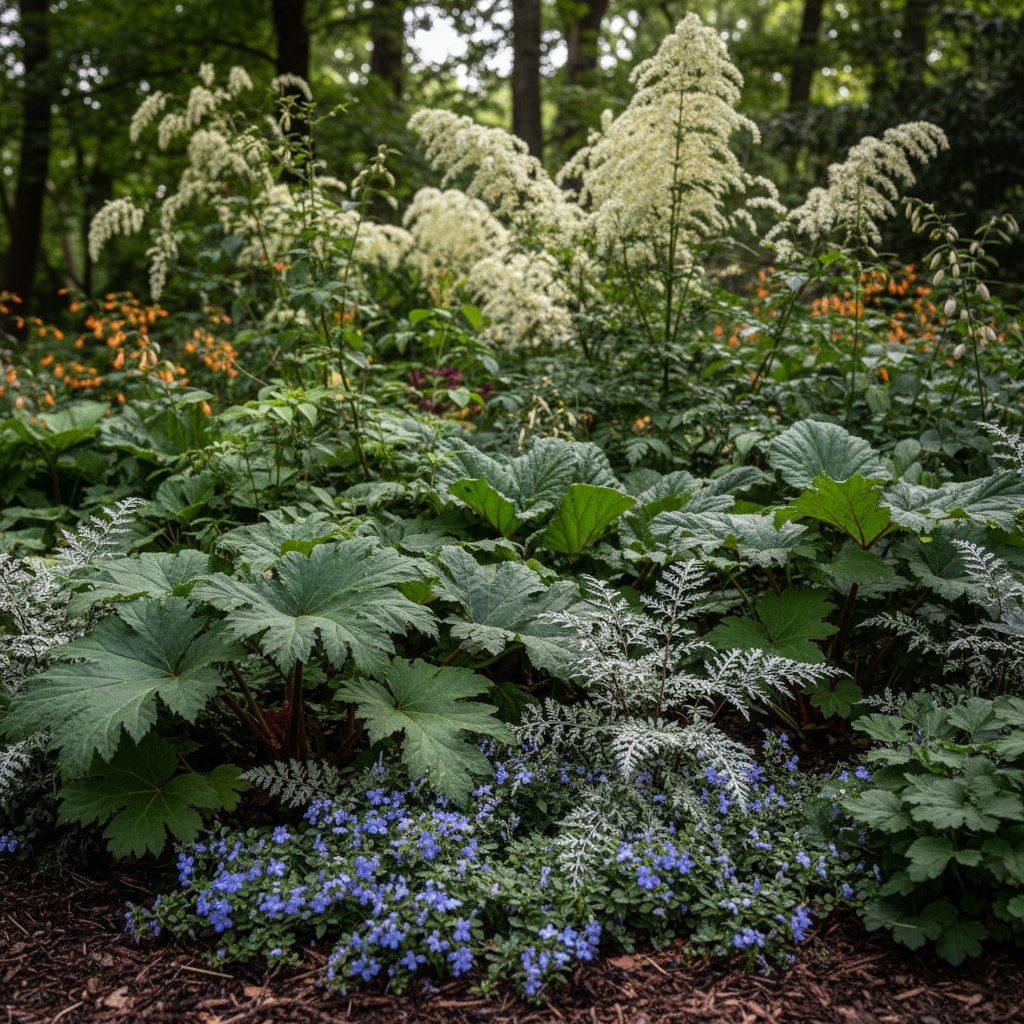
Incorporate a blend of evergreen and deciduous species to ensure year-round appeal. Pair the delicate fronds of ferns with the bold foliage of ligularia for varied leaf forms. Introduce seasonal color shifts, such as the spotted silver leaves of pulmonaria in spring or the rich burgundy tones of heuchera throughout the growing season. These elements guide the viewer's gaze and encourage prolonged appreciation.
To counteract excessive greenery, select plants that introduce brightness. Variegated Solomon's seal features cream-edged leaves that illuminate dim areas. Japanese forest grass offers cascading golden strands, while brunnera displays heart-shaped leaves with prominent silver veining. Balance color with texture: position the plume-like flowers of astilbe near the leathery surfaces of bergenia to generate visual interest without disorder.
Consider soil preferences and mature sizes when selecting companions. For example, in moist, acidic conditions under oaks, opt for acid-loving ferns like autumn fern (Dryopteris erythrosora) alongside lime-green leaved epimediums. In drier shade, choose drought-tolerant options such as barrenwort or foamflower (Tiarella cordifolia) to maintain vitality.
Implement Your Design Thoughtfully
With a solid plan in place, proceed to implementation. Thin existing hostas selectively, retaining only vigorous specimens with unique variegation or form. Divide clumps using a sharp spade in early spring or fall, then replant divisions or share them with fellow gardeners.
Address soil health as a foundational step. Shaded soils under trees often compact and lack nutrients. Aerate the top six inches with a garden fork, then incorporate two to three inches of well-rotted compost or leaf mold. Allow the amended soil to settle for a week, followed by deep watering to promote root establishment.
Arrange new plants in layered formations for depth and flow. Position tall anchors like Japanese anemones (Anemone hupehensis) or bugbane (Actaea racemosa) at the rear, reaching up to four feet. Mid-level fillers such as ostrich ferns (Matteuccia struthiopteris) and coral bells (Heuchera sanguinea) occupy the central zone. Ground-level spreaders like sweet woodruff (Galium odoratum) or wild ginger (Asarum canadense) cover the soil surface, suppressing weeds and unifying the design.
Space plants according to their mature dimensions: allow 18 to 24 inches between ferns and heucheras to accommodate growth. Stagger placements to mimic natural woodland patterns, ensuring no straight lines disrupt the organic feel.
Incorporate Year-Round Dynamics
Extend garden appeal by aligning plant choices with seasonal cycles. In early spring, hellebores (Helleborus orientalis) unfurl nodding blooms in shades of white, pink, and purple, paired with the arching spikes of bleeding heart (Dicentra spectabilis). Summer brings feathery astilbe plumes in pink or red, complemented by the spotted orchids of toad lily (Tricyrtis hirta) and the waxy flowers of hardy begonia (Begonia grandis).
Autumn highlights include the mophead blooms of oakleaf hydrangea (Hydrangea quercifolia) turning russet, alongside the amber foliage of Japanese forest grass (Hakonechloa macra 'Aureola'). For winter structure, rely on evergreens like Christmas fern (Polystichum acrostichoides) and the evergreen barrenwort (Epimedium x versicolor), which retain leathery leaves through frost.
Enhance off-season interest with hardscape elements. Introduce boulders for textural contrast, a weathered log to evoke fallen timber, or a stone bench as a focal point. These features provide permanence when foliage recedes.
Maintain and Nurture the Composition
Sustain your shade garden through consistent, low-intervention care. Monitor soil moisture, as tree roots absorb significant water; supplement with soaker hoses during dry spells. Apply a two-inch layer of shredded bark mulch annually to conserve moisture, moderate soil temperature, and deter weeds.
Prune judiciously: remove spent flower stalks from astilbe in late summer and trim dead fronds from ferns in spring. Avoid heavy fertilization; top-dress with compost in early spring to supply slow-release nutrients suited to shade conditions.
Observe plant performance and adjust as needed. Slower establishment in low light demands patience; support young perennials with temporary staking if wind-prone. Over years, this attentive approach fosters a resilient, self-sustaining ecosystem.
Cultivate Lasting Harmony in Shade
Revitalizing a shade garden involves gradual enhancement rather than wholesale overhaul. By diversifying beyond hostas, you introduce layers of texture, hue, and form that evolve with the seasons. Ferns' soft arches may temper the metallic gleam of brunnera, while grasses impart subtle animation absent in static foliage.
Continued observation and refinement yield a space of profound tranquility. Each adjustment refines the balance, revealing intricate interplay of light and shadow. The result is a personal sanctuary, where shade becomes a canvas for enduring, harmonious beauty.