Fruit-Bearing Privacy Hedges for Annual Harvests
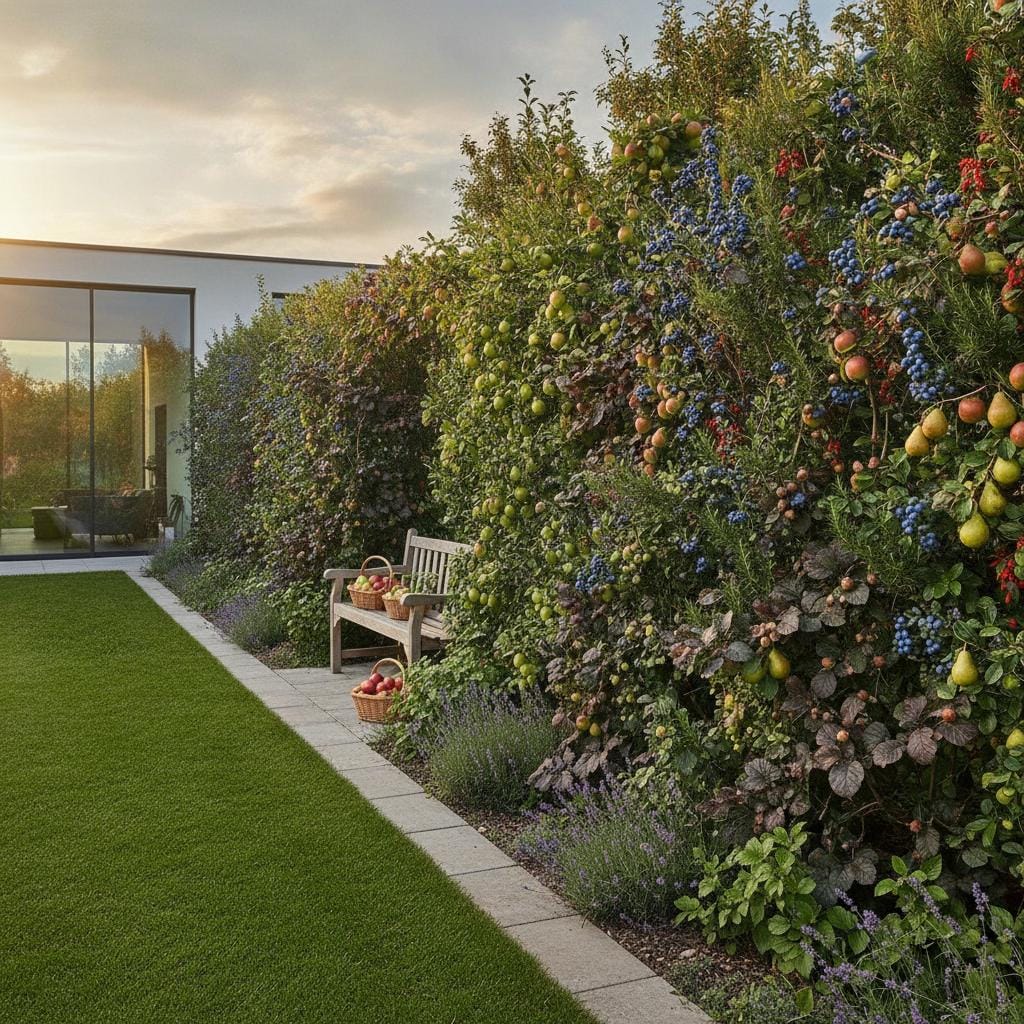
Consider the boundaries of your yard and imagine them serving multiple purposes beyond mere separation. A fruit-bearing privacy hedge transforms a simple divider into a dynamic feature that ensures seclusion while providing seasonal harvests. This approach integrates natural screening with edible productivity, enriching your outdoor environment with both visual appeal and practical benefits.
Such hedges surpass traditional fences by incorporating living elements that evolve with the seasons. They offer dense foliage for privacy, colorful blooms for aesthetics, and fruits for consumption. Selecting appropriate plants and maintaining them properly allows these hedges to become integral, self-sustaining components of your landscape.
Assessing Your Landscape for Optimal Placement
Start by evaluating your property thoroughly to identify suitable locations for your hedge. Observe sunlight patterns throughout the day, noting areas that receive at least six hours of direct light, as most fruiting shrubs require this for robust growth and fruit production. Identify wind exposure, since strong gusts can damage young plants or dry out soil prematurely.
Determine the level of privacy needed. For year-round coverage, select evergreen species that retain foliage through winter. Options like feijoa maintain density in mild climates, while deciduous varieties such as serviceberry provide thick summer screens and fall color, though they thin out in colder months.
Factor in soil conditions and space availability. Test soil pH and drainage to match plant preferences, and ensure adequate room for mature growth, typically spacing plants 3 to 6 feet apart depending on the species. This preparation minimizes future adjustments and promotes healthy establishment.
Selecting Ideal Plants for Fruiting Hedges
Approach plant selection by balancing privacy density, fruit yield, and adaptability to your region. Prioritize shrubs that form cohesive barriers while producing reliable harvests. The following options combine these qualities effectively.
1. Blueberry (Vaccinium species)
Blueberries form compact hedges ideal for acidic soils with pH levels between 4.5 and 5.5. Plant them in rows spaced 4 to 5 feet apart to achieve a 6-foot-high screen. They yield abundant berries from late spring to early summer after producing delicate white flowers. Maintain soil moisture with drip irrigation and apply pine bark mulch annually to suppress weeds and retain acidity.
2. Feijoa or Pineapple Guava (Acca sellowiana)
Feijoa establishes as an evergreen hedge with leathery, silver-green leaves that provide consistent privacy up to 10 feet tall. Its edible fruits, which mature in fall, offer a unique pineapple-guava flavor when scooped from the skin. Position plants 6 to 8 feet apart in full sun with well-drained soil, and prune annually in late winter to encourage bushy growth and flower production.
3. Serviceberry (Amelanchier species)
Serviceberries develop into multi-stemmed hedges reaching 15 feet, featuring early spring white flowers that attract pollinators. Their June-ripening berries, resembling blueberries in taste, support both human and wildlife diets. These adaptable plants tolerate clay or sandy soils; space them 4 to 6 feet apart and fertilize with a balanced product in early spring to boost fruit set.
4. Pomegranate (Punica granatum)
In USDA zones 8 to 11, pomegranates create ornamental hedges with glossy leaves and vibrant orange flowers leading to autumn fruits. Dwarf cultivars like 'Nana' stay under 4 feet, perfect for low screens, while standard types offer taller barriers. Plant in full sun with loamy soil, spacing 6 to 10 feet, and thin crowded branches post-harvest to improve air circulation and fruit quality.
5. Blackthorn or Sloe (Prunus spinosa)
Blackthorn suits temperate climates, forming thorny hedges up to 13 feet that deter intruders effectively. Its small, plum-like fruits ripen in late fall and serve well for sloe gin or jams after frost sweetens them. Plant in partial shade to full sun, spacing 3 to 4 feet, and coppice every few years by cutting back to ground level for denser regrowth.
Establishing and Pruning Your Hedge
Prepare the planting site by tilling soil to a depth of 12 inches and incorporating 2 to 3 inches of compost to enhance fertility and drainage. Dig holes twice as wide as the root ball but no deeper, and amend heavy clay soils with sand if necessary. Position plants at the same depth they grew in their nursery pots to prevent root rot.
Water newly planted shrubs deeply once a week for the first season, adjusting based on rainfall to keep soil consistently moist but not waterlogged. Apply a 2-inch layer of organic mulch around the base, extending to the drip line, to regulate temperature and reduce evaporation.
Prune immediately after fruiting to shape the hedge and stimulate new growth. For informal styles, remove only dead or damaged wood; for formal designs, shear sides vertically and taper the top to allow light penetration. Use sharp bypass pruners to make clean cuts just above outward-facing buds, avoiding over-pruning that could reduce next year's yield.
Maintaining Health and Maximizing Yields
Support hedge vitality with consistent seasonal care. Irrigate during prolonged dry periods, aiming for 1 inch of water weekly, and apply a slow-release fertilizer formulated for fruiting plants in early spring. Inspect regularly for issues like aphids or powdery mildew, treating with insecticidal soap or neem oil as needed to protect beneficial insects.
Encourage biodiversity by interplanting companion species such as bee balm near the base to draw pollinators. Monitor fruit development and harvest promptly to prevent pest attraction; for example, pick blueberries every few days during peak season to extend the harvest window.
As plants mature over 3 to 5 years, expect increased productivity. Track growth annually and adjust care, such as thinning overcrowded areas, to sustain vigor and ensure even fruit distribution along the hedge.
Integrating Variety for Enhanced Appeal
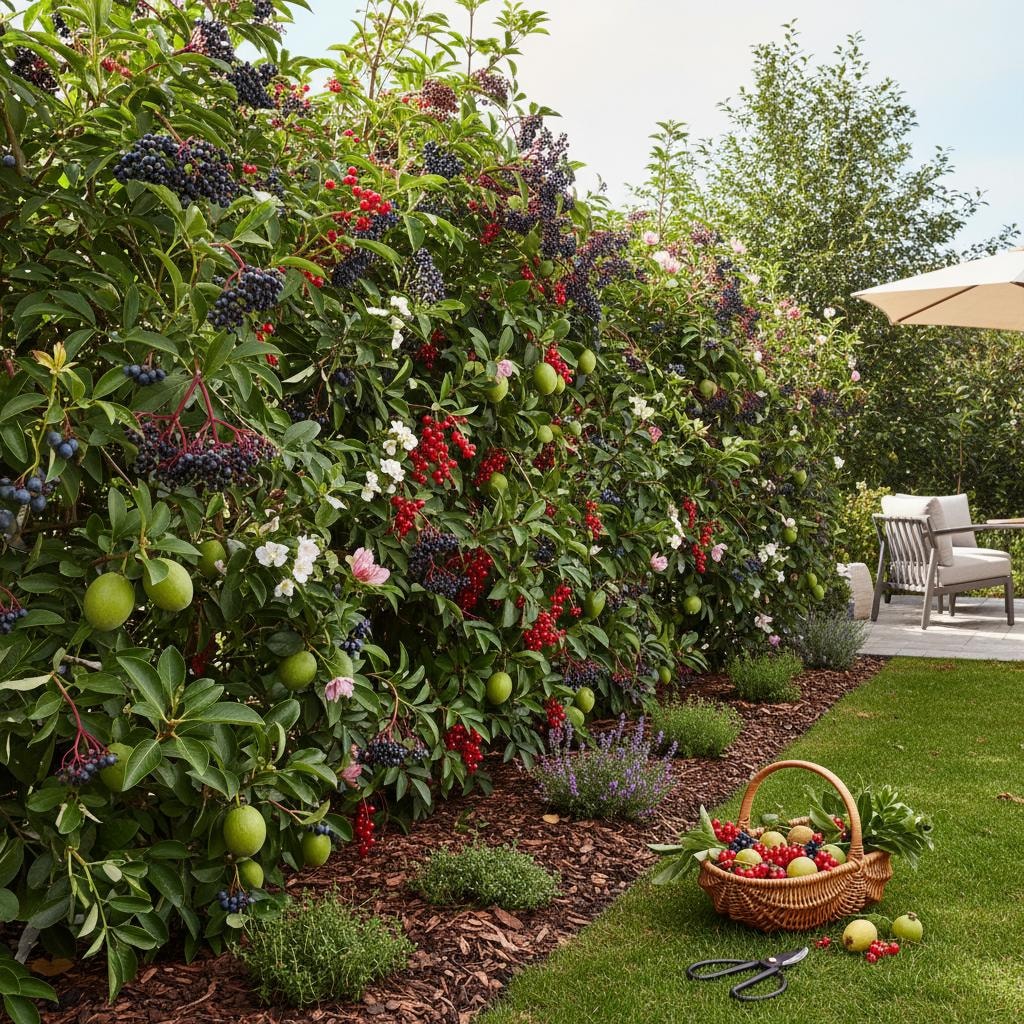
Combine multiple species to create a multifaceted hedge that extends harvest periods and adds textural interest. Pair blueberries with serviceberries for overlapping berry seasons from spring through summer. Incorporate feijoa alongside pomegranate for evergreen persistence in warmer zones, blending smooth and thorny elements.
This diversity supports ecological balance by attracting varied pollinators and improving soil health through differing root structures. Design the layout with taller plants at the back and shorter ones in front for layered privacy. Over time, this mixed planting evolves into a resilient, visually dynamic feature.
Sustaining Long-Term Productivity
Observe your hedge's progress each season to refine care routines. Note which plants thrive and adjust watering or feeding accordingly to optimize fruit quality. The maturing structure not only secures privacy but also contributes to a harmonious yard ecosystem.
Regular maintenance ensures the hedge remains a reliable source of fresh produce. Through attentive pruning and nurturing, it yields bountiful harvests that connect your landscape directly to your meals, demonstrating the value of integrating function with natural beauty.