Switch to Decomposed Granite from Gravel: Substantial Savings
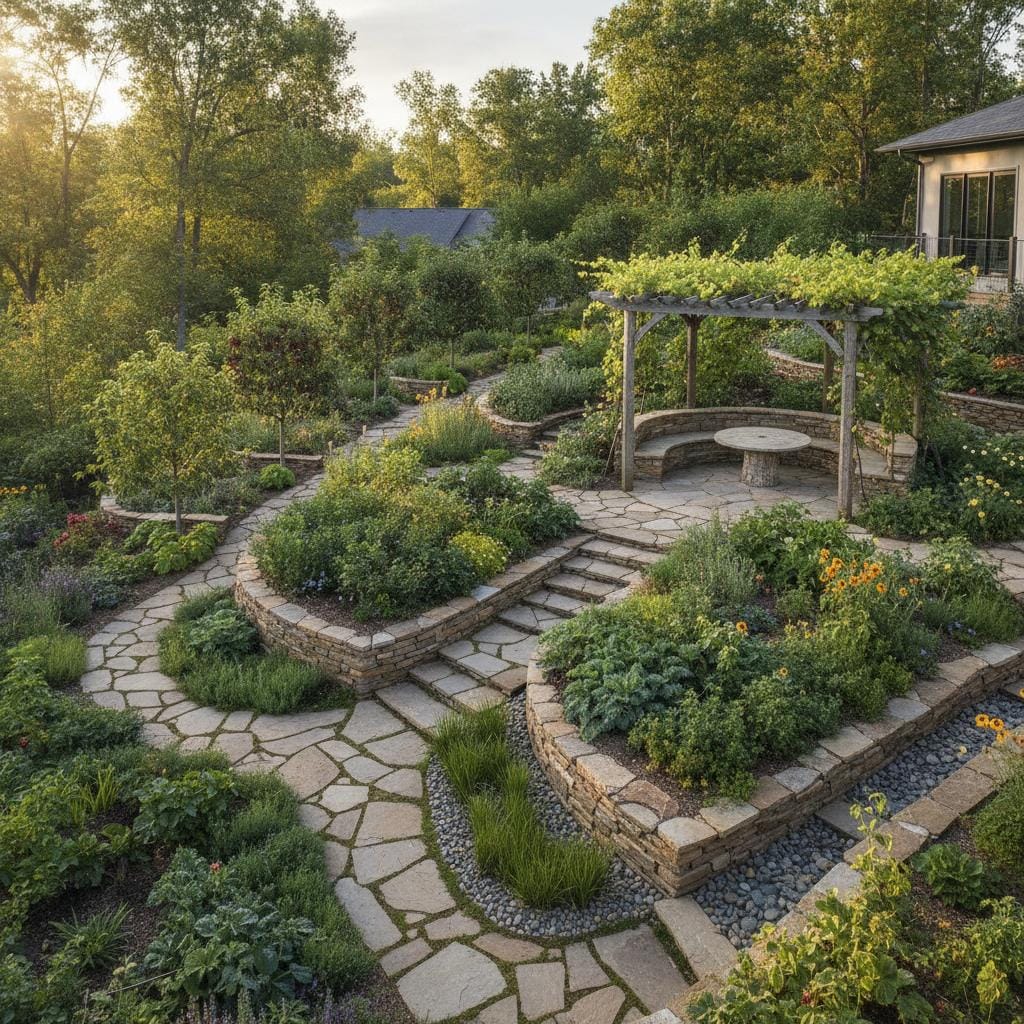
A well-designed yard invites exploration, with paths that guide the eye and surfaces that complement the surroundings. Gravel has served as a reliable option for these features in countless landscapes. However, decomposed granite provides comparable functionality at a lower cost, offering a refined alternative that enhances both aesthetics and practicality.
Decomposed granite, known as DG, forms from the natural breakdown of granite rock into finer particles. Unlike standard gravel, it compacts to create a stable, permeable surface suitable for walkways and patios. This substitution allows homeowners to achieve professional results without exceeding financial limits.
Why Choose Decomposed Granite
Decomposed granite delivers a warm, organic appearance that integrates seamlessly into diverse garden styles. Its particles, rounded by erosion, produce a texture softer than gravel's jagged edges. Available in hues from warm golds to cool grays, DG shifts subtly with moisture, adding visual depth to outdoor areas.
The material's compaction properties yield a firm yet breathable layer. Water infiltrates easily, minimizing erosion and supporting underlying soil health. This feature appeals to those prioritizing sustainable landscaping practices.
Key Differences Between Gravel and Decomposed Granite
Gravel and decomposed granite both function as ground covers, yet their properties affect performance in distinct ways. These contrasts guide selection for specific applications.
Texture and User Experience
- Gravel's irregular shapes can discomfort bare feet and shift under movement. Decomposed granite's finer, smoother grains form a more forgiving surface.
- Compaction in DG prevents migration into adjacent planting zones, reducing cleanup efforts.
Water Management and Durability
- Gravel permits drainage but may channel water unevenly, leading to washouts. Decomposed granite offers uniform permeability for consistent performance during storms.
- Stabilized DG withstands foot and light vehicle traffic without loosening, ensuring long-term reliability.
Visual and Upkeep Considerations
- Gravel retains a scattered, rocky profile that requires ongoing containment. Decomposed granite settles into a unified expanse with minimal intervention.
- Routine tasks for DG involve light raking and watering to preserve form, contrasting gravel's need for frequent redistribution.
Financial Benefits of the Switch
Decomposed granite typically costs 20 to 30 percent less per cubic yard than premium gravel varieties. Its efficient compaction requires shallower layers, typically 2 to 4 inches, compared to gravel's 4 to 6 inches for stability. These factors reduce material volume and transportation expenses.
Over time, DG minimizes replacement needs as it resists displacement from traffic or weather. Homeowners avoid the recurring costs associated with gravel's tendency to spread. Redirected savings enable enhancements like durable borders or complementary hardscape elements.
For expansive installations, such as meandering garden trails or expansive patios, the cumulative economies become evident. Bulk purchasing further amplifies value, especially from local suppliers familiar with regional soil types.
Selecting the Appropriate Decomposed Granite Variant
Decomposed granite varies by stabilization method, each suited to particular uses and upkeep levels.
Unstabilized Decomposed Granite
This form relies on natural compaction without additives. It suits low-traffic zones like meandering paths or mulched borders, where a loose, organic feel enhances informality.
Stabilized Decomposed Granite
Incorporating organic or inorganic binders, this type achieves greater firmness. Apply it in moderate-use areas such as entryways or play spaces to curb dust and erosion effectively.
Resin-Coated Decomposed Granite
A resin application creates a hardened, seamless finish. Reserve this for demanding sites like parking strips, where durability rivals paved surfaces while retaining a natural aesthetic.
Evaluate traffic patterns and aesthetic goals when choosing. Test samples in sunlight and shade to confirm color harmony with existing landscape features.
Step-by-Step Installation Guide
Proper site preparation ensures decomposed granite performs optimally over years.
- Prepare the foundation. Clear vegetation and excavate to 4 inches below the desired surface level, sloping slightly for drainage.
- Install a sub-base. Compact 2 inches of crushed stone or decomposed granite fines to form a stable underlayer.
- Apply decomposed granite incrementally. Distribute 2-inch lifts, moisten thoroughly, and compact with a plate tamper before repeating.
- Secure borders. Install metal, plastic, or natural stone edging to contain the material and maintain clean lines.
- Final compaction and curing. Water the surface evenly and allow 24 to 48 hours for settling before use.
Professional tools like a roller enhance uniformity in larger areas. Consult local guidelines for weed barriers if invasive plants pose a concern.
Integrating Decomposed Granite into Landscape Designs
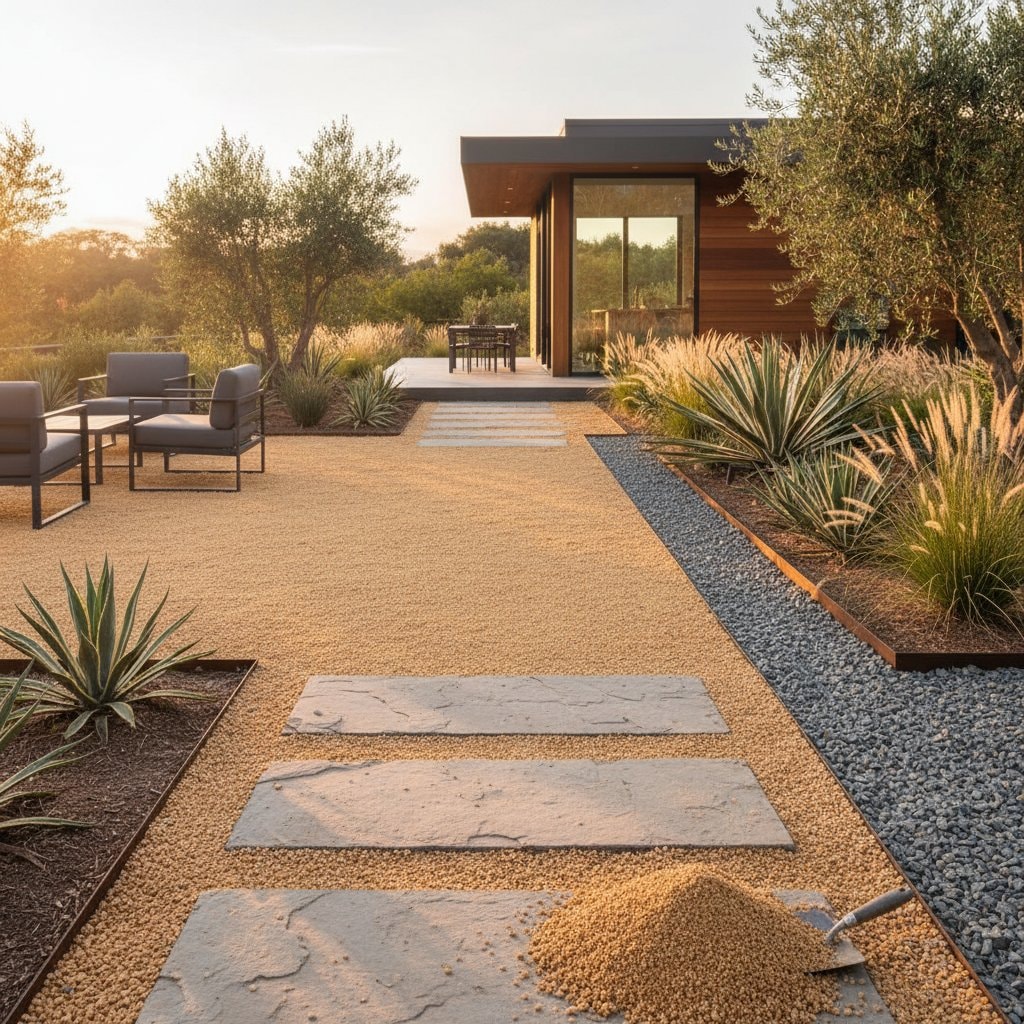
Decomposed granite adapts to contemporary, traditional, or eclectic schemes. In sleek settings, pair it with sleek metal frames for a modern pathway. Amid lush borders, it softens transitions between flower beds and open spaces.
Consistency across elements fosters harmony. Extend DG from walkways to lounging pads, accented by timber benches or boulder features. This approach unifies the yard's narrative.
Combine with complementary materials for texture play. Intersperse DG with slate tiles for defined steps, or fill joints between brick pavers to blend formality with nature.
Sustaining Your Decomposed Granite Installation
Decomposed granite matures gracefully, developing a subtle patina from exposure. Morning dew accentuates its tones, while evening light casts gentle shadows.
Preserve appearance through targeted care. Remove debris promptly to prevent staining, and apply water during extended dry periods to suppress dust. Address depressions by adding fresh material and recompacting.
Annual inspections reveal needs for edging reinforcement or binder refreshment in high-wear zones. These practices extend the surface's lifespan, often exceeding a decade with minimal investment.
Transitioning from Gravel to Decomposed Granite
Begin the change with a pilot project, such as a 10-foot path segment. Observe how DG interacts with your soil and climate over a season.
Gather materials from reputable sources to ensure quality. Calculate quantities using online estimators based on area measurements. Engage a landscaper for complex layouts to guarantee precision.
This upgrade delivers enduring value, blending economy with elegance. Decomposed granite empowers thoughtful transformations that elevate everyday outdoor experiences.