Revolutionize Backyards with Sunken Gardens
A backyard often mirrors the lifestyle of its owners. Some individuals maintain open, airy spaces filled with sunlight. Others seek secluded areas bordered by trees or stone walls. In recent seasons, more homeowners direct their focus downward. They excavate to form sunken gardens and below-grade patios that convey a sense of grounding and seclusion. This concept dates back through history, but it appears strikingly contemporary today. Descending into such a space alters the garden's atmosphere. It moderates the rhythm, muffles external sounds, and fosters closer interactions.
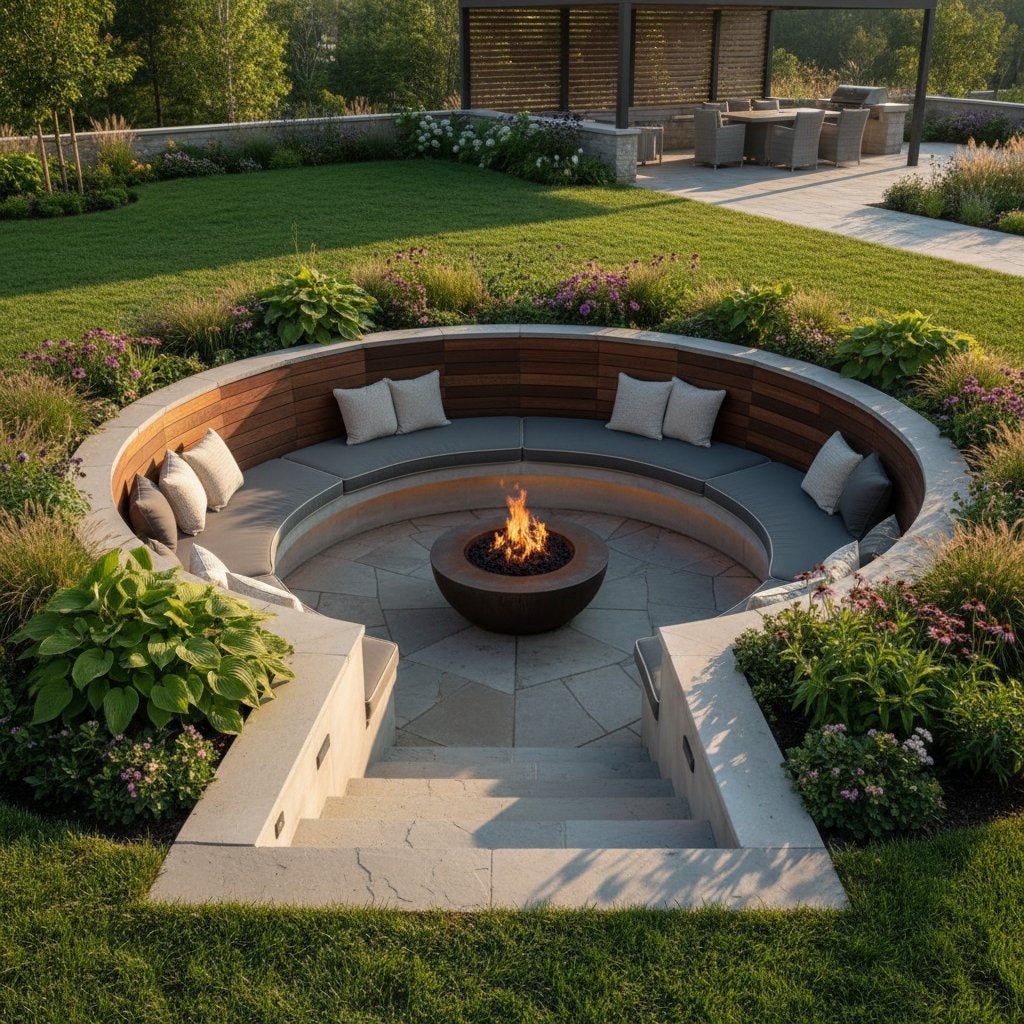
A sunken garden establishes an inherent enclosure while preserving an expansive view of the sky. It might manifest as a basic recessed patio, a tiered planting zone, or a complete outdoor room encircled by retaining walls and lush foliage. Regardless of the configuration, the outcome remains consistent: a secluded haven linked to the earth itself.
Design Principles for Sunken Gardens
Effective sunken gardens rely on balanced proportions. The depth, breadth, and height of surrounding elements influence the overall perception. Excessive depth risks creating a cavernous feel. Insufficient depth diminishes the retreat-like quality. The objective involves achieving equilibrium, where the area feels sheltered without seeming confined.
Several key considerations guide the planning process:
- Depth and Scale: A descent of two to three steps often suffices to produce the desired impact. When walls exceed eye level, incorporate integrated seating, gradual steps, or planting niches to temper the boundaries.
- Drainage: Water gravitates to the lowest elevation, making reliable drainage crucial. Install a gravel foundation, perforated drain pipes, or subtle channels to channel excess moisture away and maintain usability.
- Access and Flow: The shift from the primary yard to the sunken zone requires seamless integration. Employ broad steps, rounded contours, or low retaining barriers to render the entry welcoming rather than jarring.
- Materials: Options such as natural stone, clay brick, and cast concrete impart distinct characters. Natural stone provides organic warmth and tactile interest. Clay brick evokes classic appeal and harmonizes with heritage-style residences. Cast concrete delivers sleek modernity that integrates smoothly into current landscapes.
Select materials with an eye toward overhead perspectives. As the garden appears from lawn or upper patio elevations, the lower surfaces must enhance the broader yard without dominating it.
From Conversation Pits to Outdoor Living Rooms
Sunken gardens echo the essence of mid-century indoor conversation pits, adapted for exterior use. Those interior designs gathered individuals in cozy, lowered seating arrangements where dialogue flowed easily. Outdoors, this approach benefits from enveloping natural elements.
Transform a sunken patio into a functional outdoor living room through deliberate enhancements:
- Integrated Seating: Embed stone or concrete benches within the retaining walls to preserve a streamlined arrangement. Layer with weather-resistant cushions to introduce comfort and vibrant hues.
- Fire Elements: Position a fire bowl or compact fire pit at the center to serve as a gathering focal point. The depressed walls capture warmth and amplify the enclosed ambiance.
- Multi-Layered Lighting: Blend suspended string lights with low-profile wall fixtures to generate dimension and inviting glows during evening hours.
- Auditory and Aquatic Features: Introduce a modest fountain or trickling water element to infuse motion and mask urban sounds from adjacent roads.
These additions convert the garden into a venue for dialogue, contemplation, and tranquil repose. The lowered elevation prompts extended stays, whether for shared dining or solitary moments. It emerges as a central feature that unites built forms with natural surroundings.
Constructing with Precision and Purpose
Developing a sunken garden demands excavation and engineering, underscoring the importance of thorough preparation. Prior to any digging, consult local regulations for necessary permits and verify underground utility locations. Collaborate with a landscape architect or experienced builder versed in subsurface projects. Even minor oversights in drainage or structural integrity can precipitate future complications.
Retaining walls require solid footings and appropriate backfilling. Incorporate drainage systems behind the walls to mitigate water buildup that might induce fractures or instability. Modular block units with interlocking mechanisms offer durability alongside adaptability for moderate scales. Larger endeavors may necessitate reinforced concrete or mortared masonry for enhanced support.
For a subtler integration, opt for terraced configurations over a uniform plane. Multiple low platforms or stepped levels replicate the depth effect while merging fluidly with the terrain.
Sustaining Your Sunken Garden
After completion, a sunken garden integrates as a vital extension of the residence. It demands routine upkeep, comparable to other landscaped areas. Consistent surface cleaning, drainage inspections, and plant care ensure enduring vibrancy. As vegetation establishes, it mellows rigid lines and heightens the organic character.
Implement these maintenance practices to preserve its appeal:
- Drainage Oversight: Following substantial rainfall, inspect for unobstructed water passage via drains or gravel layers. Remove accumulated debris promptly.
- Surface Renewal: Regularly sweep and rinse stone or concrete to avert discoloration. Reapply joint sand to pavers if gaps widen over time.
- Vegetation Management: Prune plants to prevent encroachment on pathways or seats. Permit growth that accentuates rather than obscures the design.
- Accessory Refreshments: Introduce periodic updates to cushions, containers, or illumination to evolve the atmosphere without structural modifications.
Steps to Create Your Sunken Garden
Initiate your project by sketching a site plan that aligns with your yard's contours and usage patterns. Consult professionals early to address site-specific challenges like soil type or slope. Source materials from reputable suppliers to guarantee quality and longevity. With careful execution, your sunken garden will evolve into a cherished, enduring retreat that enhances daily life and property value.