Early Spring Advantages: Selecting Cold-Hardy Vegetables for 2025
Picture yourself in the garden as the first signs of spring emerge, a mix of anticipation and caution in the air. The soil remains chilled, the breeze sharp, and questions arise about the readiness for planting. Visions of vibrant greens on the dinner table persist, even as winter's chill lingers. This desire to cultivate amid transitional weather marks the essence of early spring gardening.
Early spring planting represents a deliberate step forward. Gardeners place faith in the soil's gradual revival, despite potential frosts. Success depends on selecting vegetables adapted to low temperatures. These resilient types allow season initiation ahead of schedule, yielding the pleasure of initial yields and assurance that the garden operates efficiently from the outset.
The following sections provide detailed instructions on preparation, planting, and maintenance for these durable vegetables. This approach revives outdoor areas prior to peak seasonal activity.
Selecting Appropriate Cold-Hardy Vegetables
Opt for vegetables that embrace cooler conditions to enable planting several weeks in advance of typical timelines. These selections serve as the foundation for a robust early spring garden.
Leafy Greens
- Spinach: Excels in soil temperatures between 40 and 75 degrees Fahrenheit; it germinates swiftly and yields harvests in 40 to 50 days. Sow seeds in rows spaced 12 inches apart or broadcast them over prepared beds for straightforward harvesting.
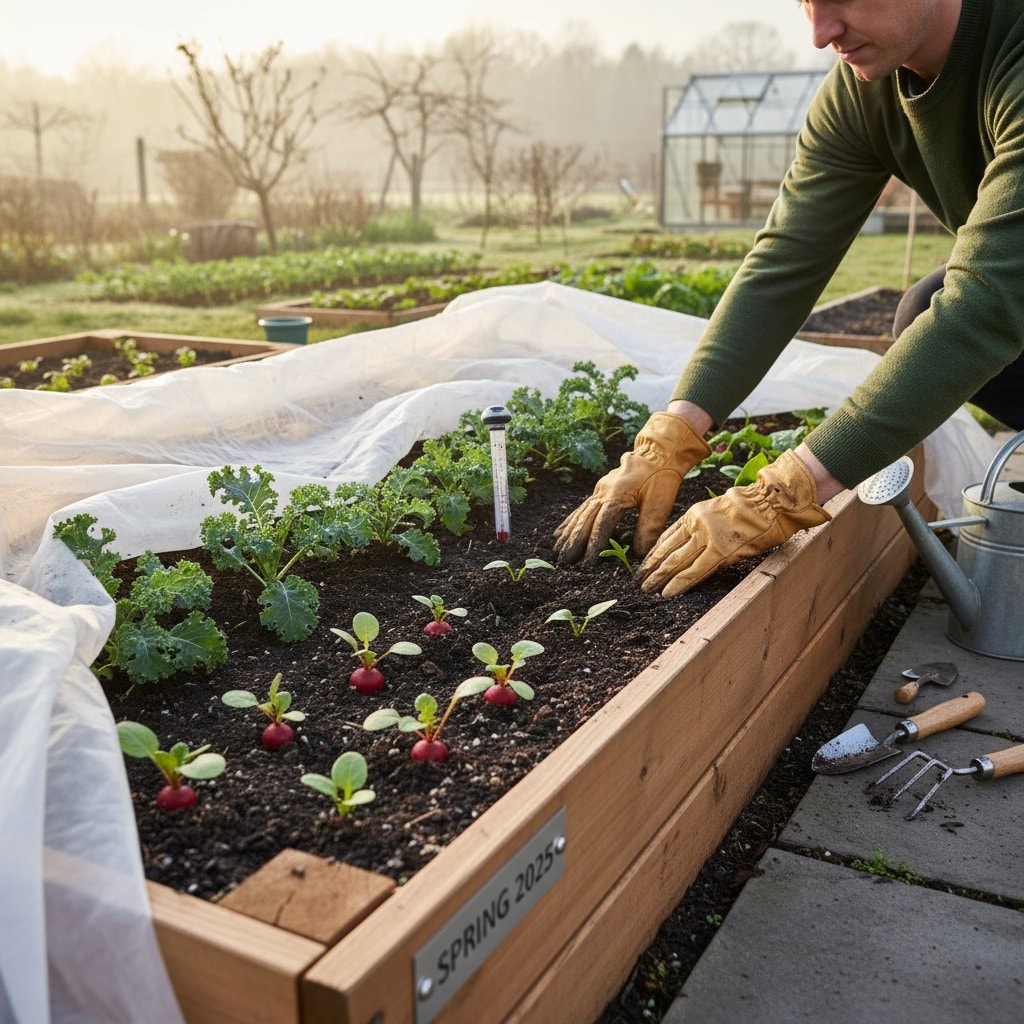
- Kale: Withstands temperatures down to 20 degrees Fahrenheit and continues leaf production into warmer months. Varieties like 'Lacinato' offer curly or flat leaves with enhanced flavor after light frosts.
- Lettuce: Loose-leaf cultivars, such as 'Black Seeded Simpson', reach maturity in 45 days. Succession plant every 10 to 14 days in 6-inch wide bands to maintain continuous availability.
Root Vegetables
- Radishes: Germinate at soil temperatures as low as 40 degrees Fahrenheit; harvest in 20 to 30 days. Varieties like 'Cherry Belle' provide round, red roots ideal for quick results.
- Carrots: Select nantes or baby types, such as 'Scarlet Nantes', which mature in 60 to 70 days in cooler conditions. Thin seedlings to 2 inches apart to promote straight development.
- Beets: Dual-purpose plants with edible greens; 'Detroit Dark Red' yields roots in 50 to 60 days. Harvest greens young for tenderness and roots at 1 to 2 inches in diameter.
Resilient Brassicas
- Broccoli: Thrives below 75 degrees Fahrenheit; early varieties like 'De Cicco' produce side shoots after the main head. Space plants 18 inches apart for optimal airflow.
- Cabbage: Tolerates nights near freezing; start 'Golden Acre' as transplants for heads in 60 to 70 days. Firm up soil around bases to support heavy growth.
- Cauliflower: Requires protection from winds above 20 miles per hour; 'Snowball' forms white heads in 70 days. Blanch inner leaves over curds to maintain color and quality.
Incorporating these options ensures visible progress while others delay for higher temperatures.
Strategic Planting Techniques
Early vegetable planting emphasizes precise timing over haste, combined with attentive handling. Cold-hardy seeds sprout in soil as cool as 45 degrees Fahrenheit, often eliminating the need for indoor initiation. For an accelerated beginning, however, indoor sowing under grow lights for two to three weeks allows hardening off before outdoor transfer.
Guidelines for Direct Sowing
- Planting Depth: Position most seeds at 0.5 inches deep to access surface sunlight while remaining protected. Larger seeds, like beets, may require 1 inch.
- Spacing Requirements: Allocate 4 to 6 inches between plants for greens and 2 to 4 inches for roots to prevent competition and disease. Use row covers if space constraints arise.
- Watering Practices: Apply gentle, consistent moisture to maintain even soil dampness without waterlogging. Aim for 1 inch of water per week, adjusting for rainfall.
For transplants, support roots during relocation to minimize disturbance. Irrigate thoroughly post-planting to establish contact with surrounding soil, and mulch lightly with straw to retain moisture and suppress weeds.
Reaping Early Benefits
The act of gathering the season's initial produce delivers profound fulfillment. Crisp air surrounds the moment, yet hands grasp nourishment cultivated through adversity. These prompt collections affirm the value of methodical nurturing.
Harvest Timing Essentials
- Radishes: Extract when shoulders emerge and roots measure 1 inch across to preserve tenderness; delay leads to pithiness.
- Lettuce and Spinach: Remove exterior leaves at the base, allowing central growth to persist for multiple cuts over 4 to 6 weeks.
- Kale: Begin with bottom leaves, cutting 6 to 8 inches above soil level, to encourage upward branching and extended yields.
- Carrots and Beets: Moisten soil the day prior, then fork gently beneath to lift intact roots; store extras in cool, humid conditions for weeks.
Successive sowing of fast-maturing items, such as radishes every two weeks, extends productivity and maximizes bed utilization throughout spring.
Cultivating Lasting Garden Success
Each early planting session imparts valuable insights. Observations of soil texture, post-rain aromas, and seedling responses to sunlight foster deeper engagement with the environment.
Cold-hardy vegetables honor persistence and initiative. They demonstrate that advancement occurs independent of ideal circumstances. Through proactive tending, gardeners seize the season's potential early on, introducing vitality, taste, and sustenance ahead of the crowd.
Sustain progress as spring advances. Monitor for pests with regular inspections, amend soil with compost for nutrients, and document successes to refine future efforts. This foundation influences the full year's output, transforming the garden into a testament to dedication and foresight.
The true gain lies in the ongoing ritual. Seeds embedded in chilled earth embody potential plenty. Repeated acts of cultivation build resilience in both plants and practitioners.