Ensure Lush 2026 Blooms with Fall Bulb Secrets
Planting bulbs in the fall captures a unique satisfaction as cooler weather settles over the garden. Gardeners place these modest bulbs into the earth, cover them carefully, and anticipate the transformation. In spring, vivid displays emerge, rewarding the earlier investment of time and thought.
Understanding Why Fall Matters
Bulbs require a period of dormancy followed by renewal to perform at their best. Winter cold triggers internal changes that enable vigorous spring growth. Fall planting allows roots to develop before soil temperatures drop below freezing, resulting in sturdier plants and more abundant flowers.
Bulbs function like energy reserves for the garden. The care provided during planting influences the intensity of future blooms. Proper timing prevents issues such as stunted growth or inconsistent flowering.
Choosing the Right Bulbs for Your Garden
Bulb selection opens a range of options suited to various garden styles. Consider bloom color, height, and longevity when making choices. Categorize selections to simplify the process.
Classic favorites:
- Tulips offer diverse forms, from classic goblet shapes to intricate parrot varieties, in colors spanning the spectrum.
- Daffodils provide reliable displays with trumpet or cup-shaped flowers in yellows, whites, and oranges.
- Crocuses emerge early, with grass-like foliage and star-shaped blooms in purple, blue, or white.
- Hyacinths deliver strong scents and upright spikes of tightly packed florets in blue, pink, or white.
Naturalizing bulbs:
- Snowdrops feature delicate, nodding white flowers and tolerate shade well.
- Grape hyacinths form small, grape-like clusters in blue or white and multiply readily.
- Scilla produces starry blue flowers and thrives in lawns or borders.
Combine early and late bloomers for continuous interest. Naturalizing types ensure returns without annual replanting, while classics add focal points.
Preparing the Soil for Success
Optimal soil supports bulb health from the start. Aim for loose, well-draining conditions enriched with organic material. Test drainage by digging a hole, filling it with water, and noting how long it takes to drain; ideal time falls between one and three hours.
For clay soils, incorporate two to three inches of compost or aged manure per square foot. Sandy soils benefit from similar additions to retain moisture and nutrients. Work amendments into the top six inches of soil using a garden fork.
Clear the planting area of debris, rocks, and perennial weeds. Level the surface with a rake to facilitate even planting and root establishment.
Planting with Care and Intention
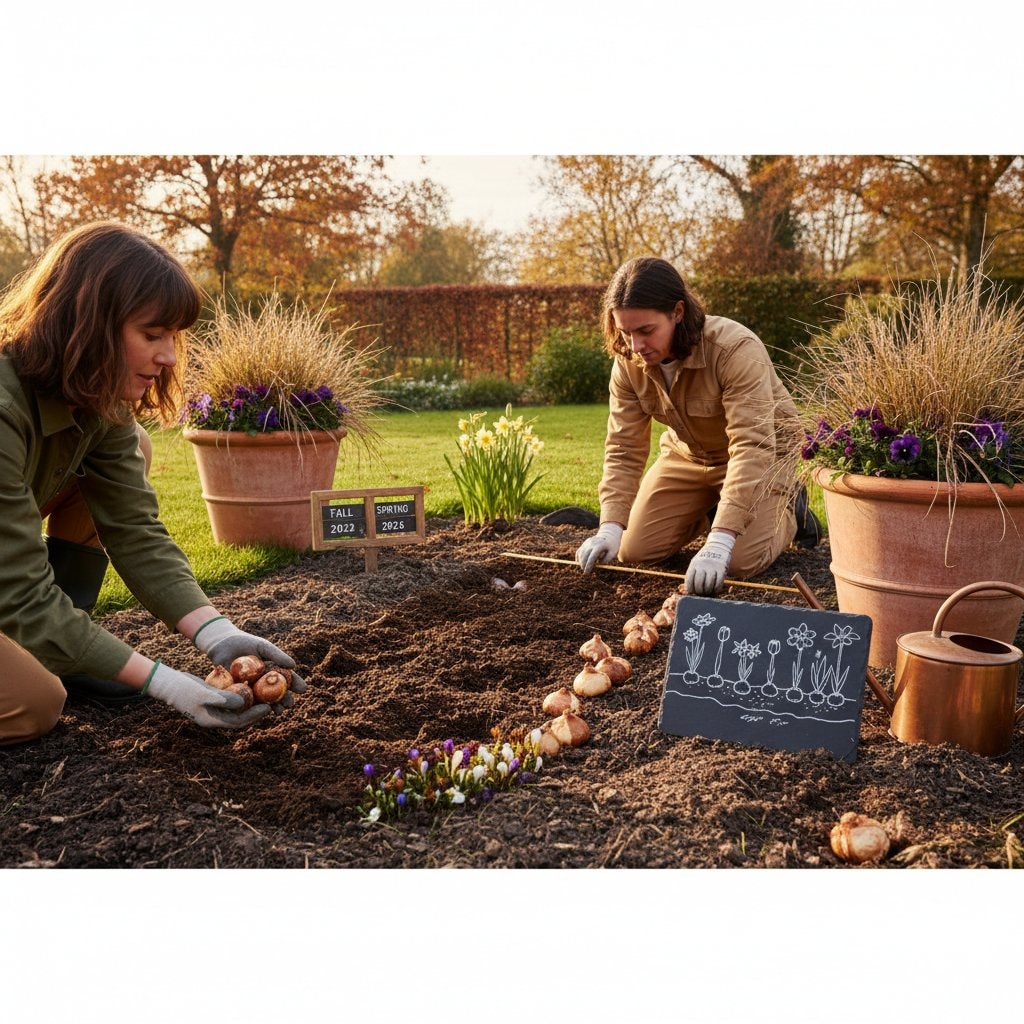
Depth guidelines protect bulbs from temperature extremes and pests. Plant large bulbs, such as tulips and daffodils, at three times their height; smaller ones, like crocuses, at two times. Orient the pointed tip upward and firm soil around the base to eliminate air pockets.
Space bulbs according to type: three to five inches apart for tulips, four to six for daffodils. Plant in irregular clusters of five to nine for a naturalistic effect. Visualize sightlines from key garden views to position drifts effectively.
After placing bulbs, water thoroughly to initiate rooting. Apply a two-inch layer of organic mulch, such as shredded bark, to moderate soil temperature and suppress weeds.
Timing and Temperature Tips
Plant when soil temperatures reach 55 to 60 degrees Fahrenheit, typically six to eight weeks before the ground freezes. This window supports root growth without encouraging top shoots. Monitor local frost dates through regional gardening resources.
In milder climates, delay planting until late fall to avoid premature growth. In colder areas, complete planting by mid-November. Divide tasks over several days to maintain precision and reduce fatigue.
Keeping It Balanced with Companion Choices
Pair bulbs with perennials for enhanced displays and prolonged interest. Creeping phlox or ajuga ground covers conceal yellowing bulb leaves after flowering. Pansies or violas serve as annual fillers, blooming alongside early bulbs.
Layer by height and bloom sequence: position crocuses at two inches deep, daffodils at six, and alliums at eight. This arrangement creates depth and extends the season from February to May. Select companions with complementary colors, such as blue scilla near yellow daffodils.
Protecting Your Investment
Animals pose risks to planted bulbs, particularly in fall when natural food sources dwindle. Install hardware cloth or chicken wire over beds, securing edges with stakes until frost sets in. Scatter sharp gravel around planting sites to deter burrowing.
Repellents like blood meal or commercial sprays offer additional barriers; reapply after rain. In spring, water deeply once weekly during dry spells and apply a low-nitrogen fertilizer at half strength when foliage reaches four inches.
Refining Your Garden Over Time
As shoots appear, observe growth patterns to inform future adjustments. Strong performers indicate ideal conditions, while sparse areas suggest soil or placement tweaks. Maintain a planting journal with dates, varieties, and outcomes.
Annual evaluation ensures evolving success. Divide overcrowded naturalizers every three to four years in late summer. This practice sustains vigor and prevents decline, building a resilient spring landscape.