Thrive in Shade: Top Plants for Dark Zones 2026
Examine that dimly lit corner of the yard and consider its untapped possibilities. Such spaces often appear barren or underutilized, especially compared to sun-drenched sections. However, shade harbors significant potential. Select appropriate plants to create serene, cooling enclaves that complement sunnier garden elements.
Shade gardening requires careful observation and steady effort, yet it delivers layers of texture, depth, and surprising allure. Grasp the essentials of low-light success to reshape overlooked areas into dynamic, multifaceted retreats.
Understanding Shade and Its Character
Shade varies considerably based on surrounding trees, structures, and daily light patterns. Spend several days monitoring light penetration in the intended area. Track spots that receive fleeting illumination versus those remaining consistently dim.
Classify shade into these key types for informed plant selection:
- Full shade describes locations with minimal direct sunlight, relying on indirect or filtered light from overhead canopies or nearby walls.
- Partial shade involves brief morning exposure or intermittent dappled rays throughout the day.
- Light shade features ample indirect brightness, typically adjacent to open areas or reflective elements.
Accurate assessment ensures plants perform optimally. For instance, a fern suited to dense woodland conditions may suffer in areas exposed to intense afternoon rays.
Planning for Texture and Contrast
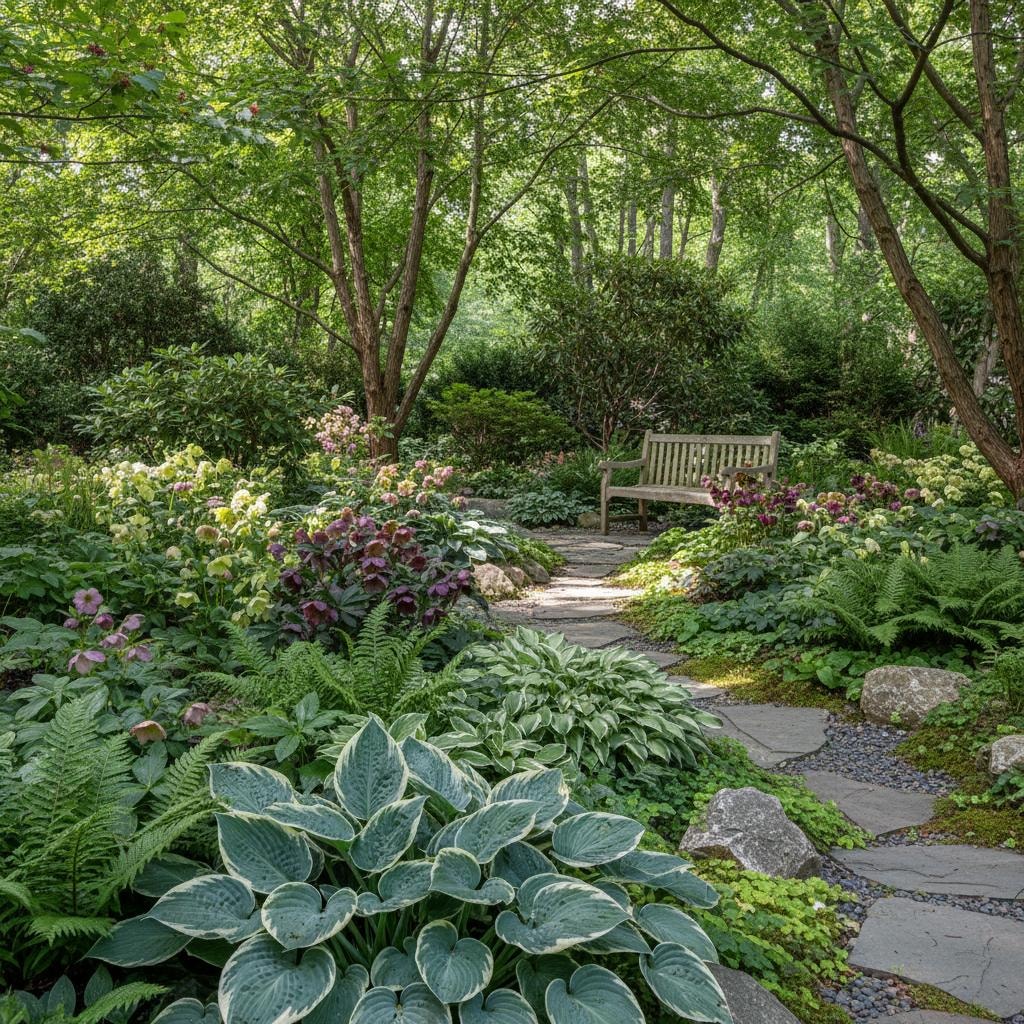
Shade designs emphasize form, foliage variation, and tactile interest over vivid blooms. Approach it as composing with leaf shapes and surfaces. Pair the broad, glossy surfaces of hostas with the intricate fronds of ferns for visual harmony. Introduce moss carpets to temper hardscape edges, or incorporate lamium's silvery accents to illuminate subdued zones.
Structure the layout in tiers: backdrop perennials for height, medium fillers for density, and trailing covers for the base. This approach fosters dimension, sustaining appeal beyond flowering periods.
Effective Combinations for Sustained Impact:
- Hosta and Fern Mix: Offset hosta boldness with fern delicacy to achieve equilibrium in form and scale.
- Heuchera and Pulmonaria Pairing: Leverage heuchera's bold foliage hues alongside pulmonaria's mottled patterns and spring flowers for year-round intrigue.
- Astilbe and Japanese Forest Grass: Integrate astilbe's plume-like blooms with the cascading strands of forest grass to introduce fluidity and grace.
Top Plants for Deep Shade
Dense tree cover or north-facing positions present challenges, but certain species excel in such cool, sheltered settings.
1. Hosta (Plantain Lily)
Hostas rank among the most dependable shade selections, offering diverse sizes from compact to expansive mounds. Leaves display waxy textures in shades of blue, green, chartreuse, and variegated motifs. These plants establish rapidly to form cohesive masses. Maintain consistent moisture, particularly in parched understory conditions, to support vigorous development.
2. Japanese Painted Fern
The fern's arching fronds, edged in silver with burgundy undertones, infuse subtle radiance into gloomy beds. It contrasts effectively with deeper green companions, creating focal points through reflective sheen. Provide humus-rich, evenly moist soil to promote healthy spread.
3. Lungwort (Pulmonaria)
Pulmonaria emerges with pendulous pink-to-blue flower clusters in early spring, followed by silver-spotted foliage that persists through summer. This plant favors humid, shaded microclimates and expands gradually to occupy voids without aggression.
4. Sweet Woodruff
Forming a fragrant emerald mat accented by delicate white stars in spring, sweet woodruff suits woodland edges or pathway borders. It tolerates periodic dry spells after rooting but thrives with supplemental watering in its first seasons.
5. Hellebore (Lenten Rose)
Hellebores initiate the gardening year with nodding blooms in ivory, rose, or deep purple tones during late winter. Evergreen, leathery foliage maintains structure across seasons, rendering them versatile for both aesthetics and utility.
Bright Choices for Partial Shade
Areas with fluctuating light allow broader options, accommodating plants sensitive to midday intensity.
1. Astilbe
Astilbe elevates shade borders with tall, feathered inflorescences in whites, pinks, and reds above divided leaves. Ensure steady soil hydration to maximize flower production and prevent wilting.
2. Heuchera (Coral Bells)
Heuchera captivates with foliage in electric lime, metallic bronze, or velvety purple, extending interest well beyond its airy summer spikes. It adapts seamlessly to partial exposure and endures in temperate regions.
3. Japanese Forest Grass (Hakonechloa)
Hakonechloa cascades in golden or lime waves, ideal for edging or draping over retaining walls. It captures stray light to enhance vibrancy while preferring fertile, moist conditions.
4. Brunnera (Siberian Bugloss)
Heart-leaved brunnera, veined in silver, scatters light effectively; spring brings clusters of azure blooms reminiscent of forget-me-nots. Position in consistently damp shade for reliable performance.
5. Tiarella (Foam Flower)
Tiarella offers frothy white or pink spikes over veined, lobed leaves that form tidy colonies. It integrates smoothly with larger perennials, enhancing overall cohesion.
Ground Covers and Low Growers
Low-spreading plants stabilize soil, suppress competitors, and unify compositions in shade.
Select from these steadfast varieties:
- Lamium (Dead Nettle): Silver-variegated foliage illuminates depths, complemented by spring snaps of pink or lavender. Control its vigor through periodic division.
- Pachysandra: Evergreen whorls of polished leaves provide year-round coverage beneath canopies.
- Moss: In perpetually moist or alkaline soils, moss creates plush, low-maintenance tapestries that evoke ancient forests.
- Wild Ginger: Broad, rounded leaves form a dense, shade-tolerant underlayer with subtle earthy aroma.
Caring for Shade Gardens
Shaded sites demand focused soil management and hydration due to root competition and reduced precipitation.
Essential Maintenance Practices:
- Enrich the soil. Incorporate aged compost or decayed leaves annually to boost fertility and drainage.
- Irrigate thoroughly. Deliver deep soakings every seven to ten days during dry periods to reach underlying roots.
- Deter pests. Slugs favor moist shade; apply barriers such as sharp sand or beer traps for organic control.
- Thin overhead growth. Selectively remove limbs to admit filtered light without compromising the canopy.
Designing with Light and Balance
Subtle illumination enhances shade through reflections from pale hardscapes, metallic leaves, or strategic placements. Integrate light-toned mulch or pale gravel to bounce rays inward. Opt for containers in matte whites or silvers to avoid visual weight.
Incorporate meandering paths or seating to navigate and appreciate the intimacy. These elements frame shade as a restorative interlude, where cooler temperatures invite lingering reflection.
Nurturing Seasonal Evolution
Shade gardens develop gradually, with each cycle revealing refined textures and stronger establishments. Initial plantings may require adjustments, but persistence unveils their full character.
Monitor annual changes: note emerging patterns in light, deepening foliage tones, and emerging synergies. A newly rooted fern or expanding moss veil signals harmony. Such observations affirm the garden's adaptation.
Low-light cultivation imparts insights into resilience and nuance. Each thriving specimen demonstrates nature's capacity to flourish in restraint. With precise selections and diligent stewardship, shaded realms emerge as cherished sanctuaries of poise and renewal.