Self-Watering Pathways Transform Permaculture Hardscaping
There is quiet satisfaction in walking through a garden after a gentle rain. The ground feels alive and the scent of damp earth lingers. Many gardeners notice how water moves through their space. It pools in some areas, skips over others, and disappears too quickly where plants need it most. Those observations lead to a simple question. What if pathways could do more than lead from one place to another?
Self-watering pathways, sometimes called water-harvesting paths, merge beauty, function, and ecological care. They are not just paving or decoration. They form part of a larger conversation about managing water wisely across every part of a landscape.
The Idea Behind Self-Watering Pathways
Traditional garden paths shed water to keep feet dry and surfaces clean. Runoff travels into drains or downhill areas. This approach wastes rainfall that could support nearby plants. Permaculture views every surface as a potential resource instead.
A self-watering pathway captures, filters, and slowly releases rainwater into soil beneath or beside it. The path becomes a sponge rather than a barrier. This approach fits the principles of permaculture by working with natural patterns.
Well-designed paths reduce erosion, recharge soil, and ease the need for supplemental irrigation. They also cool surrounding areas because moist soil holds temperature more evenly than dry ground.
How Water-Harvesting Paths Work
The structure relies on layers that each serve a purpose. A typical design includes four main elements.
- A permeable surface layer of gravel, porous pavers, or spaced flagstones that allows rain to pass through.
- A base of coarse aggregate such as crushed stone that stores water temporarily.
- A soil interface or infiltration bed where organic matter absorbs and distributes moisture to roots.
- Optional drainage channels or swales that guide excess water toward planting zones.
These layers mimic healthy soil. The path becomes part of the garden living system rather than a hard barrier.
Choosing the Right Materials
Every landscape has its own soil and drainage conditions. Sandy soils benefit from coarser gravel that slows water for plant use. Clay soils require lighter aggregates and a slightly raised path to prevent pooling.
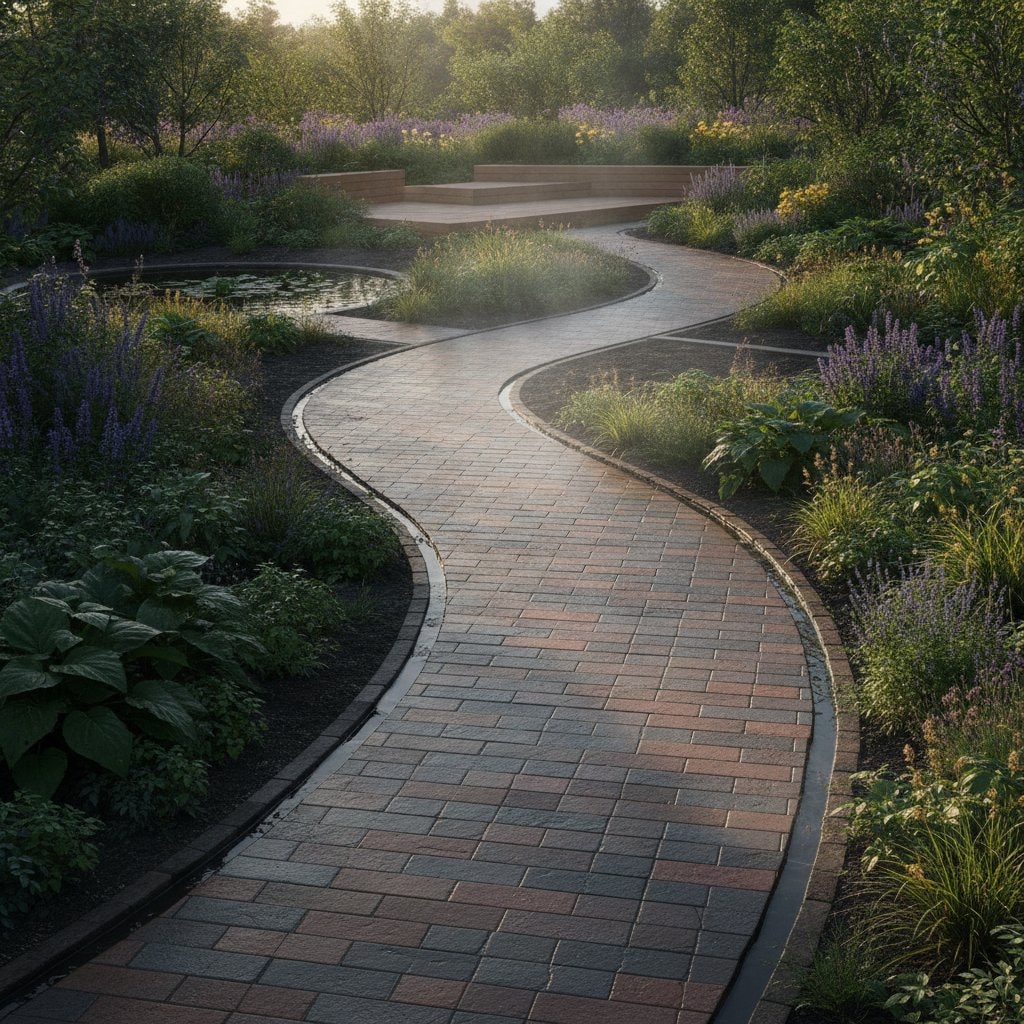
Permeable pavers made from recycled materials create neat lines with narrow joints for water passage. Crushed gravel, decomposed granite, or small river stones suit rustic settings. The key is enough space between particles for movement while maintaining stability underfoot.
Integrating Paths into a Permaculture Plan
A path serves as boundary, collector, and delivery system. Design choices should reflect how the path interacts with the rest of the garden.
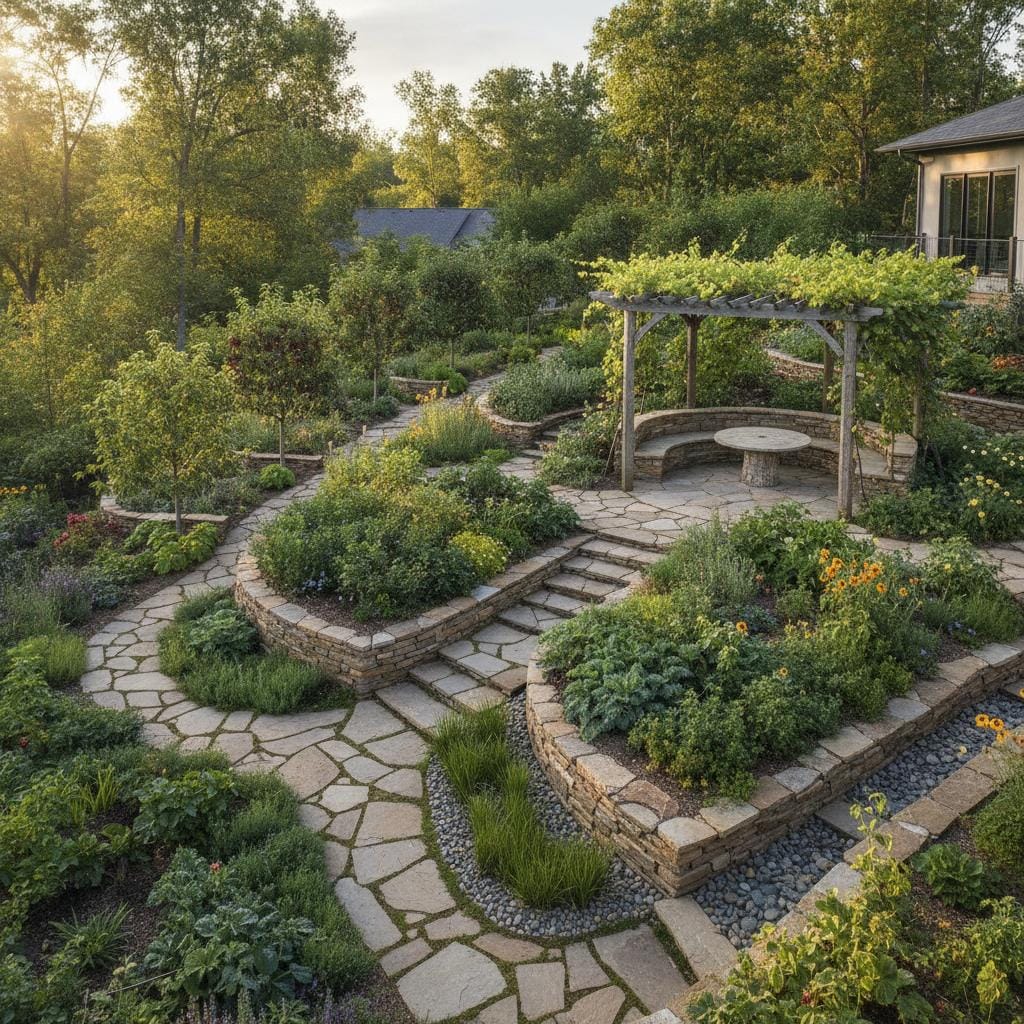
- Follow natural contours to slow water flow and direct it toward planting beds.
- Connect paths to rain gardens or cisterns so excess water can be held and reused.
- Place moisture-loving plants such as ferns, sedges, or native grasses along edges to stabilize soil.
When elements work together, water moves gently through the landscape and feeds each part in turn.
Balancing Form and Function
A good pathway feels like a natural part of the landscape. Clean geometric lines complement modern architecture. Curves echo the flow of water itself.
Texture affects both safety and appearance. Rougher materials provide better traction when wet. Mixing gravel with flagstone creates subtle transitions between spaces. Color choices influence mood. Pale limestone brightens shade while darker basalt grounds sunlit areas.
Practical Considerations for Building
Observe how water behaves on the site before construction. Note where puddles form, where soil dries quickly, and how slopes direct runoff. This information guides placement and shape.
Excavation depth depends on soil type and expected rainfall. A shallow path may need only four to six inches of material. Wetter climates benefit from deeper layers. Geotextile fabric between layers prevents mixing while allowing water flow.
Start with a short test section. Extend or connect it to swales or rain gardens after observation confirms performance.
Maintenance and Longevity
Fine particles settle over time and reduce permeability. Occasional raking or light washing restores porosity. Weeds in open joints are removed by hand.
Compacted soil beneath a section may cause excess water retention. Loosening lower layers or adding organic matter restores balance. These adjustments keep the pathway performing without major reconstruction.
Observing Results Over Time
Once installed, the pathway changes how rain interacts with the garden. Water becomes a gathered resource rather than a disruption. Plants along the edges grow lusher. The air feels cooler on hot afternoons.
Homeowners notice subtle shifts in how they experience the space. They begin to observe water movement more closely and apply similar principles elsewhere, such as contouring beds or adding mulch. The pathway serves as both teacher and practical tool for ongoing garden improvement.