Embrace Natural Design: Create a Low-Maintenance Rewilded Yard
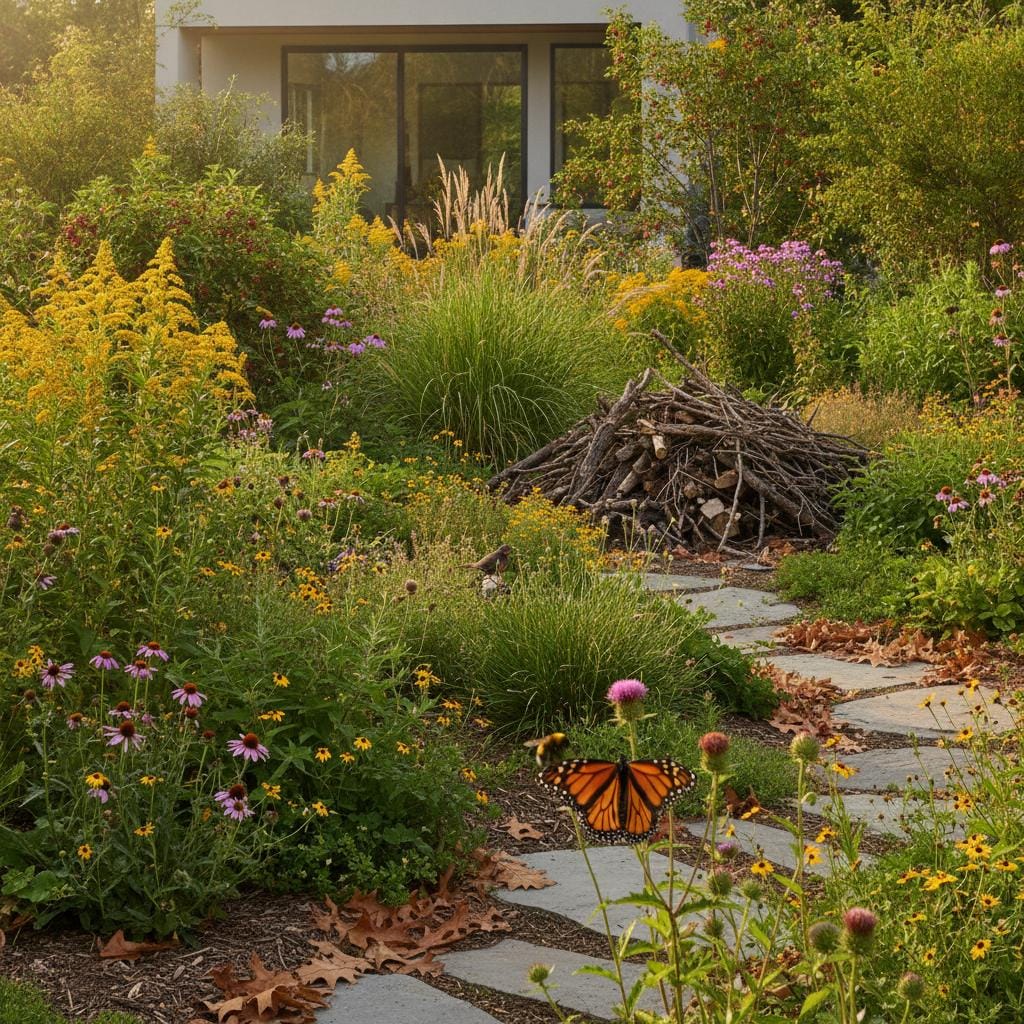
Consider the appeal of a yard that requires minimal intervention yet bursts with life. Rewilding involves restoring a natural state through the use of native plants, relaxed planting arrangements, and reduced maintenance practices. Rather than resist natural processes with frequent mowing, irrigation, and chemical applications, align efforts with the environment. The outcome yields a dynamic landscape that draws in pollinators, enhances biodiversity, and frees up substantial time previously spent on upkeep.
Rewilding avoids the pitfalls of disorder or abandonment. It emphasizes intentional design that flourishes under limited oversight. Homeowners retain influence over the evolution while permitting ecological forces to contribute significantly.
Plan Your Rewilded Landscape
Approach rewilding on a full scale or incrementally. Numerous homeowners initiate the process in a modest area, such as a garden bed or border along a property line. This strategy builds familiarity and allows observation of ecological shifts over time.
Establish Distinct Zones
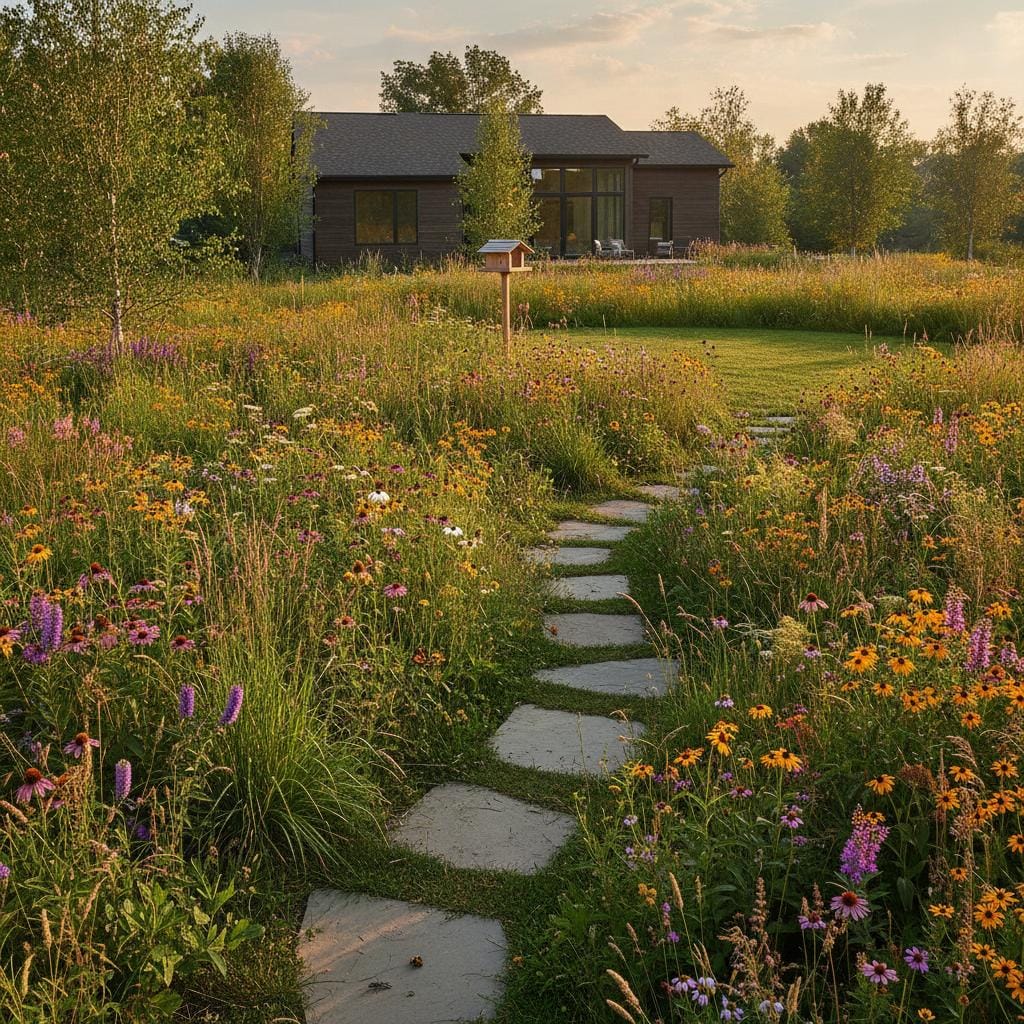
Evaluate yard usage patterns to inform zoning decisions. Preserve a compact grass area for recreation or pet activities, while permitting other sections to evolve naturally. Zoning maintains functionality amid the organic aesthetic.
- Lawn zone: Maintain a mowed expanse adjacent to the home for accessibility.
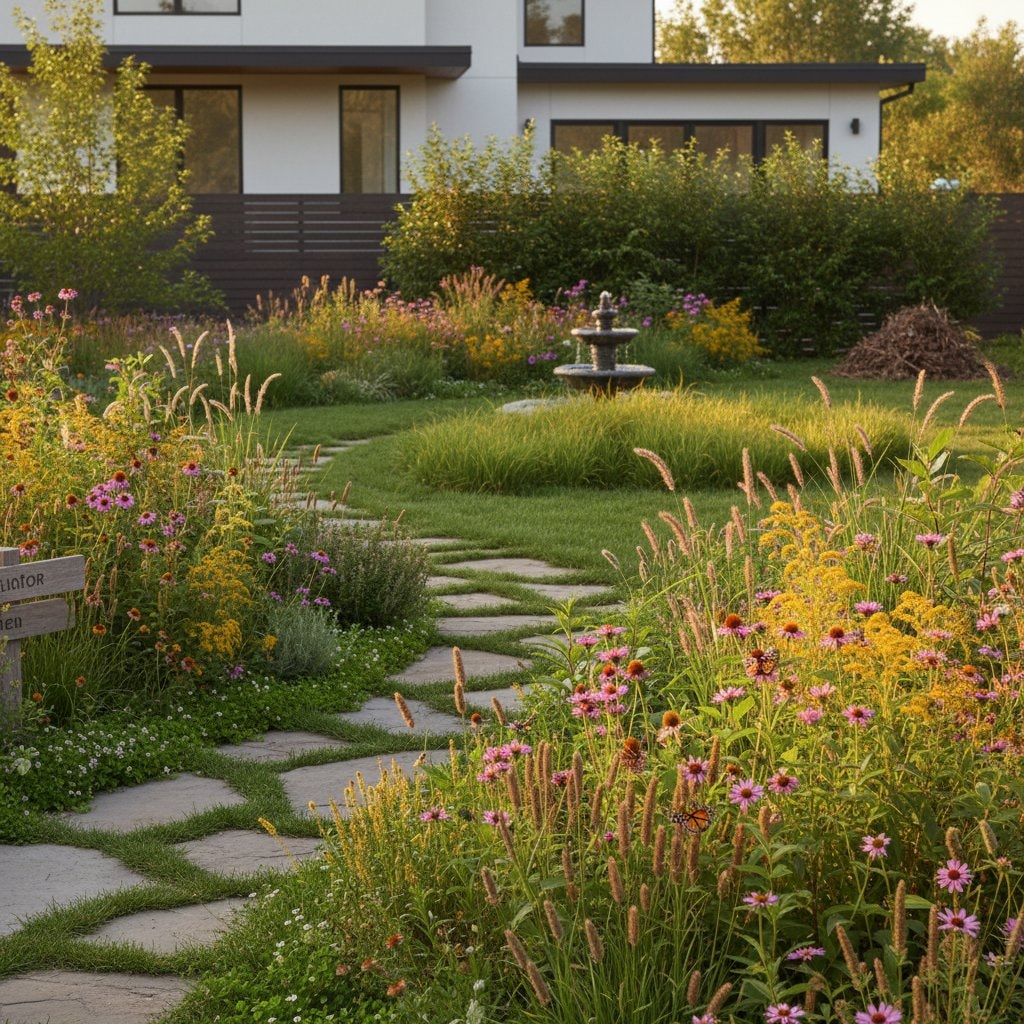
- Transition zone: Introduce mid-height grasses or perennial blooms to bridge manicured and untamed regions seamlessly.
- Wild zone: Plant robust native vegetation, including trees and shrubs, to form wildlife corridors and screening elements.
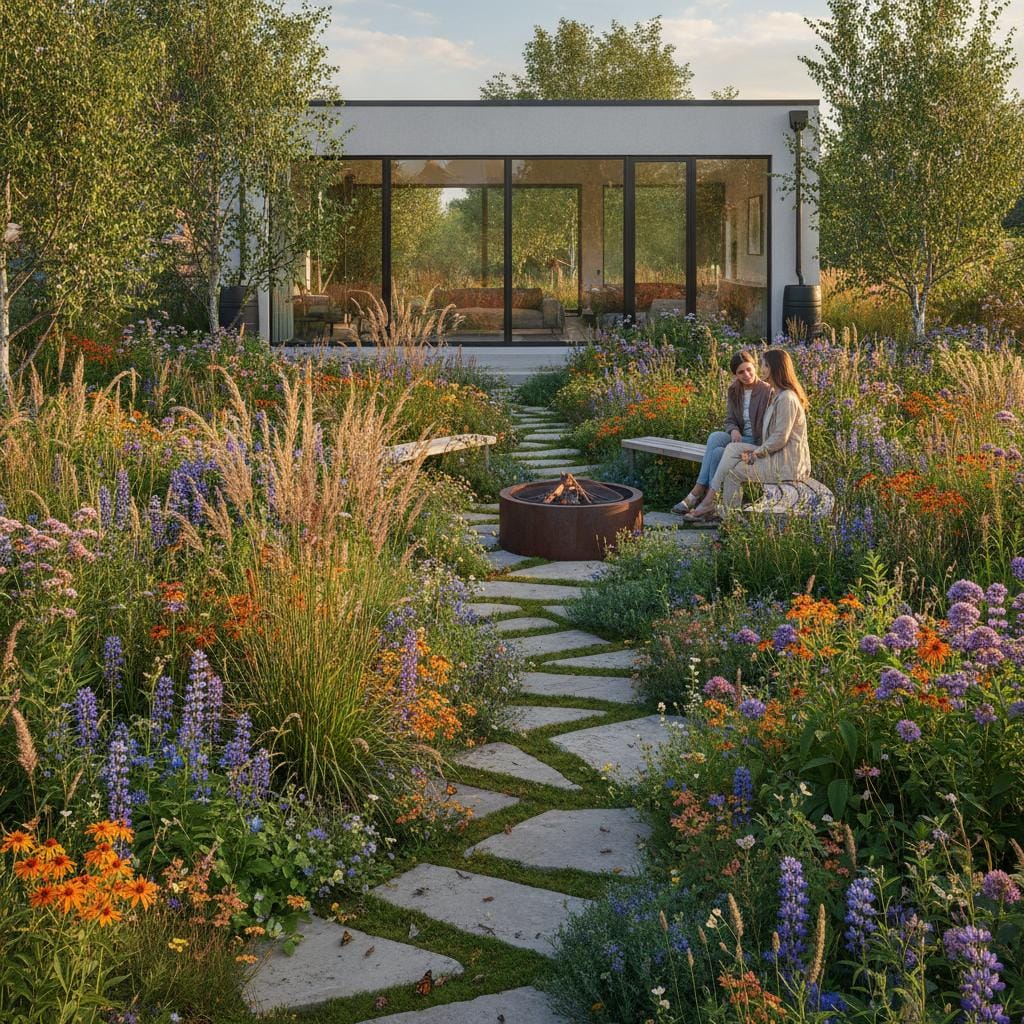
Such organization ensures the yard appears deliberate, even as vegetation expands unbound.
Select Appropriate Native Plants
Native species form the cornerstone of any rewilding project. These plants adapt inherently to regional soil compositions, precipitation patterns, and climate variations, thereby minimizing irrigation demands and eliminating the need for artificial nutrients.
Consult a specialized nursery or garden center focused on indigenous flora. Prioritize selections such as:
- Grasses: Little bluestem for its upright form and fall color, switchgrass for erosion control, or buffalo grass for drought tolerance.
- Wildflowers: Coneflower to attract butterflies, black-eyed Susan for sunny borders, milkweed as an essential monarch host, or bee balm to draw hummingbirds.
- Shrubs: Serviceberry for early berries and bird appeal, ninebark for resilient structure, or sumac for vibrant autumn foliage.
- Trees: Redbud for spring blossoms in smaller spaces, oak for long-term habitat value, or dogwood for layered understory interest.
Arrange plants according to stature and hydration requirements. Position taller varieties toward the rear and low-growers in front to achieve a naturalistic, tiered composition.
Prepare the Site Effectively
Preparation need not involve complete soil disruption. In targeted areas, lift the sod layer to facilitate new establishment, or employ a no-dig technique by layering cardboard topped with organic mulch to suppress turf and retain soil moisture.
Incorporate compost to enrich the substrate organically. This amendment promotes diverse microbial activity, including earthworms, and sustains pollinator-friendly habitats without synthetic inputs.
Analyze Costs and Ongoing Maintenance
While initial investments vary, rewilding typically yields long-term savings. Self-directed projects incur expenses primarily for planting materials and soil amendments.
Estimated costs per square foot include:
- Seed mixtures: 25 to 50 cents, ideal for broad coverage.
- Container-grown natives: 3 to 8 dollars per plant, offering quicker results.
- Compost and mulch: 40 to 60 dollars per cubic yard, sufficient for moderate areas.
Subsequent labor diminishes sharply after establishment. Annual duties focus on targeted interventions rather than routine toil.
Routine responsibilities encompass:
- Extracting nascent weeds to curb proliferation.
- Pruning spent foliage annually, preferably in late winter.
- Replenishing mulch layers periodically to conserve moisture.
In contrast to conventional turf management, time demands often halve following the inaugural year.
Guide Seasonal Management
Align care routines with natural cycles to preserve yard vitality with efficiency.
- Spring: Clear residual debris to encourage emergence. Apply a light compost dressing if the soil appears depleted.
- Summer: Irrigate sparingly during extended droughts. Appreciate the blooms and insect activity that signal success.
- Fall: Retain seed pods for avian foraging. Permit leaf litter to decompose in place, enhancing soil fertility.
- Winter: Appreciate skeletal forms for winter interest. Sturdy stems trap snowfall, insulating roots against frost.
This cyclical approach fosters resilience and autonomy in the landscape.
Adapt to the Evolving Rewilded Yard
A rewilded space remains dynamic, responding to climatic fluctuations, seasonal progressions, and temporal developments. This fluidity constitutes its inherent charm. Vegetation may self-seed into new locations, volunteer plants emerge, and faunal behaviors adapt accordingly.
Embracing such a landscape requires releasing rigid ideals in favor of ecological equilibrium. The yard imparts lessons on resilient species and spatial dynamics. With experience, stewardship simplifies as interdependent elements reinforce one another.
For those preferring defined edges, incorporate formal elements proximate to living areas. Edged borders, sculpted hedges, or low barriers delineate spaces crisply. In peripheral zones, permit unbridled expression to unfold.
Implement Rewilding for Lasting Benefits
Rewilding represents purposeful adaptation to local conditions, far from mere oversight. Commence modestly to realize efficiencies in labor and expenditure while cultivating abundant vitality.
As the project matures, anticipate streamlined routines, diminished outlays, and amplified aesthetic appeal. Pollinators will frequent the flora, avians will utilize the cover, and the earth will maintain fertility sans additives. This transformed yard not only sustains itself but enriches the surrounding ecosystem.