Rewilding Yards: The Low Maintenance Garden Trend of 2026
A garden reflects the relationship between people and the land. Traditional lawns once demanded uniform grass, constant trimming, and immediate leaf removal. Many homeowners now replace that rigid approach with rewilding, which builds living landscapes that support wildlife while reducing upkeep.
The Spirit of Rewilding
Rewilding restores natural rhythms inside managed spaces without neglect. Homeowners substitute high maintenance turf with native grasses, wildflowers, and shrubs that need little water or fertilizer after establishment. The result is a yard filled with pollinators and layered vegetation that feels dynamic rather than chaotic.
Moving from Uniformity to Natural Texture
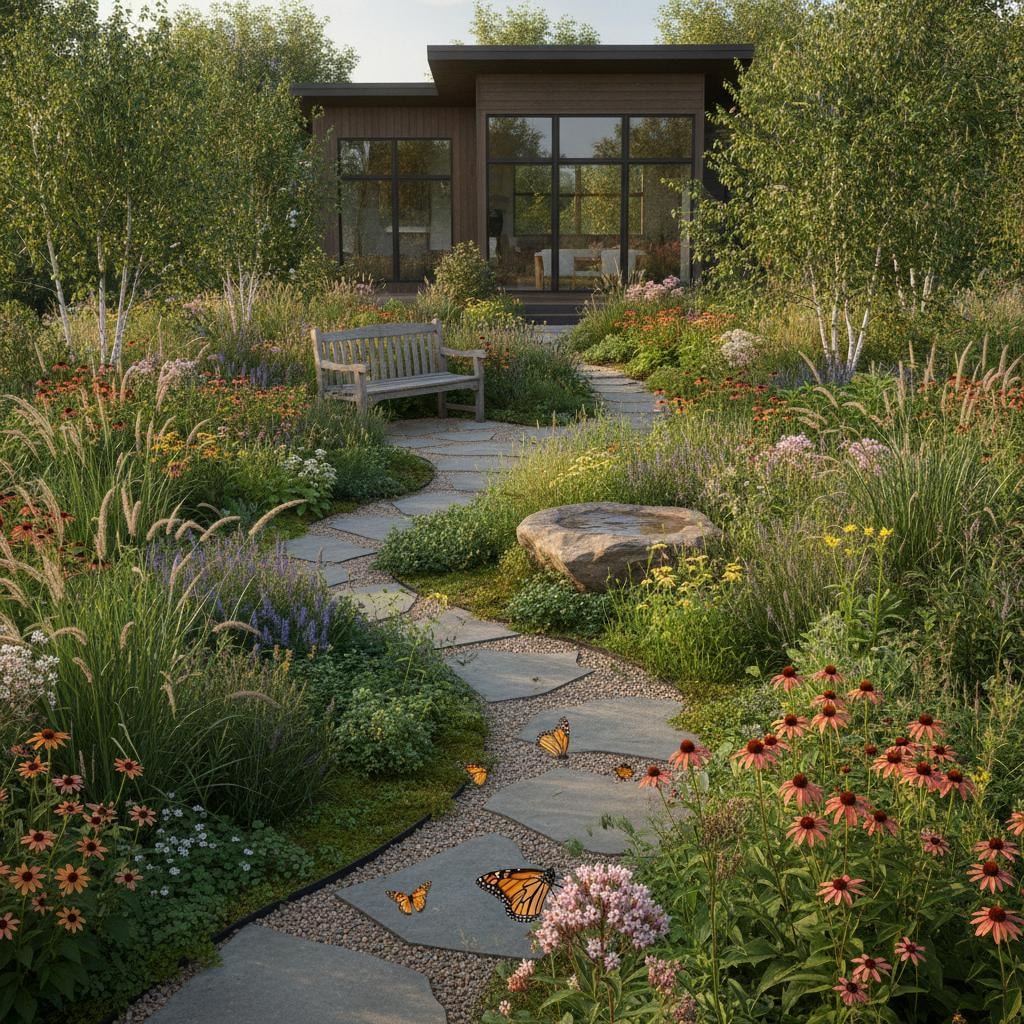
Beauty in a rewilded yard comes from movement and seasonal change. Goldenrod stems bend in the wind, coneflowers draw monarch butterflies, and moss spreads along stone edges. These elements replace the demand for perfect symmetry. Native plantings also cut water use, eliminate most chemical applications, and strengthen local food webs.
Assessing Site Conditions First
Successful rewilding starts with observation. Note sun patterns, drainage after storms, and existing soil type. Match plants to those conditions rather than forcing unsuitable species. A shaded area suits ferns and woodland sedges while a sunny slope supports prairie grasses and lupines.
Work in small sections. Convert one lawn strip into a meadow border before tackling larger areas. This measured pace reveals which plants thrive and builds practical knowledge.
Follow these steps to establish the new planting:
- Remove sections of turf and install regionally native perennials and grasses that match local rainfall patterns.
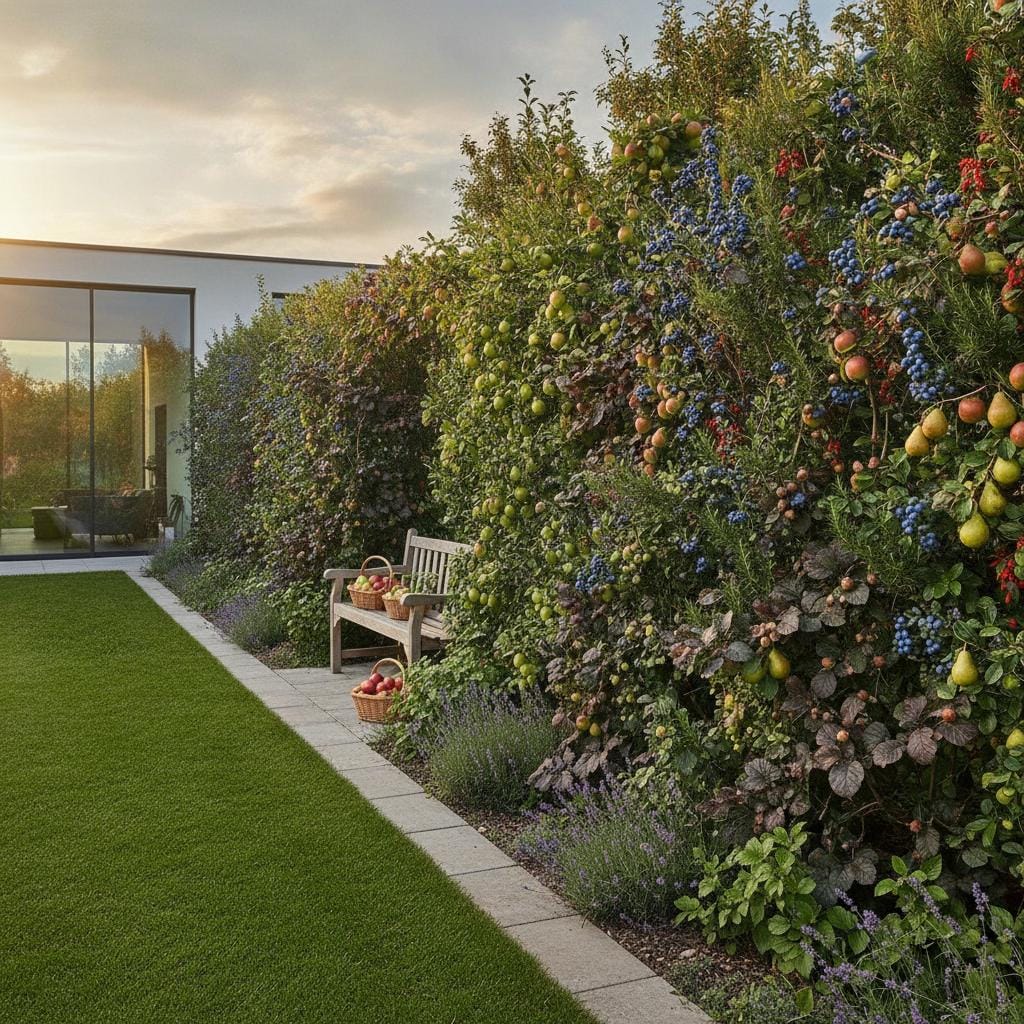
- Create vertical layers with ground covers, flowering perennials, and scattered shrubs to shelter birds and insects.
- Leave leaf litter in place during autumn so it decomposes and returns nutrients to the soil.
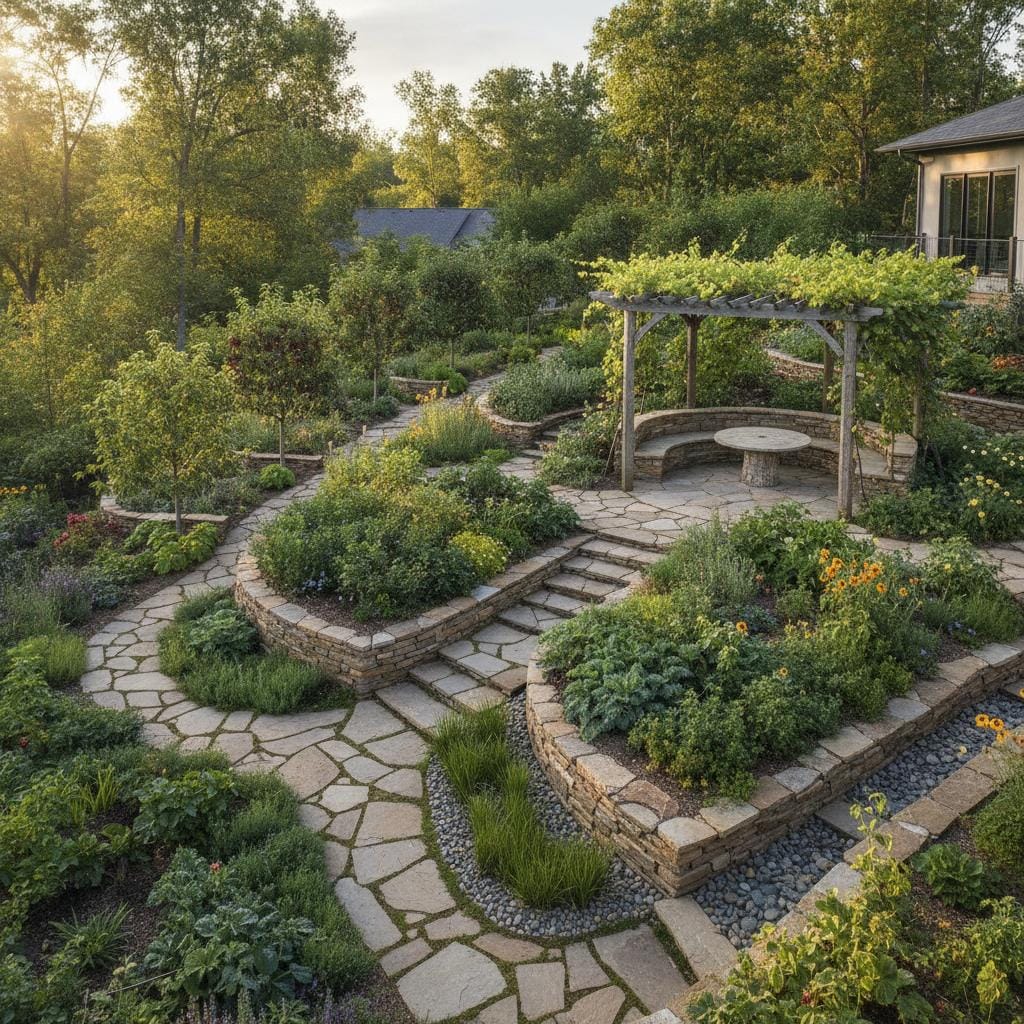
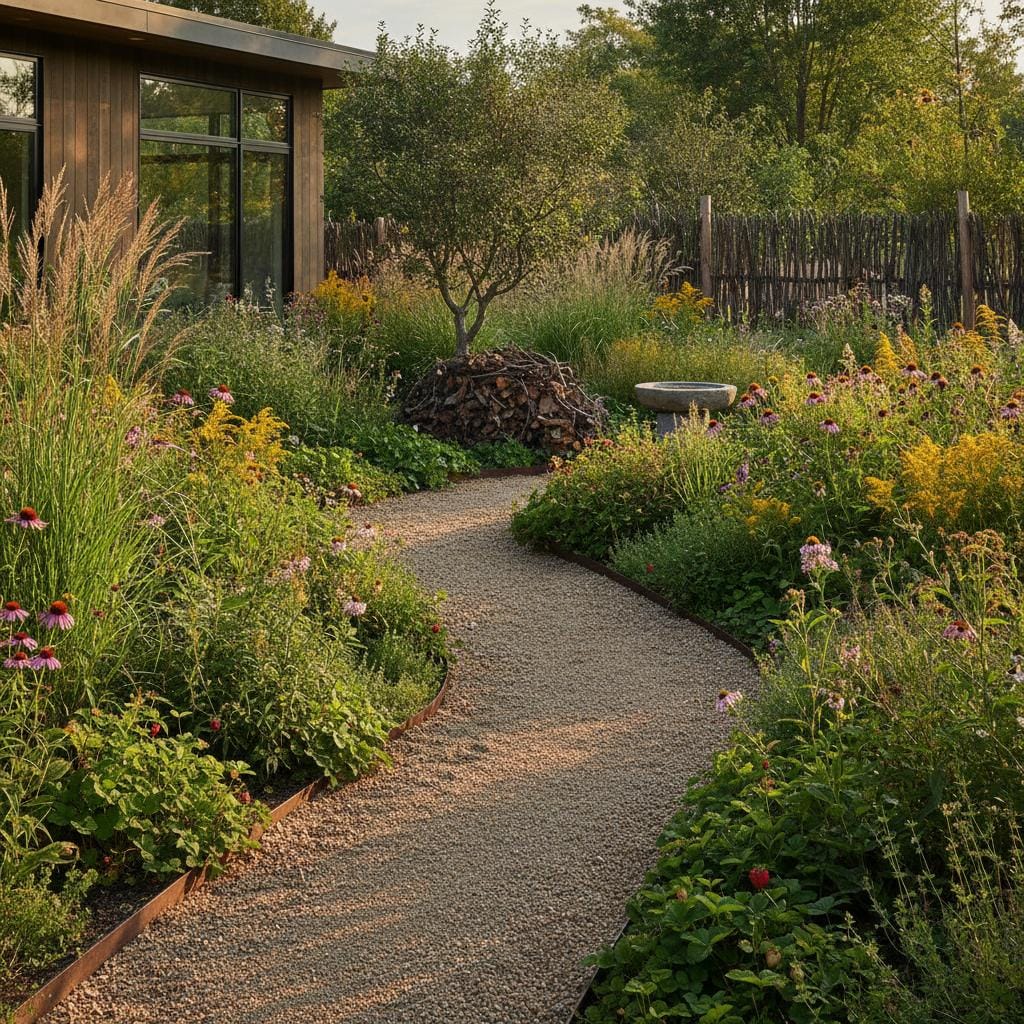
- Install paths of gravel or wood chips that blend with surrounding vegetation.
Keeping Intention Visible
A few deliberate choices prevent a rewilded yard from appearing unkempt. Maintain a narrow mowed strip along borders or through taller grasses to define circulation. Place a bench or seating area where wildflowers meet open space. Repeat key species such as black eyed Susans along multiple beds to create visual rhythm.
Watching the Garden Mature
New plantings often look sparse during the first year. Roots develop underground while foliage remains modest. By the second season, coverage increases and flowering becomes more consistent. The third year usually brings the intended balance of height, color, and wildlife activity.
Maintenance then shifts to light guidance. Cut back select stems in late winter to allow fresh growth, pull occasional invasive seedlings, and add seed in thin spots. These tasks take far less time than weekly mowing and edging.
Enjoying the Space Year Round
Design seating and paths so daily use feels natural. Position a bench beneath a small tree for midday shade. Run a narrow gravel walk between taller plantings to invite closer inspection of seed heads and visiting insects. Simple solar lights along the main route extend evening enjoyment without complex wiring.
Beginning the Process
Select three to five native species suited to your hardiness zone and soil. Observe their response through one full season, then add more plants based on what succeeds. Over several years the yard becomes a self sustaining habitat that conserves resources and offers daily encounters with local wildlife.