Rewild Your Yard With Managed Chaos Garden Ideas
The first time I watched a patch of my lawn give way to wildflowers, I felt both nervous and curious. There was a moment of unease while wondering whether I had lost control of a tidy yard. Yet as the weeks passed, bees returned, grasses swayed, and I realized that beauty sometimes grows best when control is loosened. This is the heart of rewilding. It is a way of gardening that celebrates unpredictability while still offering structure and intention.
Understanding Managed Chaos
Rewilding a garden does not mean letting everything run wild. It means allowing nature to become a partner in design rather than something to force into submission. Managed chaos strikes a balance between cultivated order and untamed spontaneity. You might think of it as an ongoing conversation between gardener and garden, with each responding to the other over time.
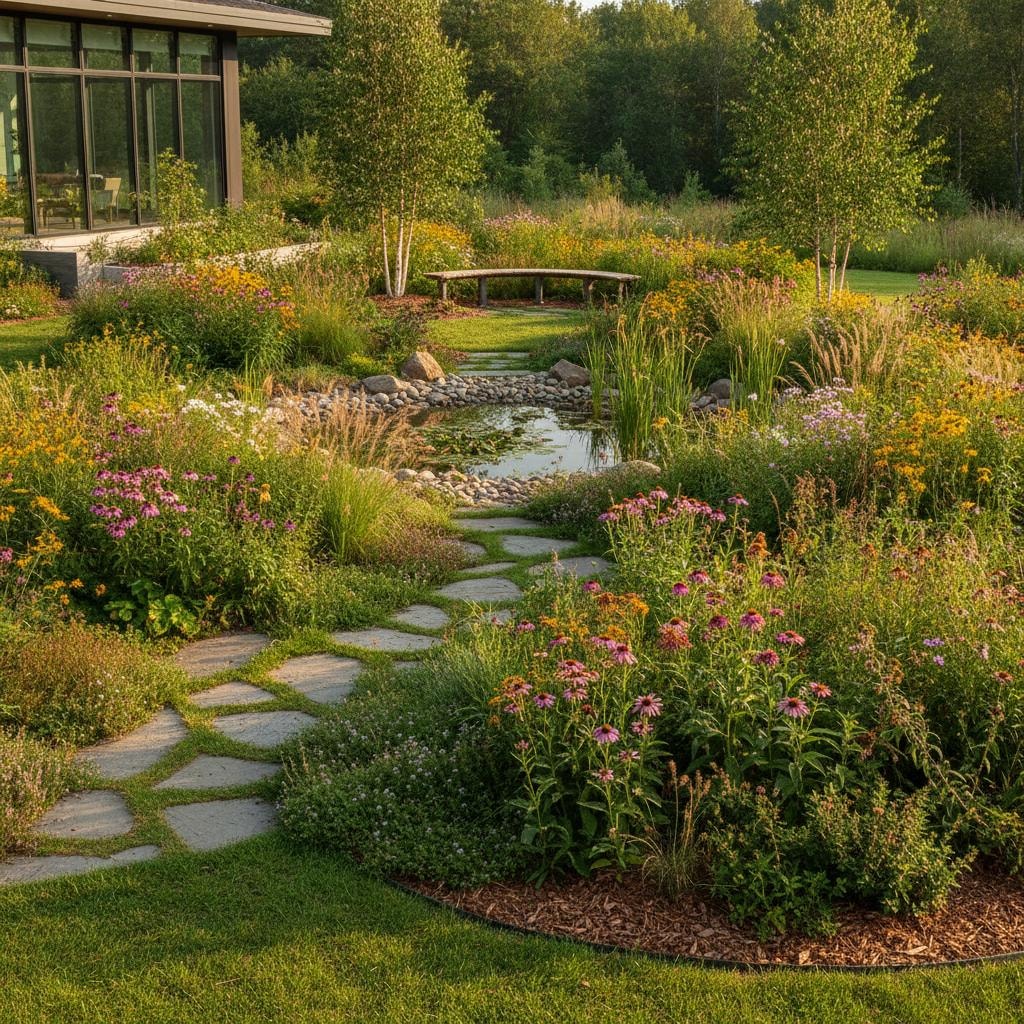
In practice, this approach encourages layers of planting, gentle irregularity, and acceptance of self seeding plants. It also invites wildlife back into the garden by offering food, shelter, and diversity. A rewilded yard often feels more alive because it truly is.
Creating Structure Within Spontaneity
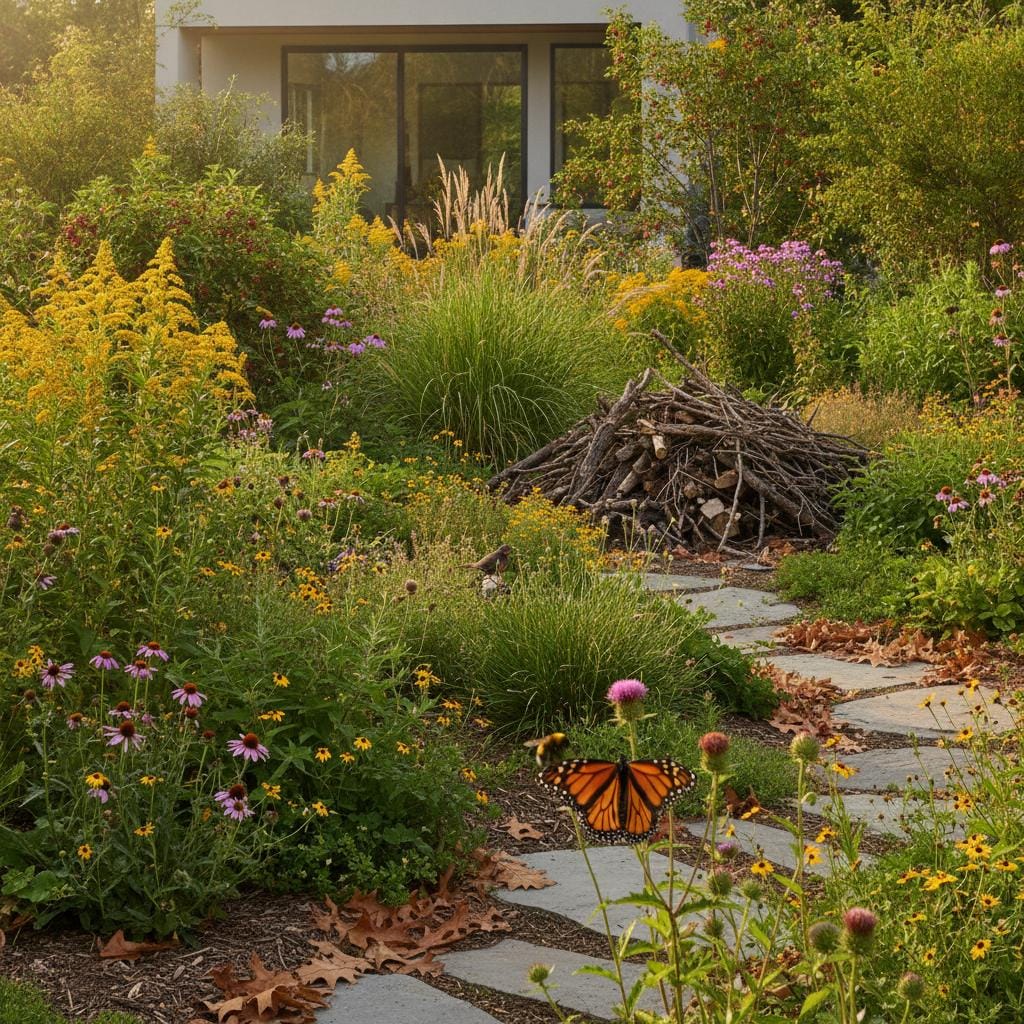
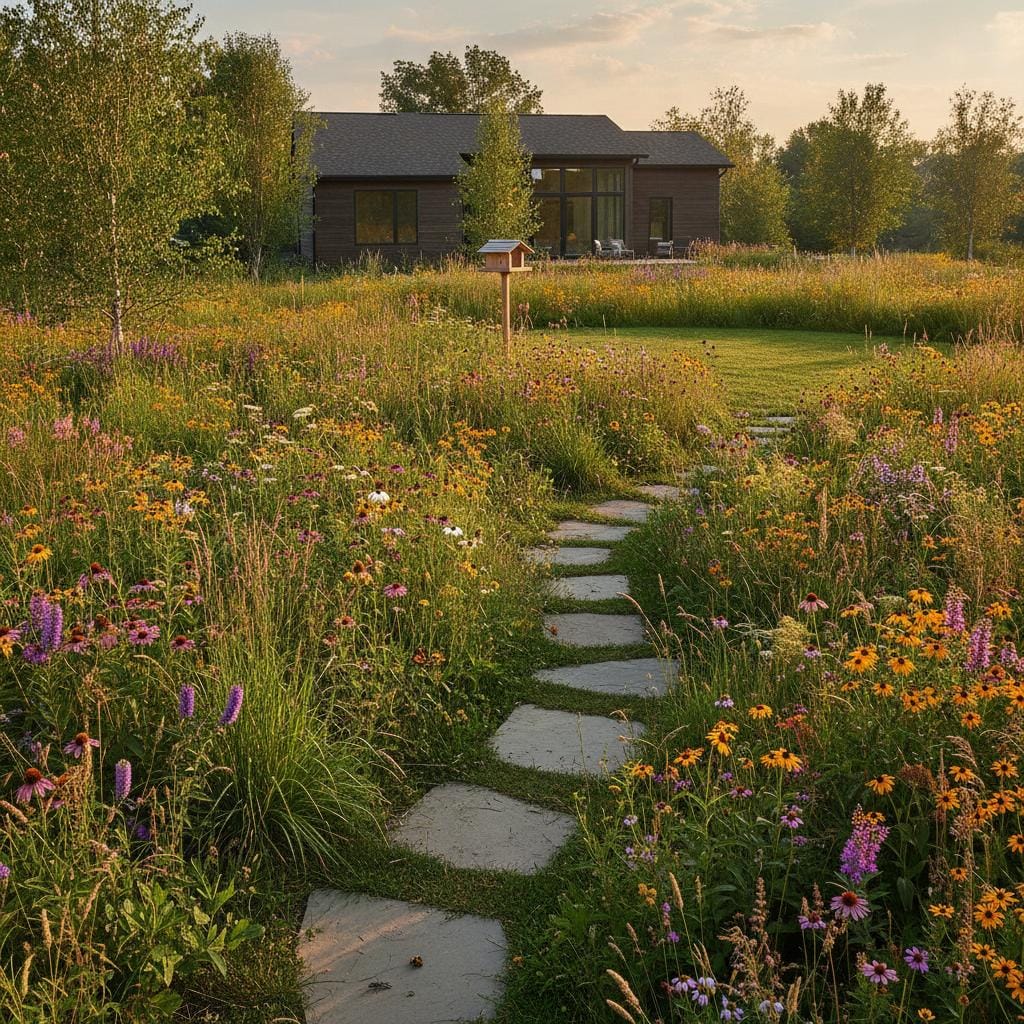
The best rewilded gardens have a quiet rhythm. They are not random patches of weeds but thoughtfully planned ecosystems that resemble natural meadows. To achieve this feeling of managed chaos, focus on contrast and repetition.
- Repeat a few key plants throughout the space to give the eye a sense of familiarity amid variety.
- Pair tall ornamental grasses with low groundcovers, or weave delicate blooms between sturdier perennials.
- Allow leaves to decay where they fall and leave a few seed heads through winter for birds to enjoy.
When these elements come together, the garden feels cohesive even though it appears untamed.
Selecting Suitable Plants
Select plants that thrive in local conditions rather than those that demand constant care. Native species form the backbone of rewilding because they support local insects and birds. Combine them with hardy ornamentals that echo natural forms.
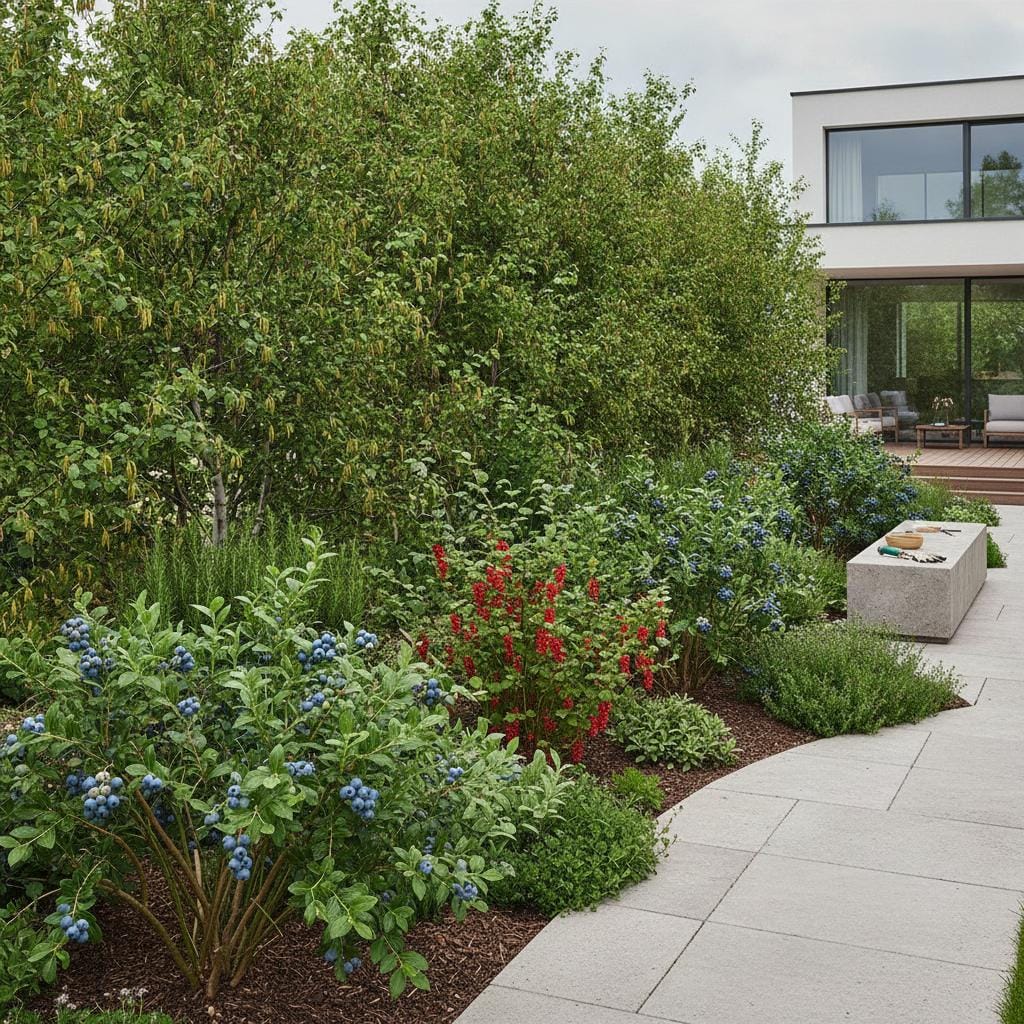
Some reliable choices include coneflowers, black eyed Susans, and asters for color and pollinator support. Add native grasses such as little bluestem or switchgrass for movement and structure. Include shrubs such as viburnum or serviceberry for seasonal interest and wildlife value.
Mixing species with different bloom times keeps the space lively and ever changing. The garden becomes a living calendar of textures and colors that shift through the seasons.
Assessing and Adapting to Your Site
Every yard has its own personality. A shaded corner might welcome ferns and woodland flowers, while a sunny slope could become a dry meadow. Observe how water moves across the property, how light changes through the day, and how the soil feels underfoot. These observations guide design choices more effectively than any trend.
If the idea of letting go feels daunting, start small. Convert a single border into a wilder planting or allow the back edge of the lawn to transition into taller grasses. Over time, it becomes clear which plants settle in gracefully and which require a firmer hand.
Ongoing Care and Evolution
A rewilded garden matures differently from a traditional landscape. It shifts, reseeds, and surprises each season. Maintenance becomes more about editing than controlling. Remove what overwhelms and encourage what thrives. This rhythm keeps the garden dynamic and sustainable.
The joy of managed chaos lies in its honesty. It reminds us that a garden is not a static picture but a living community. When that sense of wildness returns to the yard, the result is a place that hums with life while remaining very much your own.