Privacy You Can Harvest: Edible Hedges for 2025
Landscapes that provide both aesthetic appeal and practical benefits create lasting satisfaction. An edible hedge delivers privacy while yielding fruits, nuts, or leaves for culinary use. This approach aligns with growing interest in sustainable gardening, where yards serve multiple roles: enhancing beauty, ensuring seclusion, and supporting self-sufficiency.
Understanding the Concept
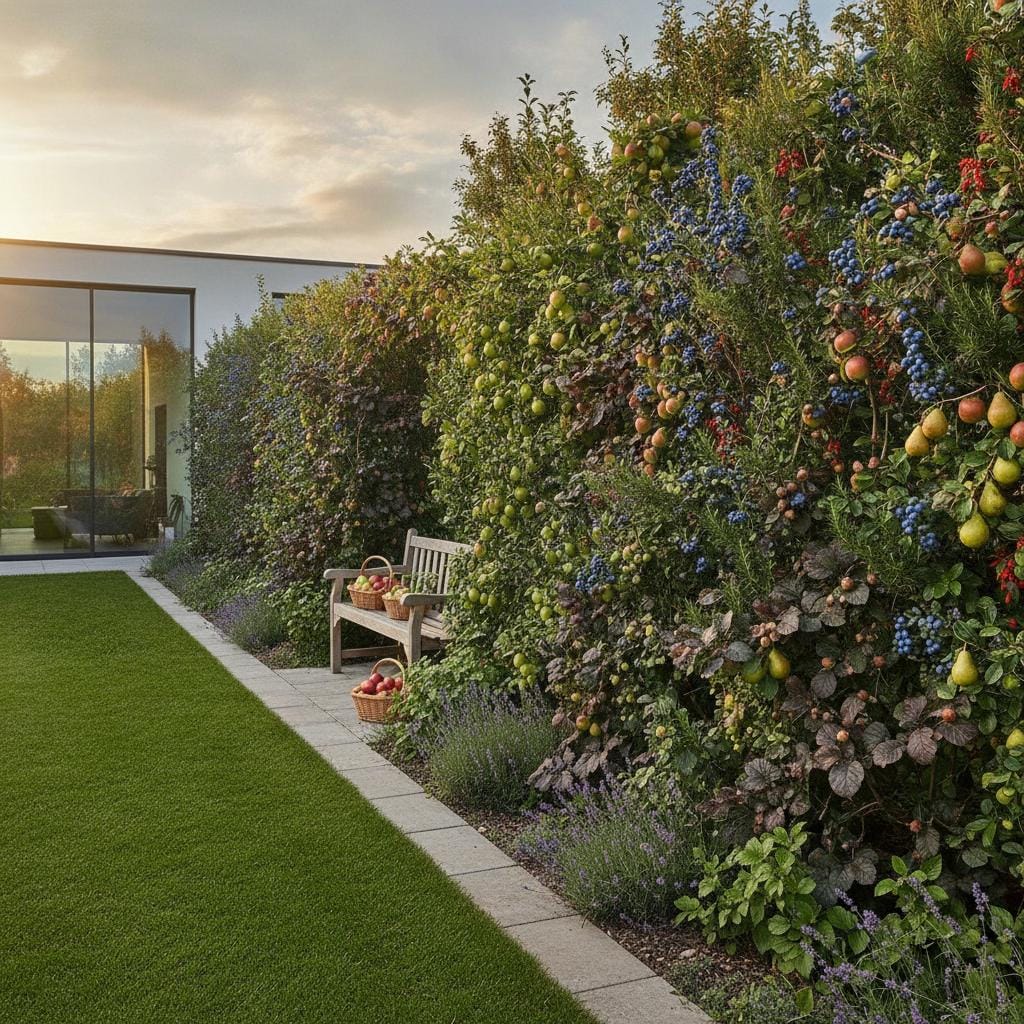
An edible hedge consists of fruit-bearing shrubs or small trees arranged as a living barrier. These plants define property boundaries, soften edges, or create enclosed garden spaces. Unlike conventional hedges of evergreens such as boxwood or privet, edible versions incorporate species that produce berries, nuts, or edible foliage, resulting in a dynamic screen that evolves through seasons with varying colors, scents, and harvests.
This design maximizes utility alongside privacy. A traditional green wall merely obstructs views, but an edible hedge functions as an ongoing food source, supplying summer raspberries or fall hazelnuts. Gardeners achieve seclusion without sacrificing the potential for productivity, fostering a landscape that sustains both people and the environment.
Choosing Plants for Your Hedge
Select plants based on desired height, density, and upkeep requirements to build an effective barrier. Aim for species that grow thickly and naturally, avoiding the need for excessive shaping. Consider local climate, soil type, and sunlight exposure to ensure long-term success. Reliable options include:
- Blueberries (Vaccinium corymbosum): Ideal for compact hedges reaching 4 to 6 feet; they feature white spring flowers, summer berries, and vibrant red-orange autumn foliage. Plant in acidic soil with pH 4.5 to 5.5, spacing 3 to 4 feet apart.
- Currants or gooseberries (Ribes species): Perfect for small spaces, growing 3 to 5 feet tall with dense branching for quick coverage. They thrive in partial shade and produce tart fruits in early summer; space 2 to 3 feet apart in well-drained, loamy soil.
- Serviceberries (Amelanchier species): Suitable for taller screens up to 15 feet, offering white spring blooms, edible purple berries in June, and striking fall color. They adapt to various soils but prefer full sun; plant 6 to 8 feet apart for a natural look.
- Rugosa roses (Rosa rugosa): Provide fragrant pink flowers, red hips for teas or jams in fall, and thorny stems for added security. Hardy in zones 3 to 7, they tolerate salt and poor soil; space 4 to 5 feet apart.
- Hazelnuts (Corylus americana): Form rustic hedges 8 to 10 feet high with catkins in spring and nuts in late summer. They require cross-pollination from multiple plants and full sun; space 10 to 12 feet apart in fertile, moist soil.
Combine species with compatible growth rates and mature sizes for a unified appearance. For example, alternate blueberries and currants in a repeating pattern to maintain balance and visual rhythm. Test soil pH and amend as needed before planting to promote healthy establishment.
Blending Style and Function
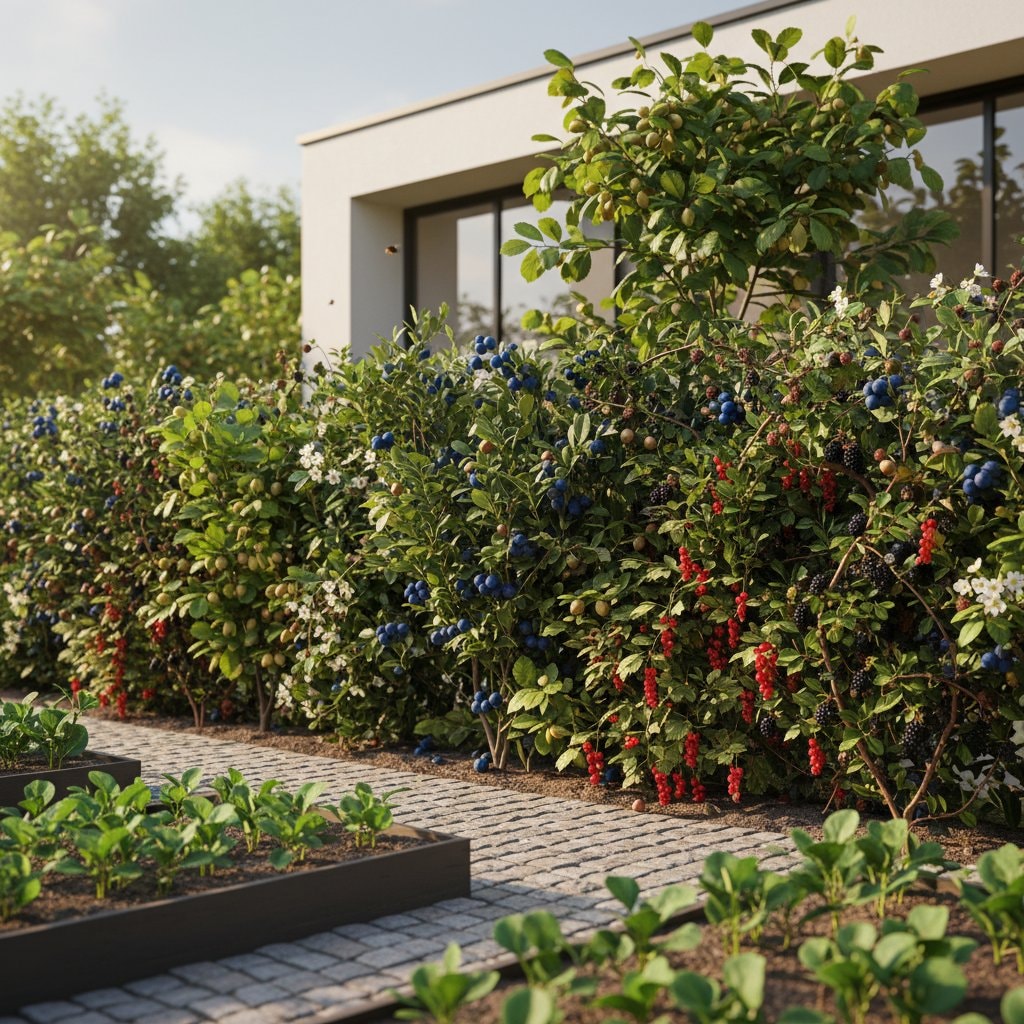
Tailor the hedge to match your home's architecture and personal taste for seamless integration. A formal arrangement of uniformly pruned blueberries along a straight line suits contemporary settings, creating clean lines and predictable harvests. In cottage-style gardens, blend currants, serviceberries, and rugosa roses for a wilder, textured effect that evokes abundance.
Modern landscapes benefit from single-species repetition, which emphasizes symmetry and ease of maintenance. Woodland or informal designs allow plants to intermingle, producing layers of foliage, flowers, and fruits that attract beneficial insects. Regardless of style, ensure the hedge reaches at least 6 feet in height for effective privacy, and incorporate evergreens sparingly if year-round screening is essential.
Care and Maintenance
Edible hedges demand consistent care similar to ornamental varieties, focusing on pruning, watering, and soil health. Prune annually after harvest: remove dead wood and thin crowded branches to improve air circulation and fruit production. For blueberries, prune in late winter; for roses and hazelnuts, trim in early spring to stimulate new growth.
Most selections require full sun to partial shade, well-drained soil enriched with organic matter, and mulch to retain moisture. Water newly planted hedges deeply once a week for the first year, reducing frequency as roots establish. Apply compost in spring to boost nutrients, and monitor for pests like aphids, using natural controls such as ladybugs or neem oil.
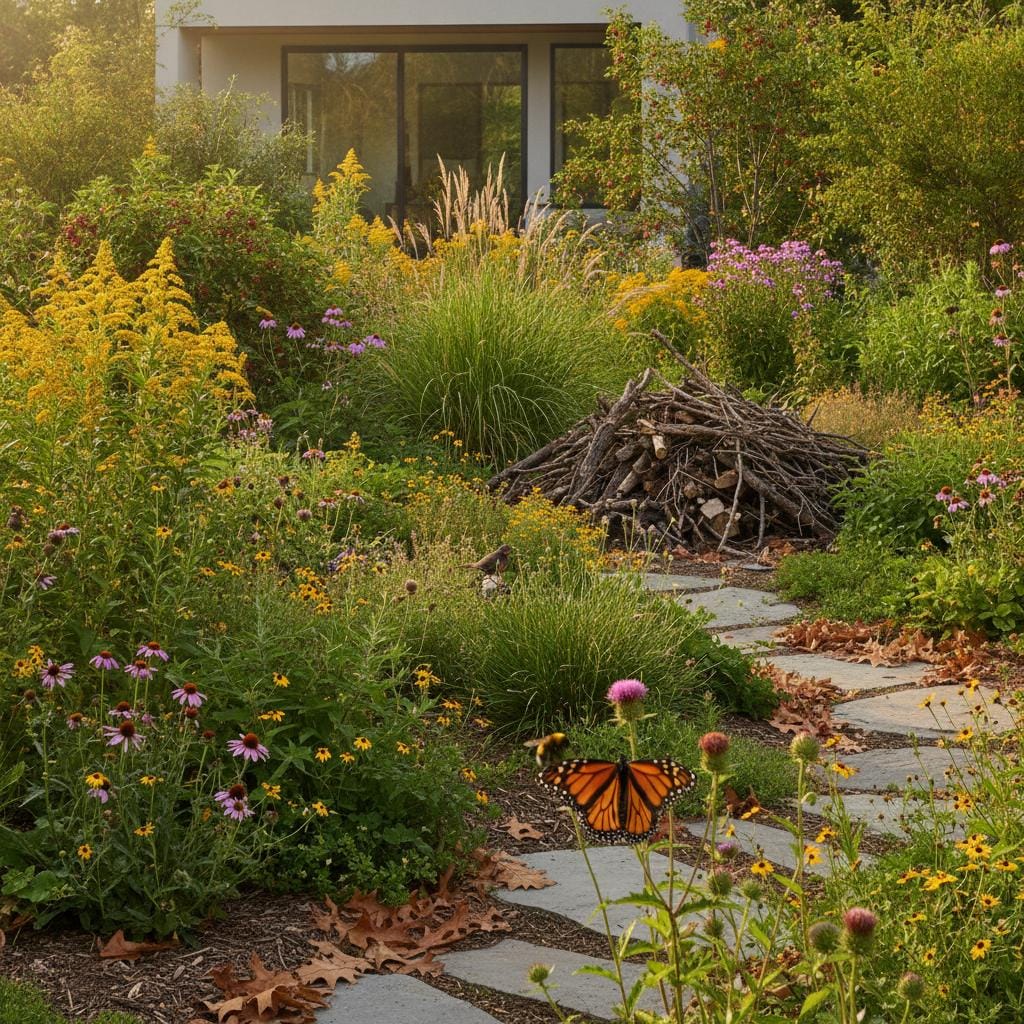
Encourage biodiversity by allowing birds access to some fruits, which aids pollination and natural pest management. Over years, this practice transforms the hedge into a resilient ecosystem, enhancing garden vitality beyond mere privacy and produce.
Integrating Edible Hedges into Daily Life
As the hedge matures, it reshapes interactions with your outdoor space, muffling external noise and fostering a sense of sanctuary. Harvesting berries directly from the boundary integrates gardening into routines, turning maintenance into moments of reward. This living feature not only nourishes physically but also deepens connection to the land.
Start with a modest section, such as 20 feet of mixed shrubs, to test compatibility with your site. With regular attention, the hedge yields reliably, demonstrating how thoughtful planting merges seclusion, sustenance, and ecological harmony in one verdant line.