Why Gravel Gardens Define Low-Water Luxury
Gardens that harmonize with their surroundings possess a quiet elegance. Gravel gardens embody this principle through their serene presence and practical design. Upon first encountering one, the subtle crunch of stones underfoot, the gentle warmth from sun-baked gravel, and the poised arrangement of plants create an immediate sense of balance.
These gardens have evolved from specialized landscapes into essential options for discerning homeowners. They emphasize restraint, sustainability, and enduring style. What began as a rustic or regional aesthetic now delivers modern sophistication rooted in environmental awareness.
Achieving Effortless Harmony
Gravel gardens master the interplay of order and organic flow. The gravel establishes a stable foundation, while selected plants introduce vitality and subtle motion. This combination produces a composed yet dynamic environment.
Light diffuses softly across the gravel surface, casting a luminous veil that enhances surrounding architecture. Whether paired with sleek modern facades or classic detailing, gravel's understated palette allows other elements to shine. Its adaptability stems from this impartial quality.
Many homeowners report a profound ease after adopting this style. Routine tasks like frequent mowing or irrigation fade away. The space transforms into one for contemplation and enjoyment, embodying genuine refinement.
Essential Components for Success
Effective gravel gardens require deliberate construction beyond mere stone placement. They form an integrated system that facilitates drainage, supports vegetation, and regulates climate.
Key components encompass:
- Foundation setup: Ensure superior soil drainage by installing a compacted layer of crushed stone below the gravel. This stabilizes the surface and inhibits weed growth.
- Plant choices: Select species adapted to arid, nutrient-poor soils, such as lavender, thyme, rosemary, ornamental grasses, sedums, and salvias. These thrive with minimal intervention.
- Layer thickness: Apply gravel to a depth of two to three inches to control weeds without restricting root access.
- Border definition: Use steel, stone, or wood edging to contain the gravel and maintain crisp lines.
These preparations demand initial effort but yield long-term simplicity. Focus on water percolation through the layers and plant adaptations to reduced moisture. The design then sustains itself effectively.
Capturing Refined Sustainability
Contemporary garden luxury prioritizes tranquility and integration over opulence. Gravel gardens capture this ethos with their poised minimalism.
The uniform stone base serves as a canvas, akin to a subtle floor in an artful interior. Against it, features like silvery sage clusters or rust-tinged sedges emerge prominently. Emphasis falls on form, texture, and selective placement rather than density.
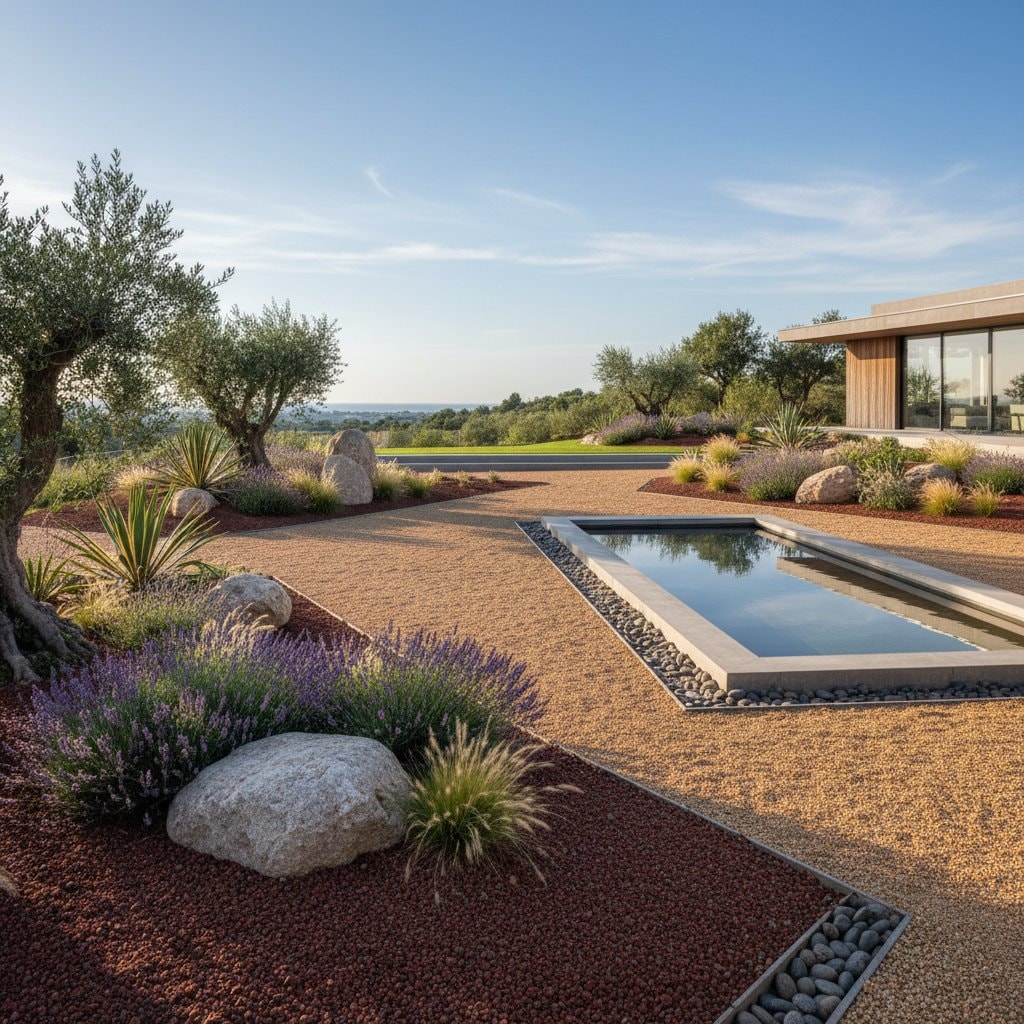
This method aligns with preferences for eco-conscious yet chic outdoor areas. Natural, durable materials deliver a sophisticated outcome. A meandering gravel path amid resilient plantings rivals traditional designs in grace, with far lower resource needs.
Gravel Gardens Versus Conventional Lawns
Lawns have traditionally represented meticulous upkeep, demanding substantial water, nutrients, and labor. Gravel gardens offer an alternative that delivers enduring appeal with minimal input.
Notable contrasts include:
- Water efficiency: Gravel configurations conserve moisture for plants, whereas lawns evaporate it rapidly.
- Upkeep demands: Gravel requires sporadic weeding and pruning; lawns necessitate regular cutting and bordering.
- Soil preservation: Gravel acts as mulch to shield against erosion and hardening.
- Aesthetic variety: Lawns provide steady verdure; gravel gardens exhibit evolving tones in stone and greenery across seasons.
Opting for gravel does not sacrifice comfort or energy. Incorporate gentle plant swells or cozy seating zones to infuse warmth. The outcome appears purposeful and inviting.
Selecting Gravel Colors and Textures
Gravel's allure derives from diverse hues and grains. Light limestone illuminates dim spots, while deep basalt or slate introduces dimension.
Blend particle sizes and shades for organic variation, simulating a timeworn landscape. For a Mediterranean vibe, warm buff or honey tones complement silver and blue-green foliage. Contemporary settings favor sharp gray gravel with upright grasses and succulents for sleek minimalism.
Uniformity across elements unifies the composition. Employ the same gravel in walkways, plant zones, and lounging spots to foster cohesion and visual calm.
Strategic Plant Integration
Plants in gravel gardens must endure sparse conditions, featuring robust roots and water-retaining foliage. Blooms may be intermittent, yet their impact proves memorable.
Proven selections feature:
- Lavender, valued for aroma and persistent structure.
- Thyme, serving as fragrant, trailing cover.
- Sedum, noted for architectural foliage and autumn blooms.
- Stipa tenuissima or similar grasses, adding sway and airiness.
- Euphorbia, providing form and extended vibrancy.
Arrange in uneven clusters and echo placements for unity. Allow voids to accentuate individual elements and the gravel's inherent grace.
Ongoing Upkeep Strategies
Gravel gardens demand light attention rather than intensive work. Early establishment phases benefit from targeted weeding and supplemental watering to anchor roots.
Sustain vitality through:
- Periodic raking to smooth disturbances and realign stones.
- Clearing debris to prevent moisture buildup and weed promotion.
- Replenishing the surface layer periodically for renewed appearance.
- Gentle shaping of plants to retain form without rigidity.
Such routines foster connection to the space, resembling stewardship over drudgery.
Tailoring to Varied Settings
Gravel gardens flex to suit climates and structures seamlessly. Coastal sites mirror sandy palettes; arid interiors merge with subdued natives.
In temperate or rainy locales, prioritize drainage to avoid pooling. Integrate with bordered plantings or elevated beds for diversity. View gravel as a core design asset, not an afterthought.
Compact city plots gain expansiveness from gravel's clean lines. Combine with potted accents, bold containers, or a focal tree. The tactile crunch enhances sensory depth in confined areas.
Embracing Seasonal Evolution
Mature gravel gardens pulse with subtle cycles. Precipitation tempers the stones' hue, sunlight revives their glow, and flora transitions gracefully.
The landscape conveys vitality tempered by stability, encouraging mindful pauses. Incremental shifts, like volunteer seedlings or settling contours, personalize the scene. These nuances affirm the garden's living essence, attuned to its context.
Implementing Your Gravel Garden
Initiate with a focused vision of pared-down elegance. Start small, such as a border or alcove, to assess gravel's interplay with light and growth.
Source regional materials for affordability and site affinity. Consider stone scale, home tones, and plant shades. Consistent motifs weave the elements into a cohesive whole, yielding a timeless retreat.