Edible Hedges: Privacy Screens That Grow Your Food
Homeowners often seek greater privacy in their yards without sacrificing space for productive gardening. Traditional hedges provide seclusion but limit opportunities for food production. Edible hedges address this challenge by combining boundary definition with ongoing harvests of fruits, berries, and herbs.
These living structures create shaded areas, reduce external noise, and support local wildlife. Property edges transform into self-sustaining ecosystems that nourish both residents and the environment. Select appropriate plants and design elements to maximize these benefits.
Planning Your Living Boundary
Effective planning ensures an edible hedge thrives and meets your needs. Consider plant growth patterns, required spacing, and seasonal harvest timelines from the outset. This approach prevents common issues and promotes long-term success.
Choose Plants That Work Together
Select a mix of species to enhance visual appeal and system resilience. Diverse plants ensure that challenges affecting one variety do not impact the entire hedge. Incorporate shrubs, small trees, and climbers for layered productivity.
Recommended options include:
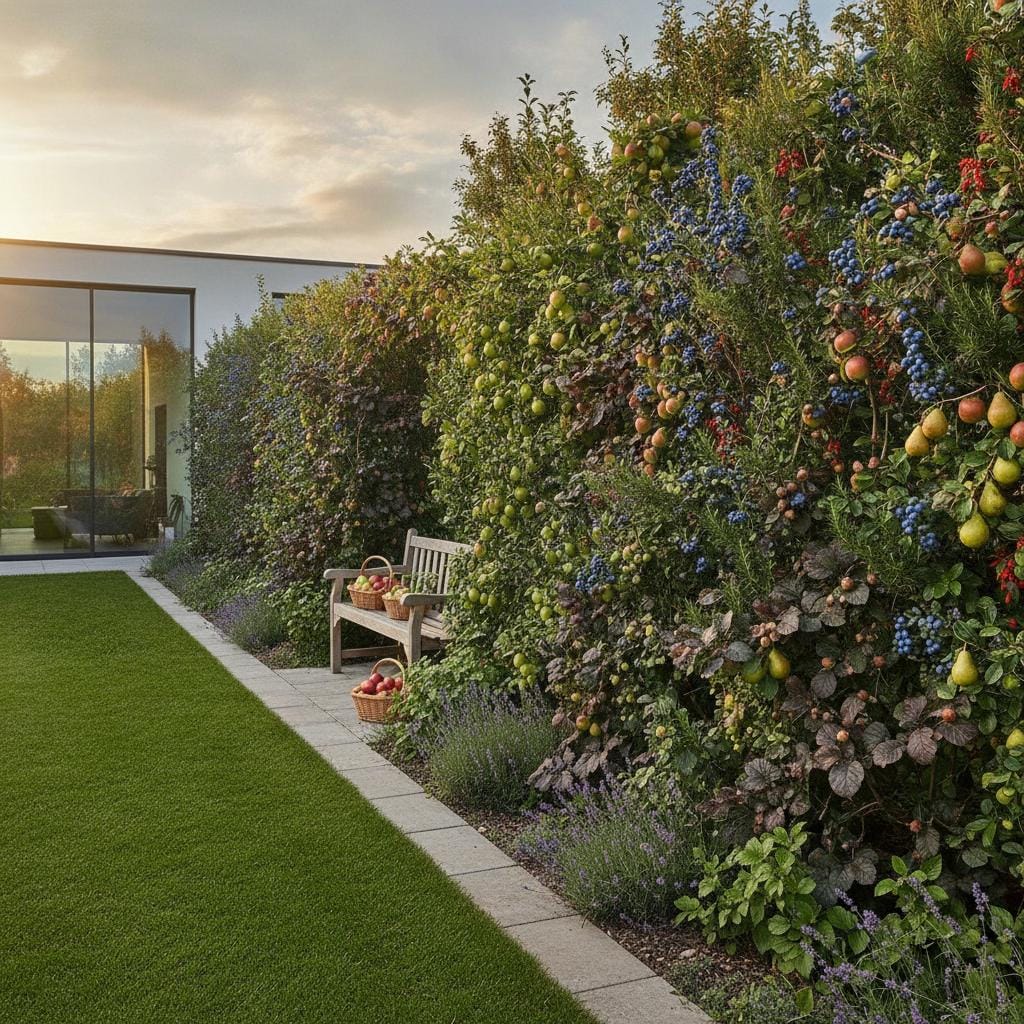
- Blueberries: These compact shrubs suit acidic soils and display vibrant red foliage in fall. Plant them in full sun for optimal fruiting.
- Gooseberries and currants: Thorny varieties yield tart fruits ideal for preserves. Position them to deter unwanted access while providing summer harvests.
- Elderberries: Vigorous growers reach heights of six to ten feet, producing berries for syrups and wines. They tolerate partial shade well.
- Serviceberries: Small trees with spring blooms, edible summer fruits, and striking orange autumn leaves. Space them eight feet apart for mature spread.
- Raspberries and blackberries: Cane producers fill spaces rapidly and deliver high yields. Support with trellises to manage growth.
- Herbs and perennials: Base plantings of rosemary, lavender, or sage repel pests and release aromas. These low-growers add year-round interest.
Consider Structure and Seasons
Balance evergreen and deciduous plants to maintain winter appeal. Sequence blooms and fruits to support pollinators from spring through fall. Place shorter varieties near walkways and taller ones in high-privacy zones.
Evergreens like rosemary provide constant coverage, while deciduous options such as serviceberries offer seasonal color shifts. This combination ensures the hedge remains functional across all months. Adjust placements based on sunlight exposure and wind patterns.
Plan for Growth
Account for mature sizes to avoid overcrowding. Allocate at least three feet between shrubs for airflow and access. As plants establish, they form a cohesive barrier naturally.
Research specific dimensions for each species before purchase. For instance, elderberries expand widely, requiring broader initial spacing. This foresight simplifies future maintenance.
Preparing the Ground
Soil preparation forms the base for hedge vitality. Address site conditions thoroughly to support root development and nutrient uptake. Invest time here for enduring results.
Clear and Enrich
Eliminate weeds, rocks, and competing roots along the proposed line. Till the soil to a depth of twelve inches using a garden fork or spade. Incorporate two to three inches of compost or aged manure to boost organic content.
For clay-heavy soils, blend in one part coarse sand to three parts soil for better drainage. Sandy sites benefit from additional compost to retain water and nutrients. Test pH levels and amend as needed, aiming for 5.5 to 7.0 for most edible plants.
Mark the Line
Use a taut string or flexible hose to outline the hedge path. This tool aids in achieving a straight or contoured alignment. On sloped terrain, align with natural grades to facilitate even water distribution.
Visualize the final height and density during this step. Adjust the line to integrate with existing features like patios or paths. Precision at this stage minimizes replanting efforts.
Planting with Purpose
Treat planting as an intentional process to integrate new elements into your landscape. Provide each plant with adequate room and initial care for establishment. Proper techniques reduce transplant shock and promote quick rooting.
Set the Spacing
Excavate holes twice as wide as the root balls and equally deep. Position shrubs three to five feet apart, depending on mature widths; for example, space blueberries at four feet. Stagger in double rows for denser screens, backfilling with amended soil and watering thoroughly.
Firm the soil around roots to eliminate air pockets. Stake taller plants like elderberries if winds are strong. Initial deep watering, about one inch per plant, settles the medium.
Protect and Mulch
Apply a two- to three-inch layer of organic mulch, such as shredded bark or straw, around bases. Keep mulch two inches from stems to avoid moisture-related diseases. This covering conserves water and inhibits weed growth.
Install wire fencing or netting around young plantings in deer-prone areas. Monitor for rodent activity and use repellents if necessary. These measures safeguard early development.
Nurturing Growth Through the Seasons
Ongoing attention during initial years builds a robust hedge. Focus on hydration, shaping, and nutrition to foster health and productivity. Consistent practices yield reliable results.
Watering Wisely
Supply newly planted shrubs with one to two inches of water weekly for the first season. Deliver water slowly at the base to penetrate deeply, promoting extensive root systems. Reduce frequency as plants mature, intervening only during prolonged dry periods.
Use drip irrigation for efficiency in larger hedges. Check soil moisture two inches below the surface before watering. This method prevents both drought stress and over-saturation.
Gentle Pruning
Prune annually to direct energy toward fruit production and structure. Remove dead, damaged, or rubbing branches in late winter. For berry producers, cut back canes post-harvest to stimulate renewal.
Employ sharp, clean tools for precise cuts just above buds. Thin interiors for light penetration, targeting one-third removal in dense areas. Observe plant responses to refine techniques over time.
Feeding Naturally
Apply a balanced organic fertilizer or compost in early spring as growth resumes. Use one cup per plant for shrubs, worked into the topsoil. This supports steady development without forcing excessive foliage.
Side-dress with compost mid-summer if growth lags. Avoid high-nitrogen formulas that favor leaves over fruits. Soil tests guide targeted amendments for optimal balance.
Designing for Beauty and Function
Elevate your hedge beyond utility through intentional aesthetics. Layer elements to create visual and sensory depth. This integration enhances overall garden harmony.
Layering for Texture
Pair plants with varied foliage: glossy bay laurel alongside textured currant leaves. Intersperse silvery herbs like lavender for contrast and scent. Vary heights from one to ten feet for dynamic profiles.
These combinations produce a multifaceted appearance that evolves seasonally. Textural diversity also improves resilience against uniform pest attacks. Experiment with color accents through berry hues.
Inviting Wildlife
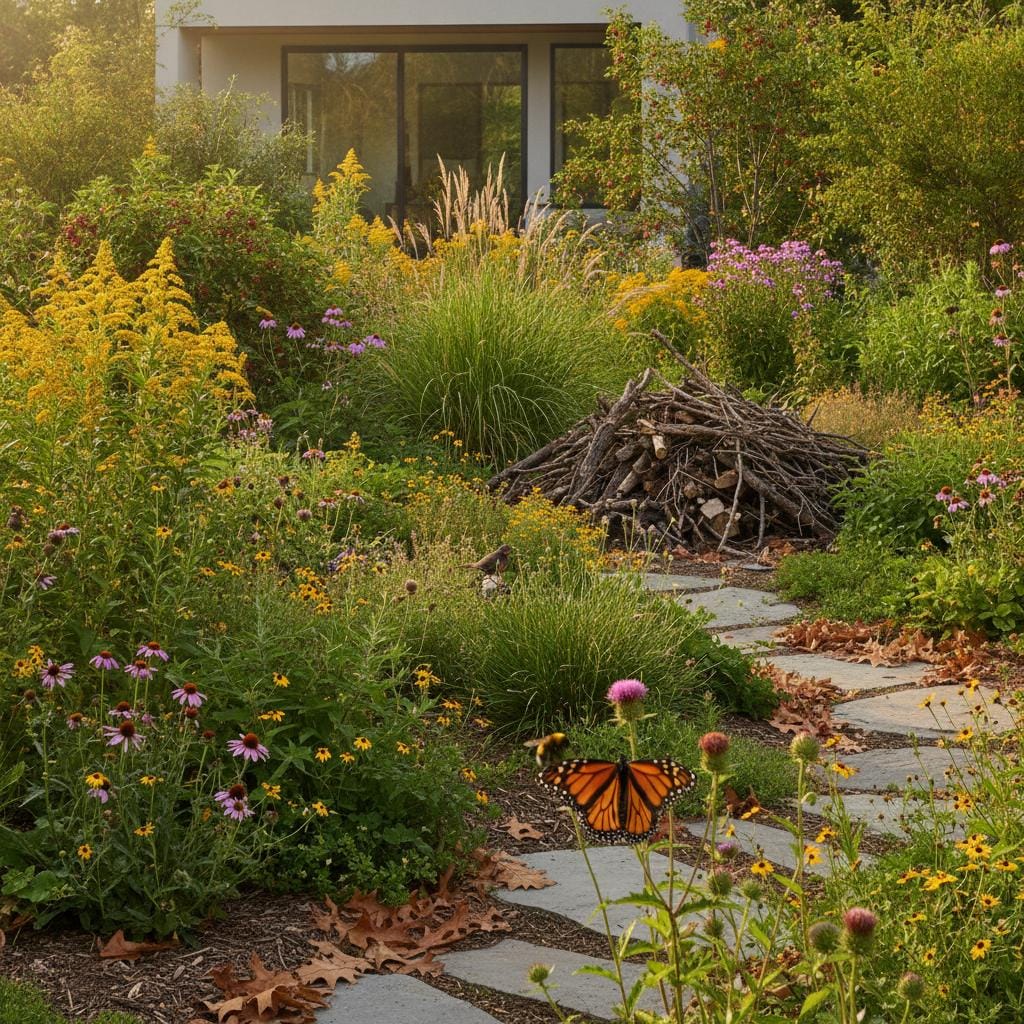
Incorporate nectar-rich flowers and persistent fruits to draw pollinators and birds. Native selections like serviceberries boost local biodiversity. Reserve portions of the harvest for animals to encourage nesting.
This design fosters ecological connections, with hedges serving as wildlife corridors. Observe visiting species to adjust plantings accordingly. Such interactions enrich the garden experience.
Integrating with the Rest of the Garden
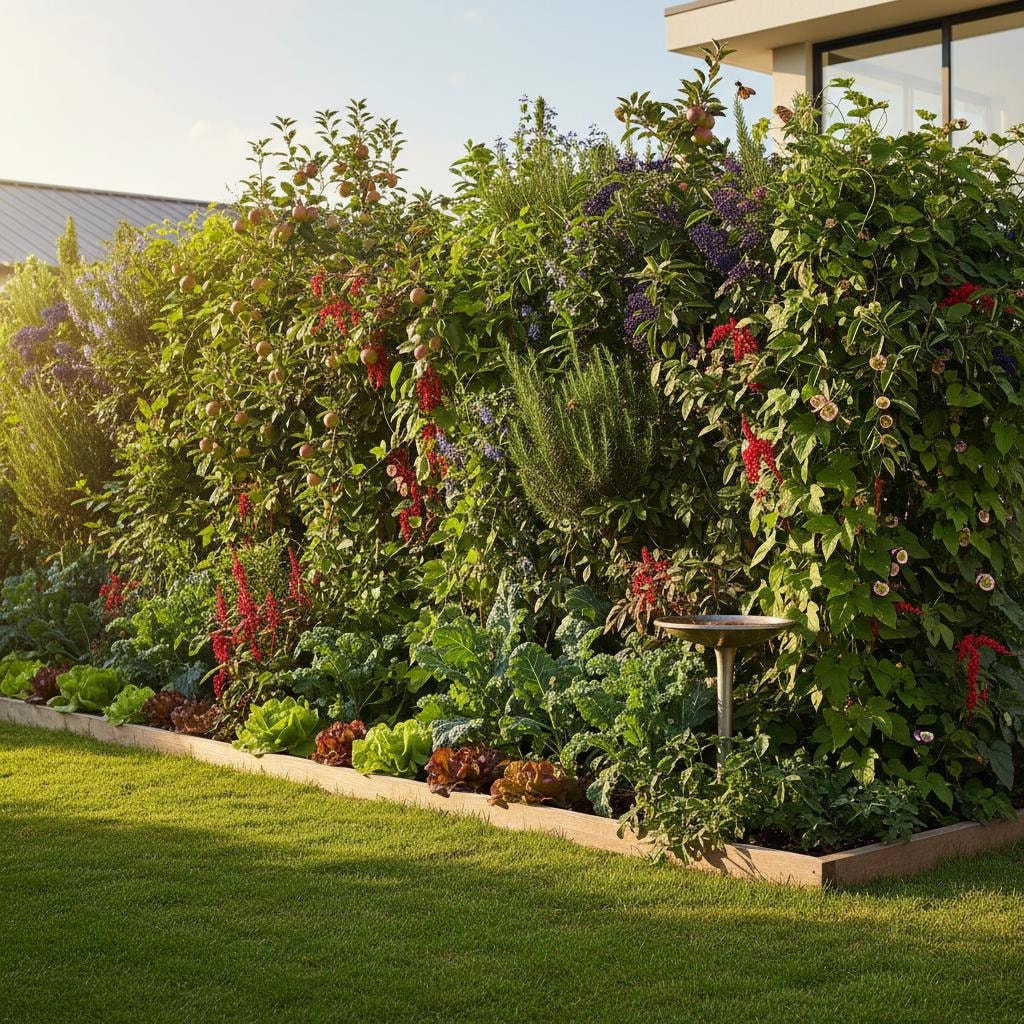
Position the hedge to complement adjacent areas, such as bordering vegetable beds or seating zones. Harvested produce supplies ingredients for nearby plantings. This synergy creates a cohesive, productive landscape.
Align paths to access fruits easily. Use hedge elements to define spaces without isolation. The result is a unified outdoor environment.
Troubleshooting Common Challenges
Anticipate and address issues to maintain hedge performance. Prompt responses preserve productivity and appearance. Knowledge of solutions empowers effective management.
Pests and Diseases
Inspect regularly for spots, wilting, or insect presence. Enhance circulation by pruning overcrowded sections and discard affected material. Introduce ladybugs or other predators to control aphids naturally.
Plant garlic or nasturtiums nearby as repellents. Opt for neem oil over synthetic pesticides to protect beneficial insects. Early intervention often resolves problems without escalation.
Overcrowding or Sparse Growth
Evaluate light and water access in uneven areas. Thin dense spots to allow penetration and add mulch to sparse zones for moisture retention. Apply balanced fertilizer to lagging plants.
Monitor progress over two seasons, as adjustments take time. Relocate underperformers if site conditions mismatch needs. Gradual tweaks restore uniformity.
Rejuvenation
Revitalize aging hedges by removing one-third of oldest stems annually. Perform this in dormant season to minimize stress. New growth fills gaps while preserving screening.
Combine with soil renewal through top-dressing compost. This cycle extends hedge lifespan beyond a decade. Regular renewal keeps yields consistent.
Harvesting and Maintaining Your Edible Screen
As the hedge matures, integrate harvesting into routines for fresh yields. Pick berries at peak ripeness and snip herbs as needed. This practice sustains plant health and provides ongoing rewards.
Maintenance evolves with the hedge: annual checks ensure vigor. Adapt care to seasonal shifts, from spring feeding to fall cleanup. The result is a dynamic feature that enhances daily life.
Building a Lasting Garden Legacy
Edible hedges represent an investment in sustainable living. They blend privacy with provision, evolving alongside your space. Through attentive stewardship, this boundary becomes a source of joy and abundance.
Reflect on progress each season to refine approaches. Introduce compatible varieties to expand offerings. Ultimately, the hedge embodies a harmonious connection between home and nature.