Porcelain Pavers: Effortless Luxury for Stunning Patios
Homeowners often seek an elegant outdoor space that requires minimal upkeep. Natural stone provides a refined appearance, yet it demands significant maintenance. Porcelain pavers offer a solution, delivering a modern patio surface that withstands weather, moisture, and regular use. These pavers blend durability with aesthetic appeal, creating a high-end look that endures with little effort.
Key Characteristics of Porcelain Pavers
Porcelain pavers consist of refined clay fired at high temperatures, resulting in a dense, non-porous material. This composition resists water absorption, stains, and scratches effectively. In contrast to ceramic tiles or concrete pavers, porcelain avoids moisture uptake, which prevents cracking or degradation from rain, sunlight, and temperature fluctuations.
Standard porcelain pavers measure about three-quarters of an inch in thickness, with thicker options available for driveways or high-traffic zones. Sizes vary from small squares to large rectangles, such as 24 by 24 inches or 12 by 48 inches. These dimensions support contemporary layouts that enhance the perceived spaciousness of patios.
Available Styles and Designs
The diverse finishes and colors of porcelain pavers attract many homeowners. Options replicate natural stone, wood, or concrete, providing desired aesthetics without associated maintenance. Surface textures range from smooth to brushed, ensuring better grip where needed.
Consider these popular styles:
- Stone effects: Tiles that emulate limestone, marble, or slate for a classic vibe.
- Wood effects: Plank designs resembling aged oak or teak for a natural warmth.
- Concrete effects: Sleek, industrial surfaces suited to minimalist aesthetics.
Colors span soft beiges and warm grays to deep charcoals and blacks. Neutral shades integrate seamlessly with landscaping and home facades, fostering a harmonious, enduring design.
Durability and Resistance to Elements
Porcelain pavers endure demanding environments through their robust construction. The dense material resists cracking from foot traffic or freeze-thaw cycles. Resistance to salt further recommends them for areas using de-icing products.
Colors remain stable under prolonged sun exposure, eliminating the need for protective sealants. This stability surpasses natural stone, which may discolor without regular treatment. Porcelain also discourages moss and mildew, maintaining a pristine appearance year-round.
Installation Methods
Several installation approaches suit different sites and budgets. Select based on traffic levels and permanence requirements.
- Dry-laid on grass or gravel: Suitable for garden paths or light-use areas. Pavers sit on a leveled base, offering simplicity and cost savings.
- Sand-set over compacted base: Appropriate for patios and walkways. A sand bed atop gravel ensures stability while permitting drainage.
- Mortar or thin-set bonding: Ideal for fixed installations like pool decks or outdoor kitchens. This creates a seamless, tile-like finish.
Professional services typically range from ten to twenty dollars per square foot, influenced by site preparation and design intricacy. For DIY enthusiasts, dry or sand-set techniques reduce expenses, provided leveling achieves uniformity.
Maintenance Practices
Porcelain pavers demand minimal care due to their non-porous nature. Spills and dirt remain surface-level, allowing easy removal with a cloth or rinse. Mild detergent and water suffice for cleaning, or employ a pressure washer for broader surfaces. Sealing proves unnecessary, unlike with concrete or stone.
Follow these routines:
- Sweep away leaves and debris each week to avoid accumulation.
- Hose down or lightly pressure wash periodically.
- Apply a gentle cleaner to address persistent marks.
The material's density prevents mold formation, color fading, or moisture-induced cracks. Such qualities position porcelain as a practical choice for time-constrained households.
Porcelain Compared to Alternative Materials
Evaluating porcelain against other options clarifies its advantages for specific projects.
Versus natural stone: Stone delivers organic textures but necessitates sealing against stains and weathering. Porcelain replicates the look with reduced upkeep and often lower expense.
Versus concrete: Concrete provides economy and straightforward installation, though it fades and stains progressively. Porcelain involves higher upfront costs yet preserves appearance without ongoing treatments.
Versus wood decking: Wood conveys inviting warmth but requires frequent staining to combat rot. Porcelain's wood-inspired designs eliminate splinter risks and maintenance demands.
Pricing and Long-Term Benefits
Material costs for porcelain pavers fall between five and fifteen dollars per square foot, varying by brand, dimensions, and finish. Though pricier than basic concrete, the investment yields savings in maintenance and repairs. Enhanced curb appeal also boosts property value upon resale.
Account for base work, edging, and drainage in your budget. Sound installation guarantees level, stable performance over decades.
Ideal Applications for Porcelain Pavers
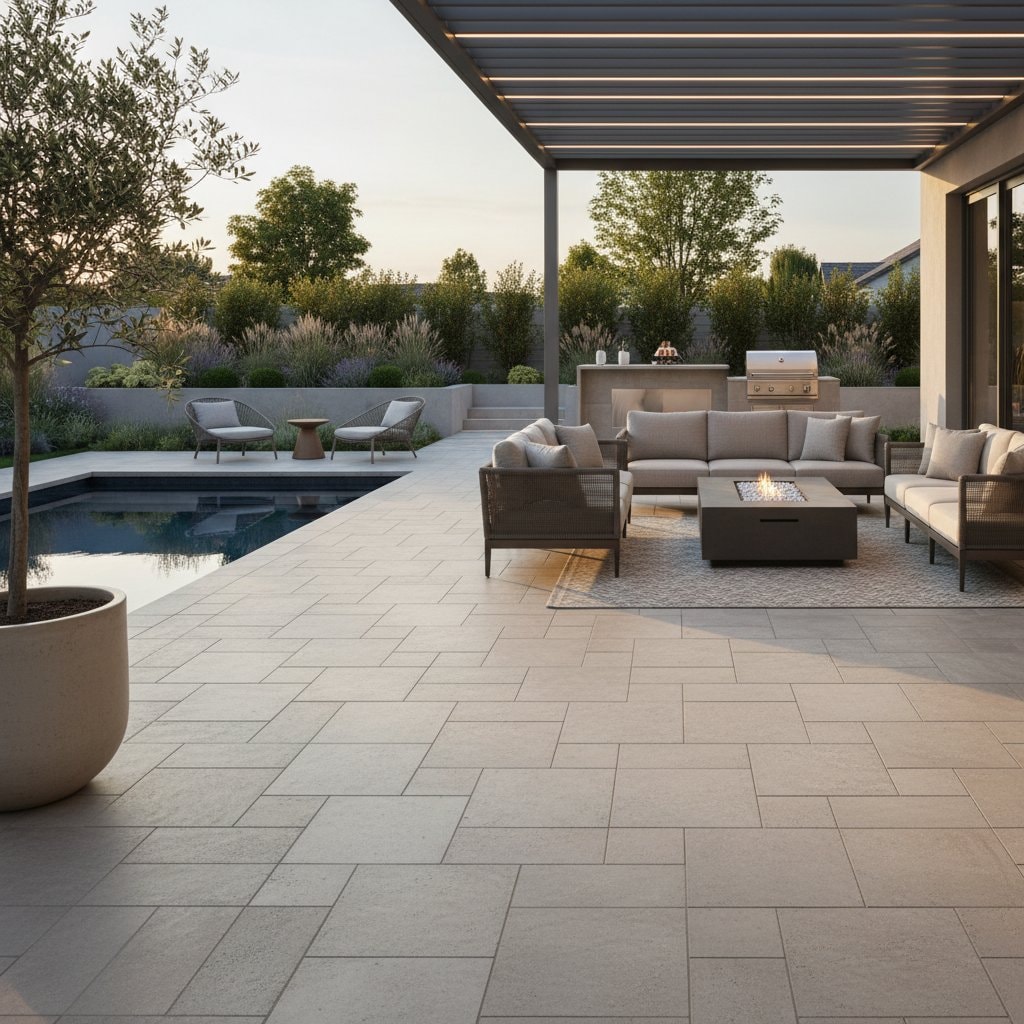
Porcelain adapts to diverse outdoor settings, from expansive yards to compact balconies. Its linear patterns expand visual space in smaller areas. Deploy it in:
- Backyard patios and lounging zones.
- Pool surrounds and hot tub areas.
- Pathways through gardens.
- Outdoor dining and kitchen setups.
- Elevated terraces.
Slip-resistant properties ensure safety near water features. The consistent surfacing aligns with architectural styles ranging from classic to modern.
Enhancing Design Integration
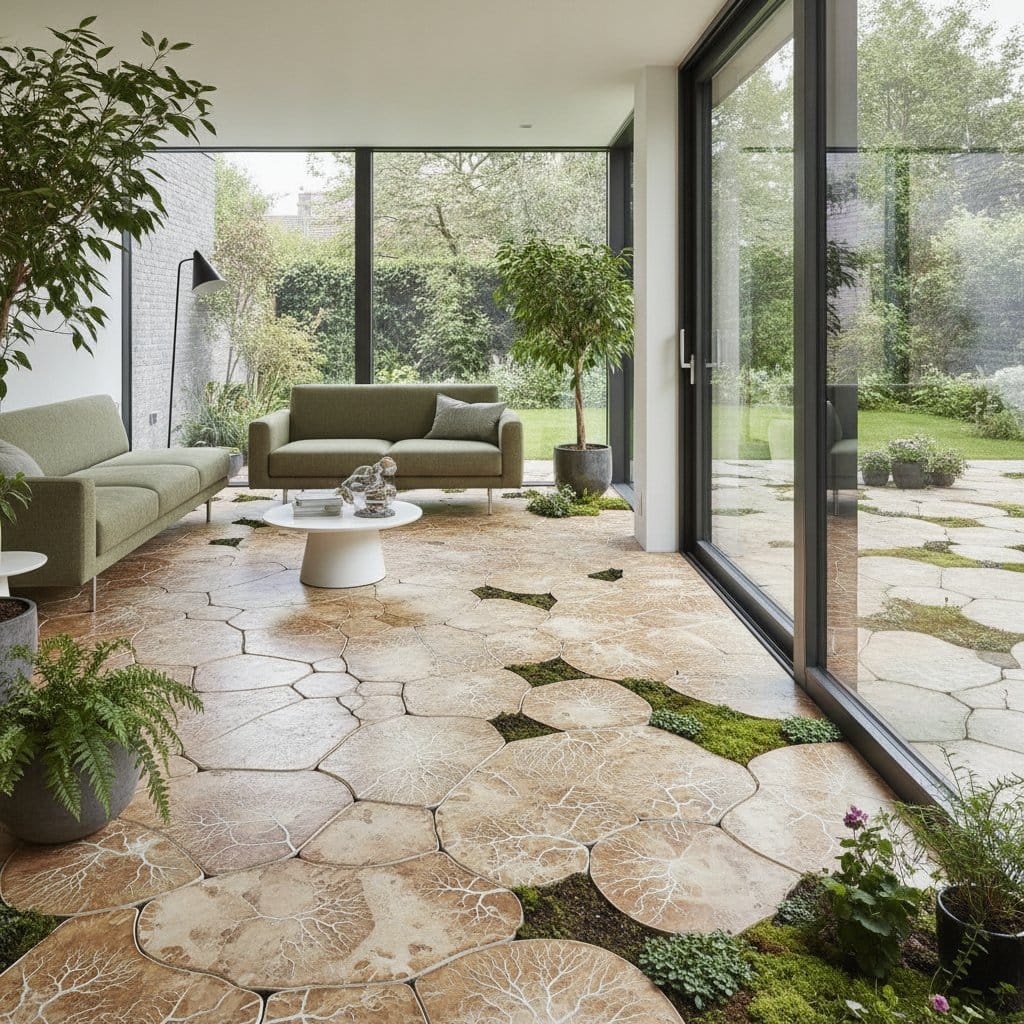
Integrate porcelain thoughtfully to unify indoor and outdoor realms. Align paver styles with interior flooring for fluid transitions via glass doors. Opt for large formats with minimal grout to convey openness. Introduce borders or accents for visual interest.
Incorporate lighting to highlight textures and hues. Position fixtures to accentuate tile variations. Map furniture placement pre-installation, ensuring patterns guide movement naturally.
Steps to Achieve Your Porcelain Patio
Porcelain pavers enable a sophisticated outdoor retreat free from routine chores. Engineered for resilience, they pair natural-inspired finishes with enduring performance. Plan your design, select compatible styles, and choose an installation suited to your needs.
This approach yields a weather-resistant, elegant surface from the outset. Focus on leisure and gatherings rather than laborious care. With deliberate preparation, your porcelain patio delivers sustained luxury and enjoyment.