Plant Fall Bulbs for Spectacular Spring 2025 Blooms
Planting bulbs during the fall season prepares a delightful surprise for the coming year. Gardeners position these modest bulbs into chilled soil, endure the stillness of winter, and then witness their landscapes erupt in vivid displays. To cultivate a lively spring vista featuring tulips, daffodils, hyacinths, or crocuses, select the period when temperatures cool and foliage begins to drop.
This comprehensive guide details the process of selecting, planting, and maintaining fall bulbs. Such practices ensure the garden delivers exceptional floral performances the following spring.
Best Bulbs to Plant in Fall
Certain bulbs emerge in early spring, whereas others appear later in the season. Combining various types extends the duration of color for several weeks. The following options prove reliable for consistent results:
Early Spring Bloomers
- Crocus: Compact yet striking flowers that frequently surface amid lingering snow. These suit borders or lawn areas effectively.
- Snowdrops: Delicate white bell-shaped blooms that establish readily and illuminate shaded regions.
- Iris reticulata: Intense purple or blue flowers accompanied by a pleasant fragrance.
Mid-Spring Bloomers
- Daffodils: Resilient varieties in yellow, white, or peach tones. These also deter deer and rodents naturally.
- Hyacinths: Renowned for their potent scent and compact, spiky inflorescences.
- Tulips: Timeless selections offering diverse colors and forms.
Late Spring Bloomers
- Alliums: Elevated, spherical blooms that provide architectural interest and theatrical elements.
- Camassia: Star-like blue or white flowers that thrive in damp conditions.
- Spanish Bluebells: Gentle, nodding blooms that propagate well beneath trees.
Finding the Right Location
The majority of spring bulbs require full sunlight or a minimum of six hours of daily exposure. Adequate drainage remains essential, as excess moisture leads to bulb decay. In areas with dense clay soil, incorporate organic compost or coarse sand to enhance aeration and permeability.
Position bulbs in groupings or irregular drifts instead of rigid rows. Such arrangements mimic natural wildflower patterns and amplify visual appeal. For instance, group 10 to 15 daffodils in a cluster, or distribute tulips in uneven formations adjacent to shrubs or pathways.
Step-by-Step Planting Guide
Follow these precise steps to install bulbs successfully:
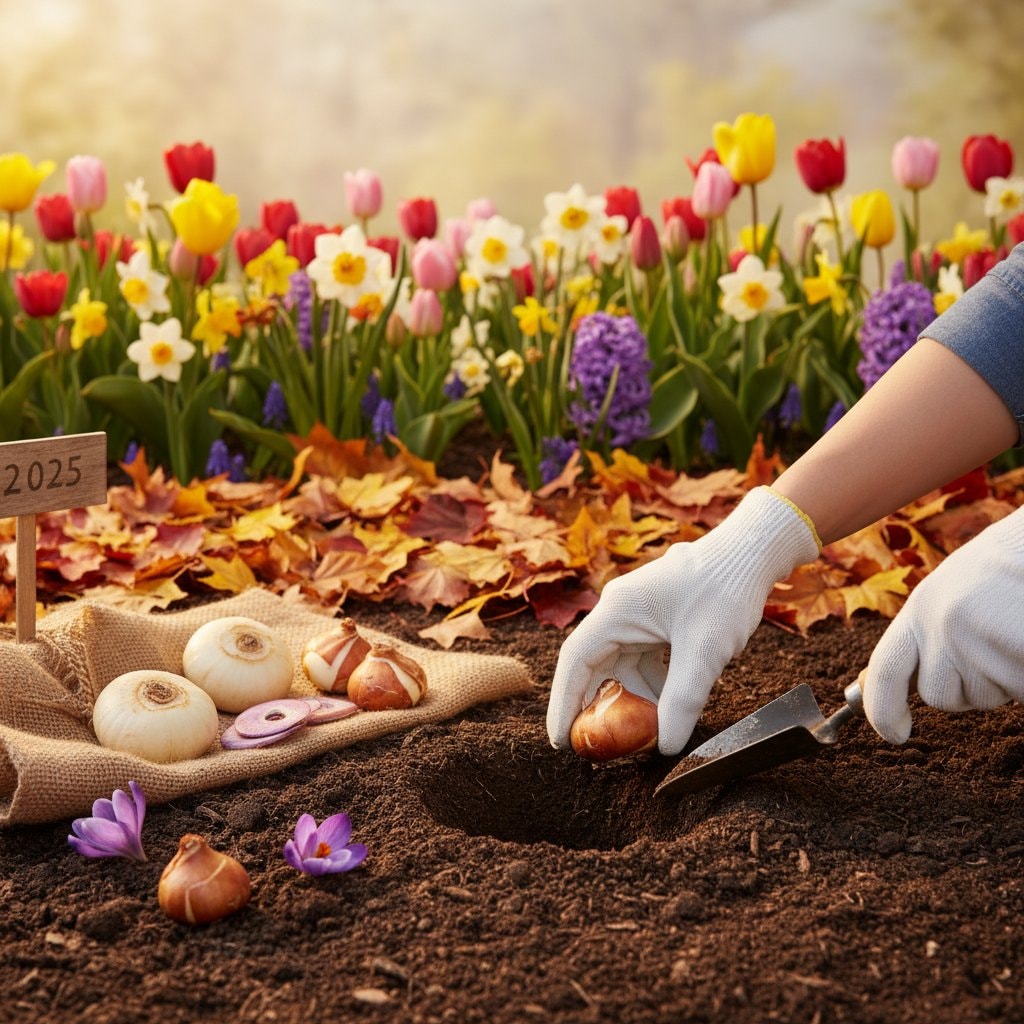
- Prepare the soil. Till the ground to a depth of approximately 8 inches. Blend in compost or a specialized bulb fertilizer to enrich nutrient levels.
- Check drainage. Should water accumulate, introduce coarse grit or sand into the planting holes' bases.
- Set the bulbs. Orient them with the pointed tip upward. In cases where orientation proves unclear, position them horizontally; the bulbs adjust during growth.
- Cover and firm. Replace the soil gradually, then tamp it lightly to eliminate voids.
- Water well. Apply a generous amount to settle the earth and initiate root development.
- Mulch. Spread a 2-inch layer of organic mulch or chopped leaves to conserve moisture and stabilize temperatures.
Caring for Bulbs After Planting
Once bulbs reside in the soil, maintenance remains minimal until spring arrives. Maintain slight soil moisture during dry spells through supplemental watering, yet prevent saturation. Upon shoot emergence, clear heavy mulch to facilitate upward growth.
In spring, allow foliage to persist after flowers wilt. The leaves photosynthesize and store energy for future seasons. Permit them to yellow and wither before removal. Interplant with annuals or perennials to conceal declining greenery.
Annual fertilization supports vigorous development. Apply a balanced bulb-specific formula as shoots appear. Steer clear of nitrogen-heavy options, which favor foliage over floral production.
Planning Color and Height
Effective spring gardens rely on strategic layering. Integrate bulbs varying in stature and flowering periods to sustain interest throughout the season. Consider this approach for a multi-tiered bed:
- Base layer: Low-growing early performers such as crocuses or snowdrops.
- Middle layer: Intermediate heights like daffodils or hyacinths.
- Top layer: Elevated late bloomers including tulips or alliums for culminating impact.
Select color schemes that harmonize or contrast dynamically. Pair yellow daffodils with purple tulips for cheerful vibrancy, or blend white hyacinths and pink tulips for a serene elegance.
Extending Bulb Longevity
After blooming concludes, enable foliage to recede naturally while controlling weeds. In climates with intense summer heat, excavate sensitive varieties like tulips once leaves desiccate. Store them in a shaded, ventilated area until the next fall cycle.
Regular division prevents overcrowding in established plantings. Every three to four years, lift clumps post-dormancy, separate offsets, and replant at appropriate depths. This practice rejuvenates vigor and expands garden coverage over time.
Achieving Vibrant Returns
Investing effort in fall bulb planting yields enduring rewards through spring 2025 and beyond. By adhering to these methods, gardeners foster resilient displays that enhance landscapes annually. Begin preparations now to transform ordinary yards into extraordinary havens of color and fragrance.